

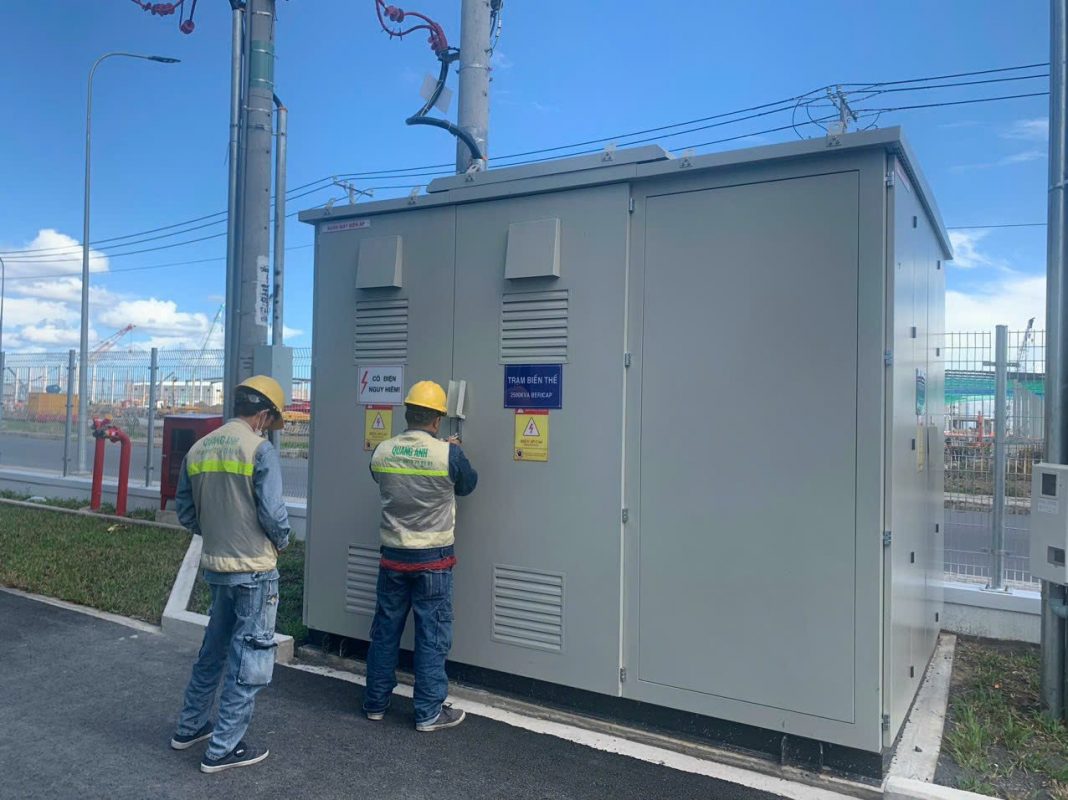
An electrical inspection and test plan should tell the factory owner what evidence will exist before work is concealed, equipment is released, a system is energized, or a package is accepted. It is not merely a contractor checklist and it is not a list of every possible electrical test. A useful ITP connects each requirement to an inspection or test, an acceptance basis, a responsible party, a decision point and a retained record.
This guide is for international factory owners, project directors, procurement managers and facility teams delivering electrical work in Vietnam. It focuses on owner controls across design release, manufacture, delivery, installation, pre-energization and handover. It does not prescribe live working, relay settings, test voltages or pass/fail values for an unidentified system. Those details must come from the approved design, applicable legal basis, the correct standard edition and the exact equipment manual.
Prepared for QuangAnhcons · Editorial focus: M&E quality and acceptance for FDI factories · Sources checked: 11 October 2026.
1. Use the ITP as an owner decision control, not a ceremonial form
An owner usually becomes involved at the wrong time if the contract only says that work will be “inspected and tested.” By then, cable routes may be covered, switchboards may have left the factory and equipment rooms may be handed to operations. The ITP should identify the last sensible decision point before evidence becomes expensive or impossible to recover.
For each activity, ask four questions. What requirement is being verified? What observable evidence will demonstrate it? Who is competent and contractually responsible for the technical check? Who can release the next stage? The person who observes a test is not automatically the designer, the statutory authority or the person authorised to accept a commercial deviation.
The ITP also protects the contractor. Define how additional witness requirements, changed notice periods and repeat inspections enter the contract change-control process; their technical and commercial consequences need an authorised decision. A balanced ITP therefore controls both quality risk and decision latency.
2. Freeze the hierarchy of requirements before writing test rows
An inspection cannot demonstrate compliance with an undefined baseline. Start with a controlled register that identifies the signed contract, owner requirements, approved drawings and calculations, applicable Vietnamese legal documents, selected TCVN/IEC editions, equipment schedules and manufacturer instructions. Record the precedence and conflict-resolution route rather than assuming that the strictest-looking sentence always governs.
For an FDI project, an overseas corporate specification may be a contractual requirement without being Vietnamese law. A Vietnamese drawing approval does not necessarily demonstrate compliance with every global owner standard. Likewise, a certificate for one component does not establish conformity of the assembled switchboard or installed system. The ITP should preserve these distinctions.
| Baseline layer | Typical controlled evidence | Owner question |
|---|---|---|
| Contract and owner requirements | Employer requirements, scope matrix, approved deviations, performance specification | What was purchased and which exceptions were accepted? |
| Applicable law and technical regulation | Current legal register, project approvals, authority or utility conditions | Which obligations apply to this location and connection? |
| Design basis | Approved SLDs, calculations, equipment schedules, protection philosophy, interface drawings | What installed configuration is being verified? |
| Product and assembly basis | Approved data sheets, certificates within their stated scope, routine/type-test evidence, OEM manuals | Does the exact supplied model and assembly match the approved requirement? |
| Work method | Method statement, risk controls, calibrated instrument register, competent-person assignments | Is the activity ready to proceed and recordable? |
Our guide to electrical design responsibilities for FDI factories explains how to assign producers, technical checkers and decision-makers. The ITP begins where that design responsibility becomes inspection and test evidence.
3. Build every ITP row so another team can audit it
A row such as “check cable installation — OK” is not auditable. A workable row identifies the asset or work package, the stage, the characteristic to inspect, the method, the acceptance reference, the party performing the activity, the surveillance level and the record to retain. It should also state prerequisites and the treatment of a failed result.
| Column | What to enter | Weak entry to avoid |
|---|---|---|
| Asset/activity | Tagged switchboard, feeder, cable section, earth electrode group or functional sequence | Electrical works |
| Requirement | Measurable characteristic or controlled drawing detail | Good workmanship |
| Method | Inspection, measurement, demonstration, document review or functional test | Check as required |
| Acceptance basis | Exact drawing, specification, standard section or OEM document revision | IEC/TCVN compliant |
| Responsibility | Performer, technical checker, witness/decision party and notification recipient | All parties |
| Control point | Review, surveillance, witness or hold point with notice period | Owner to attend |
| Record | Named form/report, asset tag, instrument ID, result, date and sign-off route | Test report later |
Use stable asset tags from the approved SLD and equipment schedule. A report that says “MSB tested” cannot be reconciled reliably if the project has several boards, replacement breakers or revised feeder names. Traceability should survive personnel changes and transfer to the facility team.
4. Define review, surveillance, witness and hold points in the contract
Project teams often use the letters R, S, W and H differently. The contract or quality plan should define them once. A practical arrangement is: review for document examination; surveillance for discretionary observation without stopping the work; witness for an activity that proceeds after the agreed notice if the invited party does not attend, unless the contract says otherwise; and hold for an activity that cannot proceed without documented release.
A hold point should be reserved for consequential and irreversible decisions. Examples may include release for manufacture after the approved technical baseline, covering concealed earthing or cable-route work, energization readiness, and acceptance of a material deviation. If every row is a hold point, the ITP stops managing risk and becomes a schedule blockage.
State the notice period, required attachments, response time and authority to waive attendance. “Client witness” is incomplete if nobody knows which owner representative can sign, whether remote attendance is allowed, or what happens when the witness does not attend. Commercial acceptance and technical release should remain separate where different authorities apply.
5. Cover design release, manufacture, delivery, installation and operation as one chain
The owner needs an evidence chain, not isolated test reports. Divide the ITP by lifecycle stage and carry the same asset identity and requirements through each stage.
| Stage | Owner control objective | Example retained evidence |
|---|---|---|
| Design/submittal | Confirm that inputs, interfaces and acceptance requirements are mature enough for release | Approved drawings, calculations, deviation register, comment closure |
| Manufacture/FAT | Verify the agreed factory scope before dispatch and record outstanding items | Approved FAT procedure, instrument list, results, punch list, release note |
| Delivery/storage | Confirm identity, condition, completeness and preservation responsibility | Packing list, serial register, damage report, storage handover |
| Installation | Verify location, interfaces, workmanship and concealed work before closure | Inspection request, redline drawing, torque/termination records where specified, photographs |
| Pre-energization | Confirm technical records, protection/control readiness and authorised work conditions | Test dossier, settings/configuration baseline, open-item assessment, release record |
| Commissioning/handover | Demonstrate functions in the installed system and transfer usable records | SAT/functional reports, issue log, as-builts, backups, manuals, training record |
The article on long-lead electrical equipment scheduling distinguishes factory acceptance, dispatch, site receipt and readiness for energization. The ITP should use the same milestone language so a FAT release is not misreported as operational readiness.
6. Design and submittal inspections should prevent untestable requirements
Before manufacture or installation, confirm that the acceptance criteria can actually be verified. If the owner requires a protective function, the design package should identify the relevant inputs, outputs, operating modes and records. If an enclosure class, internal-arc classification or temperature-rise performance is required, the procurement documents must identify the exact assembly scope and evidence expected.
Check interfaces that commonly disappear between packages: equipment heat loads to HVAC, foundation and embedded items to civil, cable entry and gland plates, earthing terminals, CT/VT signals, utility metering boundaries, SCADA points, fire-alarm interfaces and machine-vendor terminals. A successful component test does not resolve a missing interface drawing.
Before release, require a deviation register that distinguishes approved departures from unanswered comments. “Approved with comments” should not be treated as an unconditional manufacturing release unless the project procedure explicitly identifies which comments may remain open.
7. FAT scope must follow the equipment and purchase requirement
FAT is equipment-specific. A transformer, medium-voltage assembly, low-voltage power assembly, protection panel and control system have different applicable standards, routine tests, design evidence and functional checks. Do not copy a generic FAT schedule across packages and do not request destructive or type tests on a production unit without a defined engineering and contractual basis.
Before FAT, review the approved procedure, equipment identity, latest drawings, test sequence, calibrated instruments, test connections, safety arrangements, data-capture format and treatment of failures. During FAT, record actual results and asset identifiers rather than only ticking pass. After FAT, distinguish: accepted for dispatch; accepted subject to listed actions; retest required; or not released. The wording and authority must match the contract.
A type-test certificate can support design evidence within its stated configuration and scope. It does not replace routine tests on the supplied assembly, inspection of the installed system, or site functional testing. Likewise, a component certificate does not automatically cover how that component has been incorporated into a larger assembly.
8. Incoming inspection should preserve identity and condition before installation
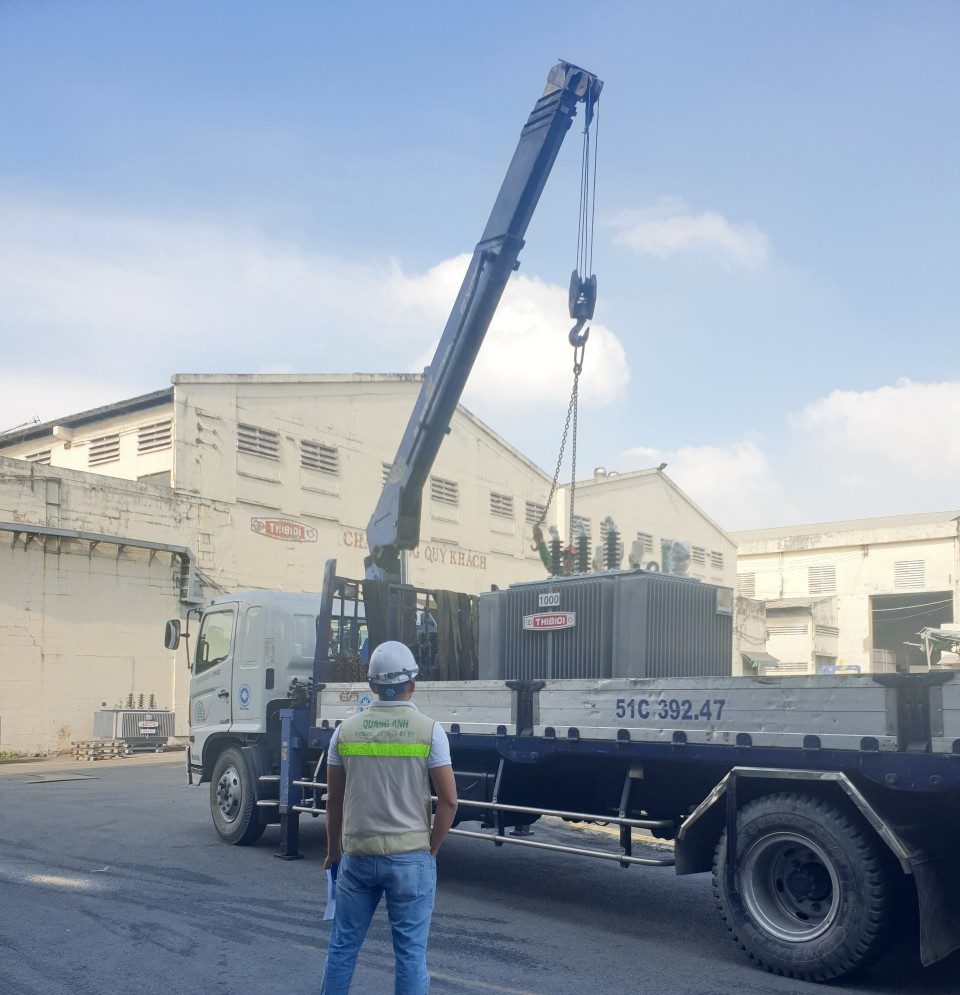
At site receipt, compare purchase order, approved submittal, packing list and nameplate. Record manufacturer, model, serial number, ratings relevant to the approved schedule, accessories, loose items, transport indicators where provided, visible damage and storage requirements. Quarantine unexplained substitutions or damage; do not allow installation to erase the evidence.
Assign storage ownership. Electrical equipment can be damaged after an acceptable FAT by moisture, dust, impact, condensation, poor heaters, incorrect orientation or uncontrolled energization of auxiliaries. The storage plan should define inspection intervals and the record required before the equipment is released to installation.
For cross-border supply, document language, editable file requirements, software/configuration access and test-data format should be checked at receipt rather than postponed until handover. A complete crate is not necessarily a complete information package.

9. Installation ITPs must capture work before it becomes concealed
Concealed-work points are often more valuable than final visual inspections. Depending on the approved design, examples can include earth-grid conductors and joints before backfilling, sleeves and embedded conduits before concrete, cable-trench preparation before covering, fire-stopping before ceilings close, and inaccessible cable terminations before enclosure completion.
The ITP should state which drawing revision is checked, what dimensions or characteristics are recorded, how location is referenced, and which photographs are required. Photographs should include a meaningful asset/location reference; an unlabelled close-up is weak evidence.
For equipment installation, verify alignment, fixing, access, environmental conditions, cable entry, segregation, mechanical interlocks, earthing connections and interfaces to adjacent systems. Torque values, clearances and assembly procedures must come from the exact product instructions or approved design—not from an uncited site habit.
10. Low-voltage verification is not the same as product conformity
IEC 60364-6:2016, Edition 2.0 covers initial and periodic verification of low-voltage electrical installations. The IEC catalogue states that it replaced the 2006 edition and includes the September 2017 corrigendum. In Vietnam, TCVN 7447-6:2011 is the national standard catalogue entry for low-voltage installation verification and is equivalent to the earlier IEC 60364-6:2006. The project team must identify which documents apply and read the licensed text before setting test values or sequences.
Installation verification considers the installed work and its records. Product or assembly conformity addresses a different object. For example, IEC 61439-1:2020, Edition 3.0, together with the relevant product part, addresses definitions, service conditions, construction, technical characteristics and verification of low-voltage switchgear/controlgear assemblies. The current IEC page incorporates Corrigendum 1:2021 and Corrigendum 2:2023. Neither document by itself proves that the owner’s complete factory distribution system is ready for service.
11. Medium-voltage equipment requires a package-specific evidence plan
For metal-enclosed AC switchgear above 1 kV and up to 52 kV, the current IEC catalogue identifies IEC 62271-200:2021 plus Amendment 1:2024. Its scope includes indoor and outdoor prefabricated metal-enclosed assemblies. The ITP should identify the actual switchgear class, ratings, service conditions, approved drawings and evidence required by the purchase specification.
Do not turn the standard title into a generic field test list. Routine tests, design/type evidence, site inspections, cable tests, protection functions and utility-interface checks belong to different scopes. The manufacturer, appointed designer, competent test organisation, EPC contractor, owner and serving entity may each control different decisions.
Vietnam’s legal and regulatory basis must be checked for the project location and date. QCVN 26:2025/BCT was issued with Circular 51/2025/TT-BCT and took effect on 1 June 2026 according to the official Công Báo metadata. This article does not reproduce technical clauses or claim that this one regulation is the complete approval basis.
12. Protection, metering and SCADA tests need a signal-to-record trace
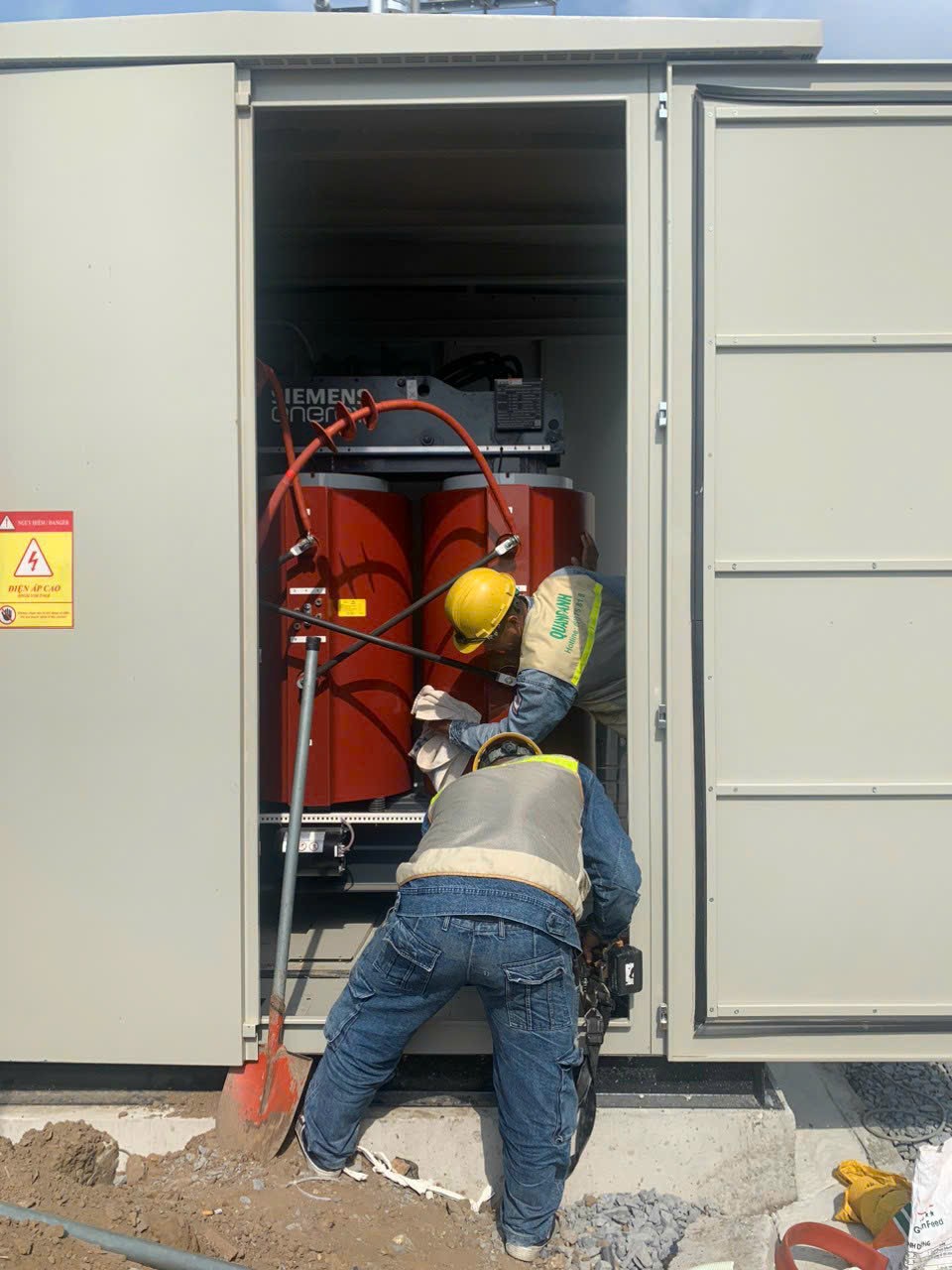
A protection test should link the approved setting file and function to the relay/IED identity, CT/VT circuit, trip path, breaker, alarm, SCADA indication and retained result. Separate testing of a relay element does not demonstrate the complete trip chain. Changes made during commissioning must return through the approved settings and configuration control process.
For SCADA and metering, build a point list with tag, source, scaling, unit, sign convention, quality/status behavior, timestamp source and expected destination. Test representative normal, abnormal and communications-loss states as required by the approved functional design. Record software/firmware versions and preserve authorised backups where the contract requires them.
Cybersecurity responsibilities should be explicit. The ITP may verify account provisioning, network segregation, backup/restore evidence and approved remote-access behavior, but it should not put passwords in a general test report. The owner’s OT/IT rules and the product’s supported method govern the actual implementation.
13. Measure dossier completeness, but never accept by percentage alone
A quantitative register helps the owner see missing evidence. Suppose a hypothetical package contains 36 tagged feeders and the agreed index expects four records per feeder: installation inspection, continuity/protective-conductor record, insulation record and functional/identification check. The register therefore expects 36 × 4 = 144 record references. If 139 are linked, numerical completeness is 139/144 × 100 = 96.5%.
That percentage is an administrative indicator, not an acceptance rule. Five missing records could all concern spare, non-energized feeders—or one could concern a critical protection circuit. The decision must consider the identity, consequence and contractual status of each missing item. Use the metric to direct review, not to replace engineering judgment.
Perform a second check by selecting an asset tag and tracing it forward from approved drawing to supplied equipment, installation record, test result, setting/configuration and handover index. Then trace one report backward to confirm that its instrument ID, date, operator and acceptance reference are identifiable.
14. Nonconformities need technical disposition before commercial closure
When an inspection or test fails, issue a record that identifies the requirement, asset, observed result, immediate containment and responsible party. The disposition should be one of the project’s defined routes: correct and retest, replace, accept by approved concession/deviation, or another authorised action. “Closed by email” is insufficient if the technical basis and acceptance authority are not preserved.
Separate a punch-list item from a nonconformity where the project procedure makes that distinction. A missing label and a failed protection function do not carry the same consequence. The ITP or linked procedure should identify which open items block dispatch, covering, energization, taking-over or final acceptance.
Trend repeated failures. Several loose terminations, wrong tags or setting mismatches can indicate a process problem that requires broader inspection than the original sample. The competent technical team should define any expanded scope; do not invent a universal sampling percentage after a failure.
15. Energization readiness and contractual acceptance are different decisions
An energization review should confirm the project-specific prerequisites: approved installation status, relevant test evidence, protection/control readiness, closed or formally assessed open items, authorised switching and safety arrangements, utility or industrial-park interfaces where applicable, and nominated decision-makers. It should not be inferred from a FAT report or from equipment being physically installed.
Taking-over may occur later and may include performance demonstration, training, as-built records, manuals, software backups, spares, warranty information and agreed defects. Final acceptance may depend on an even later period or contractual condition. Name these milestones separately in the ITP and contract.
For tender-wide boundaries, use the electrical EPC tender scope guide. For existing premises, the factory electrical due-diligence checklist explains why existing records, condition and production compatibility must be evaluated separately.
16. Standards and legal-source matrix for an owner ITP
| Layer | Reference checked on 11 Oct 2026 | Scope used here | Access limit |
|---|---|---|---|
| Quality management | ISO 9001:2026, Edition 6 | Current QMS framework; documented information, controlled operations and performance evaluation context | Official public overview only; no clause-level certification claim |
| LV installation verification | IEC 60364-6:2016 Ed.2.0, including 2017 corrigendum | Initial and periodic verification scope | Official catalogue scope; test values require licensed text and project basis |
| Vietnam LV standard | TCVN 7447-6:2011 | Vietnam catalogue identity for LV verification; equivalent to IEC 60364-6:2006 | Catalogue metadata only; not treated as proof of statutory applicability |
| LV assemblies | IEC 61439-1:2020 Ed.3.0 + COR1:2021 + COR2:2023, with relevant product part | Assembly definitions, service conditions, construction, characteristics and verification | Official catalogue scope; exact evidence depends on the assembly and purchase specification |
| MV metal-enclosed switchgear | IEC 62271-200:2021 + AMD1:2024 | Assemblies above 1 kV through 52 kV within stated scope | Official catalogue scope; not a generic site-test procedure |
| Vietnam electrical regulation | Circular 51/2025/TT-BCT issuing QCVN 26:2025/BCT | Current regulation identity and effective-date context | Clause-level applicability and project approvals require full legal review |
ISO published ISO 9001:2026 on 16 September 2026 and lists the 2015 edition as withdrawn. If a live contract still names ISO 9001:2015, do not silently change the contractual baseline: record the transition question and obtain the authorised decision. Similarly, IEC 60364-6:2026 appeared as a pre-release PRV at the research date; the ITP should state the edition actually adopted for the project rather than automatically importing a draft or pre-release.
17. Require bidders to return an ITP schedule with the priced offer
An owner does not need a final test procedure from every bidder, but it should request enough structure to compare quality scope. Require the bidder to return a proposed ITP index by package, list of planned FAT/SAT activities, responsibility matrix, proposed review/witness/hold points, notice periods, records, exclusions, specialist test providers and assumptions about utilities or authorities.
| RFQ return | What the owner should compare |
|---|---|
| Package ITP index | Coverage from submittal to handover; concealed work and energization controls |
| Standards/criteria register | Named editions, hierarchy, proposed deviations and unresolved applicability |
| Witness/hold schedule | Risk basis, notice period, remote attendance, release authority and schedule effect |
| Test resources | Competence, specialist subcontractors, instrument control and data format |
| Record index | Asset-level traceability, language, editable/native files, retention and handover route |
| NCR procedure | Containment, technical disposition, concession authority, retest and trend review |
| Price/schedule assumptions | Included attendance, repeat tests, travel, utility interfaces, shutdown windows and exclusions |
Do not evaluate a lower price as equivalent when it excludes owner attendance, independent testing, retesting after failures, editable records or commissioning support. Those differences should remain visible during commercial comparison.
18. Mini-WBS for developing and approving the ITP
| ID | Activity | Illustrative duration | Predecessor | Hold point/output |
|---|---|---|---|---|
| 1 | Freeze document hierarchy and package boundaries | 3 working days | Project start | Baseline register |
| 2 | Contractor drafts ITP index and package plans | 5 working days | FS after 1 | Draft ITP set |
| 3 | Designer/OEM/owner interface review | 5 working days | FS after 2 | Comment register |
| 4 | Close criteria, responsibilities and control points | 3 working days | FS after 3 | HP: approval for use |
| 5 | Link ITP to programme and inspection notifications | 2 working days | SS with late stage of 4 | Integrated inspection calendar |
Durations are hypothetical planning inputs, not a market promise. Complex owner standards, unresolved utility interfaces or several OEM packages may require more review. The sequence matters more than the arithmetic total: production should not begin against an unapproved acceptance baseline.
19. Owner checklist before approving the electrical ITP
- Every row identifies a tagged asset or defined work package.
- The acceptance basis names a controlled document and edition rather than “as per standard.”
- Design, product, installation and system-level evidence are not conflated.
- Review, surveillance, witness and hold points are defined contractually.
- Notice periods, attendance rules and release authorities are explicit.
- Concealed works are inspected before they become inaccessible.
- FAT release, site receipt, energization, taking-over and final acceptance are separate milestones.
- Failed results enter an NCR/deviation route with technical disposition and retest evidence.
- Protection, SCADA and metering records trace signals through the installed system.
- The handover index includes as-builts, settings/configuration, manuals, training and outstanding items.
20. Request a focused ITP and acceptance-scope review
Send QuangAnhcons the factory location, package list, owner requirements, proposed SLD, equipment schedule, procurement status, target energization date and existing quality-plan documents. A focused review can identify missing hold points, overlapping responsibilities, untestable requirements and evidence gaps before manufacturing or concealed installation proceeds.
Watch the QuangAnhcons archive video on energizing a 2,500 kVA factory substation. It provides company project context for an energization milestone; it is not evidence that the hypothetical ITP, durations or acceptance conditions in this guide applied to that project. The video remains on YouTube and playback is not required for this article.
Sources and method
Official ISO, IEC, VSQI and Government Gazette pages were checked on 11 October 2026. Only public catalogue scope and current edition/status information were used. No paid standard clause, statutory interpretation, project-specific setting, test voltage or acceptance value is reproduced. The ITP matrices, RFQ schedule and 36-feeder completeness example are original editorial tools; the arithmetic was independently checked. Apply them only after the project team confirms the signed contract, applicable law, approved design, exact equipment and competent technical authorities.
[contact-form-7 id="7239967" title="Contact form 1"]Substation budget estimate
Select the capacity, route lengths and package to view your indicative budget and electrical parameters.
Request a project quotation
Send your project details, BOQ or drawings to request a formal quotation. Fields marked * are required.
Quotation scope
Applies to one EVN-supplied substation with oil-immersed transformers at 22/0.4 kV (single-phase: 12.7/0.23 kV), with MV metering VTs/CTs supplied by EVN. The estimate includes the selected equipment, installation, earthing, transformer-to-main-breaker connections, design and connection documentation, and coordination of testing and utility acceptance.
Kiosk, integrated steel-pole and indoor substations include MV switchgear and the entered underground cable route. Other outdoor arrangements use the relevant protection configuration. The final diagram must meet the project connection requirements.
Excludes VAT, cables from the substation switchboard to the MSB/loads, live-line work, harmonic reactors, weak-ground treatment or special piling, land and special fire-protection provisions. Underground routes assume normal construction conditions and exclude road drilling and special reinstatement.
Prices are indicative investment budgets. A formal quotation follows site assessment and agreement on the configuration. Electrical selections are preliminary and require design verification before installation.
Capacity range and application conditions
The catalogue defines the enquiry range of this tool, not universal TCVN capacity limits. Single pole-mounted transformers: 15–100 kVA; three-unit banks: 3×15–3×100 kVA. Platform substations: 100–630 kVA. Steel-pole substations: 100–630 kVA; 750/800 kVA require design verification and local approval. Ground-mounted, kiosk and indoor configurations: 50–10,000 kVA. Not every configuration has a package price or the same structural design.
Reference: EVN Decision 1299/QD-EVN dated 3 November 2017, Volume 1, sections 3.3–3.4. Check the current requirements of the responsible utility before implementation. Kiosks must meet manufacturer ratings and testing requirements (IEC 62271-202); indoor and ground-mounted arrangements must meet project layout, ventilation, structural and fire-protection requirements. For multiple transformers, specify the quantity and capacity of each unit.
Developed by QuangAnhcons · © 2026 QuangAnhcons. Code licensed under GPL-2.0-or-later. Standards and manufacturer data belong to their respective owners.
Related Posts
Electrical Inspection and Test Plans: An Owner Guide for FDI Factories
Build an owner-level electrical ITP for a Vietnam factory: acceptance baselines, witness and hold points, [...]
Oct
Factory electrical interface register: close MV/LV and OEM boundaries before procurement
A project-ready electrical interface register connects the utility, transformer, MSB, OEM machines, civil works and [...]
Oct
Harmonics in Transmission and Distribution Power Systems: From 500 kV to End-Use Loads
A rigorous power-quality monograph from 500 kV transmission to end-use equipment, covering Fourier spectra, symmetrical [...]
BESS end-of-warranty acceptance: contract for net AC-deliverable energy
Define BESS end-of-warranty capacity at a named AC meter, not an ambiguous DC nameplate; includes [...]
Oct
Size an industrial standby generator from essential-load steps, not transformer kVA
A factory standby-generator procurement guide with a worked six-group P/Q load example, transfer sequence, motor-start [...]
Oct
Before choosing breaker kA ratings: build a complete factory fault-case register
An electrical fault-case register separates maximum breaking duty from minimum-fault protection sensitivity, with documented grid, [...]
Oct
Imported production lines: turn motor ratings into an auditable factory P/Q load schedule
A worked industrial load schedule converts imported machine shaft kW to active and reactive demand, [...]
Oct
Long-Lead Electrical Equipment: Plan a Vietnam Factory Schedule
Plan long-lead electrical equipment for a Vietnam factory with release milestones, a backward schedule, site [...]
Oct
Who Owns Each Electrical Design Deliverable? A Responsibility Matrix for FDI Factories
Build an electrical design responsibility matrix for a Vietnam factory. Assign inputs, checks and approvals [...]
Oct
Before Leasing a Factory in Vietnam: Verify the Electrical Supply
Verify capacity, condition and landlord–tenant boundaries before leasing a factory in Vietnam. Use an evidence [...]
Oct
What Are You Really Buying in an Electrical EPC Tender?
Compare electrical EPC tender offers fairly. Use a scope matrix, worked bid example, RFQ wording [...]
Oct
Who Owns the Utility Connection? Responsibilities in a Vietnam Factory EPC Project
A decision guide for FDI factory owners in Vietnam: divide utility connection responsibilities among the [...]
May
Professional Electrical System Installation Process in Vietnam
As Vietnam’s industrial and urban sectors continue to grow, the need for reliable electrical system [...]
Aug
Find the Best Electrical Contractor Near Me – Your Reliable Partner
Finding a dependable electrical contractor near you is crucial for ensuring the safety and efficiency [...]
Jul
Top Vietnam Electrical Contractor Near You – QuangAnhcons
Finding a reliable electrical contractor is crucial for ensuring the safety and efficiency of your [...]
Jul
Top Vietnam Electrical Contractor Services – Choose QuangAnhcons
When it comes to ensuring the electrical safety and efficiency of your industrial facilities, finding [...]
Jul
Expert MEP Engineering for Industrial Buildings – QuangAnhcons
Efficient MEP (Mechanical, Electrical, and Plumbing) engineering is crucial for the optimal performance of industrial [...]
Jul
Trusted Electrical Contractors – Your Partner in Industrial MEP Solutions
In the rapidly evolving industrial sector, finding reliable MEP contractors is crucial. QuangAnhcons stands out [...]
Jul
MEP Construction Services for Factories – Comprehensive Solutions for Businesses
In the context of modern industry, MEP (Mechanical, Electrical, and Plumbing) construction services for factories [...]
Jul
Top-Notch Industrial Electrical Installation Services
Ensuring the optimal functioning of electrical systems in industrial settings is crucial for operational efficiency [...]
Jul