

Before leasing a ready built factory in Vietnam, ask for evidence that the electrical supply can serve your operating plan, and agree who will deliver any missing work. A transformer nameplate, a socket test or a landlord’s statement that “power is available” does not establish capacity at your proposed connection point.
This guide is for FDI investors, procurement managers and facility teams comparing premises. It provides a document request, a conditional decision method and a lease interface schedule. It is not an electrical design, a legal opinion or a certificate that a particular building is safe.
Prepared for QuangAnhcons · Editorial focus: decision · Sources checked: 3 October 2026
Available capacity must refer to a point and an operating condition
Separate the capacity of the supply arrangement, transformer, main distribution board, tenant feeder and final connection. The usable capacity is constrained by the complete path. An unused outgoing circuit does not prove that the transformer or shared upstream supply has room for your production line.
For a multi-tenant building, identify which loads share the equipment, whether capacity is reserved contractually, and which operating conditions the reservation covers. Ask for the demand history, planned tenants and expansion commitments. A lease allocation is a commercial commitment; an engineering assessment must also show how it can be delivered.
Start with your own load schedule: electrical input, voltage, phases, operating hours, starting sequence, critical loads and growth. Distinguish kW from kVA and mechanical output from electrical input. Schneider Electric’s Installed power guidance explains why these distinctions matter. Do not assume that the sum of motor nameplates equals the factory’s maximum electrical demand.

Request documents that describe the same installation
Ask for a current single-line diagram, equipment schedule, relevant supply and connection records, metering arrangement, inspection/test reports and maintenance history. In Vietnam, the industrial park operator, landlord and electricity supplier may have different roles. Identify the actual arrangement for the premises; do not assume that every tenant contracts directly with EVN, Vietnam Electricity.
Match the records to the physical installation. A report for a previous transformer, an old tenant’s feeder or a board that has since been modified cannot establish the condition of the equipment you will use. Record equipment identifiers, ratings, diagram revision, test date, scope and unresolved defects. A photograph of a nameplate helps identity; it does not replace test evidence.
Supply records should identify the connection point, agreed arrangement and any operating constraints. Demand data should identify the meter, measurement interval, period covered and exceptional shutdowns. A quiet holiday month can make headroom appear larger than it is during normal production. Where data is missing, keep the uncertainty explicit and price the investigation or corrective work separately.
The useful output is an evidence register linking each commercial promise to a document, an observed item and a party responsible for closing the gap. Avoid requesting a folder of documents without a way to decide whether each document supports your lease decision.
Capacity, condition and production compatibility are separate checks
A supply may have enough nominal capacity while its protection, earthing, cables or maintenance condition still require work. Arrange a competent inspection with an agreed scope, suitable access and authorized testing conditions. Energized equipment and medium-voltage systems require proper operating controls; a prospective tenant should not improvise measurements to complete a property checklist.
Review protection arrangements, protective conductors, equipment condition, relevant test records and outstanding defects. Schneider Electric’s verification overview distinguishes installation checks and records from equipment conformity. It provides a technical reference; local requirements and the applicable project basis still need to be confirmed for the site.
Compatibility depends on the production process. Large motor starts, nonlinear loads, sensitive controls and loads requiring continuity can expose limitations that a simple steady-state capacity check misses. Ask which events require a shutdown, what backup supply actually supports, and whether automatic restart is acceptable. A generator on the premises does not establish backup capacity or transfer performance for your machines.
Keep defects and enhancements separate. A defect requiring correction before occupation is different from a tenant upgrade for a more demanding process. The distinction helps allocate cost and prevents a landlord’s basic handover from being mistaken for acceptance of your production system.

Turn unresolved work into a lease interface schedule
Define the handover point physically, such as a named feeder terminal, and specify what the landlord provides up to that point. Allocate the downstream cable route, distribution equipment, machine connections, metering, earthing interfaces and testing. Record who obtains required permissions and who coordinates access with other tenants or the park operator.
The most consequential clause is often the acceptance condition. Replace an undefined promise of “adequate electricity” with deliverables: confirmed supply arrangement, available capacity at a stated point under agreed conditions, relevant drawings and test records, closure of listed defects and access for agreed verification. The wording needs commercial and legal review for the actual lease; the technical schedule alone is not legal advice.
Set milestones against the production date: evidence review, access for survey, design confirmation, permission/connection activities, shutdown window, installation and testing. Establish what happens if capacity or access cannot be confirmed. Depending on negotiation, the decision may be conditional approval, delayed commitment or another premises; avoid signing first and relying on an unresolved technical promise.
Compare premises by the work needed to make them usable
Hypothetical example only; these figures are invented, not measurements or a design recommendation. A shared transformer is nominally 1,000 kVA. Recorded coincident demand is assumed to be 550 kVA and a further 150 kVA has been reserved for committed loads. Simple arithmetic leaves 1,000 − 550 − 150 = 300 kVA. A proposed tenant requirement of 350 kVA is 50 kVA above that arithmetic allowance.
Check independently: existing demand, reserved demand and the proposed requirement total 1,050 kVA. That does not establish an overload study, because ratings, measurement basis, thermal conditions, load timing, protection and the supply agreement remain to be checked. It does show why a claim of “1,000 kVA installed” cannot settle this tenant’s decision. Do not count the same reserve twice, or subtract a measured demand from a rating on an incompatible basis.
| Situation | Decision direction | Tradeoff | Evidence needed before commitment |
|---|---|---|---|
| Capacity and condition demonstrated; interfaces documented | Proceed to a scoped lease and fit-out plan | Less uncertainty; tenant-specific work still remains | Matched records, allocation and accepted defect list |
| Capacity plausible but shared-load history incomplete | Conditional assessment with a defined investigation | Potentially suitable location; commitment risk remains | Demand history, reservations and study of the complete path |
| Upgrade needed, with credible delivery plan | Compare the upgrade with alternative premises | Additional cost, permissions and shutdown exposure | Scope, responsible parties, schedule, acceptance and contingencies |
| Supply path or handover obligations remain undefined | Keep the decision open or reject the option | May lose a preferred location; avoids committing to an unbounded scope | Written resolution of the material uncertainties |
Compare rent together with the tenant’s fit-out scope, power upgrade, outages, access constraints and delivery uncertainty. Obtain actual quotations and programme assumptions before assigning money or days. This guide supplies a comparison structure, not a market price range or a promised saving.
A request schedule for the landlord and technical team
| Request | Responsible respondent | Required decision output |
|---|---|---|
| Supply arrangement, connection point and capacity commitments | Landlord/park operator; supplier where relevant | Traceable capacity allocation and stated restrictions |
| Current single-line diagram, equipment identity and tenant feeder route | Landlord with site technical team | Confirmed supply path and physical handover point |
| Demand history, shared loads and committed expansion | Party holding the metering and tenancy records | Headroom assessment on a consistent basis |
| Inspection, testing, maintenance and defect records | Landlord with competent technical reviewers | Condition findings and work required before handover |
| Production load schedule and continuity requirements | Tenant and machine suppliers | Compatibility and tenant-specific design inputs |
| Upgrade/access/shutdown and acceptance schedule | Landlord, tenant and appointed contractors | Bounded responsibilities, milestones and decision conditions |

For the subsequent procurement stage, see our electrical EPC tender scope guide. Lease due diligence determines whether the premises and supply arrangement are suitable; the EPC tender then allocates and purchases the agreed work.
What the site walkdown should record
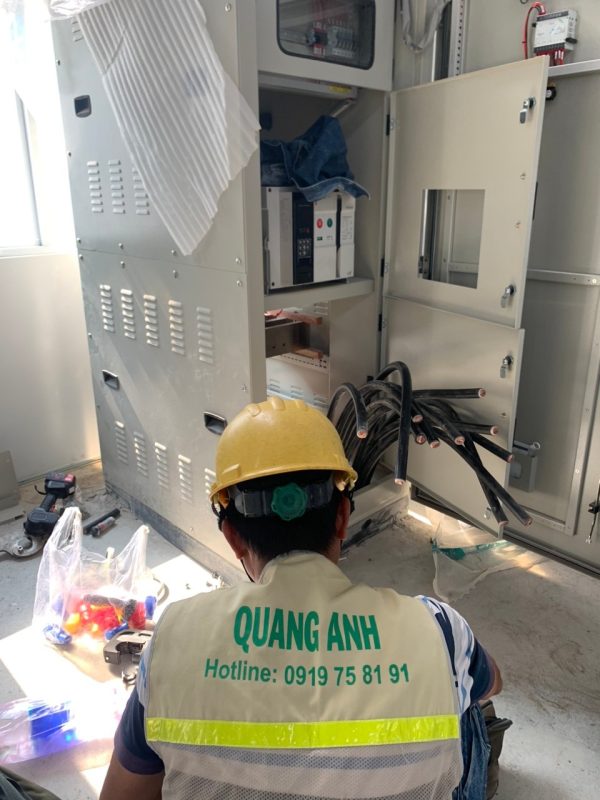
A technical walkdown should connect documents to identifiable equipment and interfaces. The images below are from the QuangAnhcons project archive and illustrate the types of physical evidence worth recording. They are not photographs of the premises being evaluated and do not prove the condition, capacity or compliance of any prospective factory.
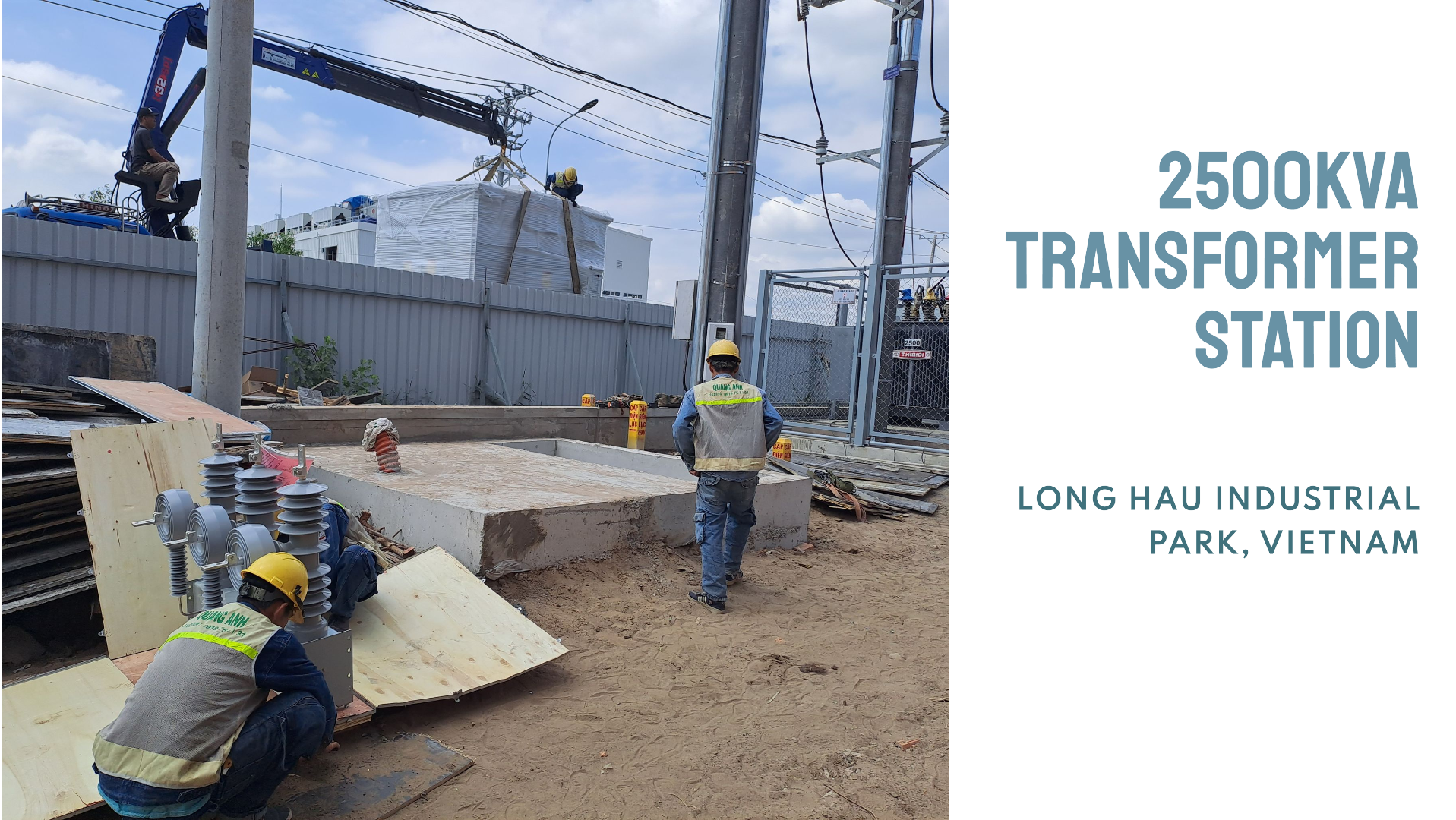
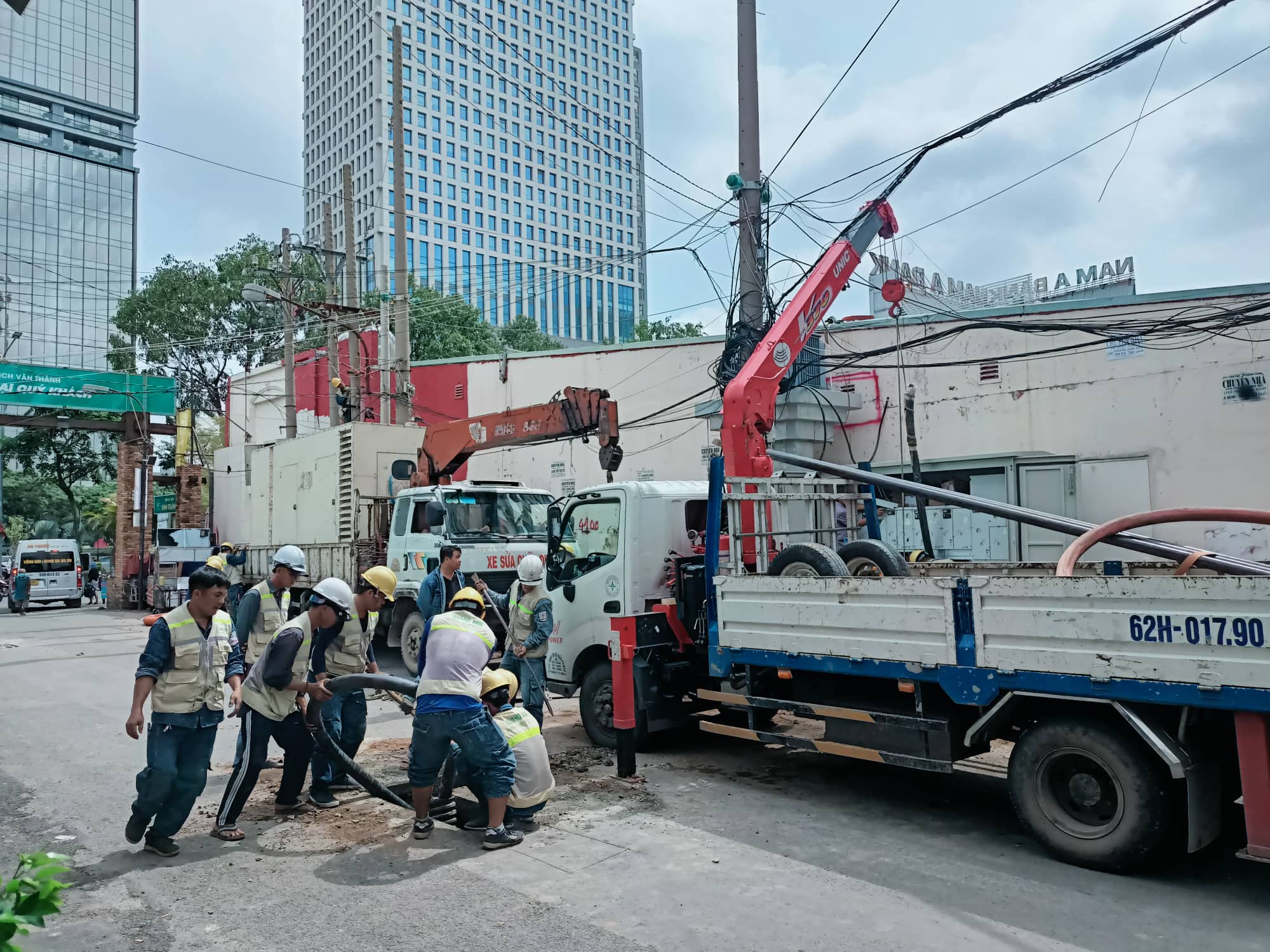
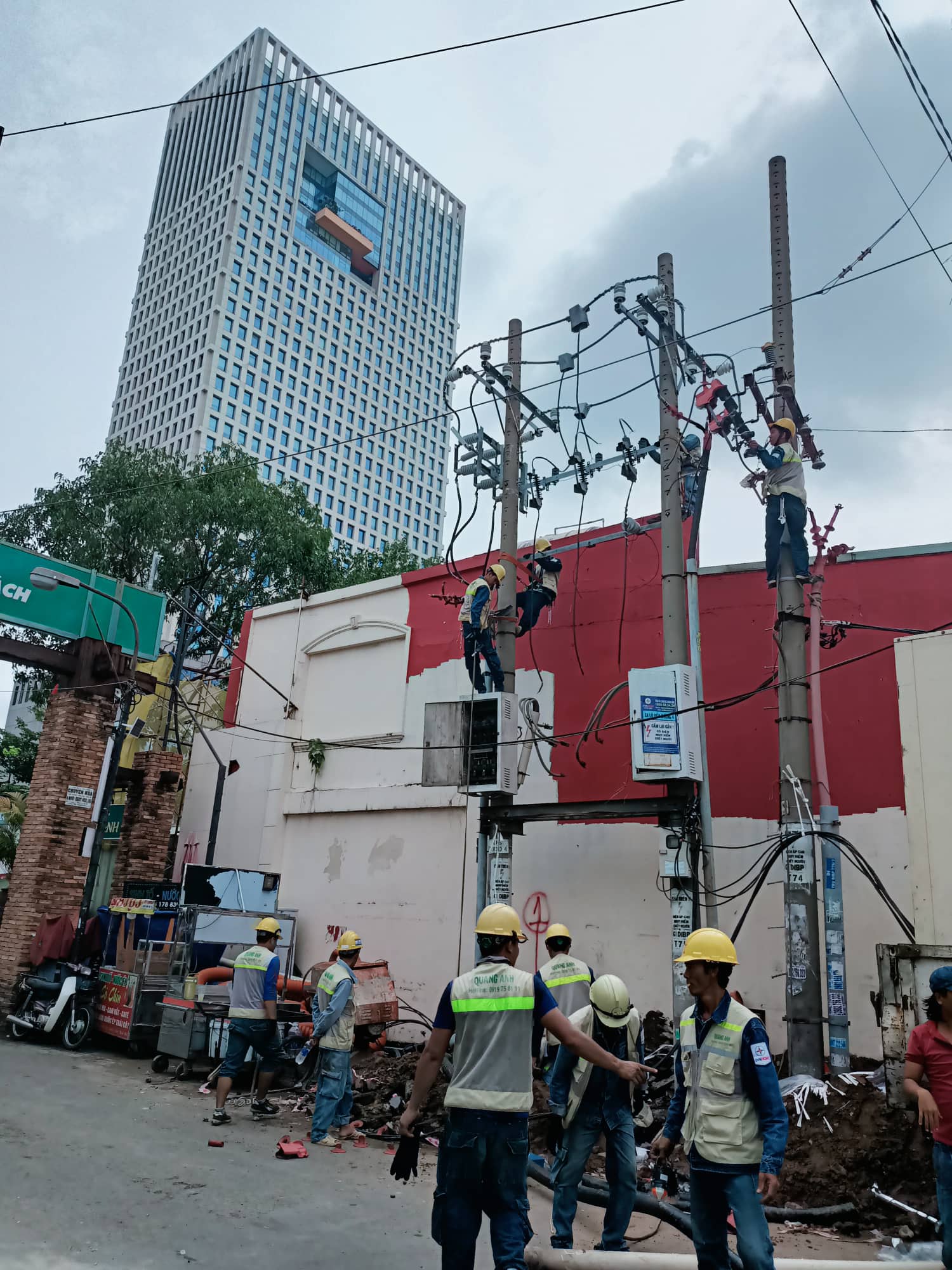
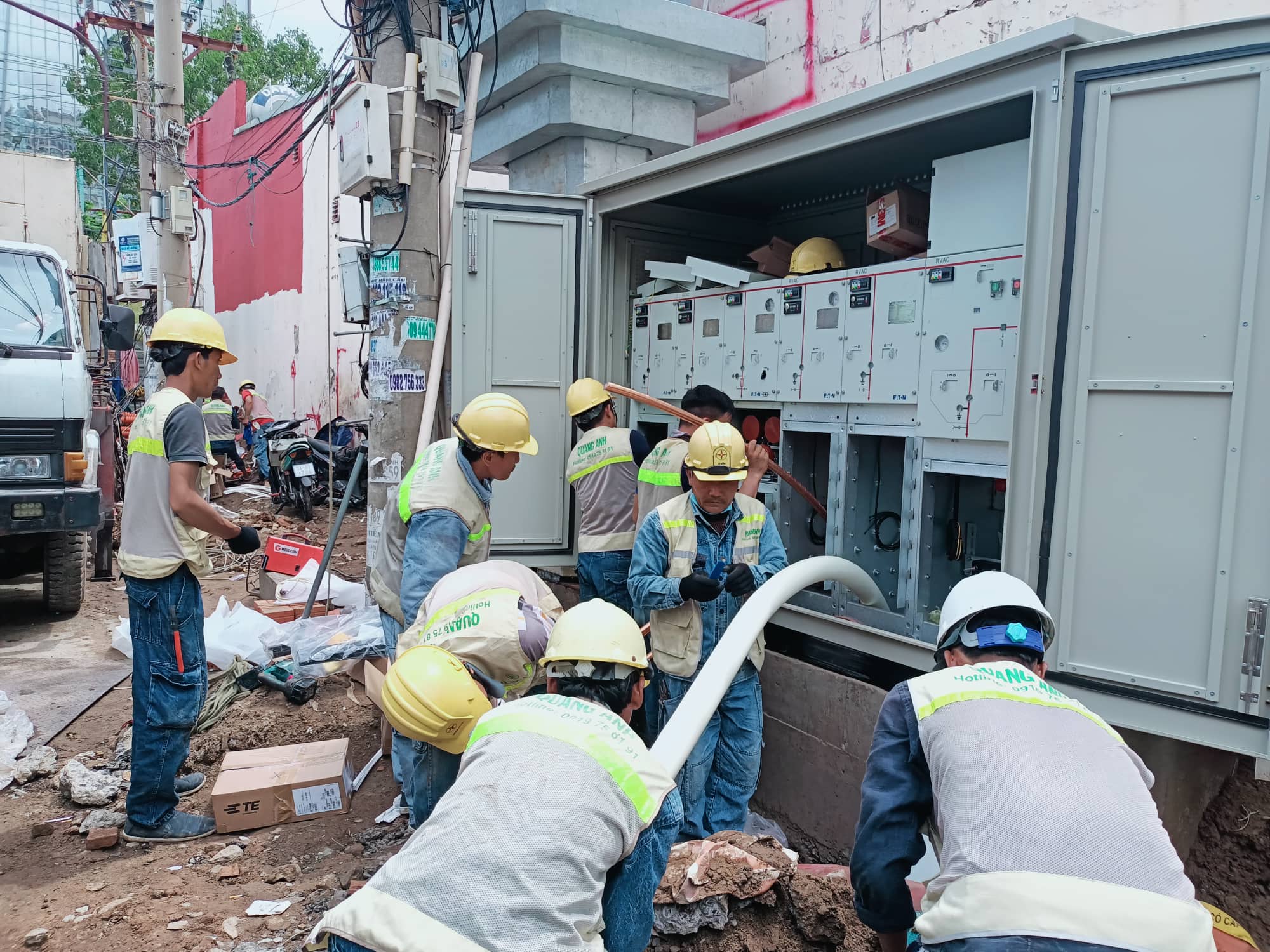
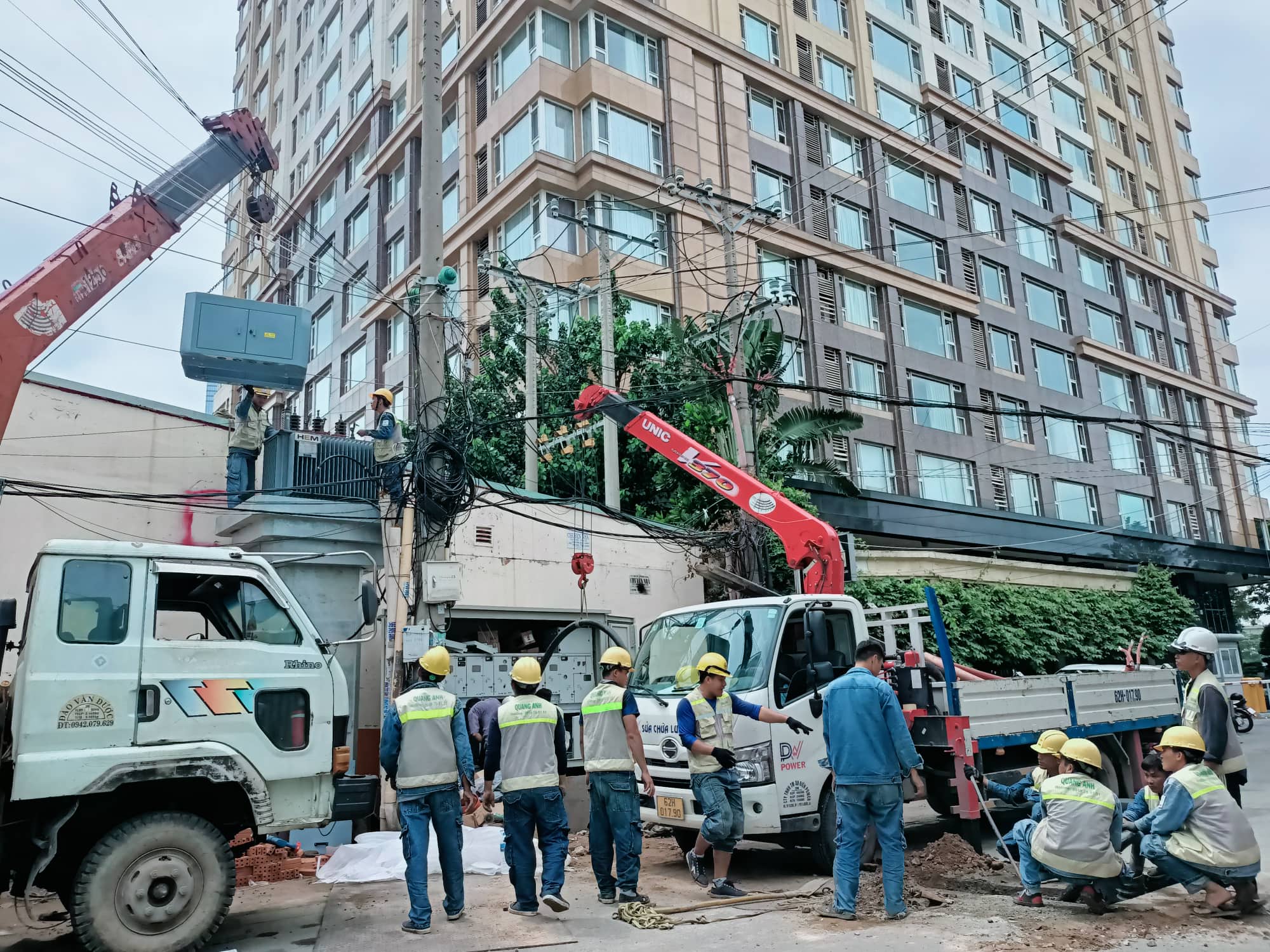
The visual record should include the equipment identifier, location, date, viewing conditions and the document or defect item it supports. Photographs are evidence of what was visible; they do not replace testing, calculations or acceptance records.
QAC construction video: factory substation energization context
QuangAnhcons video archive: energization of a 2,500 kVA transformer station serving an industrial facility. It illustrates the delivery and energization context only; it is not evidence about a prospective leased factory. Watch on YouTube.
Arrange a scope review before committing to the premises
Send the proposed factory location, landlord’s electrical records, your production load schedule and target operating date. QuangAnhcons can review the information gaps and the scope of an appropriate survey and electrical fit-out assessment.
Sources and method
- IEC 60364-6:2016 — official catalogue scope for initial and periodic verification of low-voltage installations; the licensed full text was not reproduced or treated as a Vietnam legal requirement.
- IEC 61936-1:2021 — official catalogue scope for AC power installations above 1 kV; used only to distinguish the need for an appropriate project basis for medium-voltage assets.
- EVNSPC service standards — checked for regional service and customer-side responsibility context. The page applies to EVNSPC’s stated service area and does not establish the arrangement for every industrial park, landlord or electricity supplier.
- Schneider Electric: Installed power and Quality and safety of an electrical installation — technical background only, not a lease clause or a substitute for site-specific verification.
These sources were checked on 3 October 2026. The document requests, comparison matrix and lease interface proposals are editorial recommendations. The worked example uses invented figures and a separate arithmetic check; it is not a verified site assessment. This article does not assert a statutory test interval, a standard clause or an assured utility connection date.
Related Posts
Before Leasing a Factory in Vietnam: Verify the Electrical Supply
Verify capacity, condition and landlord–tenant boundaries before leasing a factory in Vietnam. Use an evidence [...]
Oct
What Are You Really Buying in an Electrical EPC Tender?
Compare electrical EPC tender offers fairly. Use a scope matrix, worked bid example, RFQ wording [...]
Oct
Professional Electrical System Installation Process in Vietnam
As Vietnam’s industrial and urban sectors continue to grow, the need for reliable electrical system [...]
Aug
Find the Best Electrical Contractor Near Me – Your Reliable Partner
Finding a dependable electrical contractor near you is crucial for ensuring the safety and efficiency [...]
Jul
Top Vietnam Electrical Contractor Near You – QuangAnhcons
Finding a reliable electrical contractor is crucial for ensuring the safety and efficiency of your [...]
Jul
Top Vietnam Electrical Contractor Services – Choose QuangAnhcons
When it comes to ensuring the electrical safety and efficiency of your industrial facilities, finding [...]
Jul
Expert MEP Engineering for Industrial Buildings – QuangAnhcons
Efficient MEP (Mechanical, Electrical, and Plumbing) engineering is crucial for the optimal performance of industrial [...]
Jul
Trusted Electrical Contractors – Your Partner in Industrial MEP Solutions
In the rapidly evolving industrial sector, finding reliable MEP contractors is crucial. QuangAnhcons stands out [...]
Jul
MEP Construction Services for Factories – Comprehensive Solutions for Businesses
In the context of modern industry, MEP (Mechanical, Electrical, and Plumbing) construction services for factories [...]
Jul
Top-Notch Industrial Electrical Installation Services
Ensuring the optimal functioning of electrical systems in industrial settings is crucial for operational efficiency [...]
Jul
Professional Low Voltage Electrical Cable Installation and Cable Tray Construction – Enhancing Safety and Aesthetics
Upgrading your electrical systems is crucial for ensuring safety, efficiency, and aesthetics in any industrial [...]
Jul
Top-Quality M&E Construction Services – QuangAnhcons Vietnam
Professional M&E Construction Services – QuangAnhcons QuangAnhcons stands as a premier contractor in the Mechanical [...]
Jul