

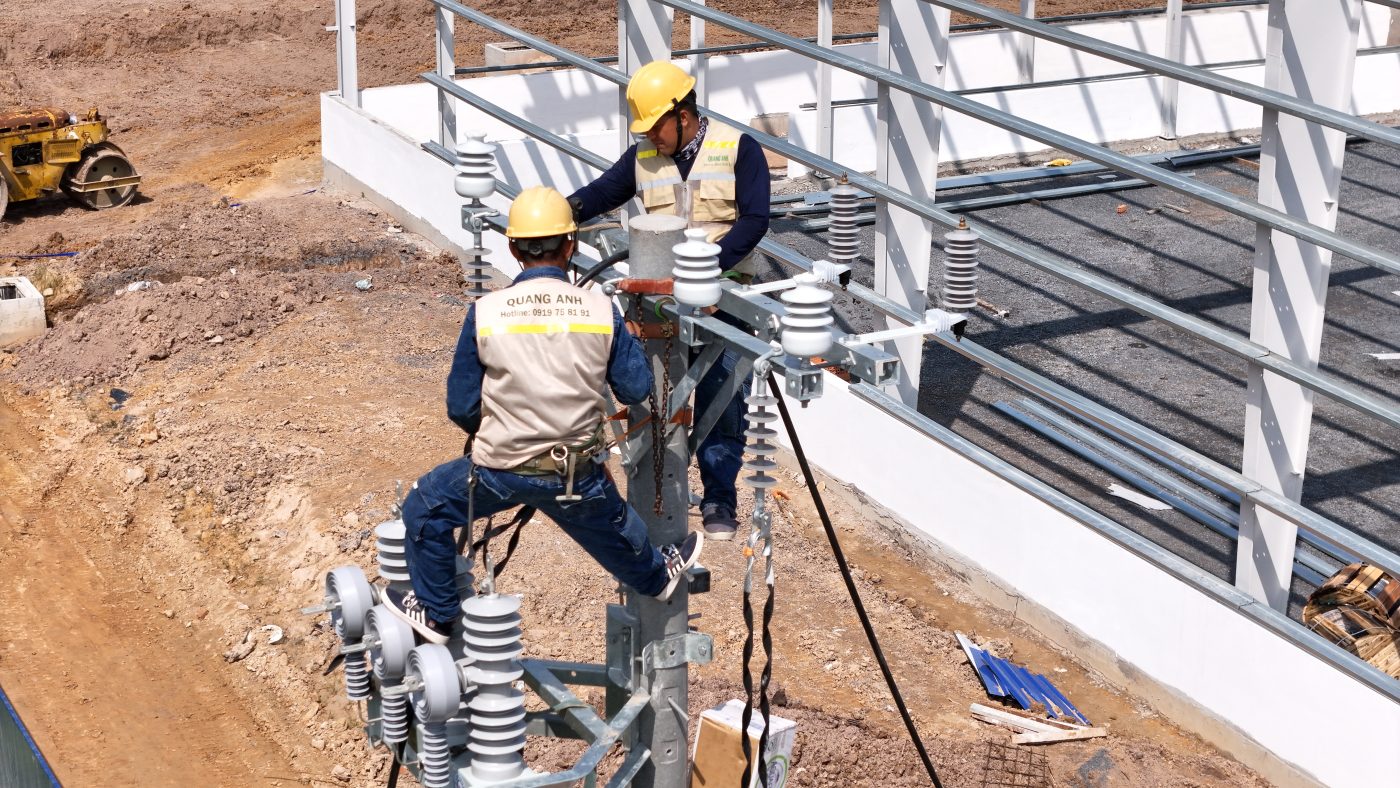
Implementing factory electrical systems is crucial as it directly influences the operational efficiency and safety of production facilities. These systems involve the design, installation, operation, and maintenance of various electrical networks within a factory setting.
Main Power Cable Systems
The foundational step in factory electrical work involves managing the main power cable systems, crucial for supplying power to all equipment. Cables must be scientifically selected to match overall capacity and device-specific requirements, ensuring safe and effective operations. They can be installed on overhead supports or enclosed in underground conduits, requiring precise connections and protection against moisture, especially when encased in PVC.
Implementing Main Power Cable Systems is vital to maintaining factory-wide electrical supply and achieving optimal performance. This involves executing a series of careful and meticulous steps.
Standard procedure includes:
- Site Survey and Design: Initially, conduct a site survey to identify specific requirements and optimal installation locations, then design detailed 2D or 3D cable system layouts.
- Cable Cross-section Selection: Calculate load capacity to choose appropriate cable cross-sections, ensuring cables can handle necessary loads and optimize electrical safety and performance.
- Installation Execution: This step involves installing PVC underground or exposed cables from the transformer to the main electrical panel, ensuring secure and safe placement.
- System Connection: Crucial for system completion, linking cables with the main circuit breaker (MCCB) and the main switchboard (MSB), ensuring standardized and safe electrical connectivity.
Cables can be set up underground (with PCV or metal protection against harsh environmental conditions) or exposed (on poles, supports, suitable for open spaces).
To maintain the cable systems’ stability and safety, regular checks and maintenance are essential, enabling early detection of potential issues and optimizing installation performance.
Implementing main power cable systems ensures secure power supply to the factory, optimizing efficiency and minimizing operational risks.
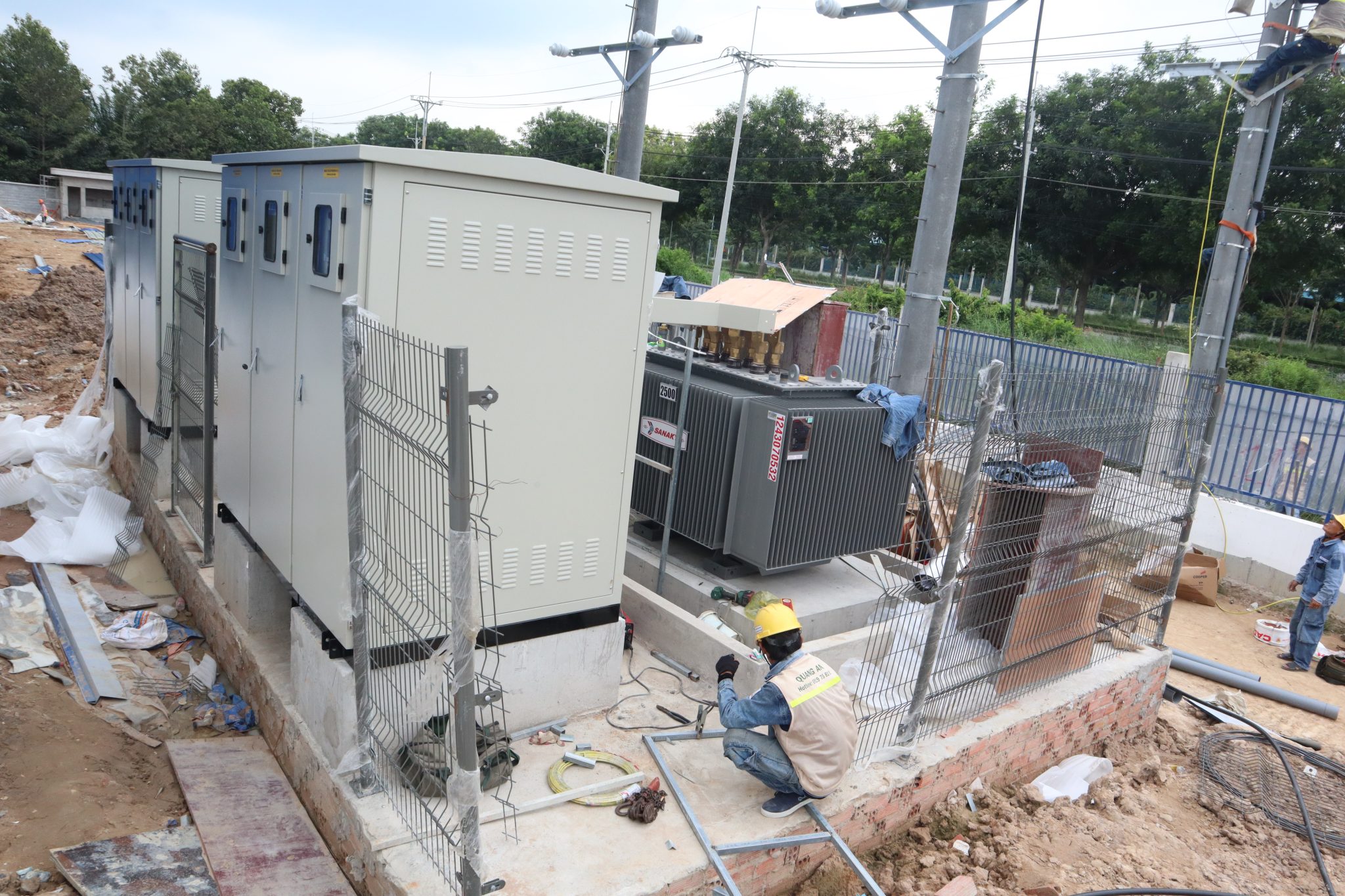
Cable Trays Installation
An essential component of factory electrical work is the installation of cable trays. These facilitate cable routing and protection, ensuring electrical safety and simplifying maintenance. Quality is maintained by utilizing specialized machinery for cutting, and supports must be securely aligned and fixed. Standard height should be below 1.5m for ease of access during maintenance.
Cable tray installation plays a crucial role in cable management and meeting necessary safety standards in electrical projects.
-
Step 1: Preparation and Inspection
- Prepare and ensure all necessary tools and support equipment for the installation process.
- Inspect designs and drawings to ascertain precise positioning and technical specifications of the cable tray system.
- Check machinery readiness and operational stability.
-
Step 2: Cutting and Processing Cable Trays
- Measure and cut cable trays to appropriate lengths, adding 5cm to each piece for adjustment ease.
- Use machinery to smooth edges, ensuring worker safety.
-
Step 3: Cable Tray Route Determination
- Determine installation routes for effective cable management.
- Mark support attachment points precisely, using a marker or specialized equipment.
-
Step 4: Support Attachment
- Drill holes and secure supports to walls or floors firmly.
- Install frame transition joints, ensuring hooks face downward for safety and stability during installation.
-
Step 5: Mounting Cable Trays on Supports
- Begin with end pieces, corners, and branches, then continue with straight sections.
- Ensure trays are securely positioned on transition frame joints.
-
Step 6: Grounding
- Secure grounding wires to the cable trays and inspect ground connections for safety.
- Ensure safety standards are maintained in the cable tray installation system.
-
Step 7: Testing and Evaluation
- Inspect the entire installation process to confirm compliance with technical standards.
- Test the system, ensuring safe and effective operation before commission.
Ensure that all cable segments are securely affixed to the cable trays using plastic ties at optimal intervals of 3m to 1.5m, maintaining system quality and efficiency.
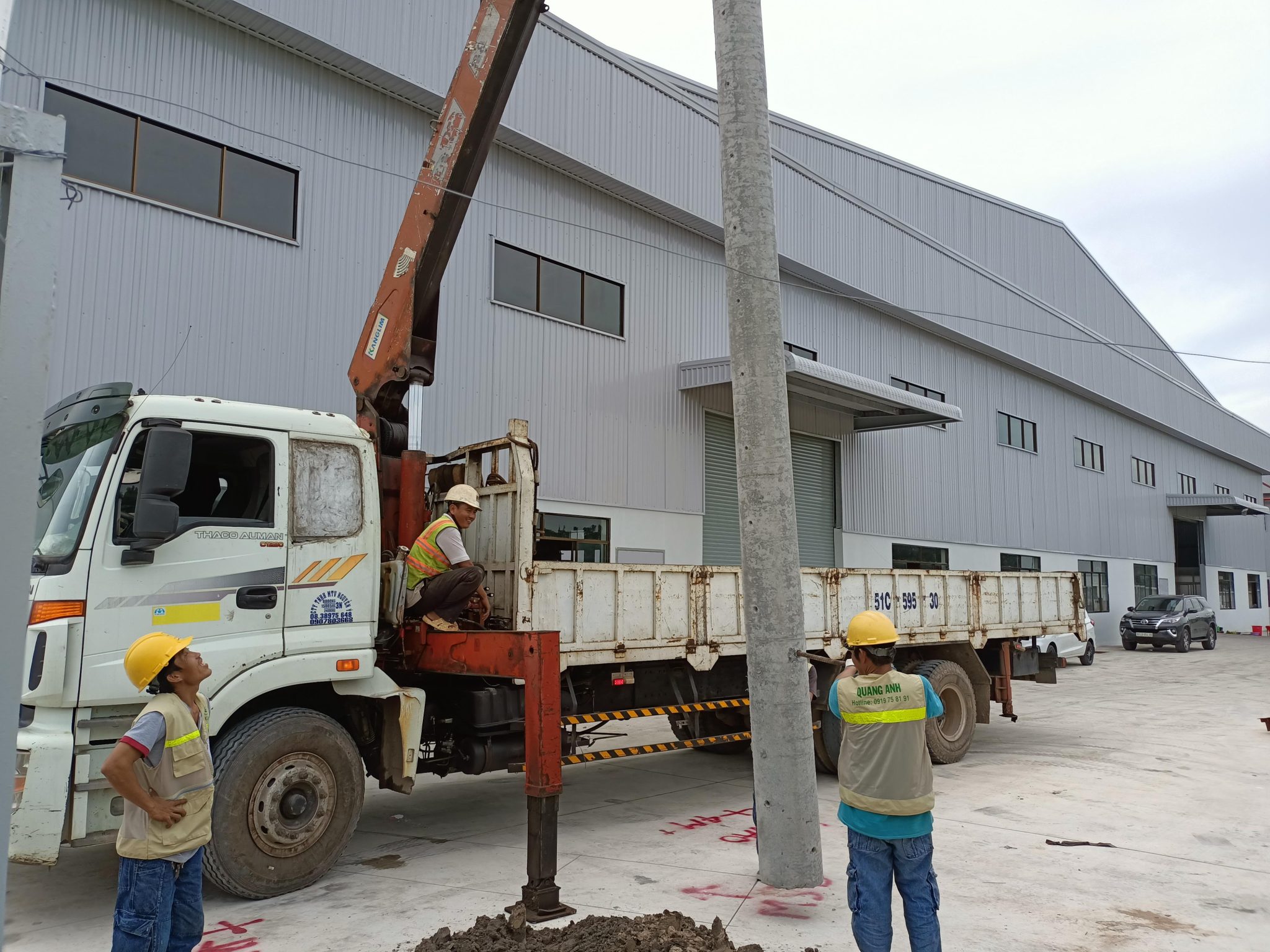
Lighting and Light Electrical Systems
Factory lighting systems must ensure adequate lighting, safety, and energy savings with industrial lights, corridor lights, and emergency lighting. Simultaneously, light electrical systems such as fire alarms, security cameras, and internal networks should be seamlessly integrated to guarantee continuous and efficient operation. These systems are crucial for maintaining security and stability in factory operations.
In the context of project development in Vietnam, industrial lighting and light electrical systems (ELV) have become indispensable elements.
Light Electrical Systems (ELV – Extra Low Voltage System)
Light electrical systems play a significant role in project electrical systems but don’t operate like main electricity. These systems include industrial LAN, security cameras, cable television, and video conferencing, with voltage typically ranging from 35V AC to 60V DC, minimizing factory safety risks. Despite a lower project proportion, these systems significantly enhance project quality and prestige.
Lighting Systems
Lighting systems, part of the ELV, provide essential illumination for industrial spaces. Key components include fluorescent, LED, halogen, and incandescent lights. In production facilities, integrating industrial lighting is necessary to ensure effectiveness and workplace safety.
Comparing Light Electrical and Lighting Systems
| System | Description | Voltage |
|——————————-|———————————————————————-|—————|
| Light Electrical Systems | Includes industrial LAN, cameras, cable TV… | 35V AC – 60V DC |
| Lighting Systems | Part of ELV, providing lighting for spaces. | Typically 220V |
Both systems play indispensable roles in enhancing quality and ensuring smooth operation within construction projects. ELV systems support modern technology, while lighting systems provide essential illumination for daily production activities.
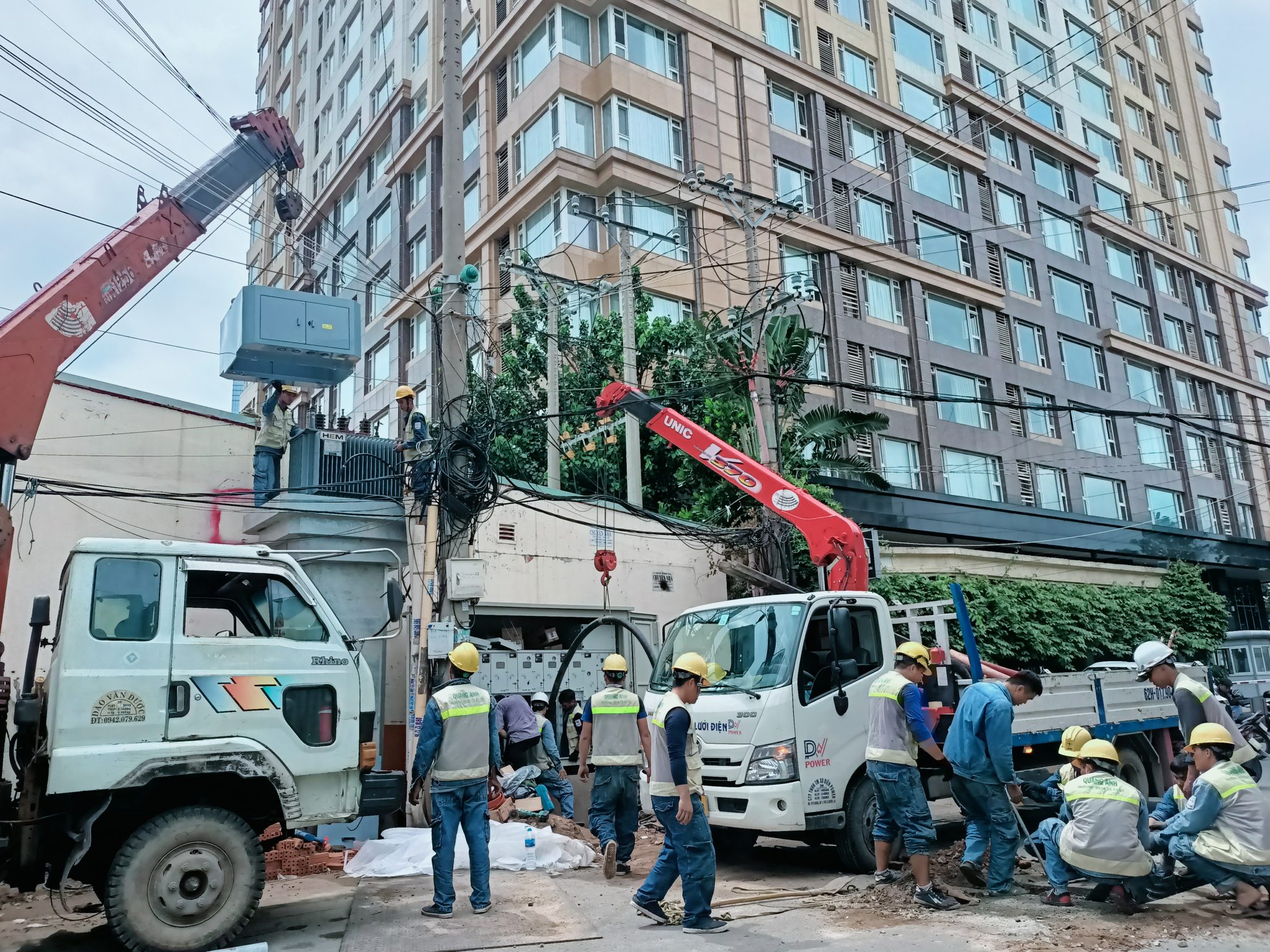
Installing factory electrical systems demands precision and high-level expertise to ensure safety and efficiency. Investing in quality systems not only boosts productivity but also provides long-term asset protection for industrial facilities.
For a factory electrical system installation that meets standards, contact QuangAnhcons at hotline: +84 9 1975 8191 today.
QuangAnhcons offers professional factory electrical system services, ensuring the highest performance and safety from design to installation and comprehensive maintenance.
[contact-form-7 id="7239967" title="Contact form 1"]
Related Posts
Substation Interconnection Documentation: A Practical Preparation Guide for Investors
A hands‑on guide for investors and M&E engineers on the information groups needed in substation [...]
May
Transformer Substation Construction Quote: Cost Components & Key Cost Drivers
Guidance for breaking down a transformer substation construction quote: main cost groups and the common [...]
May
Substation Solutions for Factories: Investing and Implementation Strategies
Overview of factory substations: when to invest, key components, execution processes, documentation, and selecting the [...]
Apr
Transformer Repair in Ho Chi Minh City: When Immediate Action Is Required
Discover signs of transformer damage, diagnostic methods, on-site handling processes, and criteria for selecting repair [...]
Apr
Transformer Repair: Process, Diagnosis, and Decision-Making
Hướng dẫn sửa chữa máy biến áp cho nhà máy: nhận biết dấu hiệu hỏng, [...]
Apr
24-Hour Transformer Repair: Efficient Solutions and Reliable Power Restoration
Khung xử lý sửa chữa máy biến áp 24h cho nhà máy: nhận biết sự [...]
Apr
Common Mistakes in Transformer Station Construction Leading to Extra Costs
Các sai lầm khi làm trạm biến áp thường không nằm ở một hạng mục [...]
Apr
Comprehensive Guide to Acquiring Used Transformers
Góc nhìn kỹ thuật về thu mua TBA cũ: cách đánh giá hiện trạng, hồ [...]
Apr
Comprehensive Transformers Maintenance for Industrial Plants
Tổng quan dịch vụ bảo trì trạm biến áp nhà máy: lịch bảo dưỡng, thí [...]
Apr
Transformers: Assessing and Safely Handling Used Transformers
Khung đánh giá máy biến áp cũ theo tình trạng kỹ thuật, dầu cách điện, [...]
Apr
How Proactive Transformer Maintenance Minimizes Business Risks
Nhìn từ góc độ vận hành nhà máy, bảo trì chủ động trạm biến áp [...]
Apr
Comparing Oil and Dry Transformers in Industrial Projects
Distinguish between oil and dry transformers based on installation site, safety, maintenance, energy losses, initial [...]
Mar
Electrical Overload Warning Signs in Factories
Recognize early indicators of factory electrical overload such as voltage drops, overheating equipment, circuit breaker [...]
Mar
Risks of Overloading Industrial Transformers Without Upgrades
Keeping the same low-voltage transformer while increasing factory loads can result in overheating, insulation degradation, [...]
Mar
Evaluating and Implementing Transformer Contractors in Tay Ninh
Criteria for selecting transformer substation contractors in Tay Ninh, EPC scope, and factors affecting project [...]
Mar
Comparing Oil and Dry Transformers for Industrial Applications
Examine oil and dry transformers based on installation location, fire safety, maintenance, energy loss, investment [...]
Mar
Comprehensive 1500kVA Transformer Station Budget for Manufacturing Facilities
Guidance for creating a detailed budget list for a 1500kVA transformer station, including medium voltage [...]
Mar
Comprehensive Transformer Station Pricing: Elements and Considerations
Examine key components in comprehensive transformer station pricing including design, equipment, construction, testing, and connection [...]
Mar
Pricing Guide for 4000kVA Transformer Stations: Configuration, Cost, and Investment Process
An overview of configuration, cost estimates, connection approaches, and investment checklists for 4000kVA transformer stations [...]
Mar
Pricing and Setup of 3200kVA Transformer Stations: Configuration, Costs, and Investment Procedure
Explore the pricing structure for a 3200kVA transformer station, primary equipment configuration, cost variables, EVN [...]
Mar