

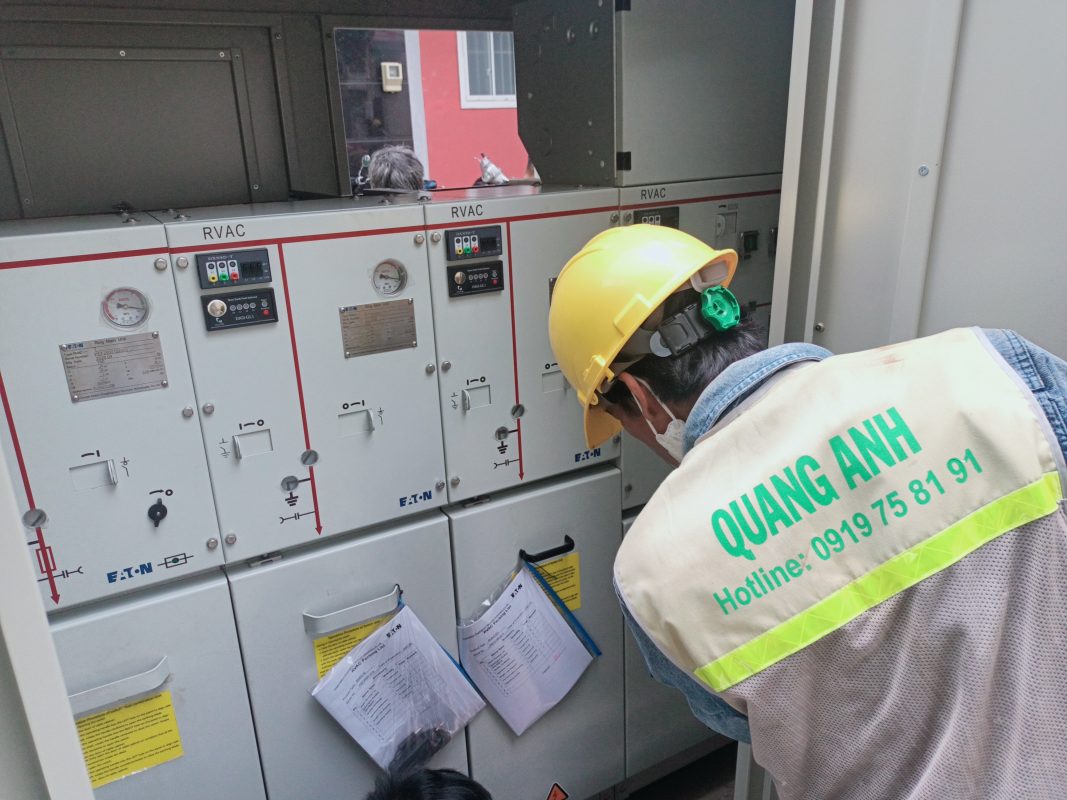
Industrial electrical installation is a complex process requiring professionalism and adherence to stringent safety standards. This process includes equipment preparation, site survey, design drawing, device installation, connection, and testing.
Detailed Process of Industrial Electrical Installation
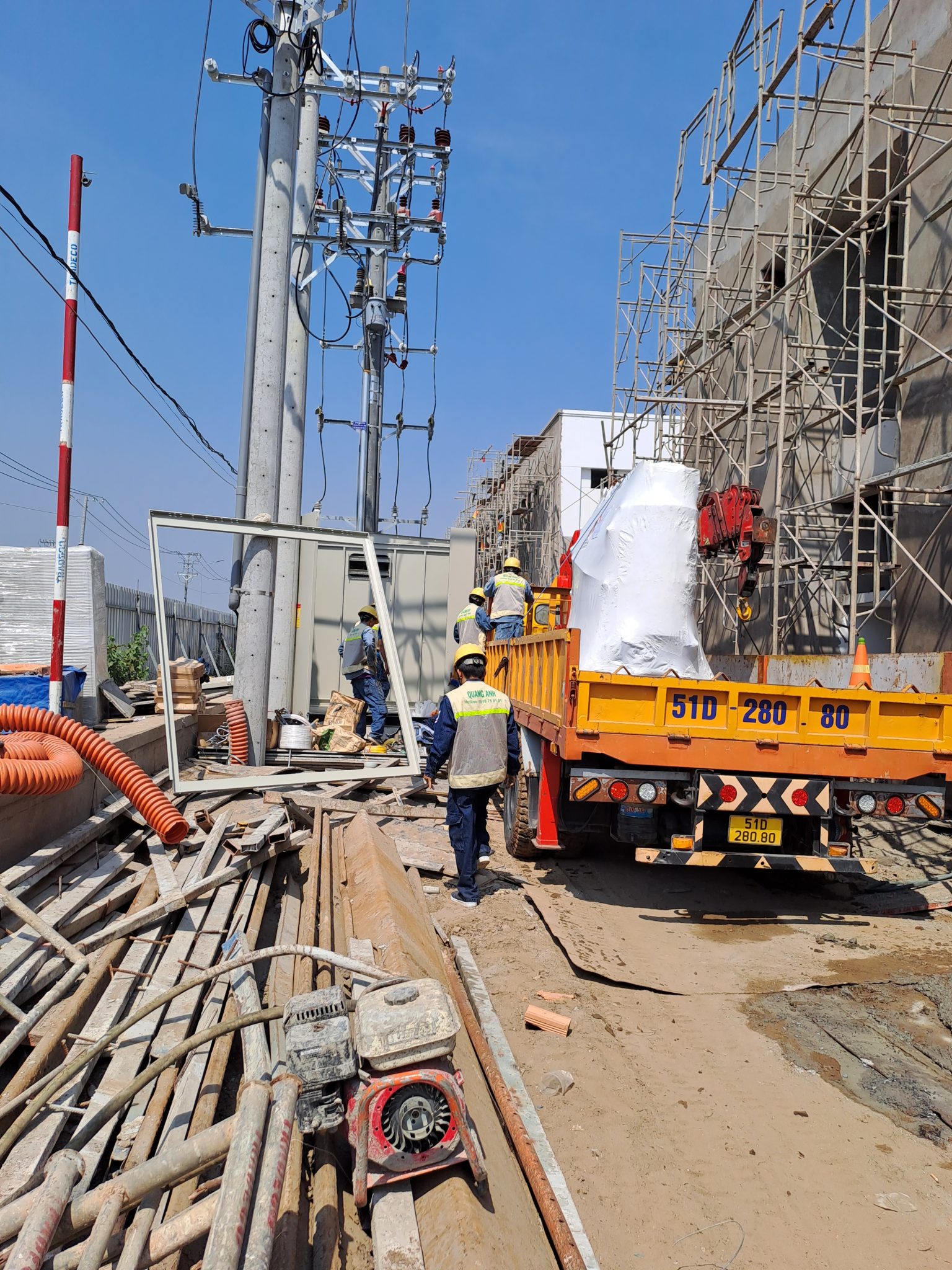
The installation process initiates with the thorough preparation of necessary equipment such as fuses, circuit breakers, transformers, and electrical wires. Following this, a site survey gathers information on installation location, electrical requirements, and specific technical demands. Detailed system design drawings are then created to ensure compliance with industrial electrical standards and meet usage needs. The last step involves installing the electrical devices onto designated locations, followed by system connections for stable operation.
Equipment Preparation and Information Collection
- Equipment preparation: Prior to installation, it is necessary to ensure all machinery, tools, and electrical materials like fuses, circuit breakers, and wires from reputable brands such as Cadivi, Schneider, and Mitsubishi are available.
- Information collection: Conducting a site survey is crucial to understand the technical requirements and project specifics, aiding in the effective system design.
Design Drawing of Industrial Electrical Systems
- Design drawing: Utilizing survey data to create detailed electrical system drawings that comply with technical symbols and industry language.
- Safety evaluation: Thoroughly check the drawings to ensure they meet safety standards and efficient system operation.
Construction Installation of Electrical Systems
- Execution by design: Install electrical equipment precisely according to approved designs to ensure accuracy and efficiency during operation.
- Safety assurance: Adhere to safety standards throughout the installation process to prevent untoward incidents.
Inspection and Testing
- Trial run: Conduct a complete system check to ensure it operates safely and reliably.
- Acceptance and handover: Upon fulfillment of requirements, proceed with handover and guide customers on operational procedures.
Warranty and Maintenance
- Warranty phase: Offer comprehensive warranty policies and support, ensuring repair services if issues arise.
- Industrial electrical maintenance: Provide periodic maintenance services to sustain system stability and prolong lifespan.
Following this process guarantees the industrial electrical system’s efficiency and utmost safety, catering to business needs.
Guide to Installing Industrial Electrical Cabinets
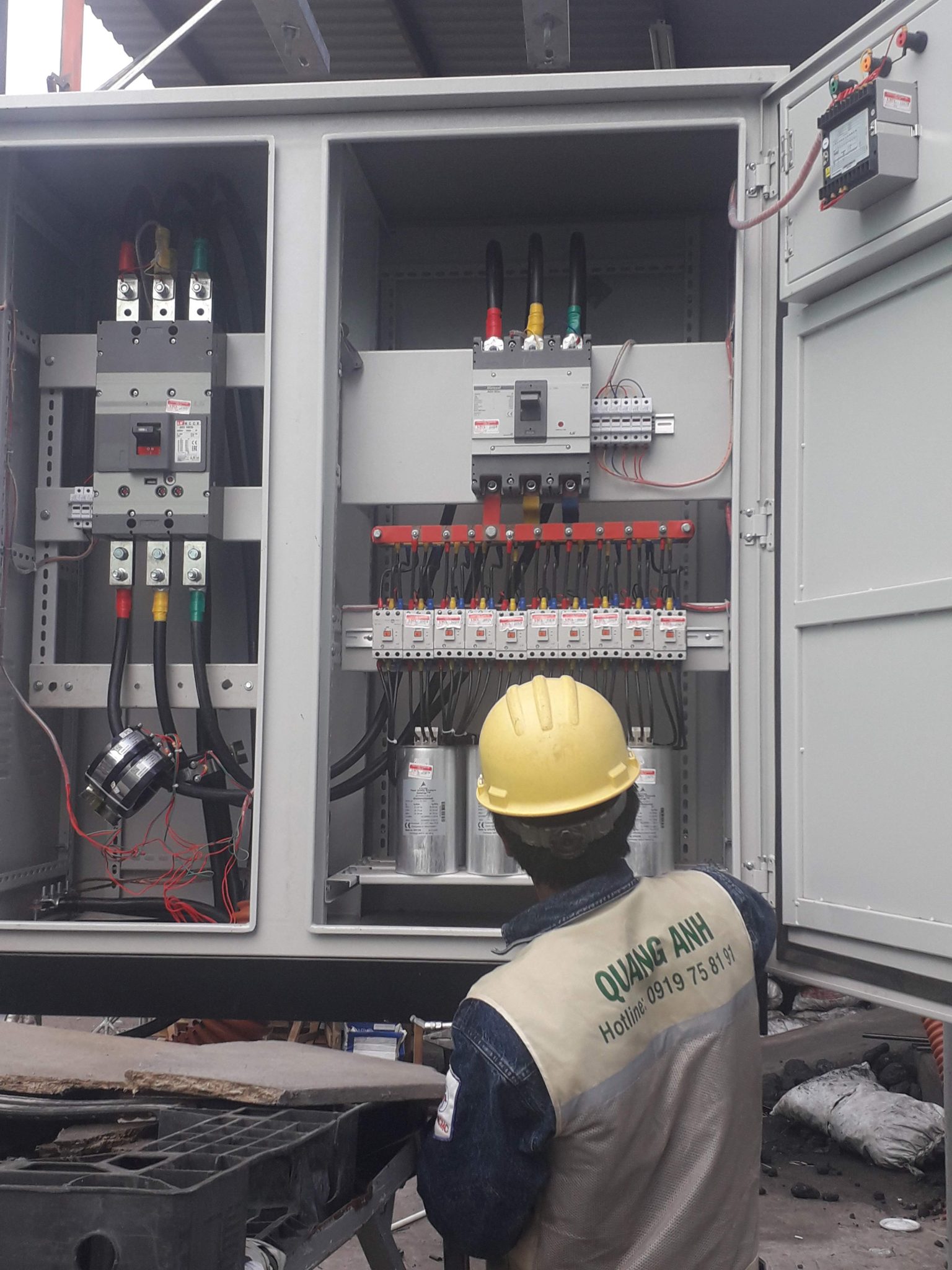
The installation of electrical cabinets begins with reading and cross-referencing drawings and material lists. Next, equipment installation according to the design is crucial, where main circuit breakers should be placed at the top left corner, and devices like fuses and phase protection units on the right. Other devices like branch circuits, control systems, relays, and contactors are sequentially arranged below. Labeling the devices within the cabinet facilitates future management and maintenance.
The assembly of industrial electrical cabinets demands meticulous attention to ensure stable and safe operations within industrial environments. This includes steps from preparing equipment to testing and running operations.
- Preparation of Equipment and Materials: All necessary equipment such as cable trays, power and control devices, indicator lights, buttons, switches, HMIs, and Volt, Amp meters must be thoroughly checked against the material list to confirm availability.
- Understanding Drawings and Material Lists: The ability to read detailed drawings and material lists is critical. Engineers must understand the placement and arrangement of cabinet components according to the electrical diagram.
- Cabinet Frame Installation: The installation location must be dry, avoiding moisture or impact. The cabinet frame is securely fixed to the wall or floor, and cable trays need precise installation.
- Mounting Components into Cabinets: Electrical conduits should be cut to size and installed as per drawings; power and control devices need appropriate anchoring. Especially, door-mounted devices should be installed post punch-hole setup.
- Electrical Device Connections: Breaking devices are installed following schematic principles. Electrical wiring must be done precisely to guarantee all components function correctly.
- Testing and Operation: A comprehensive system test is conducted before trial operation, ensuring all connections are secure and systems are functioning stably.
Standards and Technical Requirements in Industrial Electrical Installation
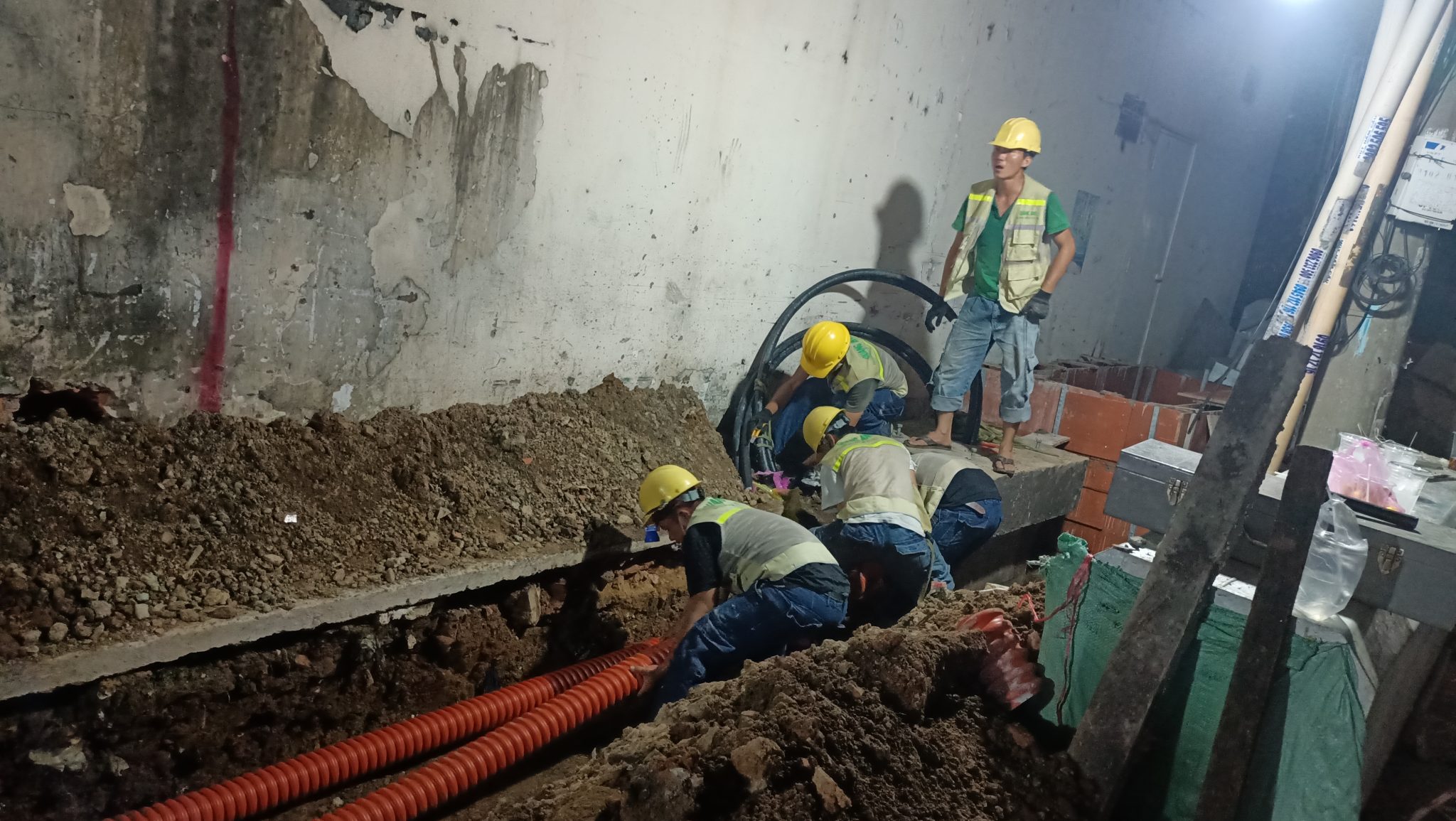
Adhering to safety standards is paramount in industrial electrical installations to protect users and equipment. Systems must meet comprehensive industrial electrical standards and be reliable and easy to maintain. This involves meticulous preparation and execution from design to post-installation inspections.
Industrial electrical installation requires adherence to national and international standards to ensure electrical safety and system effectiveness.
- National Standard TCVN 9208:2012: This standard governs the installation of cables and wires up to 24 kV, offering guidance on cable layout within tray structures, conduits, or underground.
- Cable Installation: Installation must be precise, adhering to TCVN 9207:2012, ensuring system stability.
International Standards
- IEC 60439-1: Sets requirements for cabinets to safeguard and enhance system features. Ensures cable installation and other cabinet components meet stringent safety and efficiency criteria.
- Circuit Breakers: Under IEC 60947-2, these devices must operate reliably in harsh industrial settings.
Technical Requirements in Design and Construction
- Power Calculation: Ensuring balanced power distribution to all required devices and machines for optimal system operation.
- Design Drawings: Drawings should be clear and detailed, applying correct electrical engineering symbols.
- Equipment Selection: Follow national standards such as TCVN 7447-5-51:2010 for appropriate electrical equipment selection.
- Electrical Equipment Installation Design: As guided by TCVN 394:2007 for maximum maintenance and operational efficiency.
- Industrial Electrical Safety: Prioritize by strictly adhering to regulations QCVN 01:2008/BCT.
Requirements for the Engineering Team
The engineering team must possess high expertise in industrial electrical project design and execution. Choosing a reputable partner ensures the sustainable success of the system.
Industrial electrical installations bring tremendous technical and strategic benefits, as all steps from design to construction, maintained at high standards, ensure safety and operational efficiency, thereby enhancing system productivity and lifespan.
Contact QuangAnhcons via hotline +84 9 1975 8191 for consultation and premium standard industrial electrical installation services.
QuangAnhcons provides professional industrial electrical installation services, ensuring quality and compliance with the highest safety standards, helping businesses optimize their electrical systems and enhance efficiency.
[contact-form-7 id="7239967" title="Contact form 1"]
Related Posts
Substation Interconnection Documentation: A Practical Preparation Guide for Investors
A hands‑on guide for investors and M&E engineers on the information groups needed in substation [...]
May
Transformer Substation Construction Quote: Cost Components & Key Cost Drivers
Guidance for breaking down a transformer substation construction quote: main cost groups and the common [...]
May
Substation Solutions for Factories: Investing and Implementation Strategies
Overview of factory substations: when to invest, key components, execution processes, documentation, and selecting the [...]
Apr
Transformer Repair in Ho Chi Minh City: When Immediate Action Is Required
Discover signs of transformer damage, diagnostic methods, on-site handling processes, and criteria for selecting repair [...]
Apr
Transformer Repair: Process, Diagnosis, and Decision-Making
Hướng dẫn sửa chữa máy biến áp cho nhà máy: nhận biết dấu hiệu hỏng, [...]
Apr
24-Hour Transformer Repair: Efficient Solutions and Reliable Power Restoration
Khung xử lý sửa chữa máy biến áp 24h cho nhà máy: nhận biết sự [...]
Apr
Common Mistakes in Transformer Station Construction Leading to Extra Costs
Các sai lầm khi làm trạm biến áp thường không nằm ở một hạng mục [...]
Apr
Comprehensive Guide to Acquiring Used Transformers
Góc nhìn kỹ thuật về thu mua TBA cũ: cách đánh giá hiện trạng, hồ [...]
Apr
Comprehensive Transformers Maintenance for Industrial Plants
Tổng quan dịch vụ bảo trì trạm biến áp nhà máy: lịch bảo dưỡng, thí [...]
Apr
Transformers: Assessing and Safely Handling Used Transformers
Khung đánh giá máy biến áp cũ theo tình trạng kỹ thuật, dầu cách điện, [...]
Apr
How Proactive Transformer Maintenance Minimizes Business Risks
Nhìn từ góc độ vận hành nhà máy, bảo trì chủ động trạm biến áp [...]
Apr
Comparing Oil and Dry Transformers in Industrial Projects
Distinguish between oil and dry transformers based on installation site, safety, maintenance, energy losses, initial [...]
Mar
Electrical Overload Warning Signs in Factories
Recognize early indicators of factory electrical overload such as voltage drops, overheating equipment, circuit breaker [...]
Mar
Risks of Overloading Industrial Transformers Without Upgrades
Keeping the same low-voltage transformer while increasing factory loads can result in overheating, insulation degradation, [...]
Mar
Evaluating and Implementing Transformer Contractors in Tay Ninh
Criteria for selecting transformer substation contractors in Tay Ninh, EPC scope, and factors affecting project [...]
Mar
Comparing Oil and Dry Transformers for Industrial Applications
Examine oil and dry transformers based on installation location, fire safety, maintenance, energy loss, investment [...]
Mar
Comprehensive 1500kVA Transformer Station Budget for Manufacturing Facilities
Guidance for creating a detailed budget list for a 1500kVA transformer station, including medium voltage [...]
Mar
Comprehensive Transformer Station Pricing: Elements and Considerations
Examine key components in comprehensive transformer station pricing including design, equipment, construction, testing, and connection [...]
Mar
Pricing Guide for 4000kVA Transformer Stations: Configuration, Cost, and Investment Process
An overview of configuration, cost estimates, connection approaches, and investment checklists for 4000kVA transformer stations [...]
Mar
Pricing and Setup of 3200kVA Transformer Stations: Configuration, Costs, and Investment Procedure
Explore the pricing structure for a 3200kVA transformer station, primary equipment configuration, cost variables, EVN [...]
Mar