


The installation of an industrial electrical system is a complex process requiring precision and compliance with technical standards to ensure safety and performance.
Preparing Essential Equipment for Industrial Electrical Systems
Industrial electrical system installation requires transformers to adjust voltage levels, along with various industrial control units for distribution and management of electricity. The calculation of cable requirements is crucial in ensuring adequate power supply. Safety devices like circuit breakers and relays are necessary to protect and secure the system from faults.
Preparing essential equipment is vital to building an efficient and stable industrial electrical system, ensuring optimal power supply and management.
-
Substations and Medium/Low Voltage Control Units:
Substations are pivotal in adapting various voltage levels to meet the system’s needs. Medium and low voltage control units distribute power across different areas and equipment, optimizing production operations. -
Distribution Control Units:
Distribution control units (DB) supply power to various consumption areas, and control units regulate machinery, enhancing operational efficiency. -
Generators and Switchgear:
Generators serve as backup power sources, ensuring uninterrupted factory operations during grid failures. Switchgear ensures seamless transitions between primary and backup power sources. -
Electrical Power Devices:
Utilizing motors, pumps, and compressors is essential for operating machinery, enhancing production processes, and reducing energy costs. -
Low-Voltage Systems:
These systems mainly supply power for lighting, HVAC, and communications. Designed for low-voltage use, typically single-phase or 220V, they support auxiliary yet vital operations. -
Operational and Safety Systems:
Establishing a comprehensive operational and safety monitoring system is critical to ensuring the entire electrical system’s efficient operation, mitigating potential electrical hazards.
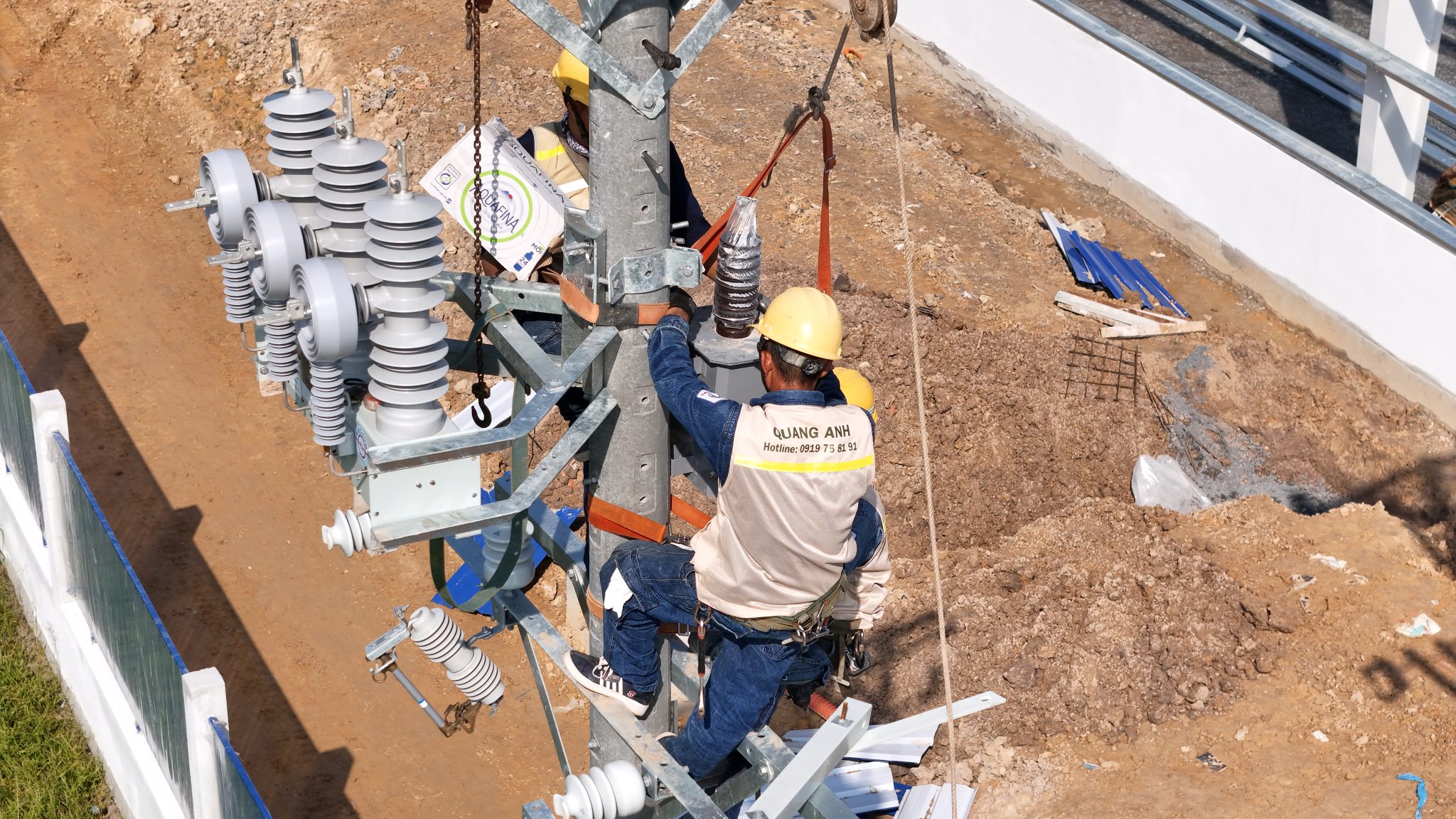
Designing an Industrial Electrical System
Accurate calculation of equipment and machinery power consumption is essential for suitable equipment selection. Designing high and low voltage networks is crucial in transmitting electricity from the national grid to the factory, ensuring a supply for devices under 1kV.
Designing an industrial electrical system is a core component of industrial infrastructure, optimized to ensure the safety and efficiency of equipment and machinery in production settings.
Calculating Total Power Consumption
It begins with calculating the total power consumption of all equipment and machinery, essential for selecting appropriate technical solutions. Accurate power assessment aids in choosing suitable cables and transformers from reputable brands like ABB or Schneider to ensure stability.
High Voltage System Design
The high voltage network is responsible for transmitting electricity from the national grid to the factory. A detailed design of this system is critical to maintaining consistent and safe power transmission. Arranging high-voltage lines and substations logically enhances electrical efficiency.
Low Voltage Network Design
The low voltage network, operating below 1kV, requires strategic installation of control units to be safe and efficient. This ensures optimal power distribution to factory equipment, facilitating smooth production operations.
Lighting System Design
Industrial lighting systems must be designed to provide sufficient illumination without wasting energy. Insufficient or excessive lighting can adversely affect production, so careful planning achieves balance.
Preliminary Design and Approval Process
The preliminary design phase includes comprehensive modeling and layout of installation areas and equipment. Submitted designs must be clear and accurate in proportion. Once complete, approval from clients is necessary to adjust details for practical application and cost optimization.
Designing industrial electrical systems involves integrating power consumption calculations with network layouts, requiring continual refinement and approval to ensure uninterrupted operations and long-term cost savings.
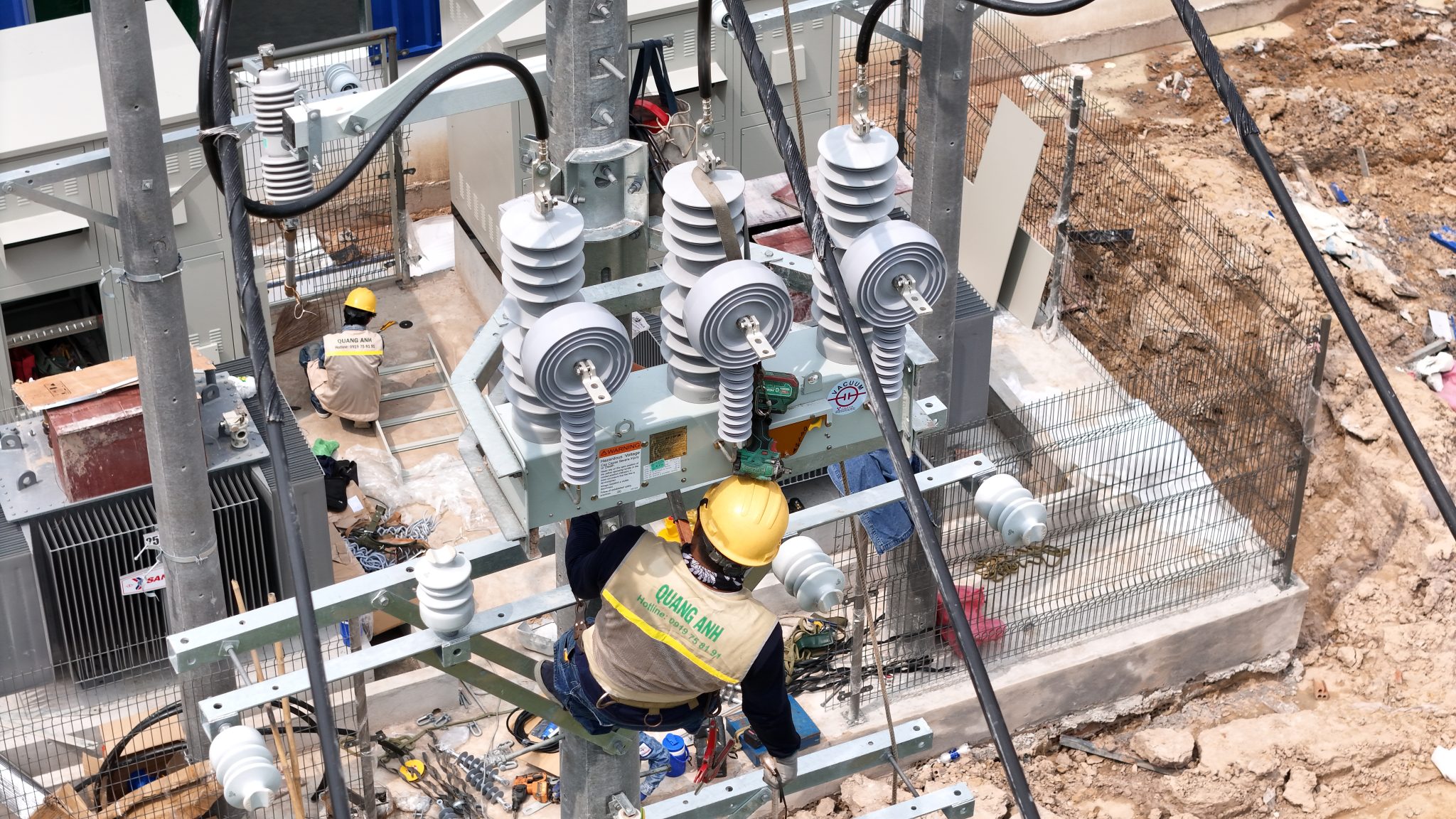
Installation and Implementation of Industrial Electrical Systems
Executing source cable systems following the transformer station requires careful cable ladder installation for securing and shielding. Industrial control units need precise installation as they are central to power distribution and control. Light electrical systems like fire alarms and lighting are also critical.
The installation and implementation of industrial electrical systems demand not only technical skills but strict adherence to engineering standards. Key steps are essential to ensure system stability and safety.
Calculating Total Power and System Design
- Calculate total power consumption: Start designing the electrical system by calculating total consumption, ensuring suitable equipment selection such as transformers from brands like Thibidi or ABB.
- Design high and low voltage networks: High voltage networks must maintain stability, whereas low voltage networks (below 1kV) require meticulous planning to align with production demands.
- Design lighting and light electrical systems: Lighting systems should optimize energy, ensuring adequate illumination without resource wastage.
Equipment Preparation
Industrial electrical system installations need specialized equipment such as industrial control units and cables from brands like Cadivi or Schneider, along with safety devices like circuit breakers. These are crucial for protecting and efficiently operating power systems.
Light Electrical and Cable Systems Installation
- Install main source cables: Cables should be buried within metal or PVC pipes for safety and durability.
- Install cable ladders: Cable ladders are essential for securing large wires, ensuring orderliness and maximum protection.
- Install industrial control units: As the distribution hub, they must be carefully established to ensure effective and safe operation.
Lighting Systems Implementation
Light electrical systems include various technologies like fire alarms, crucial for safety assurance.
Inspection and Approval
Post-installation checks and approvals are mandatory to ensure systems meet safety and performance standards before official operation.
Throughout installation, adherence to principles such as:
- Occupational safety and equipment security.
- Strict compliance with technical standards and professional procedures.
- Optimization of costs and operational efficiency.
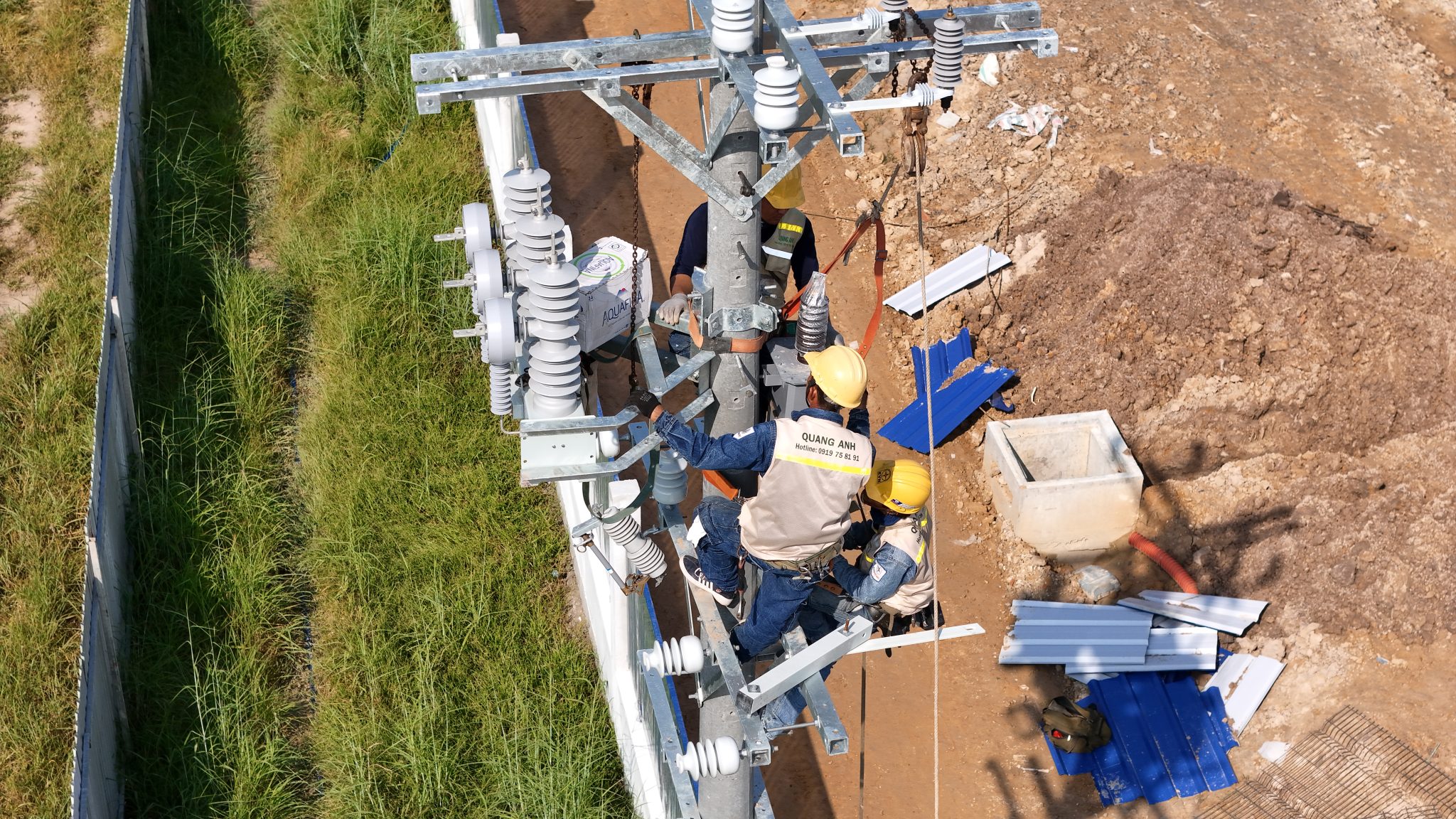
The installation of an industrial electrical system not only ensures the safety and efficiency of production processes but is also a strategic investment that must be executed properly. Technical preparations and regular maintenance are key to determining system performance and longevity.
For a safe and efficient electrical system installation, contact QuangAnhcons at +84 9 1975 8191.
QuangAnhcons offers expert industrial electrical system installation services, including comprehensive design, implementation, and maintenance, ensuring maximum safety and efficiency.
[contact-form-7 id="7239967" title="Contact form 1"]
Related Posts
Substation Interconnection Documentation: A Practical Preparation Guide for Investors
A hands‑on guide for investors and M&E engineers on the information groups needed in substation [...]
May
Transformer Substation Construction Quote: Cost Components & Key Cost Drivers
Guidance for breaking down a transformer substation construction quote: main cost groups and the common [...]
May
Substation Solutions for Factories: Investing and Implementation Strategies
Overview of factory substations: when to invest, key components, execution processes, documentation, and selecting the [...]
Apr
Transformer Repair in Ho Chi Minh City: When Immediate Action Is Required
Discover signs of transformer damage, diagnostic methods, on-site handling processes, and criteria for selecting repair [...]
Apr
Transformer Repair: Process, Diagnosis, and Decision-Making
Hướng dẫn sửa chữa máy biến áp cho nhà máy: nhận biết dấu hiệu hỏng, [...]
Apr
24-Hour Transformer Repair: Efficient Solutions and Reliable Power Restoration
Khung xử lý sửa chữa máy biến áp 24h cho nhà máy: nhận biết sự [...]
Apr
Common Mistakes in Transformer Station Construction Leading to Extra Costs
Các sai lầm khi làm trạm biến áp thường không nằm ở một hạng mục [...]
Apr
Comprehensive Guide to Acquiring Used Transformers
Góc nhìn kỹ thuật về thu mua TBA cũ: cách đánh giá hiện trạng, hồ [...]
Apr
Comprehensive Transformers Maintenance for Industrial Plants
Tổng quan dịch vụ bảo trì trạm biến áp nhà máy: lịch bảo dưỡng, thí [...]
Apr
Transformers: Assessing and Safely Handling Used Transformers
Khung đánh giá máy biến áp cũ theo tình trạng kỹ thuật, dầu cách điện, [...]
Apr
How Proactive Transformer Maintenance Minimizes Business Risks
Nhìn từ góc độ vận hành nhà máy, bảo trì chủ động trạm biến áp [...]
Apr
Comparing Oil and Dry Transformers in Industrial Projects
Distinguish between oil and dry transformers based on installation site, safety, maintenance, energy losses, initial [...]
Mar
Electrical Overload Warning Signs in Factories
Recognize early indicators of factory electrical overload such as voltage drops, overheating equipment, circuit breaker [...]
Mar
Risks of Overloading Industrial Transformers Without Upgrades
Keeping the same low-voltage transformer while increasing factory loads can result in overheating, insulation degradation, [...]
Mar
Evaluating and Implementing Transformer Contractors in Tay Ninh
Criteria for selecting transformer substation contractors in Tay Ninh, EPC scope, and factors affecting project [...]
Mar
Comparing Oil and Dry Transformers for Industrial Applications
Examine oil and dry transformers based on installation location, fire safety, maintenance, energy loss, investment [...]
Mar
Comprehensive 1500kVA Transformer Station Budget for Manufacturing Facilities
Guidance for creating a detailed budget list for a 1500kVA transformer station, including medium voltage [...]
Mar
Comprehensive Transformer Station Pricing: Elements and Considerations
Examine key components in comprehensive transformer station pricing including design, equipment, construction, testing, and connection [...]
Mar
Pricing Guide for 4000kVA Transformer Stations: Configuration, Cost, and Investment Process
An overview of configuration, cost estimates, connection approaches, and investment checklists for 4000kVA transformer stations [...]
Mar
Pricing and Setup of 3200kVA Transformer Stations: Configuration, Costs, and Investment Procedure
Explore the pricing structure for a 3200kVA transformer station, primary equipment configuration, cost variables, EVN [...]
Mar