

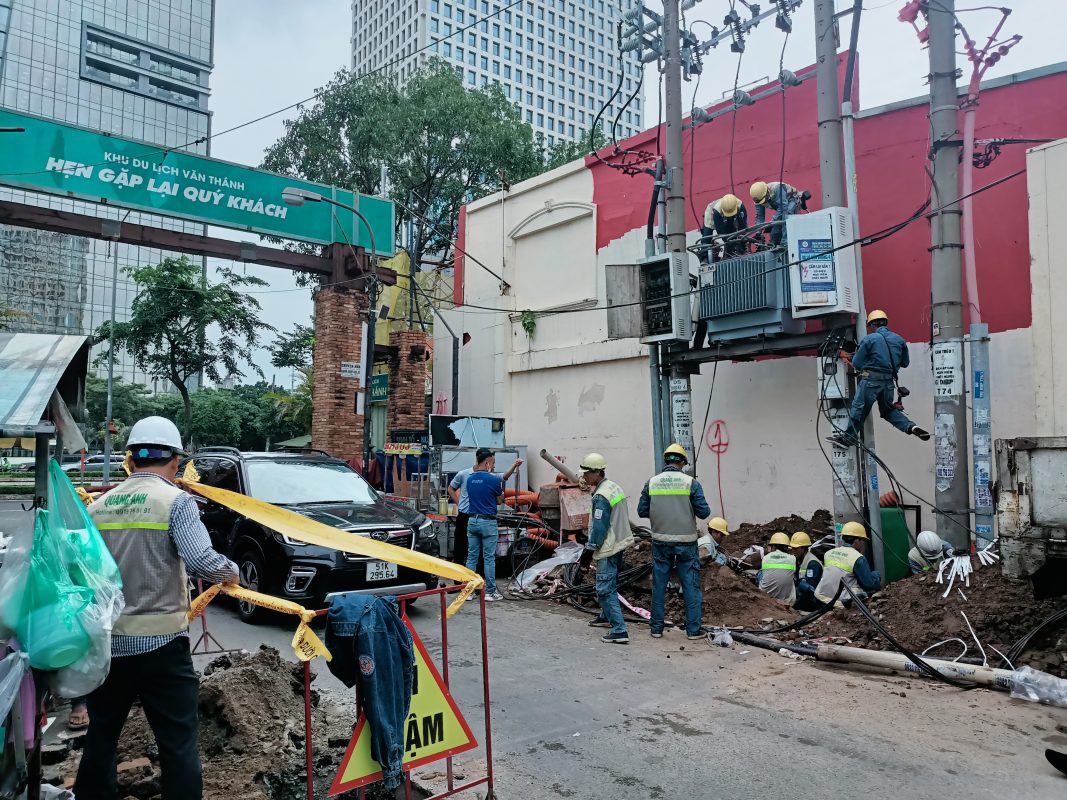
- Clearly differentiates equipment costs from construction, cable, connection, and documentation expenses.
- Presents typical 2500kVA configurations, comparing oil transformers, dry transformers, RMU, low-voltage cabinets, and reactive power compensation.
- Explains when to choose kiosk stations, outdoor ground stations, indoor stations, single circuits versus medium-voltage rings.
- Highlights factors that significantly impact costs like terrain, cable routes, power cut schedules or hotlines, progress, and construction conditions.
- Supports investors in assessing contractor capabilities before finalizing EPC plans and energization schedules.
- Plant investors planning new or expanded loads around 2500kVA.
- Technical, maintenance, EHS, or project management teams reviewing station configurations before requesting quotes.
- Procurement teams needing to itemize elements for comparing quotes from turnkey contractors.
When should you read this?
- When estimating initial budgets for a 2500kVA transformer station without finalized designs.
- When deciding between oil and dry transformers, RMU, and suitable field cut-off options.
- When preparing documentation, construction schedules, connection plans, and energization conditions with power companies.
- 1. Investment Framework and 2500kVA Transformer Station Scope for Plants
- 2. Main Equipment Configuration: 2500kVA Transformer, Medium Voltage, Low Voltage, and Reactive Compensation
- 3. RMU Cabinets and AFLR Classification: Necessity, Benefits, and Key Details
- 4. Cost Factors Causing Huge Variations in 2500kVA Station Pricing
- 5. Comparing Solutions by Station Type, Cable Route, and Field Conditions
- 6. Practical Implementation Process from Surveying to Energization
- 7. Common Mistakes When Requesting Quotes and Investing in 2500kVA Stations
- 8. Checklist for Selecting EPC Contractors and Matching Real Capabilities
For a 2500kVA transformer station, cost discrepancies often arise not from individual equipment but from the entire strategy: station type, medium voltage schematics, connection methods, construction conditions, and completeness of documentation. A well-drafted blueprint should guide readers to accurate configurations, correct scopes of quotes, and potential pitfalls before making investment decisions.
Investment Framework and 2500kVA Transformer Station Scope for Plants
The investment framework and scope for a 2500kVA transformer station outline equipment items, construction parts, and necessary statistics to avoid confusion in EPC quotes.
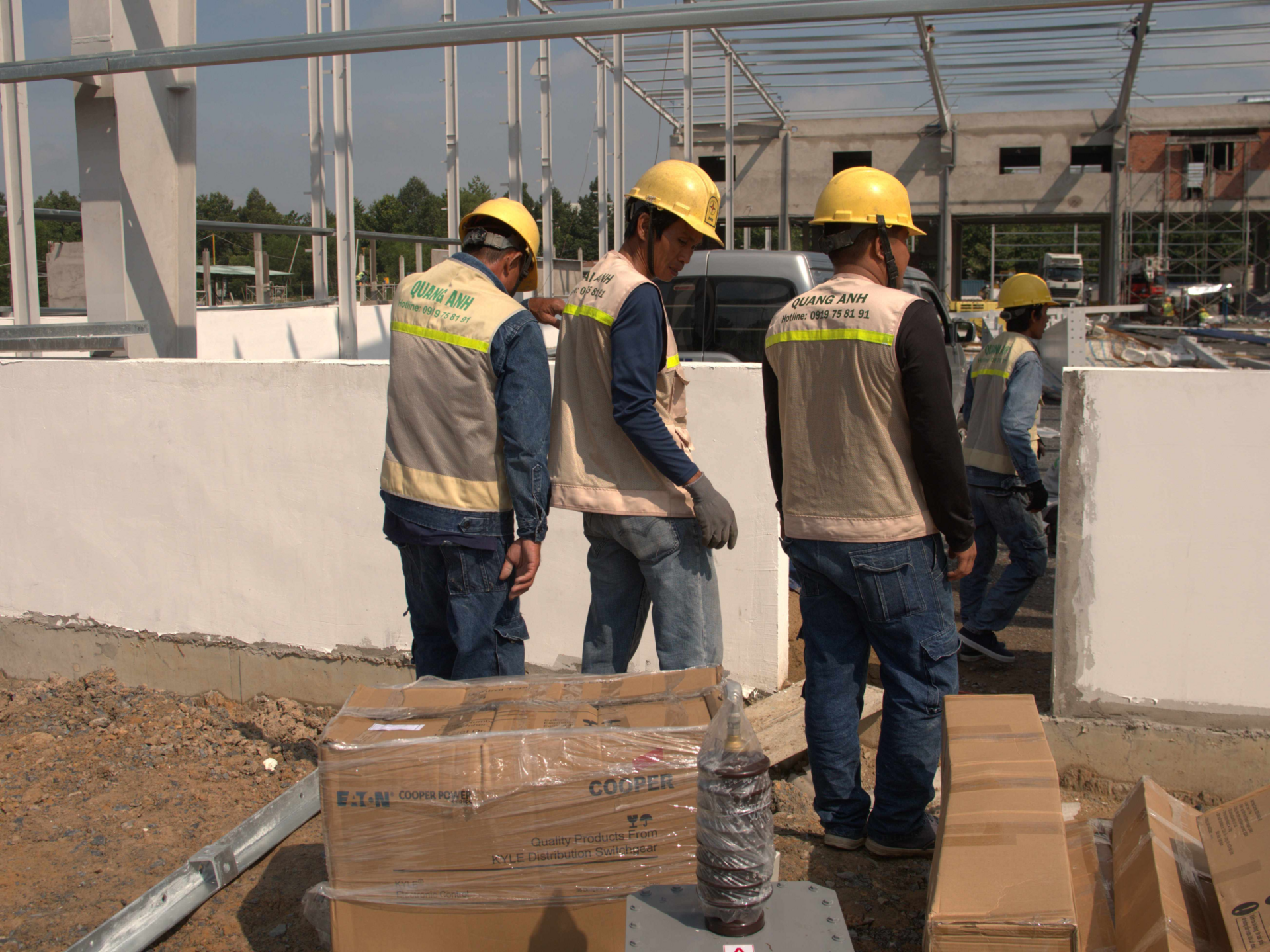
The EPC quote for a 2500kVA transformer station must clearly state equipment design and supply. Construction, medium-voltage connections, testing, and energization acceptance must be separately itemized. On the field, the contractor’s responsibilities must be defined clearly from survey to trial operation.
Field surveys at the plant should check the distance for medium-voltage connections, usually calculated up to 40m, with additional costs for more distant connections. Typically, a 2500kVA station serves a large load of about 2000–2200kW, depending on the power factor.
| Items | Description | Check Points |
|---|---|---|
| 22/0.4kV Transformer | Supply a suitable distribution transformer based on power needs. | Power specs, enclosure type (kiosk or outdoor), equipment origin. |
| Medium Voltage Cabinet (RMU) and Low Voltage Panel | Supply and install medium voltage distribution cabinets, low voltage control panels, and protection systems. | Inspect cabinet configurations, connection diagrams, and protection requirements. |
| Construction of Foundation and Substation/Kiosk | Foundation, base, enclosed station structures, or steel tower choices according to the site. | Constructability, base conditions, safety and ventilation requirements for kiosks. |
| Medium Voltage Connections and Cables | Connect to EVN grid, medium and low voltage cables, and grounding system. | Proximity to connection points (reference 40m), approachability, EVN formalities. |
| Testing, Calibration, and Acceptance | Electrical testing, safety inspection, and completion reports with EVN for energization. | Testing inventory, personnel responsibilities, and acceptance procedures. |
- Common cost distribution: materials and equipment cover a significant part (usually 60–70%), construction 15–20%, testing and soft costs 10–15%.
- Price influencing factors: station type (grid, steel structure, kiosk), site terrain, connection distance, and material origin.
- Configuration criteria: facilities often prefer kiosks or enclosed stations to ensure safety and equipment protection during operation.
- Operation warning: If the medium-voltage connection exceeds 40m, budget for installation, permitting, and site preparation costs; conduct practical site surveys.
To finalize the EPC quote, detailed material inventories, preliminary drawings, and contractor responsibility delineation from survey to energization acceptance are necessary. Once complete site documentation is available, the next step involves detailed budgeting and construction scheduling proposals.
Main Equipment Configuration: MBA 2500kVA, Medium Voltage, Low Voltage, and Reactive Compensation
Proposed configuration for a 2500kVA station includes MBA 22/0.4kV, considering oil/dry transformers based on location, RMU or FCO-LA for 22kV, ACB 3P 4000A, and compensation system of 750–1250kVar.
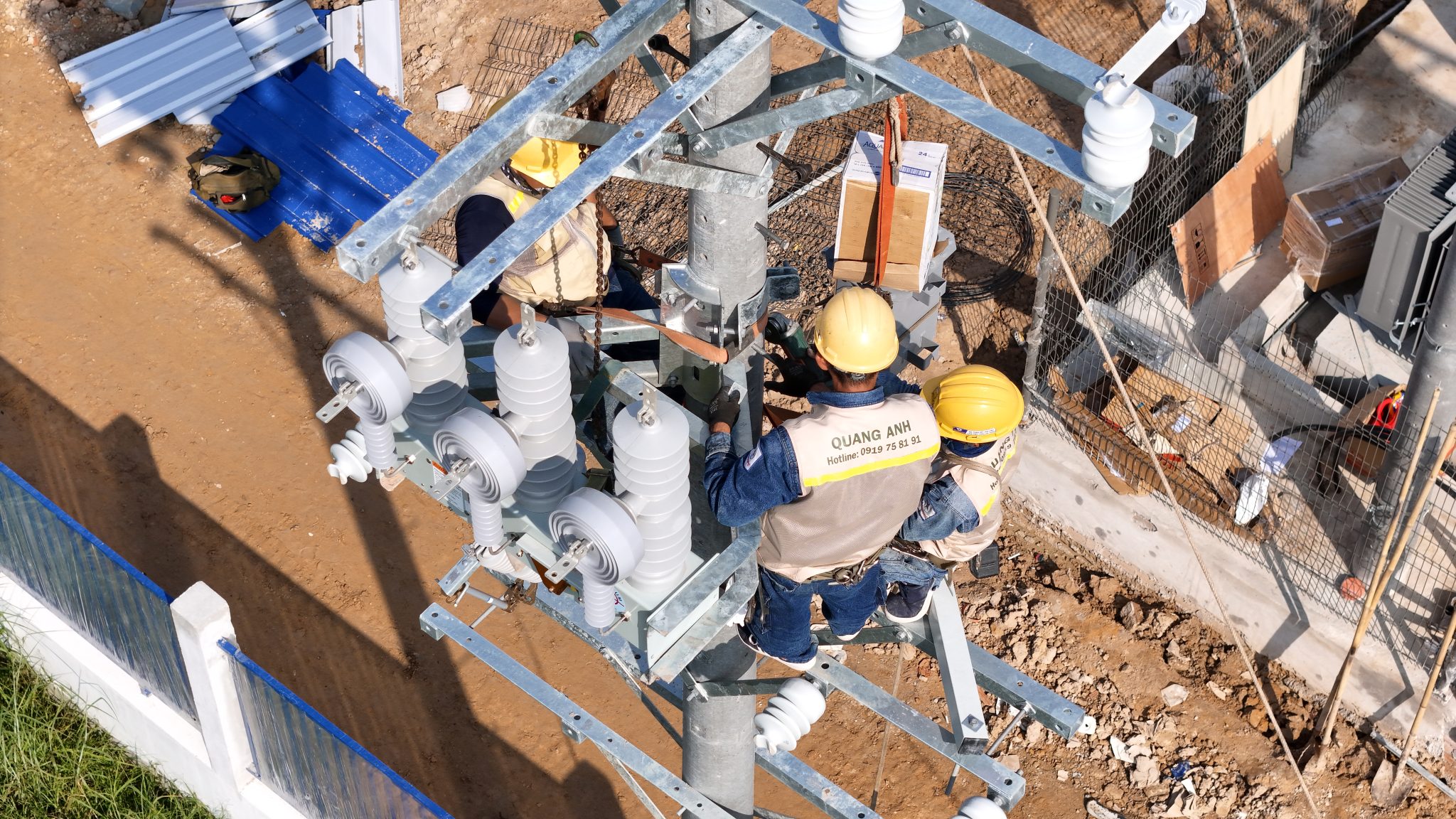
A standard configuration for a 2500kVA transformer station is an MBA 22/0.4kV coupled with RMU (or FCO-LA) in medium voltage, low voltage cabinets fitted with ACB 3P 4000A, and a reactive power compensation system approximately 750–1250kVar.
As for oil versus dry transformer decisions: the oil method often has lower costs for outdoor stations, while a dry transformer is suitable when high fire resistance is required or installed in enclosed substation buildings; a site survey and safety requirements are essential for decision-making. During acceptance/testing steps, ensure ventilation and safety distance checks prior to selecting MBA type.
Medium-voltage equipment can be an RMU used for ring circuits and 22kV line breaks, or FCO-LA if a compact solution is needed. Field checks should verify EVN connection points and the length of medium voltage cables (maximum reference 40m before additional costs arise) to decide on RMU/FCO configurations and appropriate cable sizes.
The low-voltage cabinet should include ACB 3P 4000A for distribution from the 2500kVA transformer, incorporating overload and short circuit protection for the 0.4kV system. Low voltage cables from the MBA to ACB typically utilize 4-core XLPE cables, sizing 3x500mm² or larger; field surveys should measure load currents and cable lengths to determine accurate sizing.
Reactive compensation systems are often designed at 30–50% of the MBA power capacity, approximately 750–1250kVar for a 2500kVA transformer. Automatic compensation systems may use oil or dry capacitors controlled by cosφ controllers; maintenance should check group switching operations and post-compensation cosφ values.
- 2500kVA 22/0.4kV Transformer — confirm type (oil/dry) based on location, ventilation, and fire safety requirements.
- Medium Voltage Equipment — RMU or FCO-LA 22kV; verify connection distances and cable lengths to EVN.
- Low Voltage Cabinet — ACB 3P 4000A with overload/short circuit protection; check connectivity and cable capacity to ACB.
- Cables — typically use 3x240mm² or larger XLPE for medium voltage depending on distance and load; 4-core copper XLPE, 3x500mm² upwards for low voltages.
- Compensation System — automatic 750–1250kVar, oil/dry capacitors, cosφ control; measure current cosφ during site surveys.
Technical preliminary conclusion: the 22/0.4kV MBA configuration + RMU/FCO + ACB 4000A + XLPE cables suffice for a 2500kVA station, but a field site survey is necessary to finalize MBAs type, cable size, and compensation capacity decisions for detailed quotation drafting.
RMU Cabinets and AFLR Classification: Necessity, Benefits, and Key Details
RMUs are typically required when transformer stations prioritize power supply reliability, need rapid circuit switching, and a ring circuit configuration. AFLR classification under IEC 62271-200 is not just a technical label, but directly relates to the level of internal arc risk, PPE requirements, and safe operating procedures. When reviewing RMU configurations, consider usage purpose, grid type, and safety classification details rather than merely the equipment price.
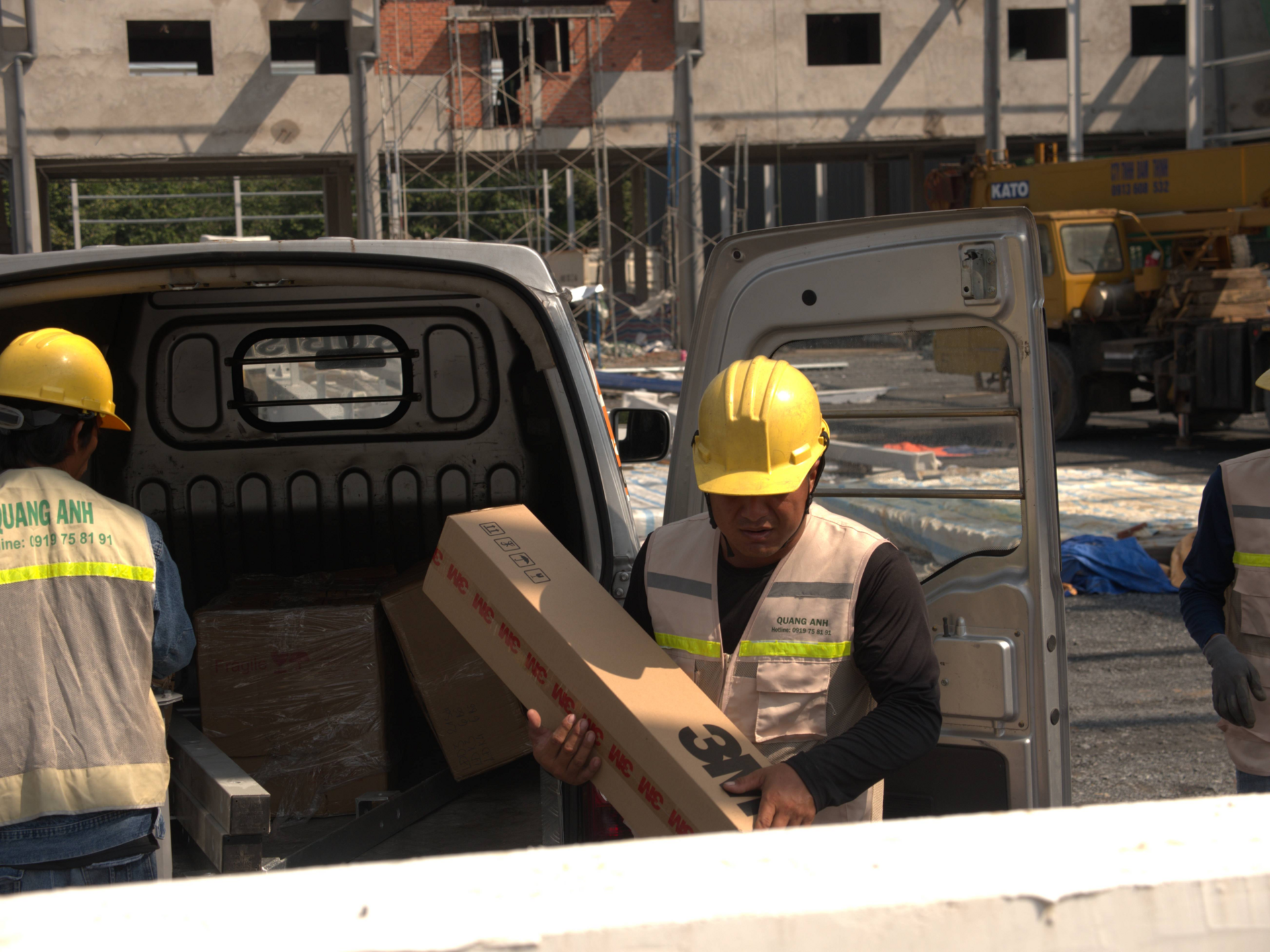
RMUs are appropriate when transformer stations demand increased power supply reliability, particularly in ring circuits or when quick circuit transfers are necessary during faults. On-site, RMUs frequently reside at substations for connecting supply sources to transformers or arranged between parallel-running transformers, so the deployment decision should align with actual network configurations.
In essence, an RMU is a compact medium voltage switchgear integrating switching, protection, and measurement devices to form either ring or single circuits within distribution systems. Operational advantages differ where ring circuits with RMUs can maintain power even if one branch fails, unlike single circuits which lack this benefit. When performing plant site surveys, primary criteria to verify include whether the supply grid is radial or ring, and whether continuous electricity supply for key loads is necessary.
AFLR per IEC 62271-200 concerns internal arc ratings in cabinets to evaluate electric shock and fire hazard risks if faults occur inside. Its implications extend beyond cabinet design, directly influencing workspace arrangement, PPE choices, and operational procedures during maintenance. For systems running on continuous power supply, this data is critical to review in technical documents and cabinet labels, rather than perceiving it as a supplementary badge.
Factors that could affect AFLR include short-circuit current, distance from fault points to enclosure surface, fault clearing time, and internal isolation design. Accordingly, similar RMUs may have differing safety suitability levels depending on models and operating conditions. When selecting configurations during acceptance or decision-making stages, technical specifications must be cross-referenced with short-circuit conditions and expected field operation processes, not just the presence or absence of an AFLR tag.
Concerning investment decisions, RMUs usually cost more than standard switchboards, yet they may help plants reduce downtime and save operational costs in real-world applications. Still, not every station requires RMUs; for single circuits only, demands for continuous power supply are low, and switching schemes are not complex, alternative arrangements may be more suitable. A prudent selection involves examining three criteria: grid type, load importance, and operational safety requirements during maintenance.
| Items | Description | Field Check Points |
|---|---|---|
| Grid Configuration Type | Ring or radial circuits | Determine whether maintaining power during one branch failure is needed |
| RMU Role | Connect supply sources to transformers or between transformers | Review single-line diagrams and practical switching plans |
| AFLR Classification | Evaluate internal arc risks under IEC 62271-200 | Check labels, technical documents, and verify PPE and safety procedures requirements |
| Fault Conditions | Short-circuit current, fault clearing time, distance and internal isolation | Revisit based on operational conditions and system short-circuit levels |
- Avoid selecting RMUs simply due to modern aesthetics; the correct choice should rely on supply reliability and fault transfer requirements.
- Do not perceive AFLR as an absolute safety certificate; it is meaningful only when evaluated alongside operational conditions and on-site maintenance procedures.
Once these criteria are clear, the next steps typically involve reviewing equipment scope, electrical safety needs, and RMU integration methods into overall transformer station design. This directly impacts configuration selections and subsequent implementation planning.
Cost Factors Causing Huge Variations in 2500kVA Station Pricing
Breaking down 2500kVA station costs highlights materials, incoming lines, labor, and acceptance costs as key influential variables.
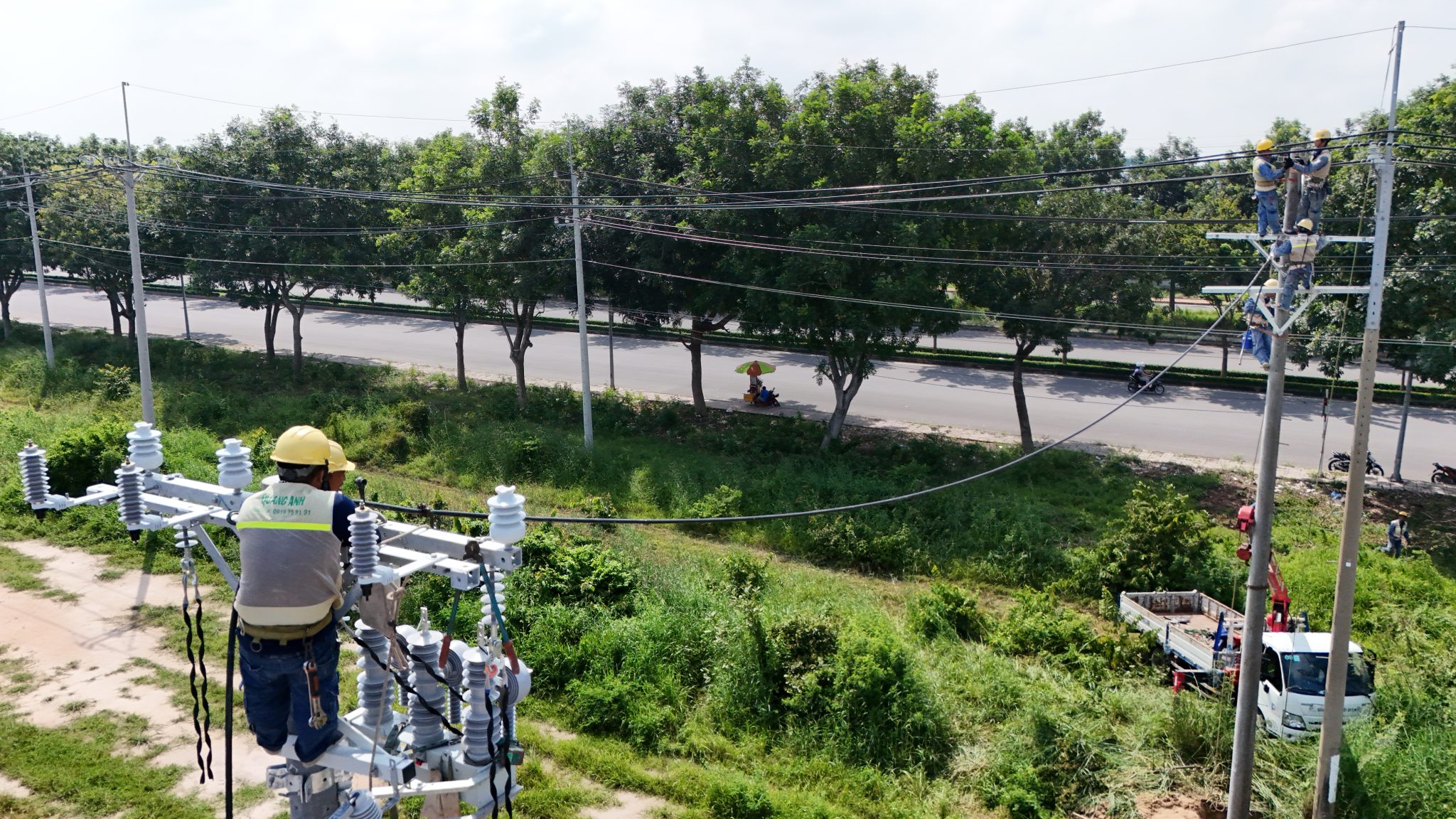
The 2500kVA station’s price mainly fluctuates due to four cost groups: materials and equipment, incoming lines, labor, and testing/soft costs.
On-site, the two most significant factors are the distance to medium-voltage lines and choosing between underground or overhead cabling; practically, every additional 40m can increase line extension and construction costs. The origin of material and station equipment affects pricing significantly, while site terrain directly influences construction methods and labor productivity.
Below are the main cost groups and criteria to verify when budgeting:
- Materials and Equipment: transformers, medium to low voltage cabinets, accessories; conduct origin checks, delivery status, and technical documentation during plant surveys.
- Incoming Lines: choose underground or overhead, check the distance to medium voltage connection points (note: further cost for each additional 40m), and check hotline connection methods if continuous power is required.
- Labor and Foundation: difficult terrain, manual work, or specialized equipment increases time and labor costs; verify accessibility for vehicles and equipment during maintenance/construction.
- Acceptance and Soft Costs: costs related to power utility relationships, acceptance formalities, equipment testing, and energization are prone to arise if initial requirements are unclear.
The following table represents the high-level scope items to contrast when preparing initial quotes:
| Cost Group | Decisive Factors | Field Check Points |
|---|---|---|
| Materials and Equipment | Origin, insulation level, accompanying accessories | Device listing, CO/COC, delivery lead times |
| Incoming Lines | Underground versus overhead, proximity to supply | Actual distances, medium voltage connection points, construction conditions |
| Labor & Foundation | Terrain, excavation volumes, concrete foundations | Access capabilities, on-site construction methods |
| Acceptance & Soft Costs | Utility acceptance requirements, equipment testing | Testing checklists, permits and energization regulations |
Operational warning: if the distance to medium-voltage connections is undefined, cable and hotline plans can result in cost surge; challenging terrain might necessitate manual construction methods, raising labor fees. Finalized pricing resolutions should rely on field surveys, quantity breakdowns, and clear material sourcing before devising detailed estimates.
Comparing Solutions by Station Type, Cable Route, and Field Conditions
Decision-making between kiosk, outdoor ground, tower, and steel structure stations along with cable/circuit options is dependent on layout, loads, construction schedules, and on-site weather conditions.

Choices between kiosk, outdoor ground, tower, or steel structure stations and between underground/overhead cable routes, ring or radial circuits hinge on layout, loads, and site weather conditions.
Technically, kiosks offer a compact, quick installation solution suitable for tight urban environments; outdoor ground stations withstand weather better but require larger safety distances. Tower stations are typically cheaper than kiosks in terms of materials but need solid concrete foundations and ample space, whereas steel structures are flexible for difficult terrain but increase structural costs.
| Station Type | When Appropriate | Field Check Points |
|---|---|---|
| Kiosk Station | Tight spaces, urban areas, requiring rapid timelines | Verify foundation dimensions and equipment transport access during plant surveys |
| Outdoor Ground Station | Broad layout, prioritize outdoor operation, weather protection | Safety distance measurement, check drainage and base |
| Tower Station | Flat terrain, prioritize material cost reduction | Check ground level, concrete foundation construction capacity |
| Steel Frame Station | Sloped or challenging terrains, limited foundations | Evaluate pole anchoring possibilities, manual construction access |
Regarding cable routes, underground cables are suitable for flood-prone industrial areas or aesthetic demands but typically cost 20–30% more than overhead in many instances. Medium-voltage ring circuits elevate power supply reliability and are recommended for continuous critical loads; in contrast, single circuits economize initial costs and fit intermittent loads or backup scenarios.
- During plant site surveys, note the proximity to EVN’s medium voltage lines since this distance directly affects cable routing expenses (additional costs per 40m intervals).
- In maintenance or construction phases, be wary of rain or storms delaying underground cable operations and heightening safety risks, necessitating waterproofing measures and labor safety protocols.
- Sloped terrain or flood-prone zones should prioritize kiosks or steel frames to reduce concrete base volumes.
Outdoor station construction generally progresses faster than indoor if weather permits; conversely, adverse weather requires waterproofing strategies and detailed work schedules. A technical resolution calls for meticulous field surveys, load determination, and item list development before deciding on cable circuits and station types.
Practical Implementation Process from Surveying to Energization
Describing practical workflows from medium voltage survey, documentation, to 2500kVA transformer station energization acceptance.
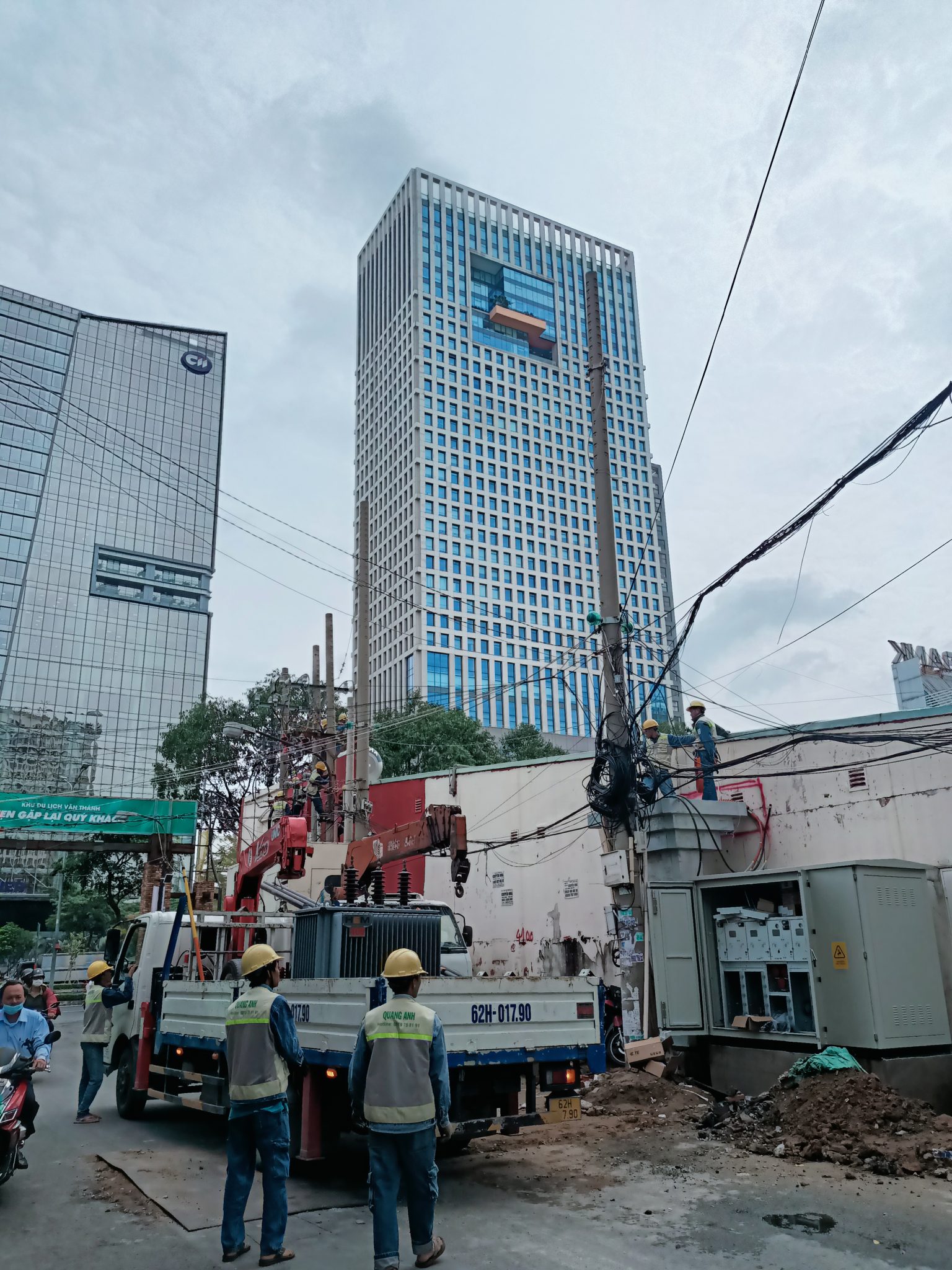
The implementation process for a 2500kVA station begins with site surveys, identifying the medium voltage connection point with the EVN grid, and completing the connection documentation.
The files must include single-line connection diagrams, 2500kVA transformer specifications, grounding plans, and medium/low voltage equipment lists. On-site, verify proximity to existing grids; connection distances ≤ 40m typically don’t incur significant line extension or foundation costs.
Administrative procedures require filing connection approval requests with local power units (EVN/EVNSPC/EVNCPC) and completing construction permits and connection contracts before starting works. During plant surveys, reference existing infrastructure, cable routes, and legal documents to avoid delays.
- Conduct field surveys and measure medium voltage connection points with the EVN grid.
- Prepare technical design documentation: connection diagrams, transformer specs, foundation, and grounding plans.
- Submit connection approvals and finalize construction permits, connection contracts.
- Construct foundations, install transformers, RMU cabinets, and medium voltage equipment; connect medium voltage lines to EVN-designated points.
- Perform equipment testing, calibration, and safety inspections before energization.
- Field and document acceptance by the investor and EVN representatives, followed by trial energization and operational checks.
During acceptance/energization, physically check: field acceptance records, test reports (insulation, ground resistance), mechanical conditions of foundations and installation positions, and all completion documentation. Acceptance requires signatures from EVN representatives to qualify for handover.
Risk management involves addressing terrain lengthening foundation construction, material origin influencing testing timelines, and connection point disagreements with EVN. Therefore, the process mandates close coordination with EVN throughout approval and energization stages to avert commissioning delays.
The practical timeline for a complete package, from design to energization acceptance, generally spans around 60 days, dependent on device models and specific operational conditions on-site. After trial energization and stable operation confirmation, formal handover and acceptance documentation is prepared for the investor.
Common Mistakes When Requesting Quotes and Investing in 2500kVA Stations
Analysis of typical errors in requesting quotes and investing in 2500kVA stations, concentrating on EPC scope, power selection, and site construction risks.
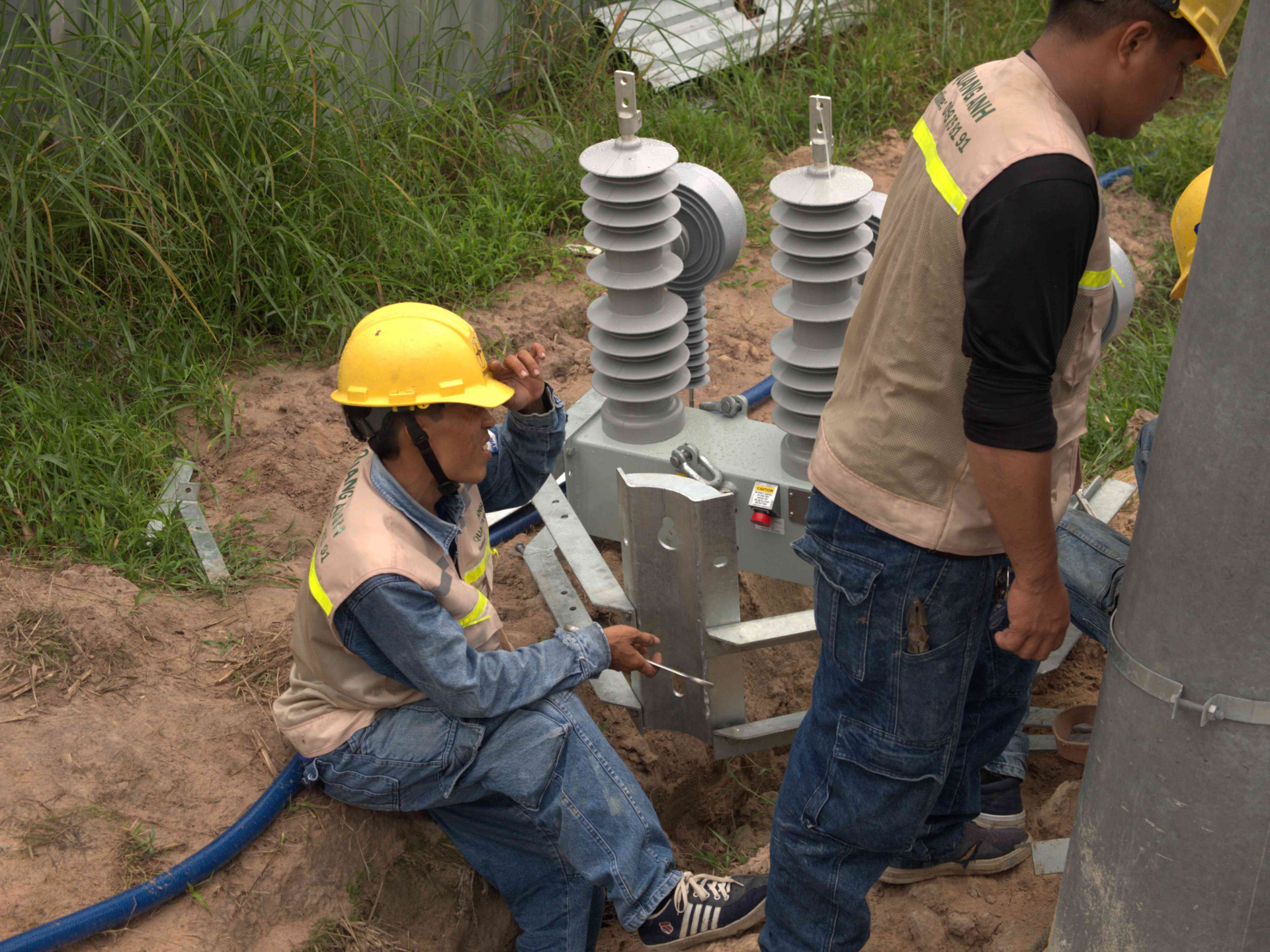
Typical errors include poor power selection aligned with load, missing EPC scope items in quotes, and underestimating on-site construction conditions. During plant surveys, analyzing peak load currents and hourly load charts is essential to avoid under or over-investing capacity.
Selecting the 2500kVA power capacity should be based on actual loads and a reasonable reserve factor; generally, avoid excessively large multipliers that lead to investment waste. Maintenance or acceptance phases should compare actual measured loads with proposed power capacity and check large equipment startup capacities (inrush current) to gauge additional power requirements.
Incomplete EPC quotes often lead to sizable cost overrun; commonly omitted items include medium-voltage/EVN connections, cables exceeding standard distances, materials, labor, and acceptance testing. Below are items to directly cross-reference with quote documentation:
- Medium-voltage/EVN connections: inspect contract notes on connection responsibility and related fees.
- Cable Laying / Medium-voltage Lines: exceeding > 40m from medium-voltage lines usually incurs additional line extension fees.
- Materials and Accessories: list transformers, distribution cabinets, support structures, poles/towers, cables, and construction materials.
- Labor and Construction Methods: evaluate mechanization versus manual work for challenging terrains (mountains, underground).
- Testing, Calibration, and Energization Acceptance: explicitly check parties responsible for costs and EVN acceptance schedule.
Field conditions, such as hard-to-reach terrains and poor access roads, raise labor costs and extend timelines; practically, site surveys should prioritize terrain evaluation to choose suitable station types (tower, steel structure, kiosk). Equipment origin and technical team competence directly impact warranty costs, repair frequency, and EVN acceptance readiness.
Operational warning: failing to fully catalog EPC scope can result in contract disputes and arising soft costs linked to EVN relations, permit timelines, and safety testing. Subsequent resolutions involve conducting detailed field surveys and preparing a complete BOQ for quote and acceptance scope finalization.
Checklist for Selecting EPC Contractors and Matching Real Capabilities
Criteria for choosing EPC contractors for transformer stations prioritize field survey capability, suitable design, experience in 2500kVA energization, and safety controls during construction.
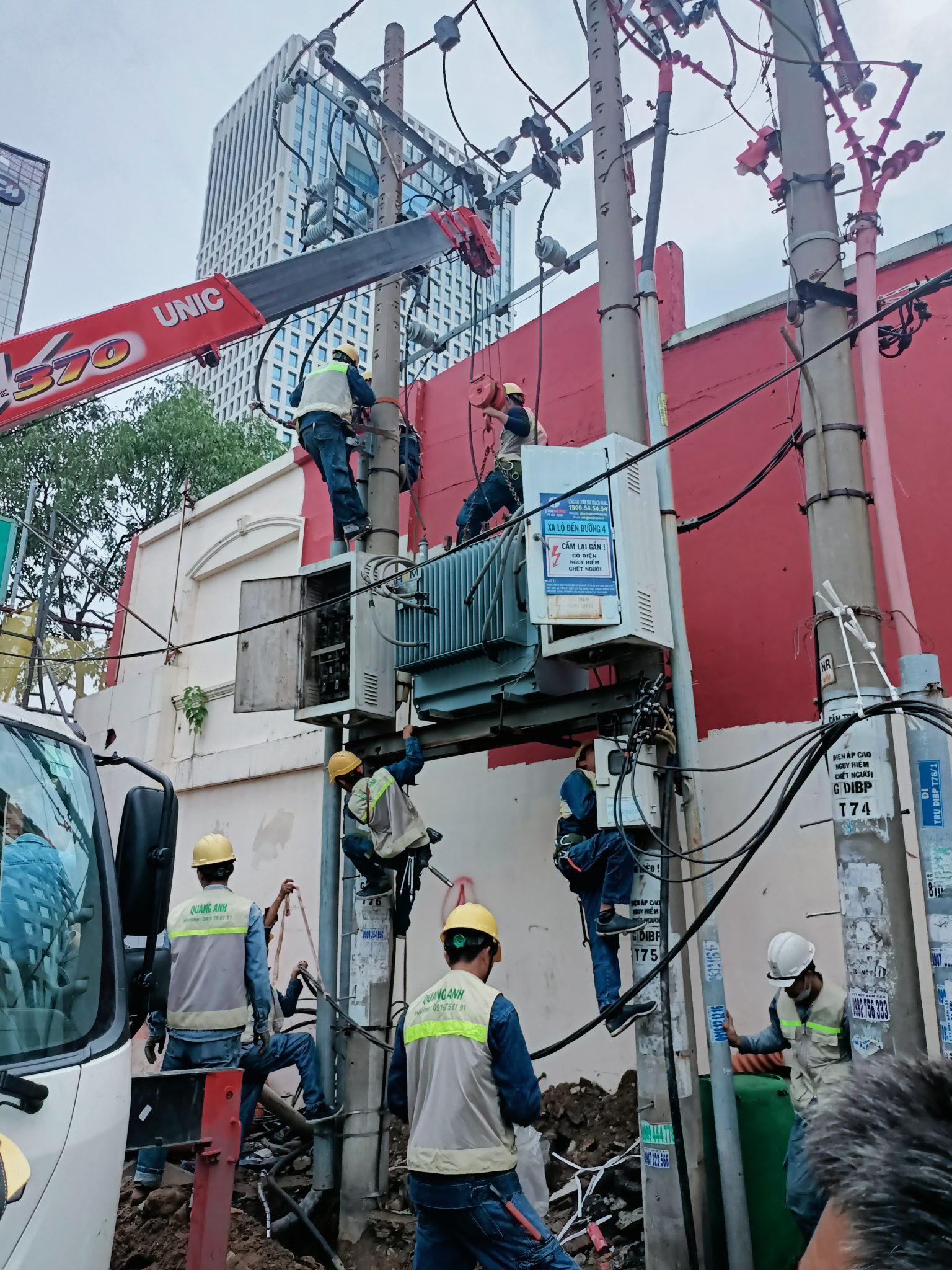
Selecting a turnkey contractor should prioritize field survey capability, construction organization, energization experience, and safety controls rather than solely initial pricing.
Field assessments require evaluating contractor survey documentation against actual site layout and clearance points. Examine capability files, including ISO 9001 certifications and high-voltage construction licenses from the Ministry of Industry and Trade; during maintenance or plant surveys, request copies of acceptance records for equally energized EVN projects.
Construction organization review should consider staffing diagrams, supervising engineer allocation, dedicated electrical safety personnel, labor safety plans, and fire protection strategies. On-site verification should ascertain transformer pre-installation testing, backup equipment availability, and medium-voltage fault recovery plans.
- Check technical records: ISO 9001 certificates; high-voltage construction licenses; alignment with applicable TCVN and regulatory circulars.
- Cross-reference experience: equivalent project lists, EVN acceptance timelines, number of energized 2500kVA stations.
- Construction management: staffing plans, supervising engineers, medium-voltage safety measures, fire protection planning.
- Materials and Supply: compliance with TCVN equipment origin, ensuring prompt supply, backup equipment provisions.
- Risk Management: medium-voltage fault recovery plans, project insurance, delay penalty terms in contracts.
| Assessment Criteria | Actual Inspection / Required Proof |
|---|---|
| Survey & Design Capability | Terrain survey reports, compliant technical designs with EVN specifications |
| Construction Organization & Personnel | Staffing diagrams, specialized engineer/labor contracts, safety plans |
| 2500kVA Energization Experience | Experience lists of equivalent EVN-accepted projects |
| Commercial Criteria | Technical/cost ratio assessment: 70/30, delay penalty terms |
Practical operational warning: avoid contractors with low prices lacking certification, lacking EVN connection experience, or missing medium-voltage safety plans. During bidding, require acceptance records, transformer testing documentation, and clear scheduling commitments to establish delay penalty cases.
The next connection entails conducting an authentic field survey and requesting contractors submit equally accepted EVN energization project documentation, then comparing technical/cost ratios to make bidding decisions.
To accurately finalize a quote for a 2500kVA transformer station, focus on three key tasks: align technical configuration with load requirements, clarify EPC scope, and verify a feasible connection with utilities. Once these variables are clear, comparing contractors and managing arising costs will be significantly more practical.
Frequently Asked Questions
What are the main components of a 2500kVA transformer station?
It typically includes a 2500kVA transformer, medium voltage cabinet (RMU or suitable switching cabinets), low voltage cabinet (ACB, MCCB), reactive power compensation systems, medium/low voltage cables, substation foundations/buildings, along with protective devices, grounding systems, and testing/connection documentation. Confirm details in site layouts and BOM.
Should I choose oil or dry transformers for the plant?
It depends on installation locations, fire safety requirements, environment, and maintenance: oil MBAs vary in efficiency and cost, while dry MBAs provide higher safety in confined/sensitive areas. Provide site details, fire safety needs, budget, and operating conditions for proper selection.
When are RMUs necessary, and what does RMU AFLR imply for operational safety?
RMUs are needed for ring circuits, enhanced reliability, or rapid switching. AFLR (internal arc classification) indicates arc risk levels, guiding PPE choices, isolation, and maintenance protocols. Understanding network diagrams and safety needs is necessary to select suitable RMU/AFLR configurations.
What major factors contribute to significant cost increases for a 2500kVA station?
Large fluctuations are due to medium voltage connection distances, underground versus overhead cable choices, terrain conditions, equipment origins and types, connection methods (hotline versus grid shutdown), and tight scheduling. Principles: conduct site surveys and demand itemized quotes to determine arising costs.
How do connections using scheduled power cuts and hotlines differ?
Scheduled power cut connections involve shutting down power according to scheduled times, simpler but dependent on off-grid slots; hotline connections mean working on live grids, requiring specialized teams and insulation equipment, making them costlier. Determine capability and power utility requirements prior to selection.
What should investors verify before selecting an EPC contractor for a 2500kVA transformer station?
Examine survey/design capabilities, electrical construction licenses, similar project documentation, construction and safety capacity, EVN acceptance and energization protocols, insurance, and scheduling pledges. Request evidence and project lists for realistic comparisons.
How to Prepare a Brief for Accurate 2500kVA Transformer Station Quotation
- Identify current load, growth prospects, and operational targets of the plant.
- Propose initial station types, installation locations, and viable medium voltage cable options.
- Create a list of main components for comparison: MBA, medium voltage cabinet, low voltage cabinet, compensation systems, cables.
- Clarify the quotation scope to include design, construction, materials, testing, documentation, and connections.
- Early discussions with power utilities about connection points, power cut schedules, or hotline feasibility.
- Ask contractors to present similar projects, schedule control methods, and energization acceptance documents.
If planning investment in a 2500kVA station, start with a concise input set including load, installation location, cable route, and scheduling needs for better configuration and budget alignment with field realities.
[contact-form-7 id="7239967" title="Contact form 1"]
Related Posts
Pricing and Setup of 3200kVA Transformer Stations: Configuration, Costs, and Investment Procedure
Explore the pricing structure for a 3200kVA transformer station, primary equipment configuration, cost variables, EVN [...]
Mar
Cost Estimation for 2500kVA Transformer Station: Configuration, Expenses, and Investment Process
Reference framework for quoting a 2500kVA transformer station based on configuration, station type, cable solutions, [...]
Mar
2000kVA Transformer Station Guide: Configuration, Costs, and Investment Process
Discover key aspects of a 2000kVA transformer station: from technical configuration and cost analysis to [...]
Mar
Pricing and Configuration Guide for 1600kVA Substations
A detailed guide on pricing for 1600kVA substations, including equipment specs, connection costs, EVN procedures, [...]
Mar
Comprehensive Guide to 1500kVA Substation Pricing: Configuration, Costs, and Investment Process
A comprehensive overview of configurations, costs, construction methods, connection procedures, and contractor selection for 1500kVA [...]
Mar
Tay Ninh Solar Power Planning: Technical Framework, Grid Interconnection, and Rollout Roadmap
Technical overview of solar planning in Tay Ninh: irradiation, grid capacity, permitting, design, operations, and [...]
Dec
Binh Duong Solar Planning: Regulatory Framework, Grid Interconnection, and an Implementation Roadmap for Factories and Industrial Parks
An overview of Binh Duong solar planning: legal framework, interconnection, design, risk management, and an [...]
Dec
Solar Farm Repair: O&M Workflow, IV Curve Diagnostics, Thermography, Inverter Service and Utility-Scale Safety
A utility-scale solar farm repair plan centered on O&M, IV curves, thermal imaging, inverter service, [...]
Dec
Dong Nai Solar Power Plan 2023–2025: Tri An 1,029 MW, Grid Upgrades and the DPPA Pathway
A complete look at Dong Nai’s solar power plan: Tri An 1,029 MW, irradiation potential, [...]
Nov
Quang Ngai Solar Power Plan 2024–2030: Legal Framework, Irradiance Potential, and Development Roadmap
A complete look at Quang Ngai’s solar power plan: capacity targets, irradiance (PVout), development zones, [...]
Nov
Solar Damage Assessment Services: On-Site Procedures, EL/IV/Thermography Testing & Compliance with Standards
Discover IEC/UL/NEC standard solar damage assessment processes: on-site evaluation, EL and IV curve testing, thermal [...]
Nov
Comprehensive Package Estimate for a 1800MVA 500kV Substation: Scope, Configuration 3x600MVA, Standards and Timeline Management
An overview of the 1800MVA 500kV substation estimate: construction scope, configuration 3x600MVA, GIS/AIS, SCADA, standards, [...]
Nov
Factory Electrical Systems: Comprehensive Design and Implementation Guide
Discover the detailed and safe process of factory electrical systems design and implementation. [...]
Oct
Blueprints Required for Factory Construction Permits
Discover the necessary blueprints in factory construction permit applications, from floor plans to electrical and [...]
Oct
What Are the Requirements for a Factory Construction Permit? A Comprehensive Guide
Explore the documentation and steps needed to secure a factory construction permit for streamlined project [...]
Oct
Factory Construction Permit Procedures in Vietnam: Essential Guidelines and Documents
Learn the procedures for securing a factory construction permit in Vietnam, focusing on document preparation [...]
Oct
Key Steps in the Factory Construction Process
Discover the essential steps and requirements for building factories. [...]
Oct
Comprehensive Electrical Substation Solutions by Quanganhcons
Discover the cutting-edge electrical substation solutions offered by Quanganhcons for industrial applications. [...]
Oct
Investment Costs for a 1MWp Solar Power System and Influencing Factors
Explore the investment costs for a 1MWp solar power system in Vietnam and the influencing [...]
Sep
QuangAnhcons: Elevating Wind Energy Solutions
Explore QuangAnhcons' leadership in wind energy and renewable solutions in Vietnam. [...]
Sep