

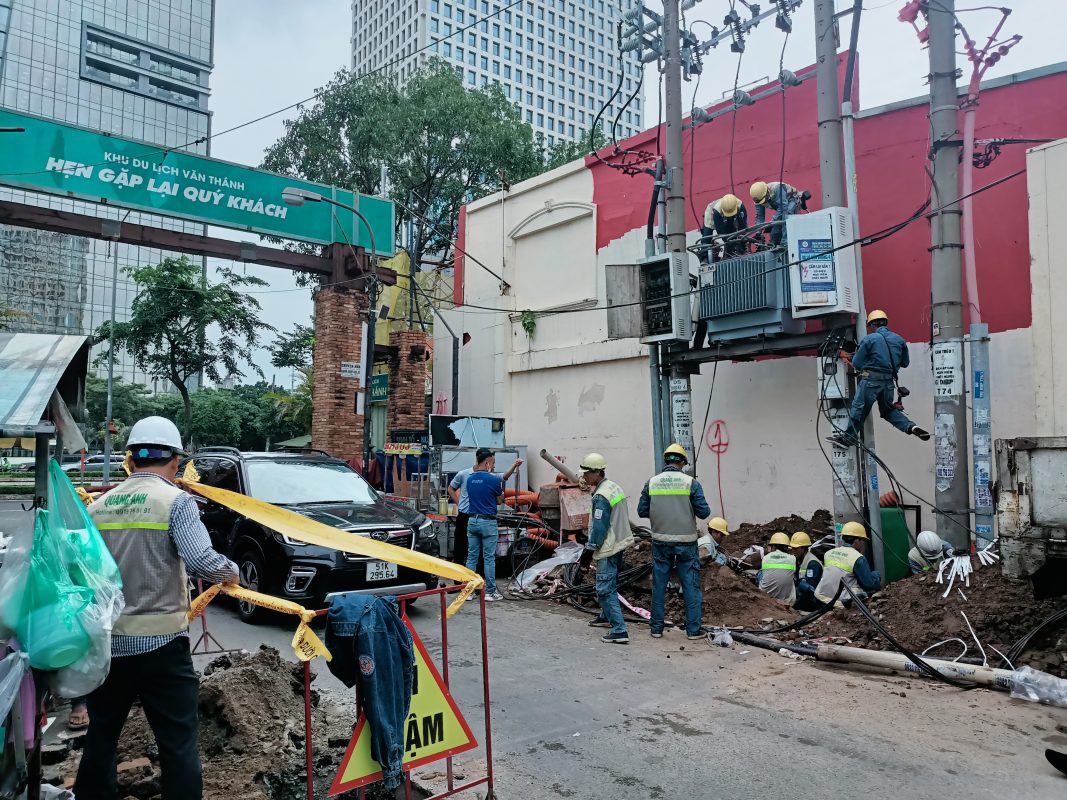
- Preview usual components in factory transformer station all-inclusive quotes.
- Delineate primary equipment, construction, testing, and connection procedures.
- Understand factors causing significant price variation like capacity, station type, location, and current power line status.
- Know the data needed for a more accurate quotation and avoid mismatched scope comparisons.
- Have criteria to avoid selecting low quotes missing crucial features.
- Factory investors planning a new transformer station
- Procurement or project management teams comparing EPC quotes
- Plant technical teams needing to define work scope before contractor negotiation
When to Read This?
- When needing to understand what’s included in comprehensive transformer station pricing
- Preparing for investment proposals or preliminary budget planning
- When receiving differing scope quotes
- 1. Typical Cost Groups in Comprehensive Transformer Station Pricing
- 2. Major Equipment Parts Dominating Pricing
- 3. Calculation of Construction, Testing, and Connection Elements
- 4. Factors Affecting Transformer Station Pricing Variances
- 5. How to Read Quotes to Assess Missing Elements
- 6. Input Data Required for Accurate Pricing Quotes
Inquiries on comprehensive transformer station pricing involve understanding the scope behind the number. For plant projects, a quote only holds value when it clarifies equipment, construction, testing, connection components, and additional costs according to field conditions.
Typical Cost Groups in Comprehensive Transformer Station Pricing
A standard EPC quote for a transformer station includes design, main equipment supply, construction, connection, testing, and auxiliary costs.
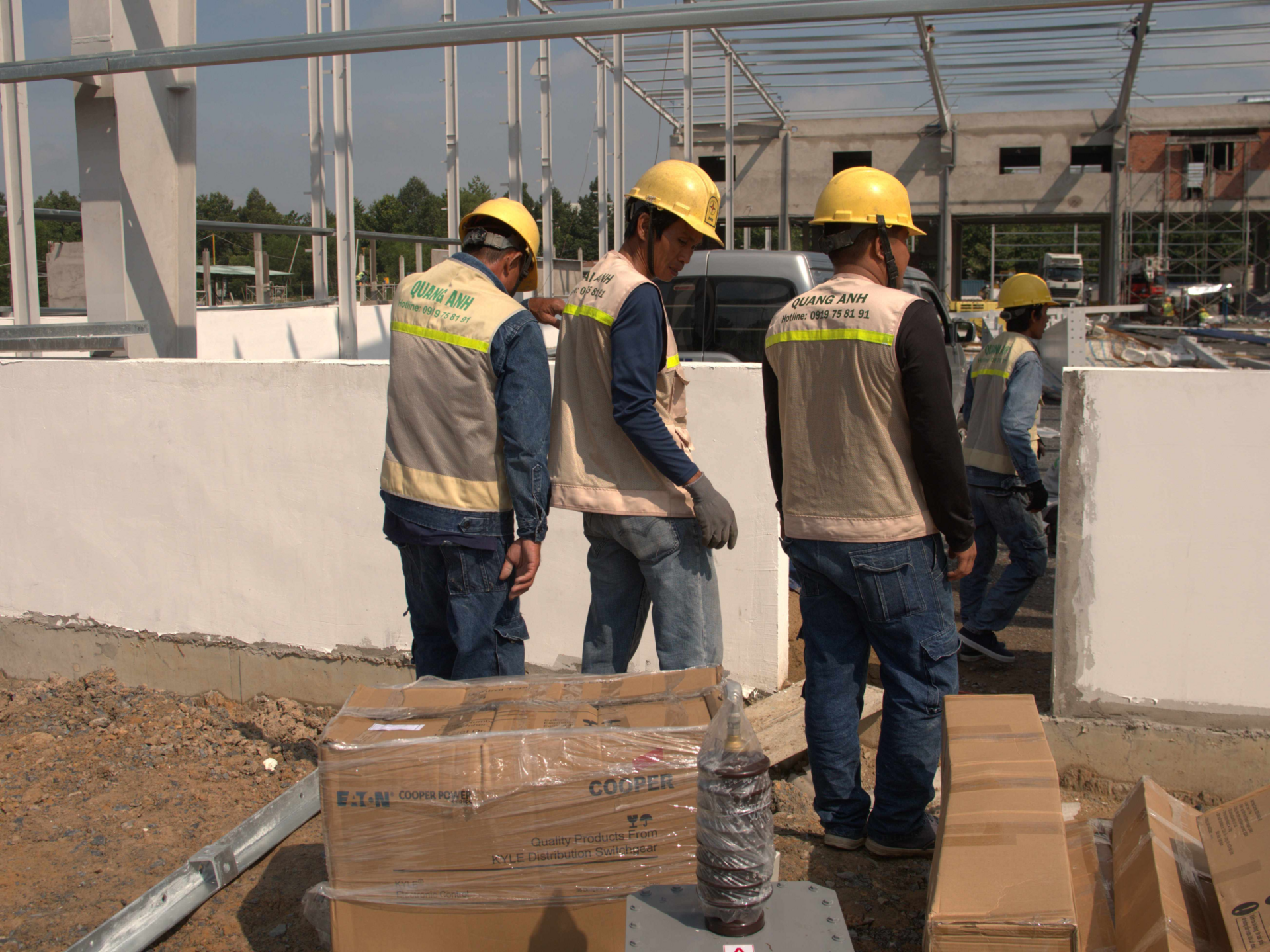
Comprehensive pricing typically covers technical design, main equipment supply, structural construction, system connections, along with testing and commissioning for grid enc network integration.
Field assessments often define the high-voltage line segment connecting from the EVN grid (commonly limited to 40m) and will add costs if this limit is exceeded. In maintenance or on-site assessments, checking the footing, grounding, and cable routing conditions is imperative to determine construction and machinery necessities.
Main material components generally include transformers, RMU cabinets, high and low voltage cabinets; alongside a full EPC contract that encapsulates installation labor, cranes, and construction machinery, auxiliary materials, wastage, and technical reserves. Comprehensive construction time is generally estimated at around 60 days, subject to field survey adjustments.
| Item | Description | Inspection Point |
|---|---|---|
| Technical Design | Construction drawings, connection diagram, equipment selection | Verify site survey records and load requirements |
| Main Equipment Supply | Transformers, RMU cabinets, high/low voltage cabinets | Confirm specifications, capacity, and delivery timelines |
| Construction and Structuring | Foundation, station/kiosk house, grounding system | Check soil conditions, foundation dimensions, concrete requirements |
| Connection and Cabling | High-voltage line from EVN grid to station, low-voltage cables to load | Measure field distance (note the 40m limit), EVN connection point |
| Testing and Commissioning | Equipment testing, verification, and energization acceptance | Check test records, compliance acceptance documentation |
Key factors likely to alter pricing include capacity and station type, line distance, foundation conditions, construction time, and technical reserve demands. When assessing at a plant, gathering current network state, cable routing distances, and EVN acceptance requirements is essential for finalizing scope and fees.
Operational alert: if the high-voltage line exceeds 40m or the terrain complicates construction, additional costs for extended cabling and lifting equipment may arise. Conclusion of this section logically leads to requesting detailed quotes based on field survey findings for cost component comparison.
Major Equipment Parts Dominating Pricing
Focus on checking the proportion of transformers, high-voltage bays, low-voltage cabinets, cables, and station structure to assess most cost-effective comprehensive pricing.
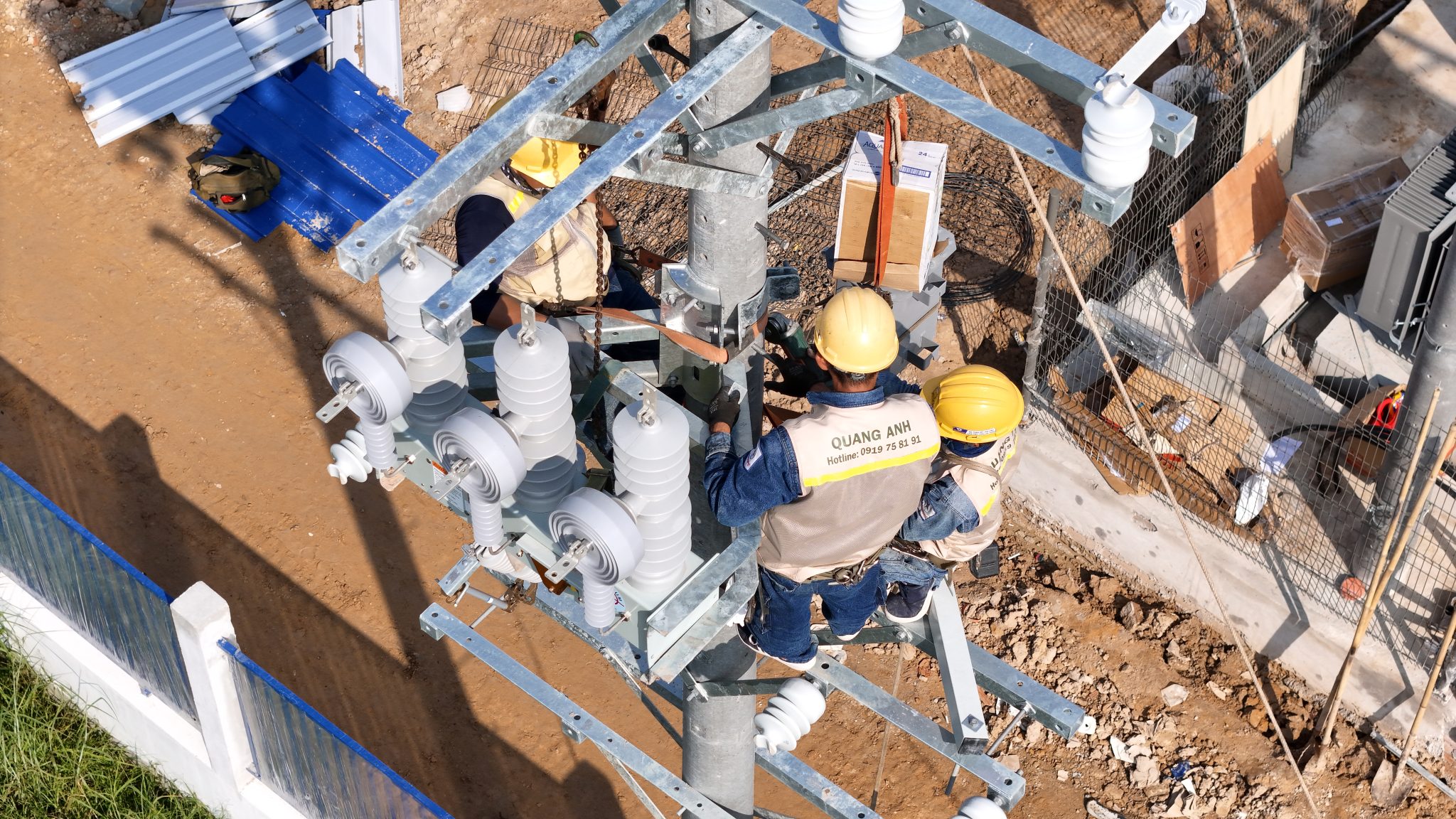
Typically, transformers represent the largest proportion of comprehensive quotes, followed by high-voltage compartments, low-voltage cabinets, cables, and station structures; these main equipment pieces usually drive 70–80% of the contract value.
On the ground, it is necessary to swiftly identify station type (rack, pole, or kios), transformer capacity, and connection distance for accurate cost segregation. Transformers generally account for 40–60% of the total cost, subject to TBA capacity (from 100kVA to 2500kVA) and catalog variety.
High-voltage compartment (RMU) is the next large item, heavily influenced by electrical voltage levels and EVN approval requirements; low-voltage cabinets (LV panel) depend on the number of outgoing feeders and load capacity. High and low voltage cables vary with connection distance — the base measurement is 40m, with additional costs applied for exceeding this distance, around 30–35 million for every extra 40m.
| Item | Price Impact | Field Inspection Criteria |
|---|---|---|
| Transformers | 40–60% total package cost (depends on capacity and model) | Confirm capacity, design specifications, price share against total quote, EVN testing requirements |
| High-Voltage Compartment (RMU) | Key item, cost varies with voltage level and EVN requirements | Check RMU type, voltage level, EVN switching and acceptance requirements |
| Low-Voltage Cabinet (LV Panel) | Dependent on feeder count and protection features | Count feeders, inspect connection diagram and distribution capacity |
| High/Low Voltage Cables | Varies with connection distance; extra cost beyond 40m | Measure connection distance, identify cable type and accessory forecast |
| Station Structure (rack/pole/kios) | Approximately 20–30% in some quotes; kios generally costlier than racks | Inspect structure type, foundation requirements, corrosion prevention measures |
In maintenance or plant survey cases, compare transformer weight against the total quote to spot pricing errors due to labor, auxiliary material, or overlapping cable costs. Note that labor and auxiliary materials typically represent smaller proportions but can inflate costs if not clearly allocated.
Operational alert: if connection distances exceed 40m, prepare to add costs for additional cables and accessories; additionally, all primary equipment must comply with EVN acceptance requirements, potentially increasing test and validation costs. Following field inspection, the logical next step is to ask contractors to break down component weights by equipment item for comparison.
Calculation of Construction, Testing, and Connection Elements
Fieldwork and technical documentation directly affect energization progress and derive choices adapted to operational needs.

Construction, testing, and connection parts are typically calculated based on site work components, the connection distance to EVN, and acceptance documentation; each item might stand alone in a comprehensive quotation.
Onsite, construction works entail foundations, key equipment installations (transformers, frames, and cabinets), and setting up high-voltage conductors. The station type (rack, steel pole, integrated kios) and transformer capacity determine the material and labor component. Plant survey requires checking foundation conditions, distance to EVN connection points, and crane capability between 5-16 tons for equipment lifting.
| Item | Description | Inspection Points |
|---|---|---|
| Foundation | Foundation preparation, anchor bolts, substrate treatment | Geological conditions, foundation size based on transformer |
| Main Equipment Installation | Set-in, bolting, grounding, and fixing transformers/frame | Cranes, site access, equipment volumes |
| Electrical Cabinet & Conductor Systems | Cabinet installation, low/high-voltage connections, cable trays | Wiring distance, cable routing, EVN connection endpoint |
| Testing and Validation | Conduct tests and inspections before energization | Testing items, execution timings prior to energization |
| High-Voltage Connection | Connection to EVN feed point, high-voltage cable run | Distance to EVN endpoint (40m baseline), cable post location |
| Technical Documentation & Acceptance | Full design, construction drawings, acceptance records | Document completeness, acceptance/energization timelines |
In testing validation, this step is vital before energizing and is usually factored into comprehensive pricing but can present as a separate expense in budget plans. High-voltage connection typically adheres to the EVN connection distance: the standard benchmark is a maximum of 40m; surpassing 40m entails supplementary high-voltage cable costs — therefore, on-site surveys must measure distance precisely to prevent subsequent add-ons.
Construction time directly influences management and labor costs; practically in plants, a total package from new build to energization typically bases planning on about 60 days but requires site survey adjustments. Labor and construction machinery (5-16 ton cranes) usually account for major portions in installation standards, while temporary materials (wood, other materials) and management fees can fluctuate based on project size.
Quotations should be decided upon field checks: determine station type, distance to EVN points, technical documentation completeness, and specific testing requirements. Operational alert: Incomplete files or misjudged connection distances often lead to energization delays and cost overruns; hence field surveys and completing drawings prior to fixing prices is essential.
Factors Affecting Transformer Station Pricing Variances
Price differences stem from capacity, station type, medium-voltage line length, location, construction conditions, and special equipment needs.
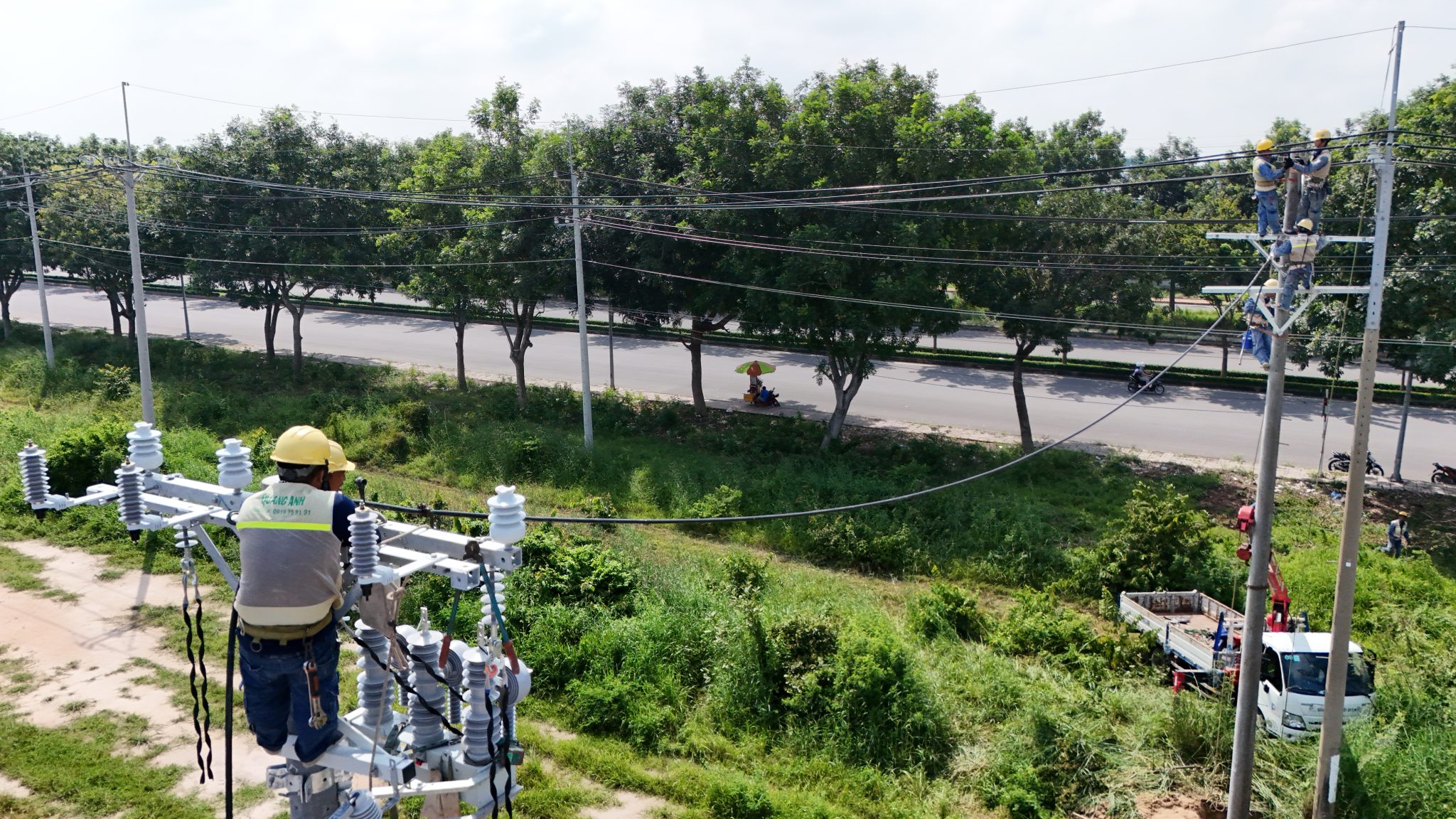
Transformer station prices primarily adjust based on capacity and station type.
At plant level, medium-voltage line length and installation location significantly influence costs.
Cost components usually comprise materials, construction machinery, labor, foundation, and medium-voltage connection fees.
To finalize price, it is essential to specify transformer capacity, station type, medium-voltage line length, and ground conditions.
| Item | Cost Impact/Assessment Criteria |
|---|---|
| Transformer Capacity | Costs rise with capacity from 100kVA to 2500kVA; accurate model and capacity needed. |
| Station Type | Integrated kios, rack, steel pole, outdoor station cause variations due to materials and installation. |
| Medium-Voltage Line Length | Length from EVN connection influences directly; costs usually incur beyond 40m. |
| Location and Terrain | Vehicle access, transportation routes, and distance to EVN lines impact logistics costs. |
| Ground Conditions | Diverse foundation treatments dictate installation and construction costs. |
| Special Equipment Needs | Undergrounding, explosion-proof, or specific gear increases costs beyond standard stations. |
| Labor and Construction Machinery | Labor and machine standards are contingent on team, progress, and construction difficulty. |
On-site, vehicle accessibility and EVN line distance affect transportation costs.
Ground conditions and construction complexity decide foundation methods and soil treatments.
Station type (integrated kiosk, outdoor station, rack or steel pole) causes significant price differences.
Special equipment needs like underground lines or explosion resistance raise costs compared to standard stations.
In maintenance or operations, complex terrain necessitates large crane usage.
This elevates machine standards and increases labor demand on site.
To confirm prices, field surveys are necessary to supply capacity, station type, and connection diagrams.
Medium-voltage line length and ground condition reports determine foundation methods and extra material needs.
Post-survey, contractors draft detailed estimates and methods suited to field conditions.
How to Read Quotes to Assess Missing Elements
To assess if a comprehensive quote lacks items, cross-reference design, construction, testing, connection, acceptance records, and contingency costs.

Direct check: evaluating whether a comprehensive quote misses elements involves comparing each mandatory component — design and appraisal, construction materials, testing, grid connection, and acceptance records — without only referencing total cost.
Onsite assessments should vet conditions affecting costs: the distance from power grid high-voltage lines (costs incurred if over 40m), construction equipment access, and electricity cut requirements as per distributor guidelines.
- Cross-reference “design” must include: detailed design and approval documentation.
- Inspect construction parts: main and auxiliary equipment, transportation, construction machinery to site.
- Testing: cost for transformer and electrical equipment testing must be separately listed.
- Acceptance/completion: acceptance, construction supervision, and completion evaluation need clear time and cost entries.
- Grid connection: electricity cut, connection fees, and cooperation with EVN must clarify responsibilities.
Below is a brief checklist to review comprehensive quotes before contract signing:
| Item | Check Content | Signs of Missing Quotes |
|---|---|---|
| Design & Appraisal | Includes appraisal design and approval, as-built drawings | No appraisal detail or no reference to completion drawings |
| Construction & Materials | List of main equipment, auxiliary materials, technical standards | Lists total cost only or omits auxiliary materials |
| Transportation & Machinery | Cost for equipment transportation, hire construction machinery, site access | Missing transport entries or vague “field condition” clause |
| Testing | Transformer testing, electrical testing, test report supply | No test costs or unspecified tests and execution responsibility |
| Acceptance & Completion | Construction supervision, acceptance, completion evaluation, completion documents | No separate acceptance/supervision cost or missing completion documents |
| Grid Connection & Shutdown | Electricity cut costs, grid connection, distributor cooperation responsibilities | Missing shutdown entries or no EVN cooperation clarification |
| Contingency | Contingencies for field variations, design changes, weather conditions | None or unclear contingency amounts |
| Tax, Fees, Safety | VAT, related fees, electrical safety measures on site | No listed tax/fees or missing electrical safety items |
| Station Type | Station type (rack, steel pole, kios), affecting unit price and materials | No specified station type or applies common pricing to multiple types |
Operational alert: unclear quote responsibilities regarding EVN cooperation and electricity cut processes raise risks of delayed energization; during maintenance or acceptance stages, this often leads to out-of-contract duties. Onsite, if the high-voltage cable distance exceeds 40m, request detailed cabling quotes.
Technical conclusion: request the contractor to clarify or supplement quotes according to checklist items, and align responsibilities with the power distribution body and construction timelines before signing comprehensive contracts.
Input Data Required for Accurate Pricing Quotes
Input data needed for transformer station quotes: rated capacity, medium/high voltage, station type, connection distance, forecast load, location, and acceptance requirements.
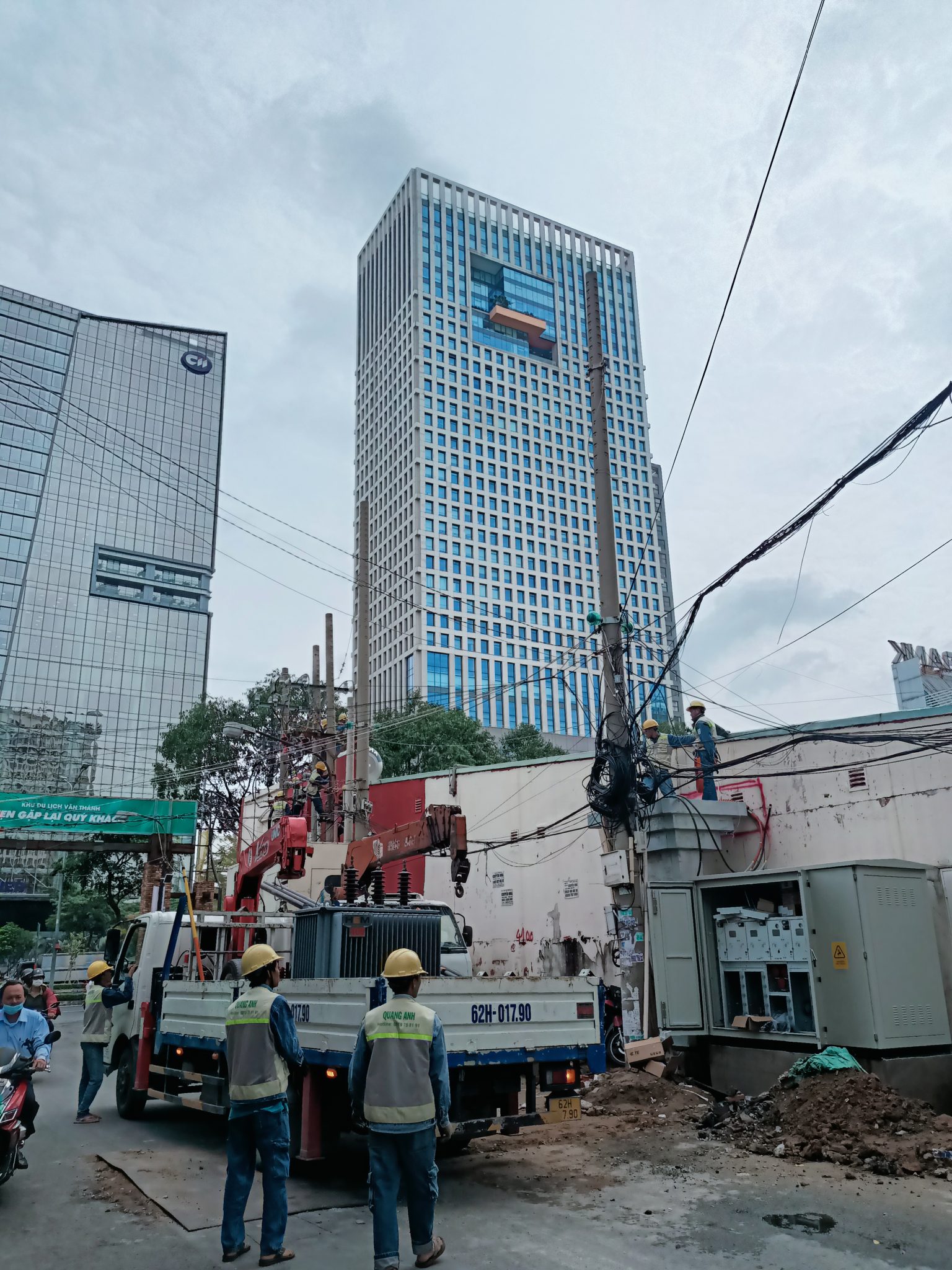
To secure an accurate transformer station pricing quote, gather fundamental information: rated capacity (kVA), medium and low-voltage levels, station type, connection distance, and projected load.
These data define the equipment scale and construction workload. Technically, the rated capacity of the transformer is core for selecting transformers and configuring wiring diagrams; input medium voltage and output low voltage establish the required dielectric structure and medium voltage equipment. Onsite evaluations require measuring the actual distance from EVN’s medium voltage connection to the station, as the standard connection distance limit is 40m; exceeding this incurs additional cable and detailed survey costs.
Prepare an information list (with corresponding field verification):
- Rated transformer capacity (kVA) — verify actual load or capacity forecast (kW, power factor cosφ, load coefficient).
- Input medium voltage and output low voltage — match it against existing network diagrams and required equipment.
- Station type (rack, steel pole, integrated kiosk, outdoor station) — check space availability and installation conditions at location.
- Connection distance to EVN high-voltage point — measure in-field to estimate cable volumes and cabling labor.
- Projected load (kW, cosφ, load coefficient) — calculate appropriate capacity and select protective devices.
Documents and conditions to provide additionally: preliminary site drawings, single-line diagram for estimate preparation, special requirements like underground medium voltage cables or explosion-proofing, auxiliary device count (RMU, SCADA, protection system), soil foundation conditions, and lightning protection requirements. At acceptance/testing phase, declare the project timeline and EVN acceptance conditions to map out acceptance planning and testing costs.
Practical decision alert: if requiring underground high-voltage cabling, explosion-proof, or beyond normal connection distances, the preliminary quote might significantly vary, necessitating a detailed site survey before finalizing. Additional costs usually encapsulate design, appraisal, testing, and grid connection shutdown; these must be explicitly listed when requesting comprehensive quotes.
Having the complete information above will shorten the query cycle during preliminary quote preparation; securing an official quote demands a field survey and EVN acceptance confirmations.
Compare comprehensive transformer station pricing only when matching capacity, scope, and connection conditions. The safest way is pre-defining work boundaries, input documentation, and included or excluded elements before evaluating quotes.
Frequently Asked Questions
Does comprehensive transformer station pricing usually include power grid connection?
There is no universal standard; a ‘comprehensive’ quote might include or exclude power grid connection segments. Principle: clarify responsibility boundaries — who prepares connection documents, runs medium voltage lines to the station, permits, and EVN fees. Supply connection point and medium voltage line status.
Does comprehensive pricing cover testing, validation, and acceptance documentation?
Testing, validation and acceptance documentation can be integrated or separate in contract terms. Principle: request the contractor lists detailed tests, certificates, acceptance records, and power grid acceptance responsibilities. If absent, demand comprehensive inclusion and fees.
Why is there a large pricing difference between two projects with the same capacity?
Differing prices arise from numerous factors beyond capacity: station type, transformer quality/brand, number and length of cables, medium voltage line costs, foundation and construction conditions, EVN hookup requirements, and timing goals. Principle: request contractors to itemize each cost group for equitable comparisons.
Do kiosk, base, and built stations have significant total cost differences?
Significant: integrated kiosks generally incur higher equipment costs but install quicker, while base/rack options are cheaper regarding equipment yet involve more for construction and foundation; building housing stations includes architectural and finishing expenses. Hint: provide preferred station type, site conditions, and maintenance agreement for precise contractor quotes.
What information should the factory provide for accurate pricing quotes?
Prepare: rated capacity (kVA), medium/low voltage levels, desired station type, installation site with map/photo, medium voltage connection distance and point, forecast load (kW, cosφ), site status and acceptance/stability operation requirements. These details help contractors break down precise costs.
How to Request Easily Comparable Comprehensive Transformer Station Quotes
- Decide on expected capacity and near-future expansion demands.
- Prepare installation site information, medium voltage source distance, and site status.
- State desired station type such as kiosk, base, or constructed.
- Request contractors distinctively separate equipment, construction, testing, connection, and tax fees.
- Check included or excluded listings before price comparisons.
- Cross-reference timelines, acceptance conditions, and coordination with power grids.
If you’re budgeting or reviewing an existing quote, attach information such as capacity, installation location, medium voltage source status, and operational needs to refine the scope extraction.
[contact-form-7 id="7239967" title="Contact form 1"]
Related Posts
Comprehensive Transformer Station Pricing: Elements and Considerations
Examine key components in comprehensive transformer station pricing including design, equipment, construction, testing, and connection [...]
Mar
Pricing Guide for 4000kVA Transformer Stations: Configuration, Cost, and Investment Process
An overview of configuration, cost estimates, connection approaches, and investment checklists for 4000kVA transformer stations [...]
Mar
Pricing and Setup of 3200kVA Transformer Stations: Configuration, Costs, and Investment Procedure
Explore the pricing structure for a 3200kVA transformer station, primary equipment configuration, cost variables, EVN [...]
Mar
Cost Estimation for 2500kVA Transformer Station: Configuration, Expenses, and Investment Process
Reference framework for quoting a 2500kVA transformer station based on configuration, station type, cable solutions, [...]
Mar
2000kVA Transformer Station Guide: Configuration, Costs, and Investment Process
Discover key aspects of a 2000kVA transformer station: from technical configuration and cost analysis to [...]
Mar
Pricing and Configuration Guide for 1600kVA Substations
A detailed guide on pricing for 1600kVA substations, including equipment specs, connection costs, EVN procedures, [...]
Mar
Comprehensive Guide to 1500kVA Substation Pricing: Configuration, Costs, and Investment Process
A comprehensive overview of configurations, costs, construction methods, connection procedures, and contractor selection for 1500kVA [...]
Mar
Tay Ninh Solar Power Planning: Technical Framework, Grid Interconnection, and Rollout Roadmap
Technical overview of solar planning in Tay Ninh: irradiation, grid capacity, permitting, design, operations, and [...]
Dec
Binh Duong Solar Planning: Regulatory Framework, Grid Interconnection, and an Implementation Roadmap for Factories and Industrial Parks
An overview of Binh Duong solar planning: legal framework, interconnection, design, risk management, and an [...]
Dec
Solar Farm Repair: O&M Workflow, IV Curve Diagnostics, Thermography, Inverter Service and Utility-Scale Safety
A utility-scale solar farm repair plan centered on O&M, IV curves, thermal imaging, inverter service, [...]
Dec
Dong Nai Solar Power Plan 2023–2025: Tri An 1,029 MW, Grid Upgrades and the DPPA Pathway
A complete look at Dong Nai’s solar power plan: Tri An 1,029 MW, irradiation potential, [...]
Nov
Quang Ngai Solar Power Plan 2024–2030: Legal Framework, Irradiance Potential, and Development Roadmap
A complete look at Quang Ngai’s solar power plan: capacity targets, irradiance (PVout), development zones, [...]
Nov
Solar Damage Assessment Services: On-Site Procedures, EL/IV/Thermography Testing & Compliance with Standards
Discover IEC/UL/NEC standard solar damage assessment processes: on-site evaluation, EL and IV curve testing, thermal [...]
Nov
Comprehensive Package Estimate for a 1800MVA 500kV Substation: Scope, Configuration 3x600MVA, Standards and Timeline Management
An overview of the 1800MVA 500kV substation estimate: construction scope, configuration 3x600MVA, GIS/AIS, SCADA, standards, [...]
Nov
Factory Electrical Systems: Comprehensive Design and Implementation Guide
Discover the detailed and safe process of factory electrical systems design and implementation. [...]
Oct
Blueprints Required for Factory Construction Permits
Discover the necessary blueprints in factory construction permit applications, from floor plans to electrical and [...]
Oct
What Are the Requirements for a Factory Construction Permit? A Comprehensive Guide
Explore the documentation and steps needed to secure a factory construction permit for streamlined project [...]
Oct
Factory Construction Permit Procedures in Vietnam: Essential Guidelines and Documents
Learn the procedures for securing a factory construction permit in Vietnam, focusing on document preparation [...]
Oct
Key Steps in the Factory Construction Process
Discover the essential steps and requirements for building factories. [...]
Oct
Comprehensive Electrical Substation Solutions by Quanganhcons
Discover the cutting-edge electrical substation solutions offered by Quanganhcons for industrial applications. [...]
Oct