

- Understand the typical setup of a 1600kVA substation for factories, covering transformers, medium and low voltage systems, and cabling.
- Identify components available for upfront pricing and those requiring site survey before finalizing the overall investment.
- Choose between oil or dry transformers, RMU versus FCO/LA, underground or overhead cables, single or loop circuit.
- Accurately evaluate cost-driving factors like substation type, terrain, connection strategies, and scheduled or hotline interruptions.
- Prepare a checklist for working with contractors and document requirements from investment to power-on acceptance.
- Factory investors preparing to invest in a 1600kVA substation.
- Technical, maintenance, or project management departments finalizing configuration and preliminary budgets.
- Procurement teams comparing equipment options and work scope before requesting comprehensive quotes.
When to read this?
- When estimating investment costs for a 1600kVA substation amidst inconsistent market pricing.
- If uncertain between kiosk, pad, indoor substations, or medium voltage underground cable options.
- When preparing documentation, schedules, and conditions for connection with the power company to avoid issues at power-on.
- 1. Standard Configuration for a 1600kVA Factory Substation
- 2. Choosing between Oil or Dry Transformers and Suitable Reactive Compensation
- 3. RMU AFLR, FCO, LA and Avoidable Mistakes in Medium Voltage Selection
- 4. Reference Costing by Component and Variables Affecting Expenses
- 5. Construction, Connection Plan, and Field Timeline from Survey to Energy Activation
- 6. Documentation, Acceptance, and Turnkey Contractor Selection Checklist
For a 1600kVA substation, it’s crucial for investors to have more than just a quoted price; understanding configuration, scope, and cost variables is key. Without clear demarcation of equipment, connection strategies, construction conditions, and power authority documentation, initial estimates can easily deviate from reality.
Standard Configuration for a 1600kVA Factory Substation
A standard 1600kVA (22/0.4kV) substation setup includes a main transformer, RMU/GIS medium voltage switchgear, ACB 2500A low voltage cabinet, grounding system, and relevant protection mechanisms.
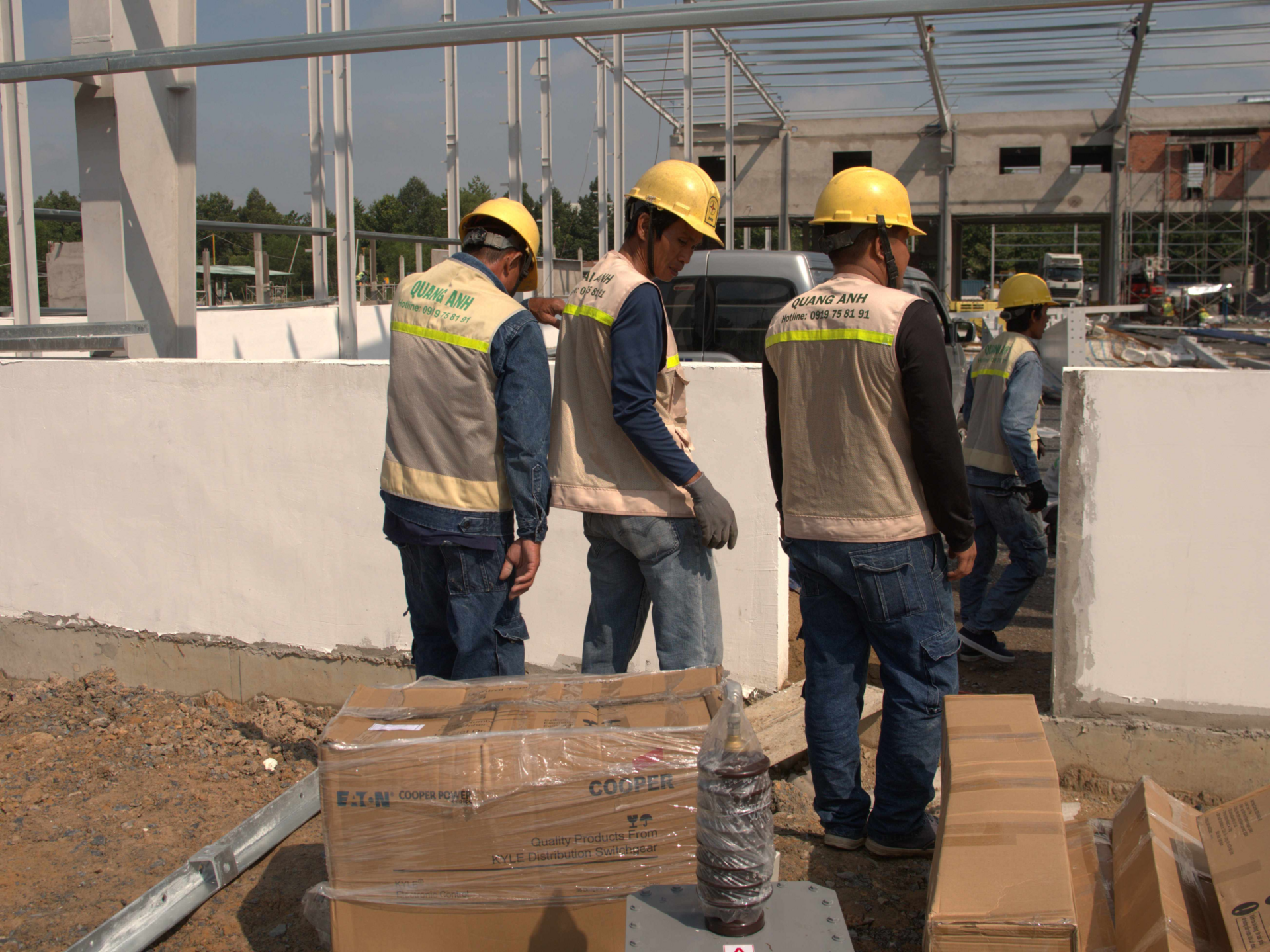
A standard 1600kVA substation includes a 1600kVA transformer (22/0.4kV), medium voltage cabinet (RMU or GIS) for connecting to the EVN grid, low voltage cabinet with ACB 2500A, grounding system, internal lighting, and relay protection system.
On-site surveys need to check the distance of medium voltage cables to the substation—typically capped at 40m in the quoted price—and the connection point to the EVN grid for determining the type of medium voltage cabinet (RMU or GIS) and mechanical bracing requirements.
For layout, kiosks style substations usually have three main divisions: transformer bay, medium voltage bay, and low voltage bay; the transformer can be oil or dry type, with cooling fans and metering systems. During acceptance/testing phases, the functioning of overload relays, short-circuit protection relays, and transformer safeguards must be verified before activation.
- 1600kVA Transformer 22/0.4kV—confirm oil/dry type and protective cabinet conditions prior to acceptance.
- Medium Voltage Cabinet (RMU/GIS)—verify EVN connection point and ensure MV cable distance does not exceed 40m.
- Low Voltage Cabinet with ACB 2500A—check operation cut-off ability and connections, record operational currents during maintenance.
- Protection and Metering Systems—overload/short-circuit relays, transformer protection; verify functionality during trials.
- Accessories: grounding, lightning protection, cooling fans, basic SCADA for remote monitoring.
For outdoor installation options, choose a gantry, steel pole, or kiosk suitable for environmental conditions; during periodic maintenance, measure coil temperatures and verify the integrity of grounding systems. Designs should comply with EVN acceptance requirements and related standards like QĐ-62 EVN, IEC 60076, TCVN 6306, Circular 25/2020/TT-BCT, and QĐ-96/HĐTV EVN.
Finalizing the scheme and BOM requires an on-site survey to determine transformer type (oil or dry), medium voltage cable location, and EVN grid connection conditions before pricing and project scheduling.
Choosing between Oil or Dry Transformers and Suitable Reactive Compensation
Compare oil and dry transformers based on installation conditions and decide on reactive power compensation to sustain operating cosφ and optimize costs.
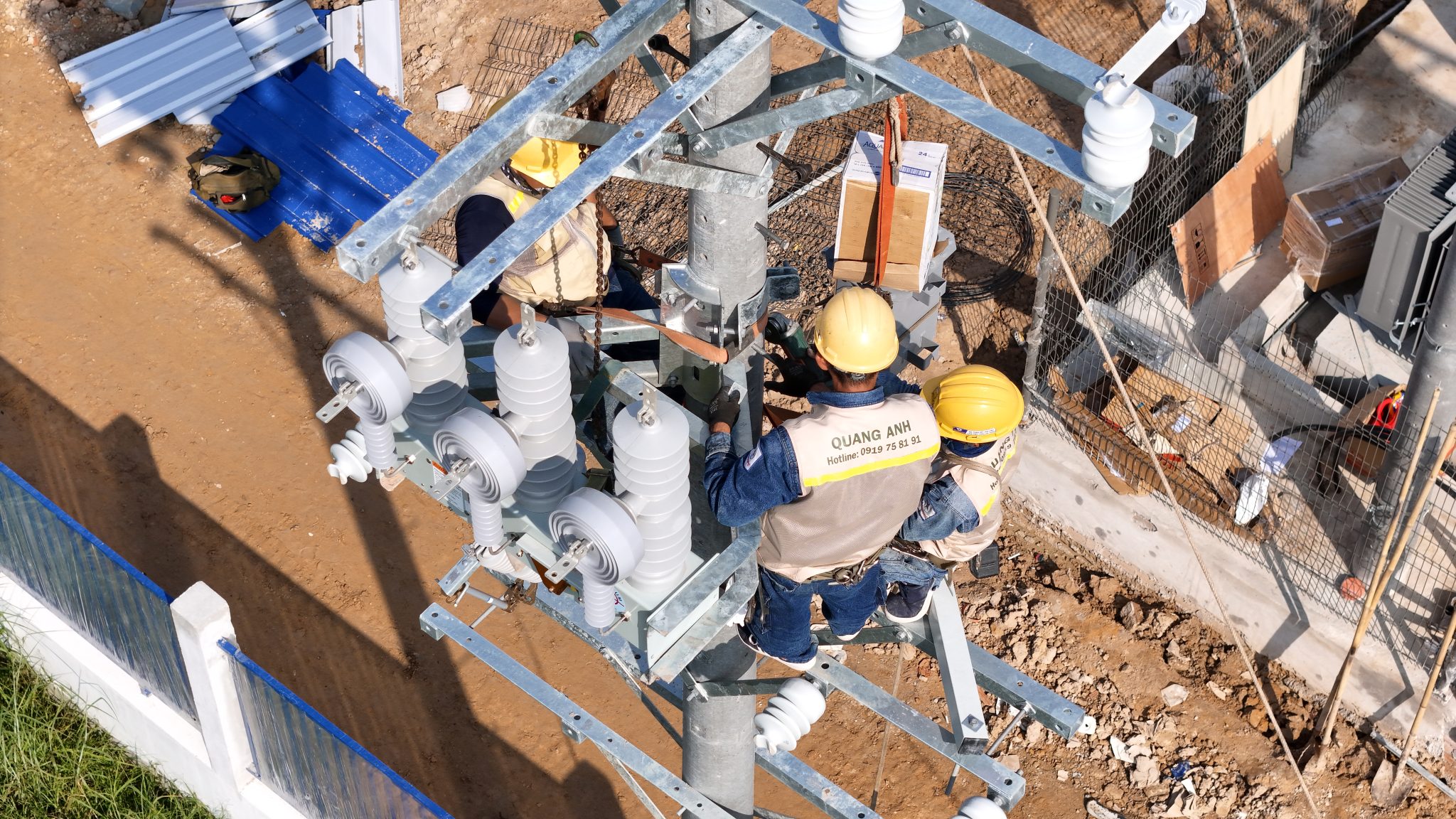
For a 1600 kVA substation, prioritize oil transformers in harsh environments; dry transformers are preferred where fire safety is critical or for indoor installations.
Reactive compensation is necessary when cosφ < 0.9; basic compensation power is calculated as Qc = P × (tanφ₁ − tanφ₂), with P being the real measured power on-site and φ₁, φ₂ as the phase angles before and after compensation. Equipment-wise, capacitors or automatic compensation sets (ATS) are typically installed on the low voltage side of the substation.
The selection criteria for transformers should be based on environmental conditions, installation location, fire safety, and investment/operation costs. During maintenance or on-site surveys, check environmental temperature, humidity, dust levels, and potential flammable material escape before finalizing the type.
| Specification | Reference Values for 1600kVA Transformer |
|---|---|
| Voltage Level | 22/0.4 kV |
| No-Load Loss Po | ≤ 490 W |
| Load Loss Pk | ≤ 13,680 W |
| Short-Circuit Voltage Uk | ≥ 6% |
The practical procedure for determining compensation levels and transformer type should include the following steps on-site:
- Measure the real power P and current power factor (cosφ) at the low voltage switchgear during representative operating hours.
- Calculate required Qc compensation with Qc = P × (tanφ₁ − tanφ₂); choose φ₂ corresponding to the target cosφ (e.g., 0.9 if subject to compensation fees).
- Compare required compensation power with the thermal tolerance and specifications of the selected transformer; install capacitors on the substation’s low voltage side.
- Risk assessment for safety: prioritize dry transformers for indoor or densely populated areas; choose oil transformers for humid, dusty environments or when excessive load capacity is needed.
Operation warning: selecting and installing excessive capacitors without surveying the actual load may cause overcompensation when the load decreases, leading to voltage fluctuations or sub-cosφ operational conditions. Plants should test incrementally when bringing capacitors into operation. Furthermore, oil transformers must comply with laboratory testing regulations and standards (e.g., QĐ-62 EVN) before acceptance.
Light conclusion: Based on listed specifications and on-site measurements, the final decision should rely on measured P and actual cosφ, installation environment, and safety requirements; a site survey is necessary to finalize the transformer type and suitable compensation power.
RMU AFLR, FCO, LA and Avoidable Mistakes in Medium Voltage Selection
Choosing RMU for underground cables requires discerning RMU with AFLR, FCO, and LA per IEC 62271-200 to ensure proper internal arcing and fault current handling.
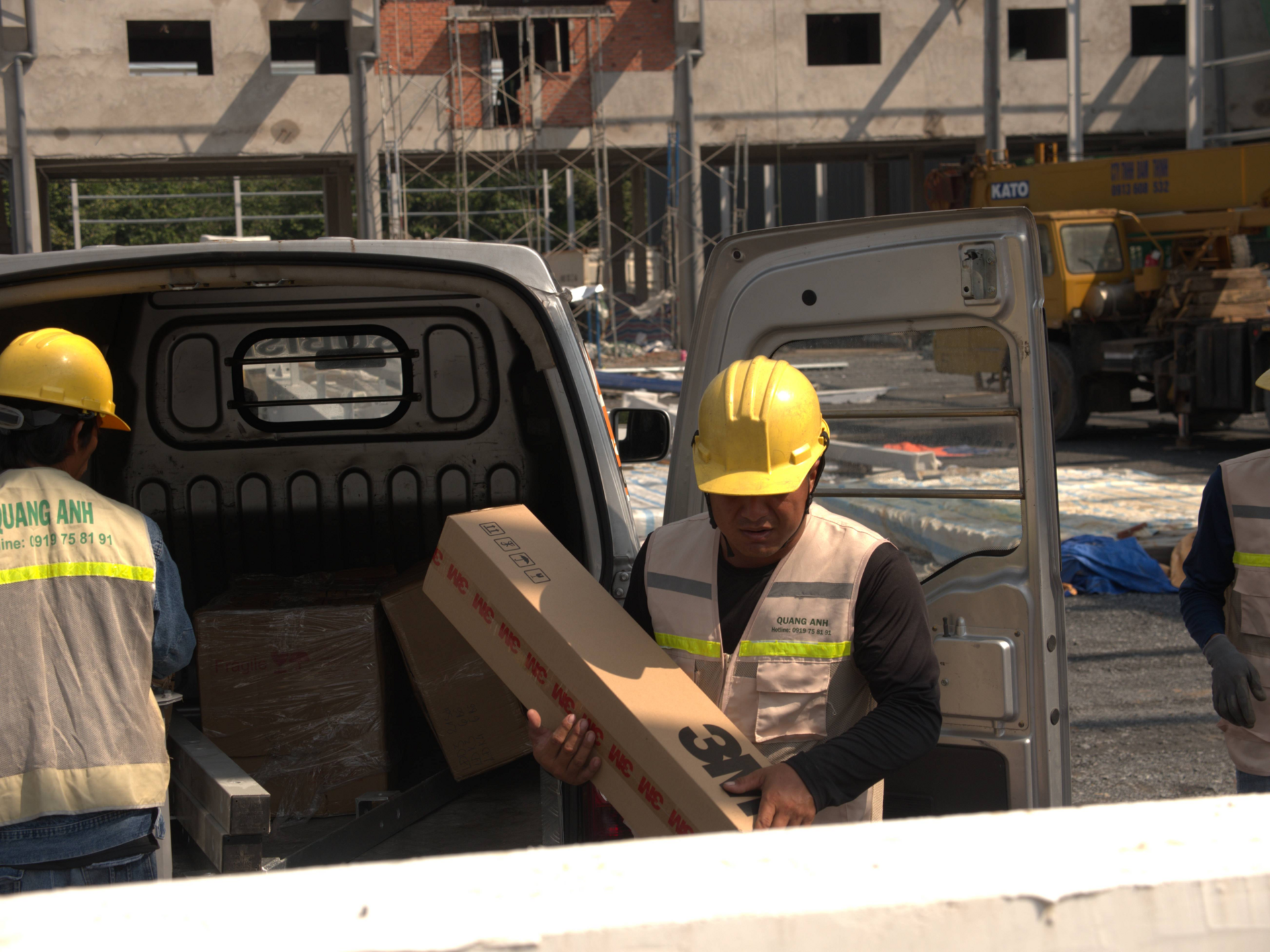
RMUs with AFLR are generally applied for underground cables needing internal arc energy limitation; AFLR stands for Arc-Flash Limiting Resistor per IEC 62271-200.
RMU is a medium voltage enclosed switchgear, suitable for underground cables and protecting equipment and personnel from direct contact with live components. According to IEC 62271-200, RMU classification directly relates to internal arc handling capability: from non-AFLR type (unlimited arc), AFLR type (restricted arc) to comprehensive protection type. During an on-site factory survey, check technical labels and catalogs to verify arc arc-handling type for each model.
FCO and LA serve different functionalities: FCO (Fault Current Limiter) reduces short-circuit current, while LA (Load Break Switch) is only capable of normal load switching and not interrupting fault currents. A common misunderstanding is selecting LA instead of FCO or RMU with AFLR when internal arc handling or high fault current is necessary. During maintenance and acceptance, signs of misfit include a catalog lacking AFLR, missing fault current specifications, or symbols per IEC 62271-200.
- On-site verification: confirm medium voltage level (22kV or 35kV) and the rated current on equipment labels.
- Catalog validation: verify if AFLR or internal arc handling per IEC 62271-200 is documented.
- Compare functionalities: if fault current limitation is needed, prioritize FCO or RMU with AFLR; avoid substituting LA.
- Project/EVN requirements: verify arc protection level requirement from design documents or grid authority.
For a 1600kVA substation, detailed field surveys are necessary to clearly identify medium voltage level, rated current, and arc protection requirements set by EVN or design. Incorrect selection of medium voltage equipment can lead to non-compliance with safety standards, increased risk of malfunction, and future repair costs. To proceed with technical decisions, gather comprehensive catalogs, fault current data, and protection requirements from the investor or grid supplier.
Reference Costing by Component and Variables Affecting Expenses
Understand 1600kVA substation pricing by cost groups and identify variables requiring survey before finalizing detailed quotes.
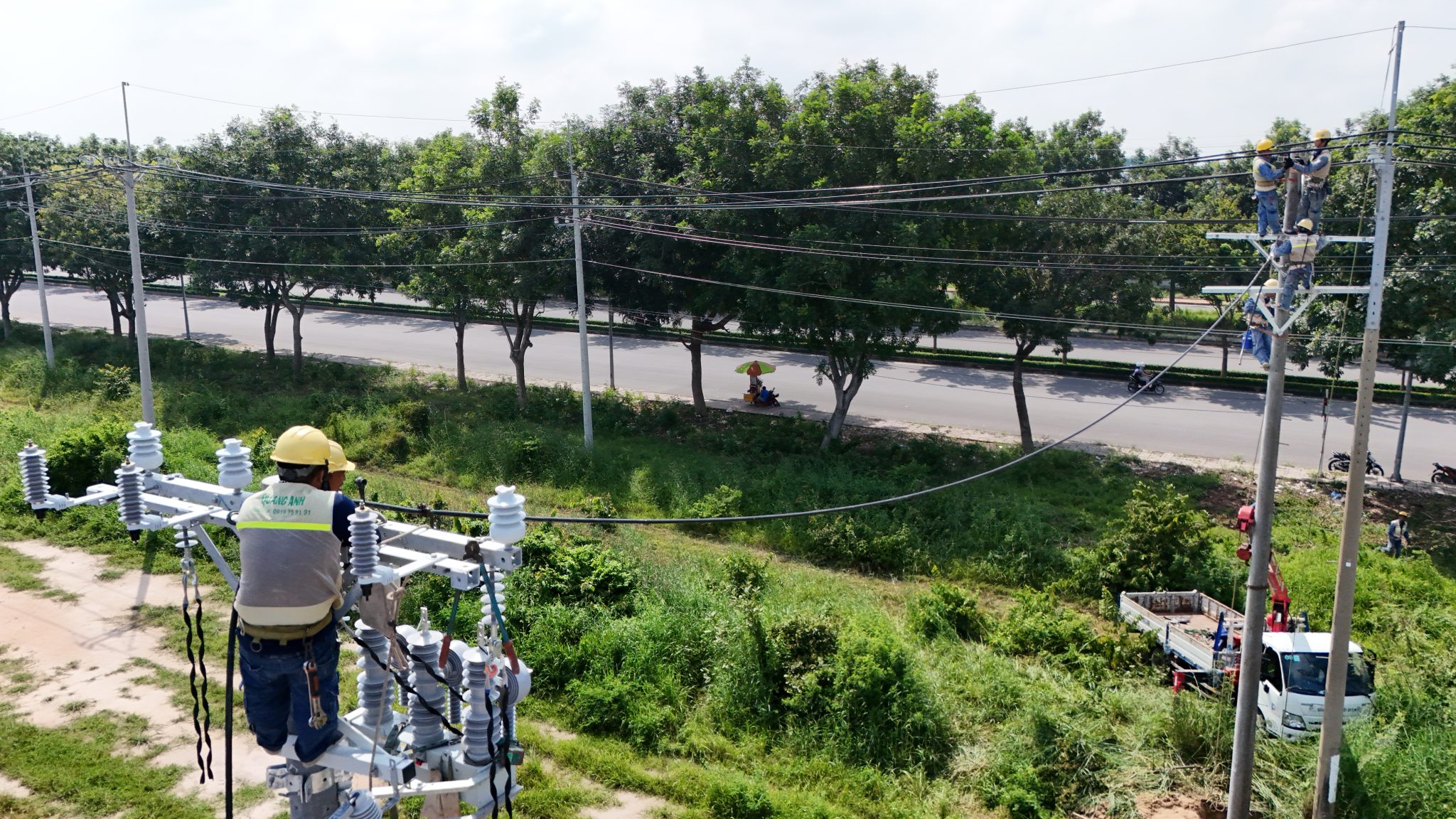
Comprehensive pricing for a 1600kVA substation often divides into main cost groups: transformers, control/distribution cabinets, construction, installation, testing, and EVN grid connection.
Based on reference range, the price for a 1600kVA oil transformer (22/0.4kV) varies between 856–962 million VND depending on input voltage and configuration, while turnkey project estimates (supply + installation) range from 1.585 to 1.968 billion VND depending on substation type and applicable standards. Testing and inspection costs at electrical test centers are not included in transformer prices and must be separately estimated; on-site surveys must clarify medium voltage cable routes, construction site, and EVN connection conditions before price confirmations.
Below is an advanced cost component breakdown and real-time variables needing verification:
| Cost Group | Description | Influence Variables |
|---|---|---|
| Transformer | Oil transformer supply 1600kVA, complies with loss and technical specs per EVN QĐ-62 | Input voltage level (10/15/22/35kV), core type (EMC Amorphous), Po loss ≤ 490W, Pk loss ≤ 13,680W, Uk ≥ 6% |
| Control/Distribution Cabinets | Main, metering, and capacitive cabinets if present, protection devices | Protection standard, automation level, available space for cabinets |
| Construction Works | Foundation, indoor/outdoor transformer room, drainage system | Substation type (enclosed/open), geology, overall site layout, noise/fireproof requirements |
| Installation & Connection | Mechanical-electrical work, medium voltage cabling, EVN grid connection | Connection distance, site construction conditions, EVN requirements |
| Testing & Acceptance | Field testing and certification at electrical testing centers | Acceptance scope, separate inspection costs, EVN schedule |
| Maintenance & Lifecycle Costs | Spare parts, maintenance schedule, material quality | Product durability, long-term maintenance demands impacting total ownership costs |
Real-world variables that often alter quoted costs include:
- Input voltage level and transformer configuration (direct impact on pricing and design).
- Substation type (indoor/outdoor, enclosed/open) and construction requirements.
- Environmental conditions (temperature, humidity, dust) and corrosion protection needs.
- Scope of work for EVN connection and testing/certification costs not included in the transformer quote.
- Power loss requirements and standards (Po, Pk, Uk) influencing machine types and costs.
- Unique client requirements and long-term maintenance costs affecting investment decisions.
Practical warning: preliminary pricing is directional if there’s no survey of the medium voltage cable route, site construction, and EVN connection conditions; during field trials/surveys, measure connection distances, check soil conditions, and define testing scope before contract closure. When requesting an official quote, provide position drawings, connection diagrams, and standard requirements to prepare a detailed estimate.
Construction, Connection Plan, and Field Timeline from Survey to Energy Activation
The sequence for constructing a 1600kVA substation from surveys, foundation, installation to power activation, distinguishing planned blackout vs hotline connection options influenced by terrain and weather.

The construction sequence begins with site surveys, followed by foundation preparation, equipment installation, medium and low voltage connection, and finally dielectric testing before power activation.
During site surveys at factories, establish the location of the 1600kVA transformer, medium voltage lines, construction accessibility, and terrain conditions. On-site checks of foundation layers, slopes, anchors for medium voltage cables, and feasibility for underground cables in industrial zones are crucial to final foundation design and construction strategies.
The connection diagram must encompass RMU cabinets, medium voltage cables, low-voltage connections, and protective devices per acceptance requirements; during maintenance or acceptance, check cable dielectric, joint connections, and protection functions before grid linkage. Dielectric testing and equipment inspection should be completed per EVN acceptance procedures before power-on.
| Section | Description | Points to Check |
|---|---|---|
| Site Survey | Identify substation siting, medium voltage lines, and terrain conditions | Access to medium voltage lines, boundary, temporary drainage |
| Concrete Foundation | Foundation adapted to flat terrain or hilly environments | Depth, leverage against slipping, inspect foundation layers |
| 1600kVA Transformer Installation | Install after material inspection; low-voltage linking before medium voltage | Check bolting, electrical corridor spacing, grounding technique compliance |
| Medium Voltage & RMU Connection | Connect medium voltage cables to RMU and ensure protection | Verify cable insulation layers, joints, blackout/hotline permissions |
| Testing & Acceptance | Dielectric testing, no-load trials, acceptance per procedure | Testing reports, protection functions, approval for power activation |
Field timelines generally vary; typically, total duration from survey to activation can range from 30-60 days, depending on model and operating conditions. Control milestones include:
- Survey: 1-3 days—checking line status and substation location.
- Foundation: 7-10 days—relying on reinforcement for hilly sites.
- Equipment Installation: 10-15 days—including transformer and RMU installation, low-voltage links.
- Testing and Acceptance: time varies based on testing requirements and reporting.
The choice between scheduled outages or hotline connections depends on coordination with EVN, acceptable interruptions, and safety considerations. Hotline connections minimize downtime but require specialized equipment, certified personnel, and specific approvals; this is crucial on-site if scheduling an outage is unfeasible.
Operational warning: working during rainy seasons or on landslide-prone terrain requires temporary drainage measures and foundational reinforcements to prevent slippage before pouring concrete; safety protocols and blackout/hotline permits must be followed during medium voltage line construction. Moreover, high population density or restricted access will increase time and preparatory efforts.
Conclusion of tasks includes acceptance per regulations and safety reporting before power-on; depending on real conditions, thorough surveys are necessary to decide scheduled outages or hotline connections and plan for storm reinforcement and foundation stability on mountainous terrain.
Documentation, Acceptance, and Turnkey Contractor Selection Checklist
Document package for 1600kVA substation energizing includes technical drawings, legal procedures, and contractor competence evaluation criteria.
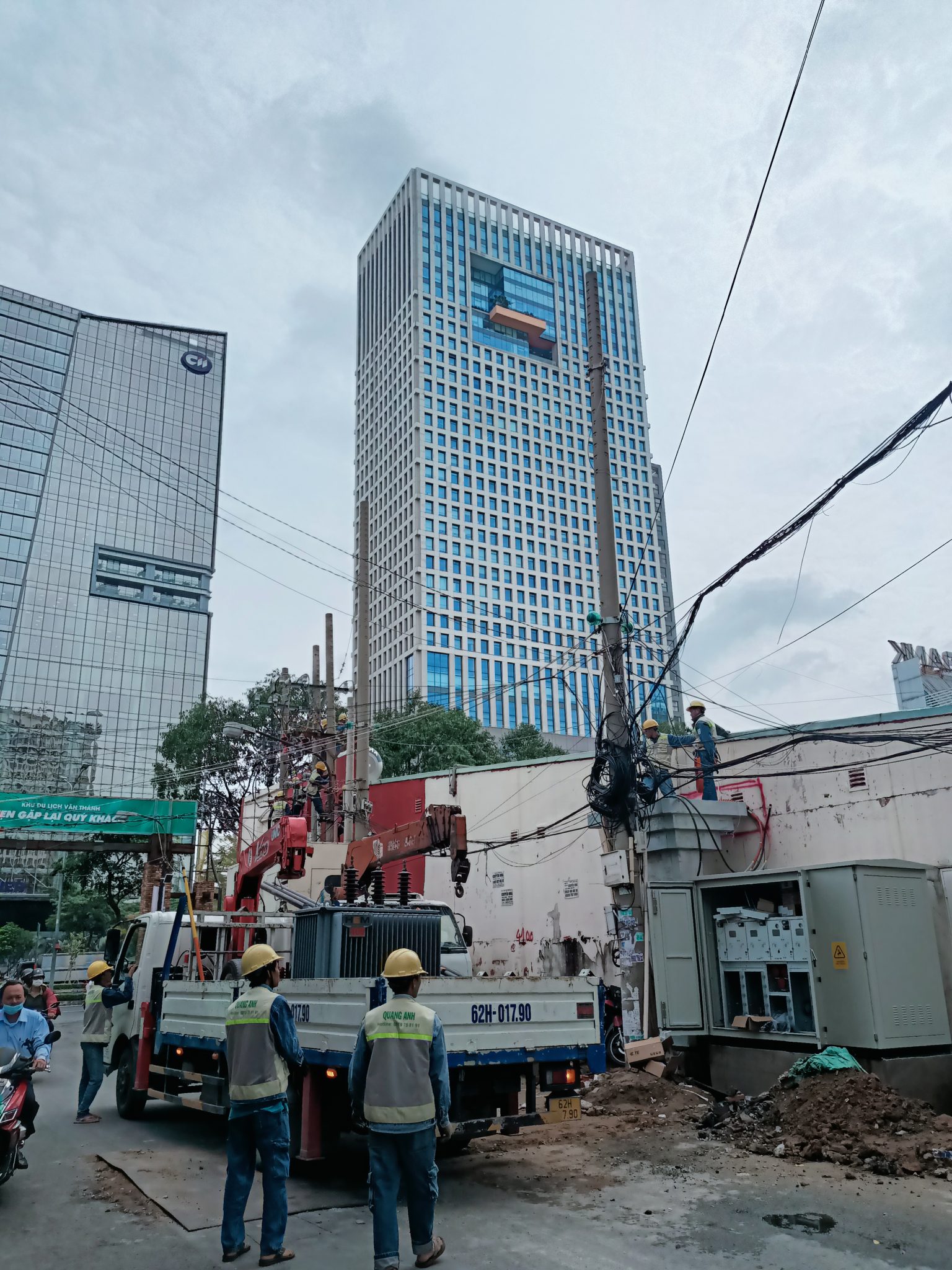
A complete documentation package for a 1600kVA substation must include technical designs, construction permits, contracts with EVN/EVNSPC, electrical safety records, acceptance minutes, and energizing test reports.
The projected timeline for the entire project, including design, construction, and completing energizing acceptance procedures, is 60 days. A turnkey price applies only within a maximum 40m distance from medium voltage lines; exceeding this distance requires field surveys and additional costs of 35.5 million VND per additional 40m cable extension.
During acceptance and test runs, perform fundamental electrical tests before official energy output: verify voltage and current, measure calculated and actual losses, check grounding and dielectric using appropriate devices, and synchronize phase testing and trial energizing. During factory acceptance testing, verify material certificates, labels, and bolts/cables fasteners to minimize mechanical risks.
- Contractor selection criteria: experience with similar-powered substation energizing, completed project records, electrical safety certificates, warranty/maintenance history.
- Avoid assessments based solely on quoted prices; verify actual energizing competence and promised completion timelines.
- Contractor technical documentation requirements: single-line diagrams, loss calculation tables, foundation design, safety labor plans, and pre-energizing test plans.
Below is a framework of work scope and points to check for bidding and real-world acceptance documentation.
| Task | Description | Points to Check |
|---|---|---|
| Technical Design | Single-line diagram, foundation drawings, loss calculations | Cross-check specifications, check loss calculations, design sign-off |
| Licenses & Contracts | Construction permits, contracts with EVN/EVNSPC | EVN approvals, complete permits, and legal documentation |
| Construction & Materials | Supply/installation of transformers, medium voltage cabinets, grounding | Verify material certificates, labels, inspect connections and fixtures |
| Testing & Acceptance | Dielectric testing, grounding resistance, loss measurement, trial energizing | Test results, trial energizing records, formal acceptance minutes |
The decision to sign a turnkey contract should be based on actual competence documents and evidence of energizing similar stations. During factory or site surveys, demand contractors to present similar project acceptance reports and warranty schedules for comparison basis.
To invest safely in a 1600kVA substation with minimal issues, follow a sequence: identify load and substation approach, separate costs by component, verify grid connection conditions, and evaluate contractors based on proven energizing capabilities instead of just input pricing.
Frequently Asked Questions
What factory load does a 1600kVA substation support?
It matches when the plant’s peak load and coincidence factor closely align with the 1600kVA transformer’s capacity; consider motor start loads, non-linear load content, and expansion plans. Include: hourly load charts, start-up loads, and growth forecasts.
Should I choose an oil or dry transformer for a 1600kVA substation?
The decision for oil or dry transformers depends on installation location, fire protection needs, ventilation, cost, and overload capability. Dry transformers suit indoor or populated areas; oil transformers generally have higher efficiency and overload capacity for outdoor industrial environments. Provide installation conditions and safety criteria.
When is an RMU needed for a 1600kVA substation with underground medium voltage lines?
Utilize RMUs for underground medium voltage feeders requiring enclosed bays, branch divisions, and safe on-site operations. RMUs suit looped circuits or multiple branches; additional AFLR/FCO choices rely on short-circuit levels and arc-handling needs. Provide cable route diagrams and short-circuit values at connection points.
Is a hotline connection cost always applicable for a 1600kVA substation?
Hotline connections aren’t always necessary. They’re essential where continuous production or operation requires non-interruptibility; this approach increases costs, execution skills, and safety risks. Check power authority rules, interruption plans, and contractor feasibility.
Why does the total investment for two 1600kVA substations with the same capacity differ significantly?
Price discrepancies arise from several elements: substation type (kiosk, indoor, pad), transformer type, medium voltage equipment, cable length, foundation structure, execution conditions, technical standards, and deadlines. Principle: decompose by BOM and conduct field inspections to identify variable items.
What should be verified with a contractor before outsourcing complete substation work?
Assess contractor capacity through similar project’s energizing documentation, electrical safety certifications, technical personnel, construction methods, testing competence, warranty, insurance, and client references. Request energizing records, construction diaries, and tangible acceptance proof from past projects.
How to Prepare for a 1600kVA Substation Investment Efficiently
- Review max load and simultaneous factor, including expansion plans, to confirm 1600kVA suitability.
- Pre-select substation type, installation location, and medium voltage cable route based on actual site layout.
- Separate the quote scope into main equipment, cabling, construction, testing, documentation, and power utility connection.
- Engage early with the power utility to verify supply plans, outage schedules, or hotline connection feasibilities.
- Compare at least two technical approaches rather than a single lump-sum price.
- Judge contractors by actual competence documents, execution methods, and similar project’s energizing experience.
- Only finalize contracts when clear on drawings, main equipment lists, and handover acceptance conditions.
If defining a 1600kVA method based on specific site layouts, cable routes, and realistic connection conditions is required, start with a technical survey to outline scope before evaluating quotes.
[contact-form-7 id="7239967" title="Contact form 1"]
Related Posts
Pricing and Configuration Guide for 1600kVA Substations
A detailed guide on pricing for 1600kVA substations, including equipment specs, connection costs, EVN procedures, [...]
Mar
Comprehensive Guide to 1500kVA Substation Pricing: Configuration, Costs, and Investment Process
A comprehensive overview of configurations, costs, construction methods, connection procedures, and contractor selection for 1500kVA [...]
Mar
Tay Ninh Solar Power Planning: Technical Framework, Grid Interconnection, and Rollout Roadmap
Technical overview of solar planning in Tay Ninh: irradiation, grid capacity, permitting, design, operations, and [...]
Dec
Binh Duong Solar Planning: Regulatory Framework, Grid Interconnection, and an Implementation Roadmap for Factories and Industrial Parks
An overview of Binh Duong solar planning: legal framework, interconnection, design, risk management, and an [...]
Dec
Solar Farm Repair: O&M Workflow, IV Curve Diagnostics, Thermography, Inverter Service and Utility-Scale Safety
A utility-scale solar farm repair plan centered on O&M, IV curves, thermal imaging, inverter service, [...]
Dec
Dong Nai Solar Power Plan 2023–2025: Tri An 1,029 MW, Grid Upgrades and the DPPA Pathway
A complete look at Dong Nai’s solar power plan: Tri An 1,029 MW, irradiation potential, [...]
Nov
Quang Ngai Solar Power Plan 2024–2030: Legal Framework, Irradiance Potential, and Development Roadmap
A complete look at Quang Ngai’s solar power plan: capacity targets, irradiance (PVout), development zones, [...]
Nov
Solar Damage Assessment Services: On-Site Procedures, EL/IV/Thermography Testing & Compliance with Standards
Discover IEC/UL/NEC standard solar damage assessment processes: on-site evaluation, EL and IV curve testing, thermal [...]
Nov
Comprehensive Package Estimate for a 1800MVA 500kV Substation: Scope, Configuration 3x600MVA, Standards and Timeline Management
An overview of the 1800MVA 500kV substation estimate: construction scope, configuration 3x600MVA, GIS/AIS, SCADA, standards, [...]
Nov
Factory Electrical Systems: Comprehensive Design and Implementation Guide
Discover the detailed and safe process of factory electrical systems design and implementation. [...]
Oct
Blueprints Required for Factory Construction Permits
Discover the necessary blueprints in factory construction permit applications, from floor plans to electrical and [...]
Oct
What Are the Requirements for a Factory Construction Permit? A Comprehensive Guide
Explore the documentation and steps needed to secure a factory construction permit for streamlined project [...]
Oct
Factory Construction Permit Procedures in Vietnam: Essential Guidelines and Documents
Learn the procedures for securing a factory construction permit in Vietnam, focusing on document preparation [...]
Oct
Key Steps in the Factory Construction Process
Discover the essential steps and requirements for building factories. [...]
Oct
Comprehensive Electrical Substation Solutions by Quanganhcons
Discover the cutting-edge electrical substation solutions offered by Quanganhcons for industrial applications. [...]
Oct
Investment Costs for a 1MWp Solar Power System and Influencing Factors
Explore the investment costs for a 1MWp solar power system in Vietnam and the influencing [...]
Sep
QuangAnhcons: Elevating Wind Energy Solutions
Explore QuangAnhcons' leadership in wind energy and renewable solutions in Vietnam. [...]
Sep
Electrical Contractor Strategies at Becamex Industrial Park
Discover the strategic advancements and partnerships of the electrical contractor at Becamex Industrial Park. [...]
Sep
Investment Insights for 1MW Wind Energy in Vietnam: Costs and Opportunities
Discover the detailed analysis of costs and opportunities for investing in 1MW wind energy projects [...]
Sep
Advanced Electrical Installation Solutions by QuangAnhcons
Explore advanced electrical installation solutions and modern technology with QuangAnhcons. [...]
Sep