

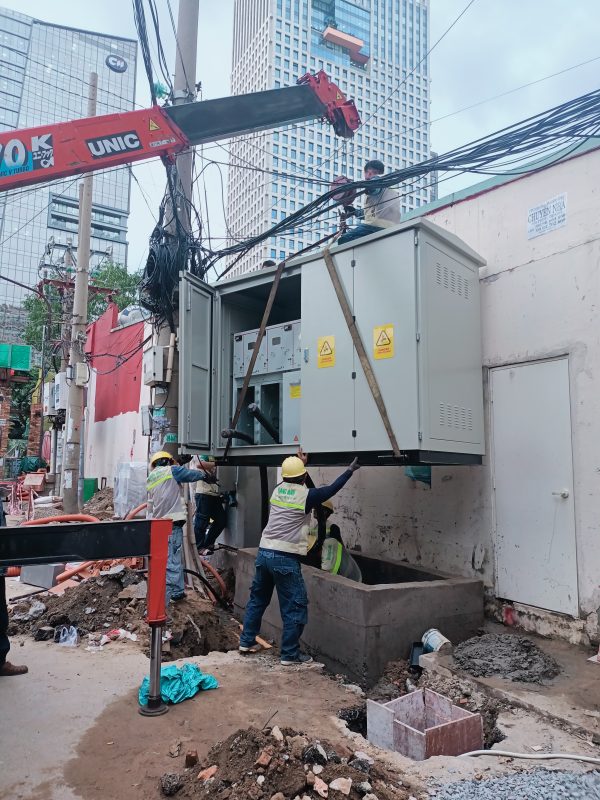
Electrical system maintenance is crucial for ensuring smooth and safe operations of electrical setups across various sectors, including industrial and residential.
Key Activities in Electrical System Maintenance
Maintenance services encompass comprehensive activities such as Inspection and Tracking: performing routine checks on electrical equipment like transformers, capacitors, circuit breakers, and safety devices. Cleaning and Servicing: removing dust to ensure heat dissipation and ventilation, reducing overheating or short-circuit risks. Consulting and Upgrading: advising on investment, upgrading, or improving electrical equipment for optimal performance. Cable Management: organizing and labeling electrical cables to prevent signal interference and ensure safe repairs.
Ensuring the system operates safely and efficiently requires adherence to detailed maintenance activities:
-
Regular Inspections: Start with scheduled inspections to identify potential issues early. This includes detecting wear and tear of components, with regular electrical checks serving as a foundation for long-term system stability.
-
Cleaning and Servicing Components: An essential part of this service involves cleaning electrical equipment to prevent overheating and maintain optimal performance. Regular maintenance ensures efficient operation of system components.
-
Replacing Faulty Parts: Prompt replacement of malfunctioning parts is necessary to uphold the system’s highest efficiency and safety levels.
-
Safety Testing: Electrical safety is a top priority. Conduct safety tests to ensure the system complies with industry standards, thereby avoiding unnecessary risks.
-
Recording and Reporting: Detailed records of inspections and maintenance support proactive future maintenance planning.
-
Upgrades and Updates: Upgrading electrical equipment not only boosts performance but also saves energy, meeting constantly evolving standards with new technology.
-
Training and Instruction: Staff training on usage and maintenance reduces risks and enhances operational efficiency.
The role of electrical maintenance is critical for stable operation and cost-saving in buildings, industrial zones, or commercial centers. These tasks are often carried out by owners or independent service providers, on a scheduled basis or when issues arise.
The Benefits of Electrical System Maintenance
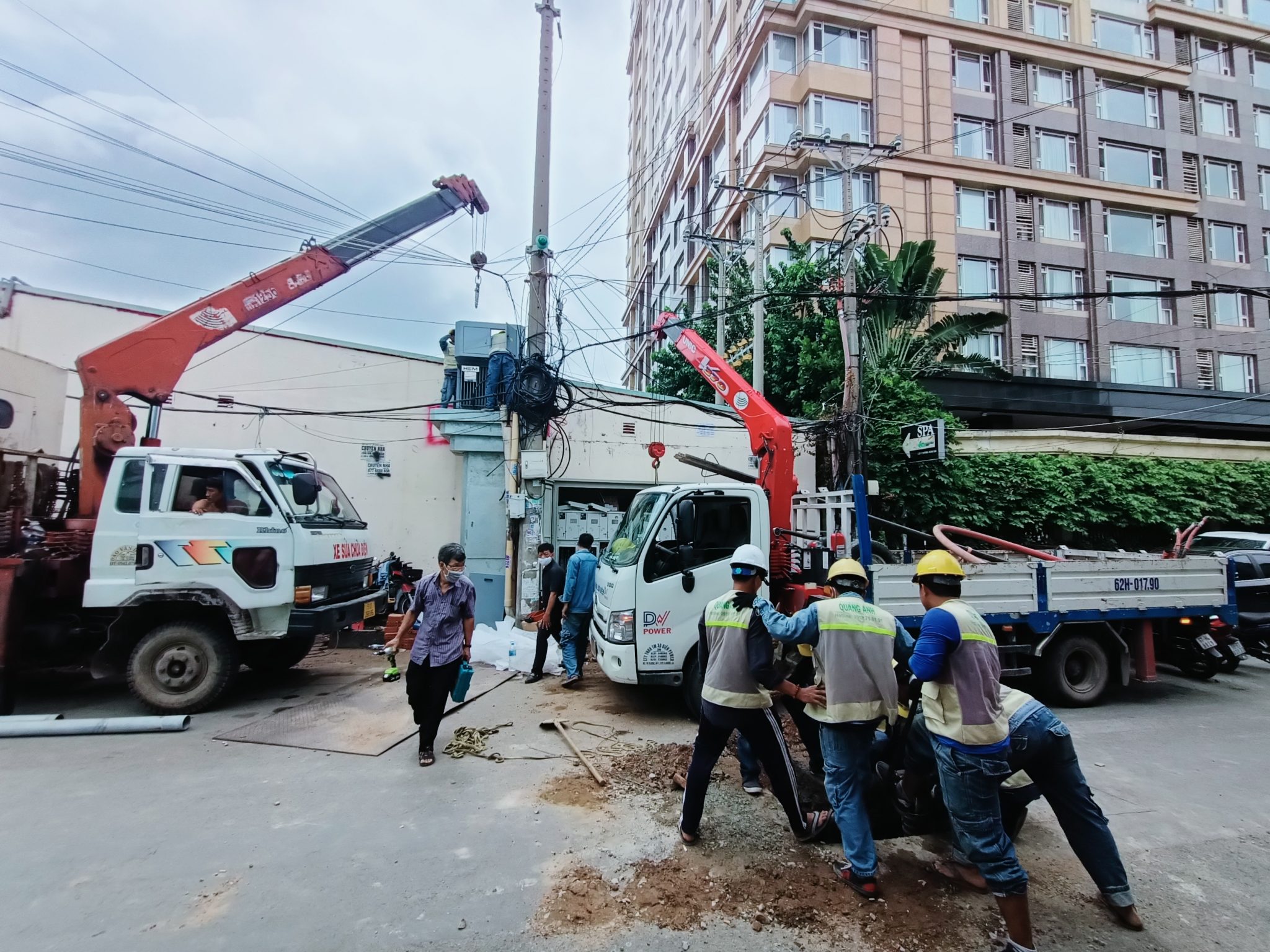
Electrical maintenance services offer significant advantages such as Cost Savings: extending equipment lifespan, reducing replacement costs, and avoiding unwanted fines from power providers. Operational Optimization: minimizing production downtime, ensuring continuous and efficient operations. Electrical Safety: preventing electrical hazards like fires or short circuits, making workplaces safer. Energy Conservation: ensuring efficient equipment operation, cutting energy costs and operational expenses.
- Cost and Energy Efficiency
- Energy savings: Proper system maintenance distinctly reduces energy consumption by 5% to 20%, significantly lowering electricity bills.
- Reduced repair costs: Scheduled maintenance prevents unwanted failures and damages, thus reducing repair and replacement expenses.
- Enhanced Safety and Performance
- Improved workplace safety: Maintenance helps identify and resolve issues before escalating, enhancing safety for workers and their environment.
- Increased production efficiency: Well-maintained systems ensure stable equipment performance, boosting production capabilities and minimizing downtime.
- Asset Protection
- Safeguarding equipment and investments: Routine maintenance extends equipment longevity, protecting enterprise assets from undue damage.
- Efficient Management and Quick Incident Response
- Swift incident response: Professional maintenance services ensure rapid handling of electrical issues, minimizing unforeseen losses.
- Effective management: Utilizing advanced technology for remote system tracking reduces human error risks.
Common Forms of Electrical System Maintenance Services
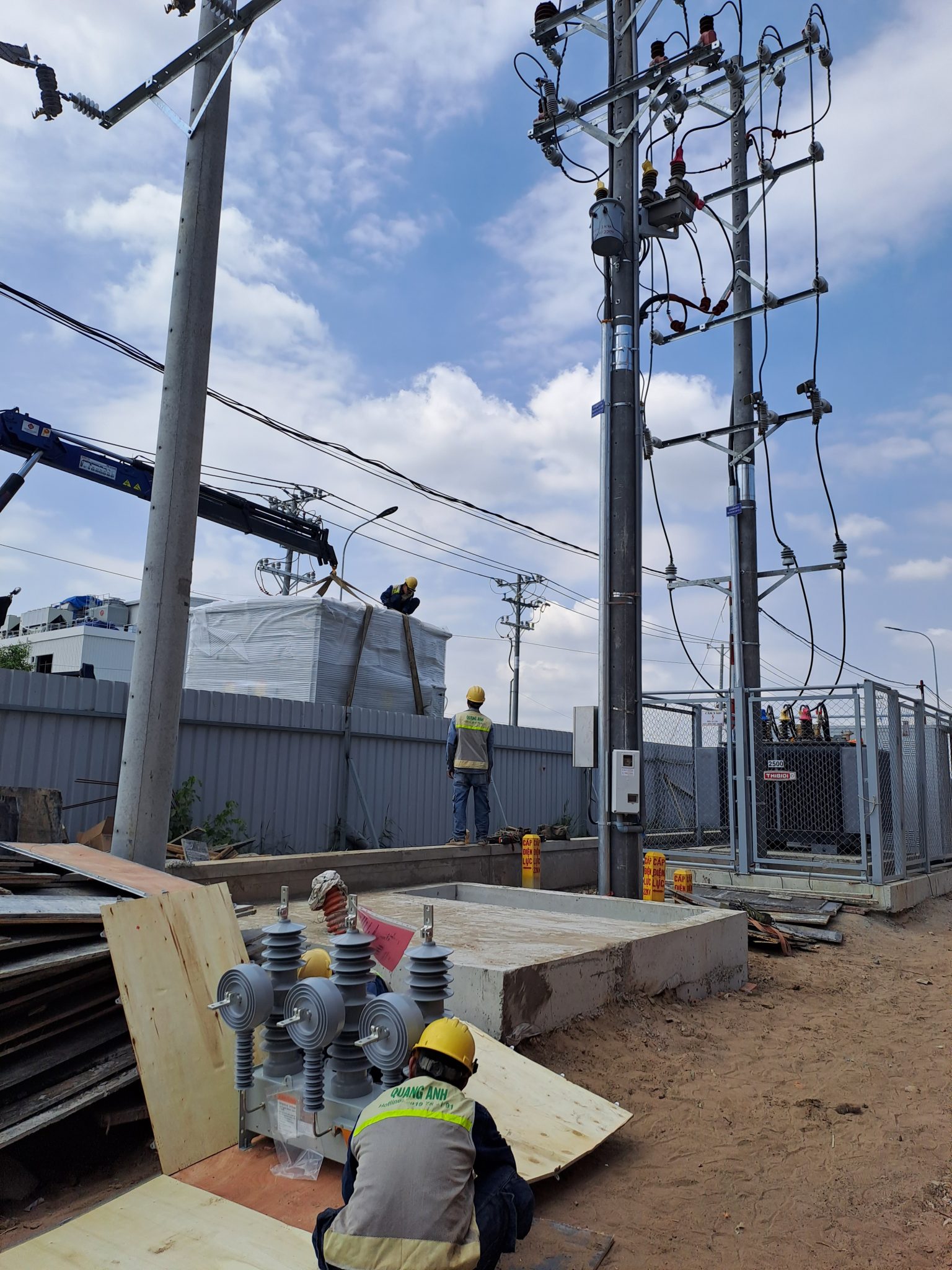
Electrical maintenance is commonly offered in two main forms: Scheduled Maintenance: periodic checks and servicing ensure the system remains in optimal condition. On-Demand Maintenance: conducted upon incidents or customer requests, quickly resolving arising issues.
Maintaining consistent performance and safety of electrical systems is crucial. Electrical maintenance services are categorized into various forms, each with specific approaches and goals.
Preventive Maintenance
Preventive maintenance focuses on regular inspections to detect and address problems early. This includes cleaning systems, preemptively replacing components like contacts and wires, and evaluating safety standards like insulation and load capacity.
Condition-Based Maintenance
This form relies on continuous monitoring using measurement tools. Data analysis from sensors aids in fault prediction, improving the accuracy of forecasts and timely maintenance of components showing wear.
Corrective Maintenance
Carried out when unexpected system failures occur, this involves in-depth repairs including dismantling and inspecting devices like MCBs, MCCBs, and inverters to determine and resolve root causes.
Scheduled Maintenance
For cyclical systems, scheduled maintenance is applied with specific timelines, typically every 3 to 6 months or following manufacturer recommendations, ensuring thorough inspection and maintenance from substations to distribution equipment.
Automated Maintenance
Automated maintenance leverages new technologies like IoT and remote monitoring software. Integrated sensors and monitoring software detect abnormalities, while PLC and inverter software updates optimize performance.
Standard Maintenance Protocol
- Preparation: Planning and preparing necessary equipment and personnel.
- Execution: Thorough cleaning and technical parameter checking.
- Post-maintenance Check: System testing to ensure stable operation.
- Reporting: Detailed documentation of discovered issues and resolutions applied.
New Trends in Maintenance
Technological advancements are driving maintenance services forward with AR/VR and AI applications. Remote maintenance with AR/VR supports technicians through online visual aid, while AI offers flexible fault prediction using machine learning from historical operational data.
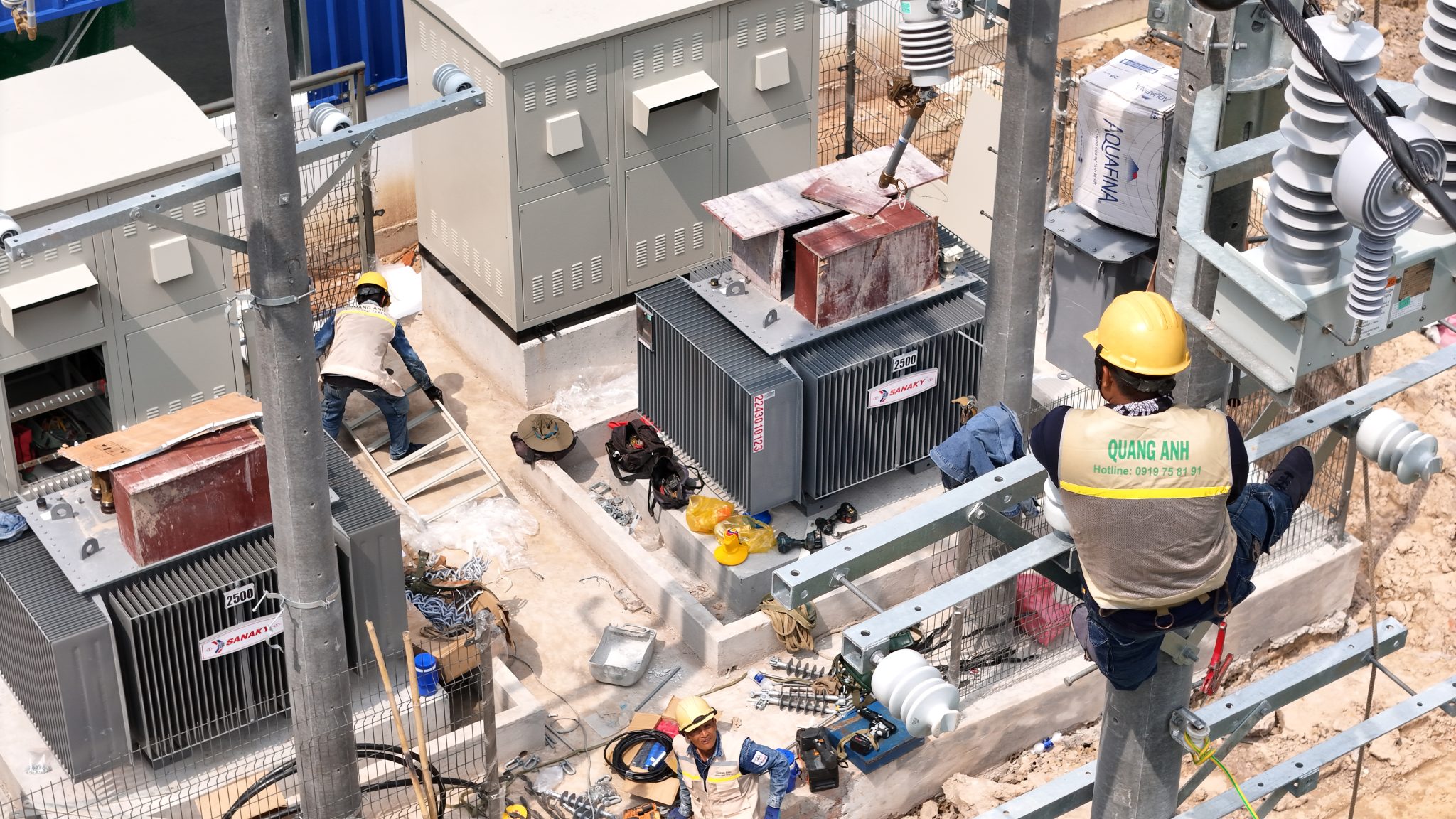
Electrical system maintenance services are vital for ensuring safety, enhancing performance, and extending the lifespan of electrical equipment. Not only do they optimize operations, but they also offer financial benefits and minimize risks for industrial and commercial facilities.
Contact QuangAnhcons to discover the most efficient electrical system maintenance packages: Hotline: +84 9 1975 8191.
QuangAnhcons offers comprehensive electrical system maintenance services, from inspections and cleaning to equipment upgrade advice. We are committed to delivering optimal quality and safety for your electrical systems.
[contact-form-7 id="7239967" title="Contact form 1"]
Related Posts
Comparing Oil and Dry Transformers in Industrial Projects
Distinguish between oil and dry transformers based on installation site, safety, maintenance, energy losses, initial [...]
Mar
Electrical Overload Warning Signs in Factories
Recognize early indicators of factory electrical overload such as voltage drops, overheating equipment, circuit breaker [...]
Mar
Risks of Overloading Industrial Transformers Without Upgrades
Keeping the same low-voltage transformer while increasing factory loads can result in overheating, insulation degradation, [...]
Mar
Evaluating and Implementing Transformer Contractors in Tay Ninh
Criteria for selecting transformer substation contractors in Tay Ninh, EPC scope, and factors affecting project [...]
Mar
Comparing Oil and Dry Transformers for Industrial Applications
Examine oil and dry transformers based on installation location, fire safety, maintenance, energy loss, investment [...]
Mar
Comprehensive 1500kVA Transformer Station Budget for Manufacturing Facilities
Guidance for creating a detailed budget list for a 1500kVA transformer station, including medium voltage [...]
Mar
Comprehensive Transformer Station Pricing: Elements and Considerations
Examine key components in comprehensive transformer station pricing including design, equipment, construction, testing, and connection [...]
Mar
Pricing Guide for 4000kVA Transformer Stations: Configuration, Cost, and Investment Process
An overview of configuration, cost estimates, connection approaches, and investment checklists for 4000kVA transformer stations [...]
Mar
Pricing and Setup of 3200kVA Transformer Stations: Configuration, Costs, and Investment Procedure
Explore the pricing structure for a 3200kVA transformer station, primary equipment configuration, cost variables, EVN [...]
Mar
Cost Estimation for 2500kVA Transformer Station: Configuration, Expenses, and Investment Process
Reference framework for quoting a 2500kVA transformer station based on configuration, station type, cable solutions, [...]
Mar
2000kVA Transformer Station Guide: Configuration, Costs, and Investment Process
Discover key aspects of a 2000kVA transformer station: from technical configuration and cost analysis to [...]
Mar
Pricing and Configuration Guide for 1600kVA Substations
A detailed guide on pricing for 1600kVA substations, including equipment specs, connection costs, EVN procedures, [...]
Mar
Comprehensive Guide to 1500kVA Substation Pricing: Configuration, Costs, and Investment Process
A comprehensive overview of configurations, costs, construction methods, connection procedures, and contractor selection for 1500kVA [...]
Mar
Tay Ninh Solar Power Planning: Technical Framework, Grid Interconnection, and Rollout Roadmap
Technical overview of solar planning in Tay Ninh: irradiation, grid capacity, permitting, design, operations, and [...]
Dec
Binh Duong Solar Planning: Regulatory Framework, Grid Interconnection, and an Implementation Roadmap for Factories and Industrial Parks
An overview of Binh Duong solar planning: legal framework, interconnection, design, risk management, and an [...]
Dec
Solar Farm Repair: O&M Workflow, IV Curve Diagnostics, Thermography, Inverter Service and Utility-Scale Safety
A utility-scale solar farm repair plan centered on O&M, IV curves, thermal imaging, inverter service, [...]
Dec
Dong Nai Solar Power Plan 2023–2025: Tri An 1,029 MW, Grid Upgrades and the DPPA Pathway
A complete look at Dong Nai’s solar power plan: Tri An 1,029 MW, irradiation potential, [...]
Nov
Quang Ngai Solar Power Plan 2024–2030: Legal Framework, Irradiance Potential, and Development Roadmap
A complete look at Quang Ngai’s solar power plan: capacity targets, irradiance (PVout), development zones, [...]
Nov
Solar Damage Assessment Services: On-Site Procedures, EL/IV/Thermography Testing & Compliance with Standards
Discover IEC/UL/NEC standard solar damage assessment processes: on-site evaluation, EL and IV curve testing, thermal [...]
Nov
Comprehensive Package Estimate for a 1800MVA 500kV Substation: Scope, Configuration 3x600MVA, Standards and Timeline Management
An overview of the 1800MVA 500kV substation estimate: construction scope, configuration 3x600MVA, GIS/AIS, SCADA, standards, [...]
Nov