

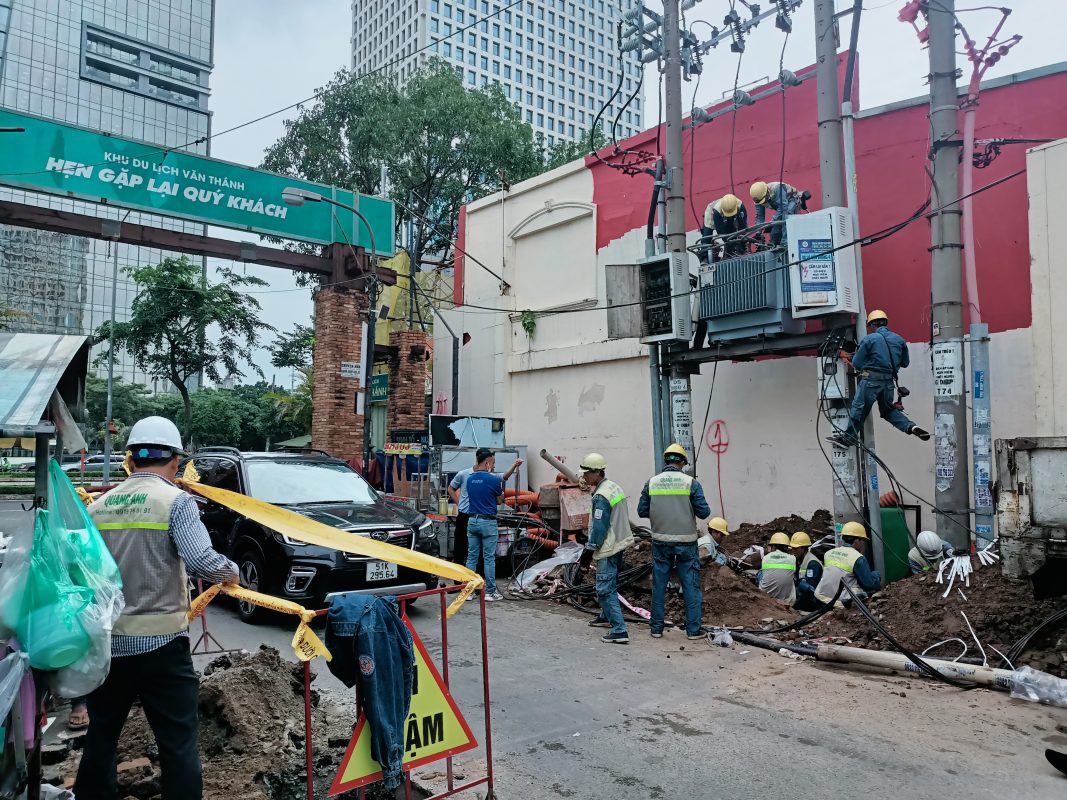
- Precisely define categories for pricing per line rather than vague groupings.
- Clearly separate medium voltage components, transformers, MSB, distribution cabinets, cables, grounding, and fieldwork costs.
- Identify key decisions such as 22kV or 35kV supply voltage, cabling or overhead lines, and compensation levels.
- Highlight common omissions like connection accessories, calibration tests, crane operations, and commissioning documents.
- Ensure presentation suits purchasing, technical, and construction teams for record comparison.
- Investors or project managers constructing a 1500kVA transformer station for a factory.
- Electrical, maintenance, or EHS departments reviewing transformer station setups before requesting quotes.
- Purchasing departments splitting categories for cost comparison among construction options.
When should you read this article?
- When considering new investments or load expansions, securing equipment lists is critical.
- When preparing for tenders, requests for prices, or preliminary breakdowns for a 1500kVA station.
- When checking if a comprehensive quote misses key components.
- 1. Confirming the Scope of a Comprehensive 1500kVA Transformer Station Budget
- 2. High Voltage Main List: Poles, Insulators, FCO, LA, and Cables
- 3. 1500kVA Transformer and Accompanying Foundation
- 4. MSB Cabinet with Three Compartments: Load and Compensation Sections Explained
- 5. Low Voltage Cables, Distribution Cabinet, Trunking and Grounding – Where Costs Typically Arise
- 6. Essential Field Processes, Testing, and Commissioning Documentation for Estimates
- 7. Variables Influencing Quantity and Bid Value
- 8. Utilizing This Guide to Develop a BOQ and Compare Quotations
For a 1500kVA transformer station in a factory, significant discrepancies at the budgeting stage often arise not from individual equipment but from missing workflow items, omitted accessories, and unconfirmed input configurations. This guide follows a practical breakdown to help create a sufficiently detailed list for pricing and comprehensive bid comparison.
Confirming the Scope of a Comprehensive 1500kVA Transformer Station Budget
Define the comprehensive scope of a full-service 1500kVA transformer station from medium voltage connections to low voltage distribution cabinets and commissioning documents to avoid omissions in project execution scope.
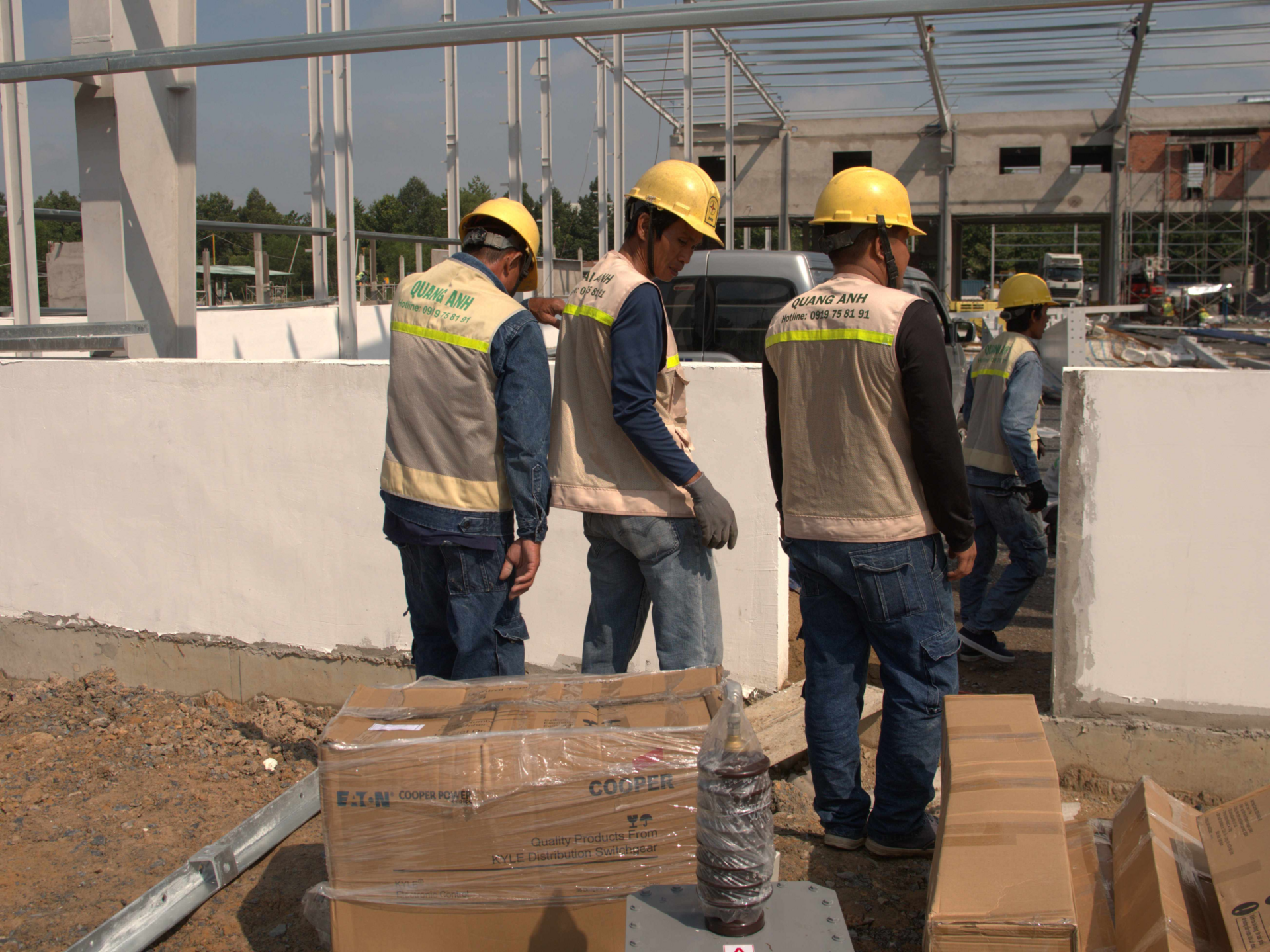
The comprehensive budget scope for a 1500kVA transformer station covers from the medium voltage connection point to the low voltage distribution cabinet.
Acceptance and commissioning documents must be included in the package to fulfill current electricity commissioning regulations.
Beyond technical specifications, a comprehensive package usually involves the following key items, which need clarification when confirming the scope and preparing the BOQ:
- Design and technical estimation, including cost for document review.
- Provide the 1500kVA transformer (oil or dry type) and related equipment.
- Medium voltage and low voltage cabinets featuring protection devices, metering, and connection accessories.
- Connection materials: cross-arms, stanchions, supports, overhead line cables, and mechanical accessories.
- Construction below grade (outdoor) or indoor substations, including foundation and railings as needed.
- Transformer testing, electrical equipment testing, acceptance, construction supervision, and completion.
- Transporting and mobilizing construction machinery to the site and coordination costs for power outages from the medium voltage connection point.
- Installation approval, review, commissioning, and operational acceptance documentation (e.g., for the Department of Industry and Trade acceptance).
Concerning costs and influencing factors, consider practical points when surveying the factory site: the distance of medium voltage lines often affects cable costs and lifting framework; reports often use a maximum distance of 40 meters as a calculation benchmark; the overall timeline from design to acceptance may span approximately 60 days, but site-specific factors are essential for exact assessments.
Practical advisories and decisions: if the connection point surpasses the reference distance, additional cable and support costs will rise; plan outage coordination with the medium voltage supplier before construction is critical; choosing between outdoor or substation impacts foundation, anti-moisture measures, and costs.
Next steps in conclusion: confirm on-site work scope, prepare a detailed BOQ according to the above categories, and finalize design documentation for approval and commissioning as per applicable regulations.
High Voltage Main List: Poles, Insulators, FCO, LA, and Cables
The main list for high voltage sources includes poles, insulators, FCO, LA, and cables, determined by connection distance, EVN plans, and terrain conditions.
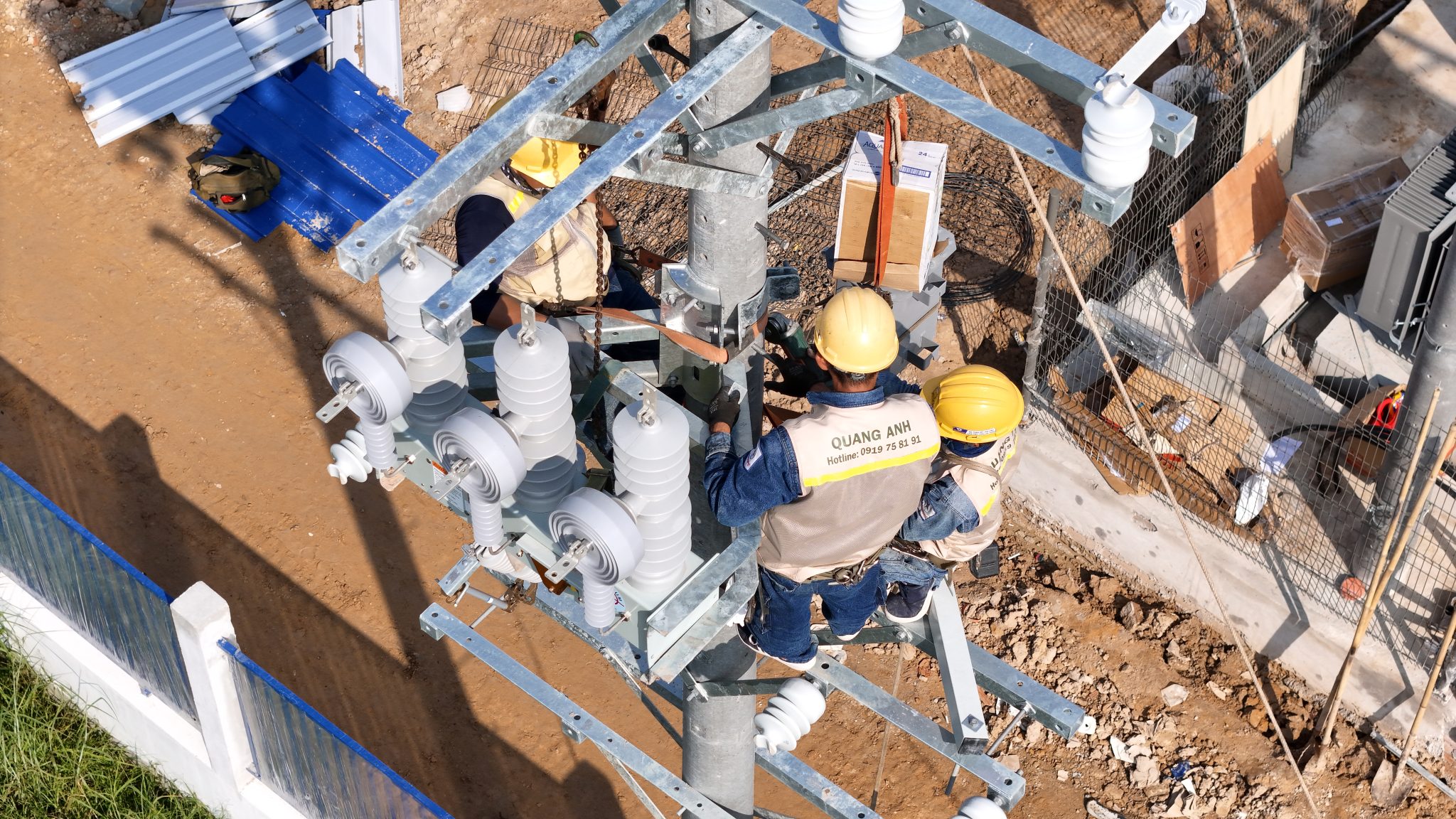
The high voltage source list for a 1500kVA station involves BTLT poles, insulators, FCOs (fuse cutouts), LAs (lightning arresters), and medium voltage cable entries; the range and item number depend on the actual EVN connection plan.
Technically, a 14m BTLT pole is standard for connecting medium voltage lines to medium capacity transformer stations; dielectric insulators support and isolate the 22kV line into the station. The FCO typically uses a 24kV polymer form, with 100A or 200A configurations available as required; in some forms, 200A polymers are utilized in threes as medium voltage cable connectors. LA protects against transient over-voltages on medium voltage lines, benchmarked at 18kV 10kA.
With machines operating on a conveyor or during maintenance, attention should be paid to the actual distance from the electric provider connection point to the station site; roughly 40 meters is considered a standard limit for cable head calculations; if distance exceeds 40 meters, additional cable/conductor provisions become necessary, increasing material quantities and project costs. Coordination for pole, FCO, and LA installations must align with acceptance, outage, and EVN/EVNSPC connection guidelines before completing final budgeting.
During factory site surveys, at minimum, perform the following field checks to confirm the list and quantity:
- Verify the distance from the EVN/EVNSPC connection point to the station site (cable route meters or overhead line length).
- Confirm the connection method: overhead lines or underground cables; this decision dictates poles, insulators, and FCO configuration.
- Surveys include real-world pole placement, geographic conditions, and construction feasibility (foundation, access for machinery).
- Verify acceptance, outage, and utility company conditions for post-installation commissioning to circumvent missteps in energization.
Procurement decisions should be based on field assessments and connection blueprints provided by the utility firm; when connection details are lacking, plan contingencies for additional cable costs and quantity additions for FCO/LA. If a budget must be finalized, require a site survey report and connection theory approval from EVN/EVNSPC before tender issuance or material procurement.
1500kVA Transformer and Accompanying Foundation
Choose 1500kVA transformer configurations of 22/0.4kV or 35/0.4kV based on EVN’s medium voltage source, and separate equipment, accessory and foundation/substation costs distinctly.
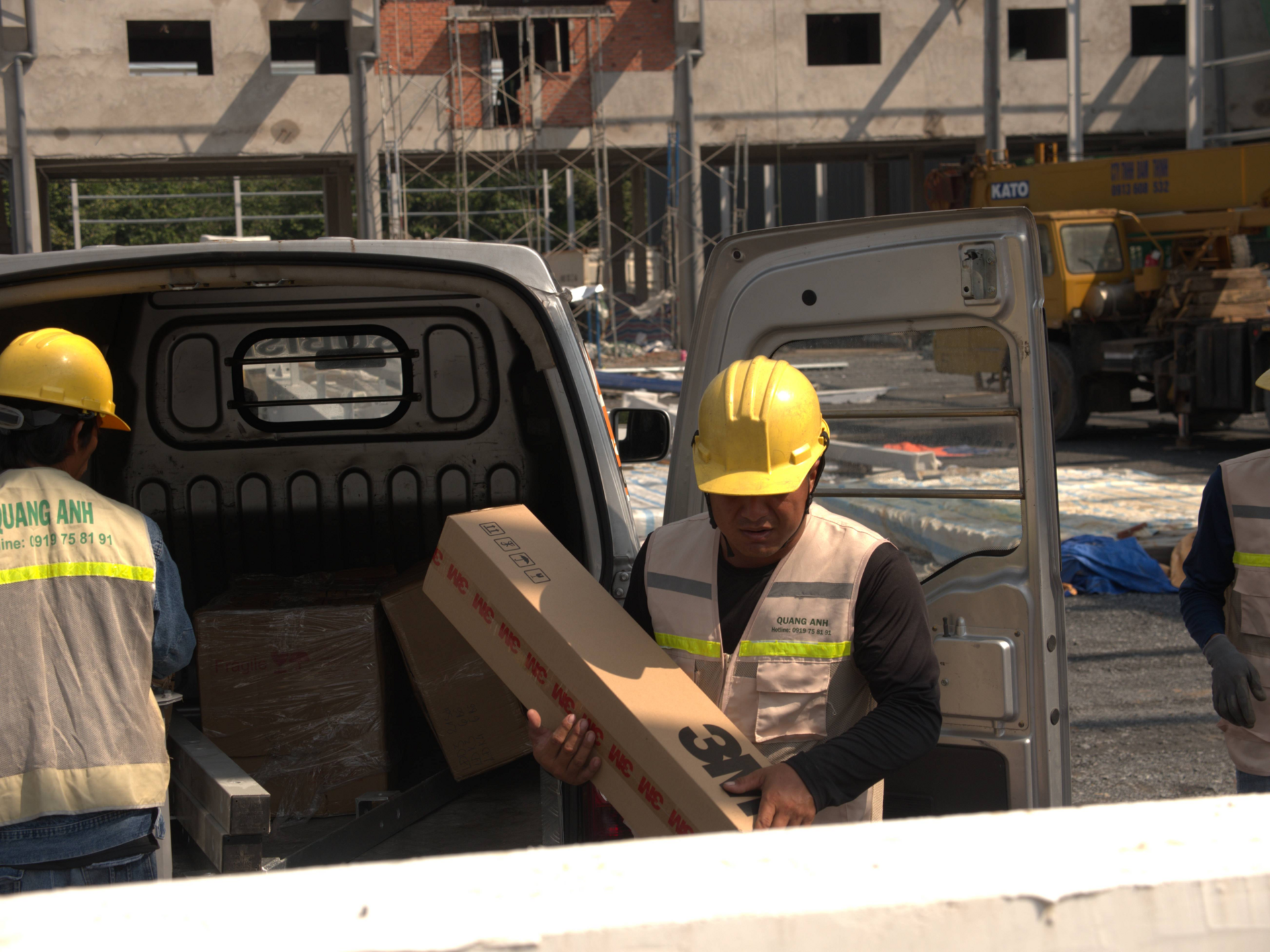
The 1500kVA transformer is typically configured as 22/0.4kV or 35/0.4kV, selecting based on the medium voltage source provided by EVN and load profile analytics.
Technically, transformers may be oil or dry type; standard connection accessories include LBFCO polymers, Cu300mm² crimped cosse, supports, and brackets. During site surveys, define the medium voltage connection position, cable length, and machinery lift possibilities to calculate accessories and installation techniques.
The foundation for a 1500kVA transformer includes cross-arms and a concrete base, designed for specific load-bearing properties and should separate civil engineering construction costs from electrical equipment pricing. Inspection/testing requires flatness checks, elevation marking, and anchoring consistency before machine commissioning.
- Configuration selection criteria: EVN’s medium voltage source, load profile, connection distance, indoor/outdoor conditions, and EVN acceptance requirements.
- Separate accessories/materials: RMU cabinets, cables, protection devices, low voltage cabling, copper connection materials.
- Connection limits: maximum medium voltage connection distance is 40 meters from the EVN line; exceeding adds cost for line extension.
The construction time for a 1500kVA transformer installation typically spans about 10 days on site; the project’s overall framework is around 50-60 days, including design, review, and acceptance. Variables influencing progress and budget include installation site topography, application method (machinery/manual), and proximity to the medium voltage line.
During maintenance and budgeting, distinctly separate: transformer items, electrical accessories, and civil foundation elements. Following this, perform a detailed terrain survey to complete foundation drawings, accessory lists, and segmented cost frameworks to assist review and commissioning.
MSB Cabinet with Three Compartments: Load and Compensation Sections Explained
Examine the tripartite arrangement of MSB cabinets for 1500 kVA stations, covering cabinet casing, main ACB, load section, compensation section, and control accessories.
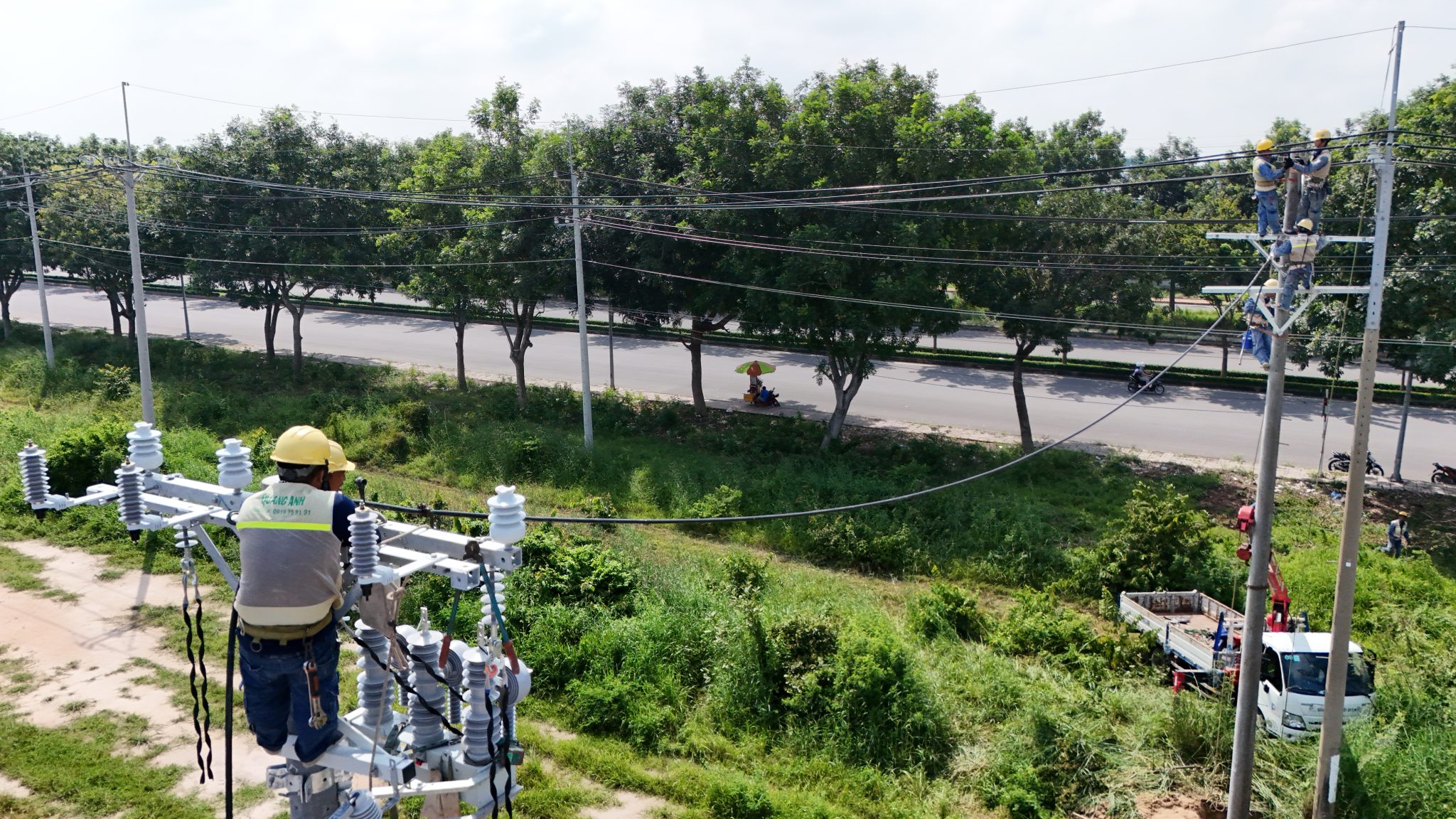
Three-compartment MSBs typically divide into a reception section (main ACB), a load section (branch MCCBs/MCBs), and a reactive compensation section (capacitors + reactors); each compartment must be clearly arranged to ensure operational safety and protective coordination.
Technically, the reception section uses high-power ACBs (generally 2500A–3200A) paired with overcurrent/overvoltage protection relays, set based on rated and maximum short-circuit current levels (typically 10–15 kA for a 1500 kVA station at 22 kV). Busbars should be sized and material-selected to withstand rated and short-circuit currents; site surveys should verify short-circuit current readings and cable head specifics to affirm busbar dimensions and connected assembly arrangements.
The load section should be subdivided for equipment or load clusters using MCCBs/MCBs for manageable operations and maintenance; during maintenance, assess MCCB tripping compatibility with the main ACB and overloading protection for each feeder. The reactive compensation section is separately organized, with a total capacity typically around 600–800 kvar based on operational reality, and reactors approximately 7% in series with capacitors to restrain switching shock currents and harmonic waves.
- During the factory site survey: verify actual operational currents against ACB ratings and select appropriate relays.
- In maintenance: inspect busbar cabling connections, cosse contacts, and capacitor protection fuses to prevent bank damage from poor connections.
- During acceptance/testing: measure insulation resistance, verify protective spacing between compartments, and ensure ventilation complies with IEC 61439.
- Watch for the presence/lack of small items (crimp cosse, fuses, relays, cable heads) as they are easily overlooked but materially accumulate costs.
Operational advisories: for outdoor installations, choose protective cabinet enclosures; indoor arrangements should ensure adequate airflow and thermal management between compartments. Due to variable field data and load demands, detailed site surveys are vital to finalizing detailed drawings, specifying precise capacitor capacities, and assessing short-circuit bearing capability before materializing purchases.
Low Voltage Cables, Distribution Cabinet, Trunking and Grounding – Where Costs Typically Arise
Detail the breakout of low voltage cables, distribution cabinets, trunks, and grounding systems by on-site layout to avoid quantity omissions in budgeting.

Low voltage cables, distribution cabinets, trunkings, and grounding systems originate from paths leading from the transformer to distribution cabinets, pathways on layout plans, and grounding zones around the station. Site surveys must delineate each segment and connection point.
For low voltage cables, they must be broken down by actual route length, the conductor type (Cu or Al), and allowable voltage drop. The formula S = (2ρIL)/(ΔU × U) typically denotes necessary variables (ρ, I, L, ΔU, U), with ΔU often taking 3–5% as needed. During acceptance/testing, verify measured parameters against calculations and perform megger insulation tests pre-commissioning.
Low voltage distribution cabinets are independent items, listed by rating and compartment numbers: for a 1500kVA station (~2165A at 0.4kV), typically select cabinets with MCCBs of 800A–1600A and 4–6 isolating compartments depending on load numbers. Control/protection materials (MCCB, ACB, relays) separate from cabinet bodies during budgeting to avoid missing components and installation labor costs.
Cable acmen, supports, and accessories require breakout: path length, lateral/vertical sections, junction elbows, support legs, and connecting parts. During maintenance or field inspections, verify installation heights, wall penetrations, and safe clearances, as these critically impact material quantities and labor costs.
The grounding and lightning systems are mandatory, separately listed in estimates; require impedance calculations and proofing trials. Reference lists mention standard parts like electrodes (copper Ø16mm, 2–3m long) and grounding conductors (Cu 16–25mm²). Pay attention to statutory impedance requirements (≤ 4Ω or ≤ 10Ω by station type) and allocate costs for impedance measurement, proving, and acceptance.
- Groups of costs needing clear separation in budgeting: cable materials (by cross-section and length), terminators (cosse, mechanical fittings in line with cable types), distribution cabinets (shell, compartments, protection devices), trunks/mounts and fitments, grounding systems (electrodes, wires, testing), labor costs, and costs for reinstatement/excavation if applicable.
- Factors influencing cost increase/decrease: distance to EVN connection (if over 40m, add costs for medium voltage cables), material type (Cu versus Al), trunk complexity (walls, bridges, height variations), and testing/acceptance documentation stipulations.
Practical warnings: avoid merging underground high voltage cables, grounding systems, and distribution cabinets into transformer items; each category has its own material, procedure, and testing requirements. For final pricing, conduct site surveys, obtain actual route lengths, list terminators by section, and confirm distance to the EVN connection point before pricing.
Essential Field Processes, Testing, and Commissioning Documentation for Estimates
Compile necessary on-site tasks, testing, and commissioning documents required for budgeting a 1500kVA transformer station.
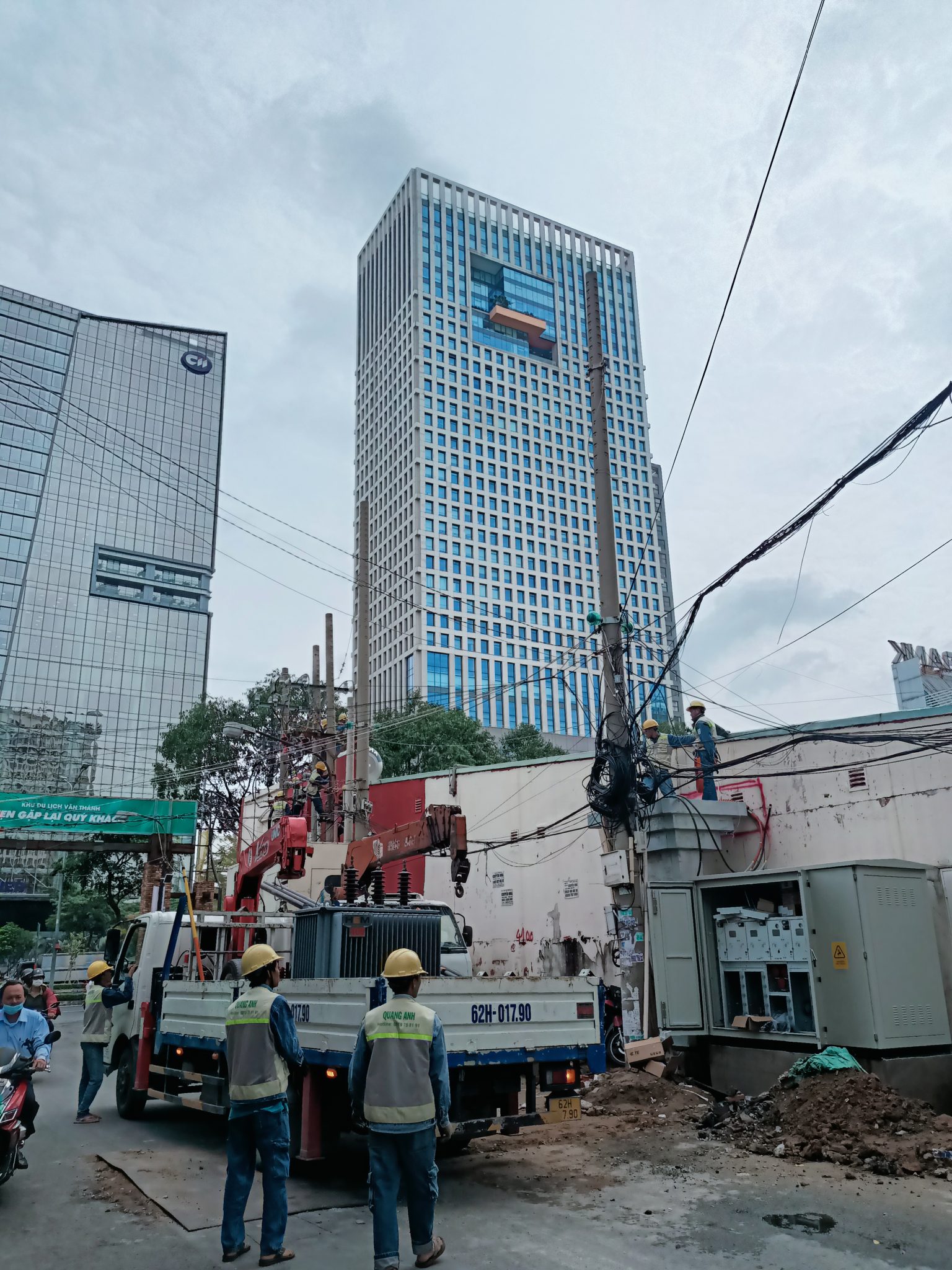
Mandatory on-site processes and testing include transporting, crane-lifting the 1500kVA transformer, installation, connection, testing, and completion of documentation for EVN commissioning approval.
Field execution typically progresses as follows: position surveying, lift equipment mobilization, transformer crane-lifting and positioning, structural fixation, medium-low voltage line connections, followed by pre-commissioning tests. For maintenance or factory site surveys, implement secure power outage measures and construction oversight to facilitate acceptance.
The minimum testing and adjustment steps listed include:
- Transformer tests (insulation measurements, oil inspection if relevant, coil checks) – compulsory entries.
- Testing of electrical cabinets and switching devices (insulation resistance, functionality tests).
- Protection relay system checks and fine-tuning, signal calibrations and actuation thresholds.
- Grounding checks, impedance verification before electrical energization.
- Construction supervision, temporary power cut, and site acceptance documentation.
| Cost Group | Notes |
|---|---|
| Transport & crane-liability | Must be accounted for separately due to the substantial weight and distance of the 1500kVA transformer. |
| Installation labor | Depends on the technical team, construction site’s topology, and method (mechanical/manual). |
| Testing & adjustment | Includes device testing, relay protection adjustments, and measurements post-installation. |
| Documentation & EVN procedures | Design, compliance reviews, completion, acceptance documentation, and commissioning licenses. |
In actual factory practice, operational decisions require coordination with EVN for connection power cuts, provisional cost allowances for outage durations, and budget assessments before execution. Typical timeframes are around 10 days for on-site work and a total of 50-60 days covering documentation, though detailed site surveys are needed for nuanced breakdowns.
Variables Influencing Quantity and Bid Value
Compare the impact of voltage selections, cable types, and station types on construction volume, materials, and the overall work scope for a 1500kVA station.
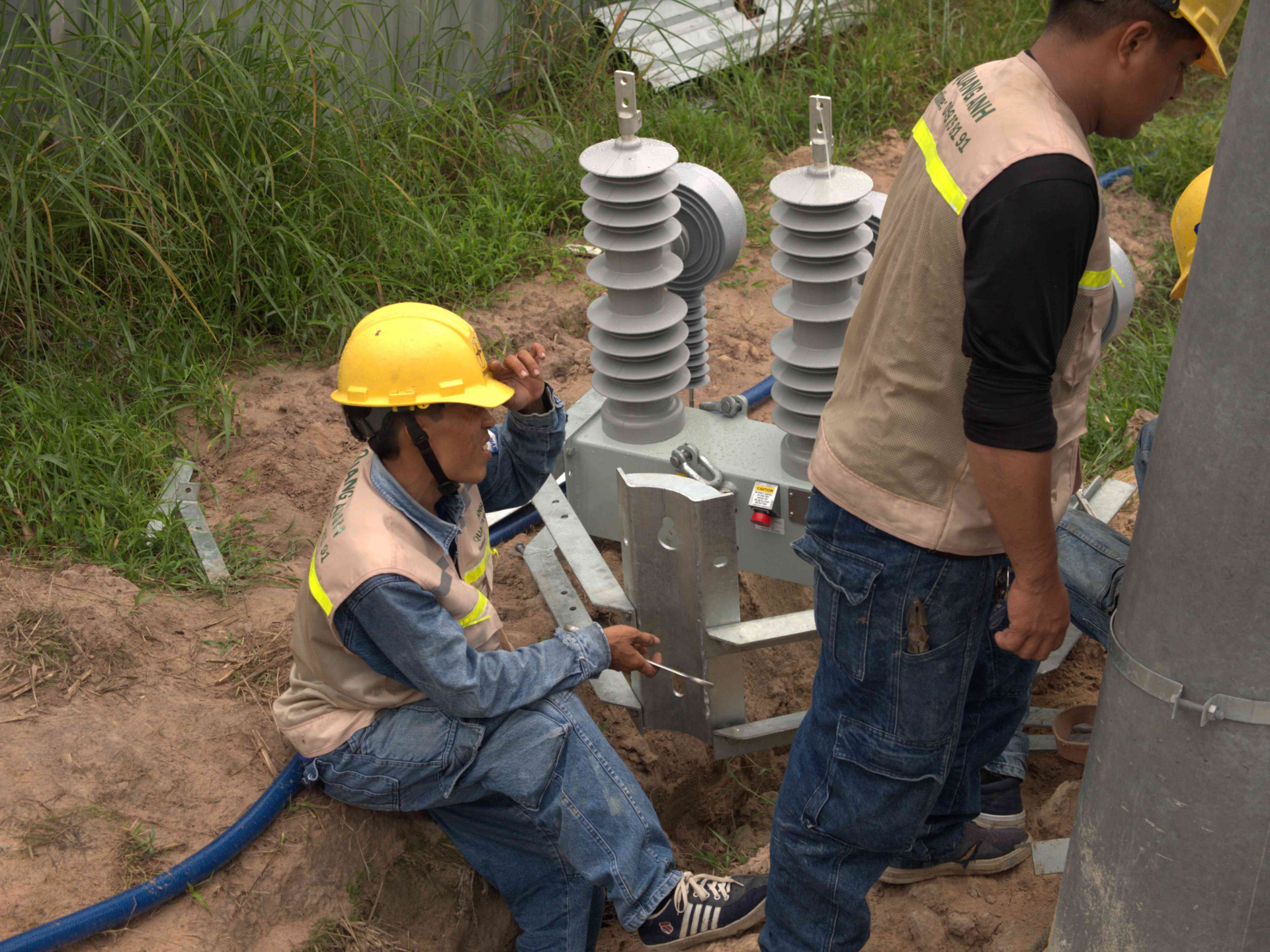
Production quantities and the value of a 1500kVA station tender depend on variables like medium voltage levels, transmission forms, station types, transformer models, distances to lines, and construction conditions.
These factors directly affect medium voltage material amounts, foundation tasks, connection work, and soft costs such as design and acceptance; site surveys must calculate distances and assess construction approach conditions.
Key variables include:
- Medium voltage level (22kV or 35kV): this determines medium voltage equipment type, low voltage cable sizes, and EVN connection costs; 22kV tends to be used in smaller plants and can help minimize equipment costs.
- Transmission form (overhead lines or underground cables): overhead lines are usually cheaper but depend on the terrain and safety requirements; site surveys must identify any section over 40m to account for line extension costs.
- Station type (outdoor ground station, indoor ground station, kiosk/prefabricated): outdoor ground stations need concrete foundations and protective housing, indoor ground stations require secure rooms, while kiosks or prefabrications shorten construction time and reduce site management costs.
- Transformer type (oil or dry): oil transformers tend to cost less initially than dry types, but require ongoing maintenance and long-term fire safety planning.
- Construction and logistics conditions: challenging geographies, large equipment transportation, or hotline upgrades will raise labor, mechanical, and temporary connection costs.
From practical field perspectives, two critical check points are measuring actual distances from the station site to the medium voltage line (identifying any sections over 40m) and assessing the feasibility of kiosk/prefabricated methods compared to traditional foundation builds.
Soft costs and material origins significantly impact total estimates; in real plant scenarios, costs for design, compliance reviews, acceptance, and power cuts often constitute a notable share, and the origin of medium voltage equipment could guide 40-60% of material valuation.
Operational caveats: if selecting oil transformers, incorporate fire protection, oil reclamation, and maintenance scheduling into plans; if choosing underground cables, assess excavation risks and reinstatement costs.
Final note: To make well-informed procurement decisions, conduct field assessments, prepare detailed quantity breakdowns per option, and compare based on equipment costs, construction timelines, and operational risks before fixing the tender package.
Utilizing This Guide to Develop a BOQ and Compare Quotations
Translate the technical list of a 1500kVA transformer station into a working BOQ and comparison specifications, detailing items to verify.
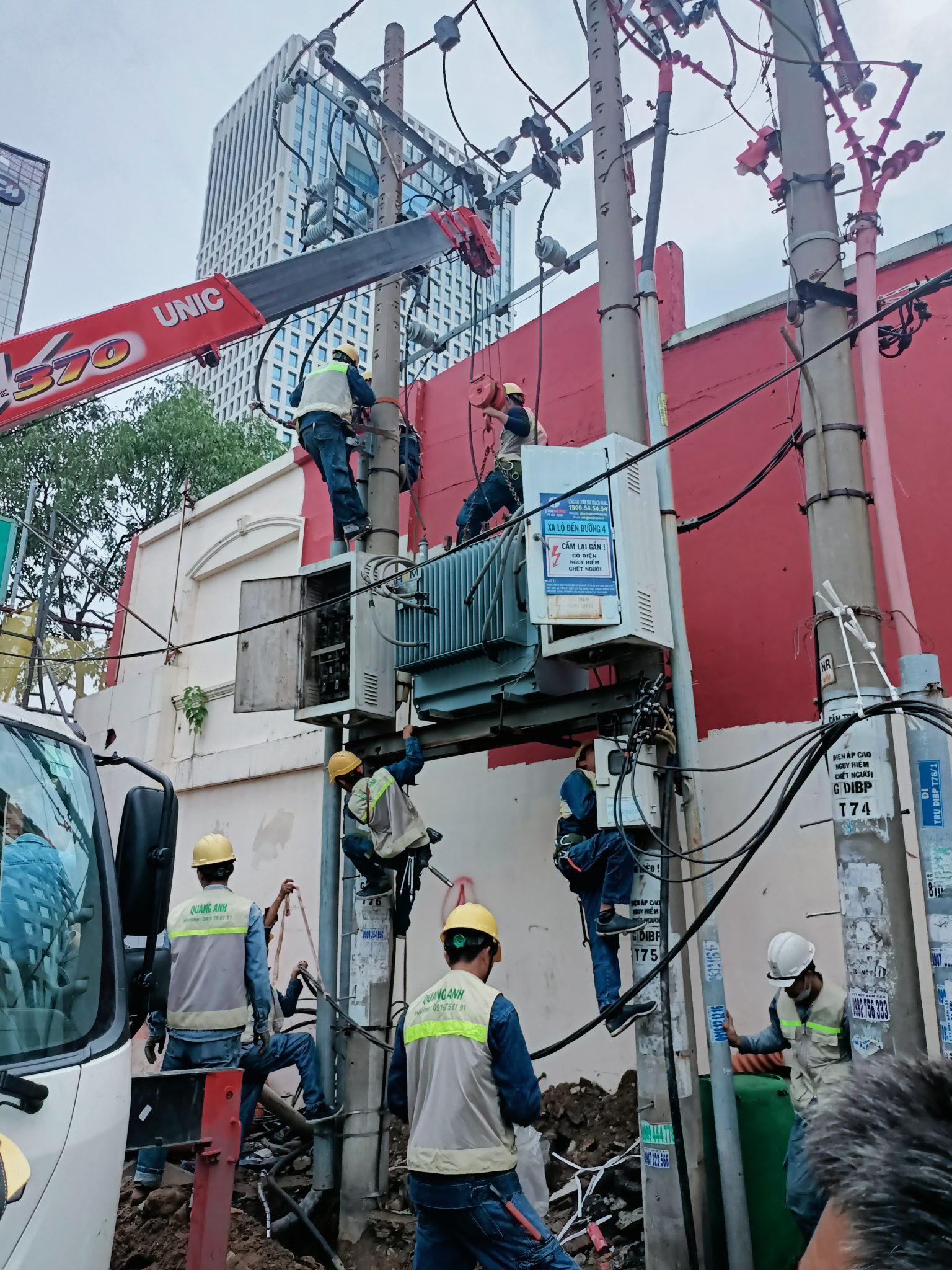
Creating a BOQ for a 1500kVA transformer station should clearly delineate eight principal cost groups and specify each item for inclusive price quotations from the start.
Technically, key groups include design-estimation, review, construction, testing, acceptance-supervision, transportation-machinery, utilization-metering, and power cut-connection. Factory site assessments should document cost variables such as the proximity to EVN’s medium voltage lines and chosen construction methods.
| Item Group | Notes |
|---|---|
| Design–Estimation | Often stands alone; reference costs in total estimates about 48–50 million VND. |
| Review | Separate item; typically around 25 million VND. |
| Construction & Installation | Dependent on topography, line type, connection distance, and construction method. |
| Testing & Verification | Separate group; around 18–20 million VND for transformer and protection device tests. |
| Acceptance–Supervision–Completion | EVN mandatory; usually around 18–20 million VND. |
| Transportation–Machinery | A significant factor if materials are bulky or sourced far away. |
| Utilization–Metering | Operation and measurement item after installation. |
| Power Cut–Connection | Separate group; reference cost around 15 million VND, needing EVN agreement. |
When comparing quotations, the primary factors for price changes are: placing distance of the station (if >40m, add 35.5 million VND per 40m extended line), material origins directly affecting costs, and construction methods (machinery vs manual). Field surveys should validate cable lengths, supporting structures, and surface conditions as non-negotiables.
- Verify if the contractor separately outlines design, review, testing, acceptance and power cut in their estimates.
- Confirm quotations include 8% VAT on pre-tax totals.
- Request the contractor to specify the origin of main materials: transformer, electrical cabinets, protective gear, cables.
- Match timelines: design documentation around 50 days, construction 10 days, a total of approximately 60 days; assess impacts on management costs.
- Ensure discussion of power cut-connection costs with EVN before finalizing prices.
Final contractor selection should prioritize itemized transparency and field-backed evidence; if items are bundled, demand detailed breakouts. During acceptance/testing, verify transformer test forms and protection device results before payments. Lastly, field surveys need to refresh distance reviews, construction methods, and material prices before BOQ approval and full tender contract signing.
An effective 1500kVA transformer station budget should clarify power supply scope, medium voltage configuration, transformer, low voltage cabinet, compensation system, cable route, and commissioning documentation. Should these inputs be vague, lock in primary technical hypotheses to evade low initial quotes but substantial developments during execution.
Frequently Asked Questions
When should a 1500kVA transformer choose 22kV or 35kV inputs?
The choice between 22kV and 35kV depends on available utility supply, connection distance, short-circuit levels, and expansion needs. Principle: follow the provided EVN source, prioritize minimal construction alterations; data on EVN supply (voltage provision, connection point, short-circuit info) is essential for final determination.
What common omissions occur in a comprehensive 1500kVA station budget?
Omissions often include cable head accessories, cosse, support brackets, small installation materials, crane/lifting costs, acceptance/commission fees, calibration testing, and substitute documentation/prototype spares. Principle: itemize each accessory and field work line according to the layout to avoid omissions.
Is an 800kvar compensation unit always suitable for a 1500kVA station?
It is not necessarily always suitable. Compensation capacity varies with current power factor, load type, load fluctuations, and harmonic levels. Principle: conduct load measurements, analyze cosφ/harmonics; demand load profiles, current cosφ, and target cosφ before deciding on compensation capacity.
Can medium and low voltage cable quantities be finalized upfront without a route survey?
Exact figures cannot be set without a survey; they can be estimated based on layout plans and straight distances. For final confirmation, layout drawings, cable routes, underground/overhead methods, trunking locations, and connection points determine real lengths and terminal materials.
Should testing adjustment and commissioning documentation be separate or included in an EPC package?
Separately indicate in the BOQ (as a distinct list) or specify detailed scope when included in EPC. Principle: identify who completes EVN documentation, required tests, and acceptance; if unclear, list necessary testing services and documents before contracting.
If switching from traditional to kiosk or prefab stations, how does the estimate change?
Switching to a kiosk/prefab reduces foundation and finishing volumes but increases transport, assembly, integrated cabinet, ventilation, and anti-vibration costs. Obtain prefab specifics (dimensions, weight, integrated cabinet), site accessibility, and fire protection needs to adjust the BOQ.
Using this Blueprint for Initial Estimate BOQ
- Secure electrical source inputs: establish voltage level, connection point, and transmission method.
- Divide the list into main groups: medium voltage, transformer, MSB, distribution cabinet, cable, grounding, and fieldwork.
- Populate technical specs per line per existing documents, keep them as references until surveys are complete.
- Highlight mandatory accessories like cable heads, busbars, cosse, cabinet fans, relays, and installation materials.
- Incorporate field service sections including installation, crane operations, tests, acceptance, and completion.
- Verify BOQ against practical commissioning requirements to ensure no documentation or scope responsibility is missing.
- Finally, apply unit prices based on reference origins and specific construction conditions.
If transitioning from the technical list to a BOQ ready for pricing, it is advisable to revisit each item category based on actual electrical supply, layout conditions, and commissioning requirements from the local utility company.
[contact-form-7 id="7239967" title="Contact form 1"]
Related Posts
Comprehensive 1500kVA Transformer Station Budget for Manufacturing Facilities
Guidance for creating a detailed budget list for a 1500kVA transformer station, including medium voltage [...]
Mar
Comprehensive Transformer Station Pricing: Elements and Considerations
Examine key components in comprehensive transformer station pricing including design, equipment, construction, testing, and connection [...]
Mar
Pricing Guide for 4000kVA Transformer Stations: Configuration, Cost, and Investment Process
An overview of configuration, cost estimates, connection approaches, and investment checklists for 4000kVA transformer stations [...]
Mar
Pricing and Setup of 3200kVA Transformer Stations: Configuration, Costs, and Investment Procedure
Explore the pricing structure for a 3200kVA transformer station, primary equipment configuration, cost variables, EVN [...]
Mar
Cost Estimation for 2500kVA Transformer Station: Configuration, Expenses, and Investment Process
Reference framework for quoting a 2500kVA transformer station based on configuration, station type, cable solutions, [...]
Mar
2000kVA Transformer Station Guide: Configuration, Costs, and Investment Process
Discover key aspects of a 2000kVA transformer station: from technical configuration and cost analysis to [...]
Mar
Pricing and Configuration Guide for 1600kVA Substations
A detailed guide on pricing for 1600kVA substations, including equipment specs, connection costs, EVN procedures, [...]
Mar
Comprehensive Guide to 1500kVA Substation Pricing: Configuration, Costs, and Investment Process
A comprehensive overview of configurations, costs, construction methods, connection procedures, and contractor selection for 1500kVA [...]
Mar
Tay Ninh Solar Power Planning: Technical Framework, Grid Interconnection, and Rollout Roadmap
Technical overview of solar planning in Tay Ninh: irradiation, grid capacity, permitting, design, operations, and [...]
Dec
Binh Duong Solar Planning: Regulatory Framework, Grid Interconnection, and an Implementation Roadmap for Factories and Industrial Parks
An overview of Binh Duong solar planning: legal framework, interconnection, design, risk management, and an [...]
Dec
Solar Farm Repair: O&M Workflow, IV Curve Diagnostics, Thermography, Inverter Service and Utility-Scale Safety
A utility-scale solar farm repair plan centered on O&M, IV curves, thermal imaging, inverter service, [...]
Dec
Dong Nai Solar Power Plan 2023–2025: Tri An 1,029 MW, Grid Upgrades and the DPPA Pathway
A complete look at Dong Nai’s solar power plan: Tri An 1,029 MW, irradiation potential, [...]
Nov
Quang Ngai Solar Power Plan 2024–2030: Legal Framework, Irradiance Potential, and Development Roadmap
A complete look at Quang Ngai’s solar power plan: capacity targets, irradiance (PVout), development zones, [...]
Nov
Solar Damage Assessment Services: On-Site Procedures, EL/IV/Thermography Testing & Compliance with Standards
Discover IEC/UL/NEC standard solar damage assessment processes: on-site evaluation, EL and IV curve testing, thermal [...]
Nov
Comprehensive Package Estimate for a 1800MVA 500kV Substation: Scope, Configuration 3x600MVA, Standards and Timeline Management
An overview of the 1800MVA 500kV substation estimate: construction scope, configuration 3x600MVA, GIS/AIS, SCADA, standards, [...]
Nov
Factory Electrical Systems: Comprehensive Design and Implementation Guide
Discover the detailed and safe process of factory electrical systems design and implementation. [...]
Oct
Blueprints Required for Factory Construction Permits
Discover the necessary blueprints in factory construction permit applications, from floor plans to electrical and [...]
Oct
What Are the Requirements for a Factory Construction Permit? A Comprehensive Guide
Explore the documentation and steps needed to secure a factory construction permit for streamlined project [...]
Oct
Factory Construction Permit Procedures in Vietnam: Essential Guidelines and Documents
Learn the procedures for securing a factory construction permit in Vietnam, focusing on document preparation [...]
Oct
Key Steps in the Factory Construction Process
Discover the essential steps and requirements for building factories. [...]
Oct