

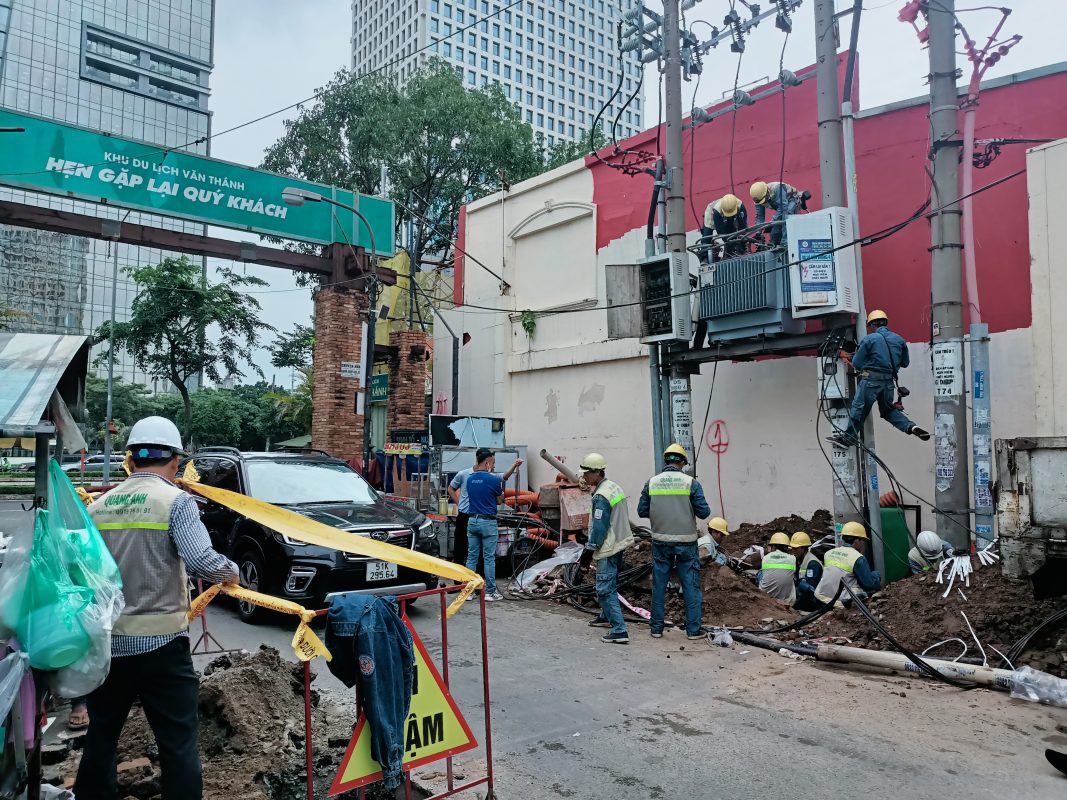
- Clarifies distinct costs including equipment, construction, connection, and documentation.
- Details typical configurations for a 1500kVA substation to prevent overspending or underspecifying equipment.
- Compares substation layouts, cable routes, and connections to select the best plan for space and timeline.
- Highlights factors causing cost variations such as substation type, terrain, underground or overhead cabling, and network configurations.
- Offers a checklist to evaluate contractors based on practical capability, documentation, and service history.
- Plant investors preparing to invest in a 1500kVA substation.
- Factory technical, maintenance, or project teams needing electrical supply plans.
- Procurement teams comparing EPC quotes, equipment, and work scopes.
- Those reviewing connection documentation, procedures, and conditions for commissioning.
When to Read This Guide?
- When creating a preliminary budget for a 1500kVA substation.
- When deciding between oil or dry transformers, kiosk-type or base substations.
- When selecting underground or overhead medium voltage cables, loop or radial networks.
- When coordinating with power utilities for power outage schedules or hotline options.
- When evaluating comprehensive contractors before contract signing.
- 1. Investment Scope for a 1500kVA Substation and Cost Influencers
- 2. Essential Equipment Configuration for the 1500kVA Substation
- 3. Pricing References and Estimating Without Missing Items
- 4. Selecting Substation Layout and Cable Routes Based on Layout, Safety, and Operations
- 5. Survey and Construction Process, Connections, and Commissioning
- 6. Common Mistakes, Required Documentation, and Selecting the Right Contractor
For a 1500kVA substation, cost differences usually stem not just from the transformer itself but also from configuration choices, substation type, cabling, connection approach, and the actual construction scope. A good blueprint should provide a complete investment overview before delving into detailed quotes.
Investment Scope for a 1500kVA Substation and Cost Influencers
The investment in a 1500kVA substation extends beyond core equipment and includes legal documentation, construction, testing, and commissioning. In practice, cost discrepancies arise from substation type, medium voltage connection distance, power cut requirements, and procedures with EVN or the Department of Industry and Trade. When comparing quotes, distinguish between core costs and site-dependent variables.
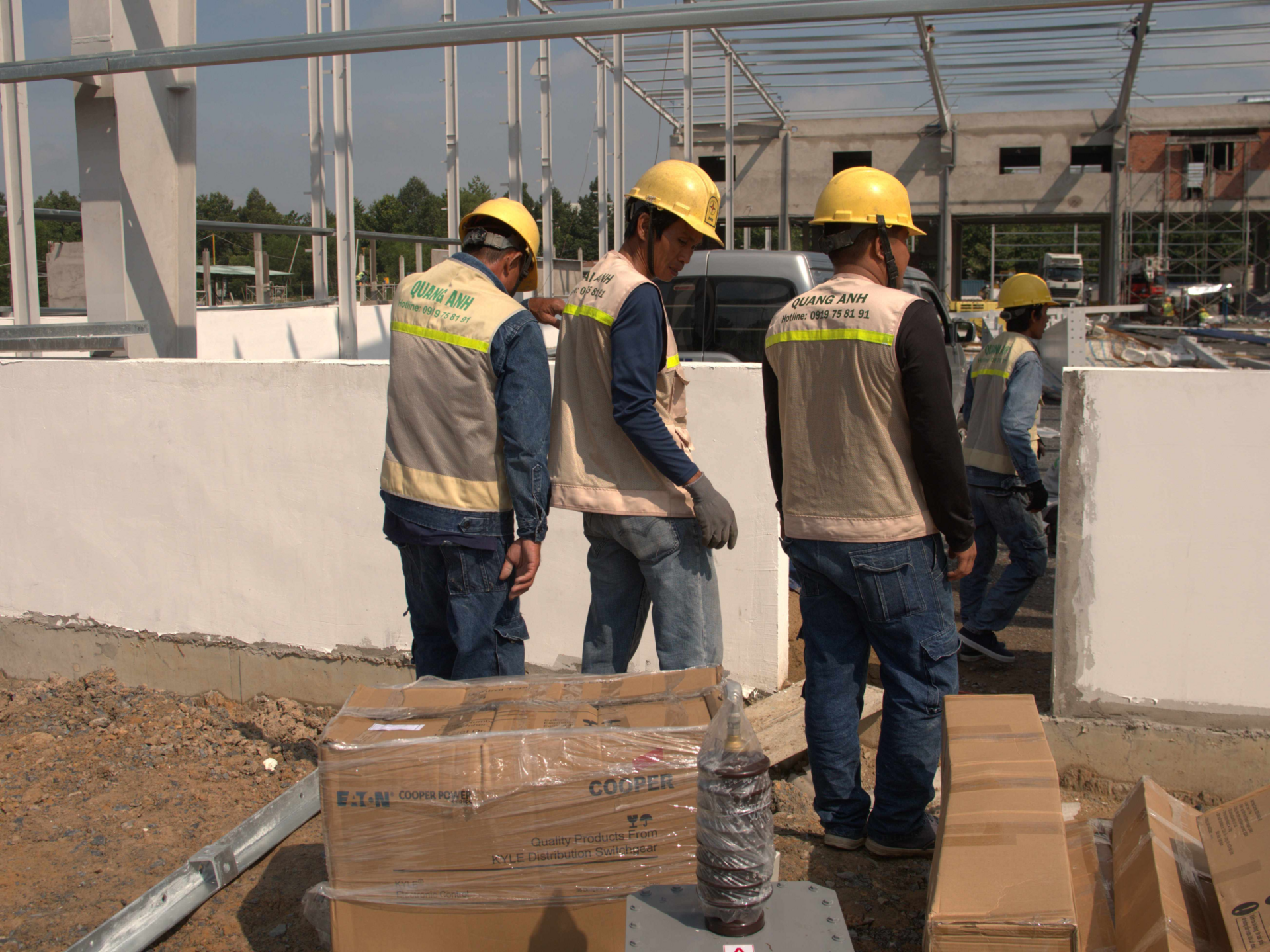
Typically, the investment scope for a 1500kVA substation includes design estimation, design approval, main equipment supply, construction, testing, and completion documentation. Differences in estimates can arise even with similar capacities if these tasks are not scrutinized carefully.
The core costs on-site generally relate to construction and connections. This includes foundations, crossbar installations, outdoor or indoor installation platforms, and connection tasks requiring machinery and coordinated power cuts. Variations in substation type, such as outdoor platforms, steel towers, or integrated kiosks, can significantly impact building and installation costs.
Another set of variables stems from connection conditions and approval procedures. Medium voltage line distances exceeding 40m incur additional cabling costs; transport, construction machinery, and connection power cut costs also vary based on location and agreements with power units. Installation approval documents, completion checks with EVN or the Department of Industry and Trade, are mandatory, making administrative tasks and construction oversight major cost differentiators in quotes.
Selected equipment also directly impacts total estimates, especially when choosing between oil-immersed or dry transformers and protective electrical panels according to performance and operational needs. Testing or trial runs should not be isolated from the overall budget, as these relate directly to commissioning and operational readiness. If quotes do not clearly outline testing, oversight, commissioning stages, or VAT inclusions, request a breakdown to avoid scope gaps.
| Item | Description | Key Checkpoints |
|---|---|---|
| Design & Approval | Prepares design estimates, design approval, and initial documentation | Explicit scope for substation installation approval is included |
| Main Equipment | Transformers, protective switchgear, and related components | Defines whether oil or dry type transformers and protective configurations are specified |
| Construction & Installation | Foundations, crossbars, supporting frames, outdoor/indoor installation, and connections | Verifies substation type, installation layout, and actual construction conditions |
| Testing & Commissioning | Transformer trials, equipment oversight, and completion documentation | Reviews testing responsibilities, completion reports, and utility liaison contacts |
| Field Variables | Transport, construction machinery, power cut connections, additional medium voltage cabling | Measures connection distances, notably if the medium voltage route exceeds 40m |
A crucial sign to verify is whether quotes specify medium voltage connection distance, substation type, and scope of approval with EVN. Missing these factors could lead to unforeseen additions post-technical plan finalization. Project execution typically takes about 60 days, with 50 days for design and 10 days for construction, affecting project management costs based on implementation conditions.
To decide on the next steps, compare quotes by work scope first, then by capacity and equipment. This method helps identify essential activation costs from those dependent on site conditions and connection agreements.
Essential Equipment Configuration for the 1500kVA Substation
Key configurations for a 1500kVA substation: oil or dry-type transformers, medium voltage switchgear/RMU, low voltage cabinets, primary ACB, reactive power compensation systems, and standard grounding.
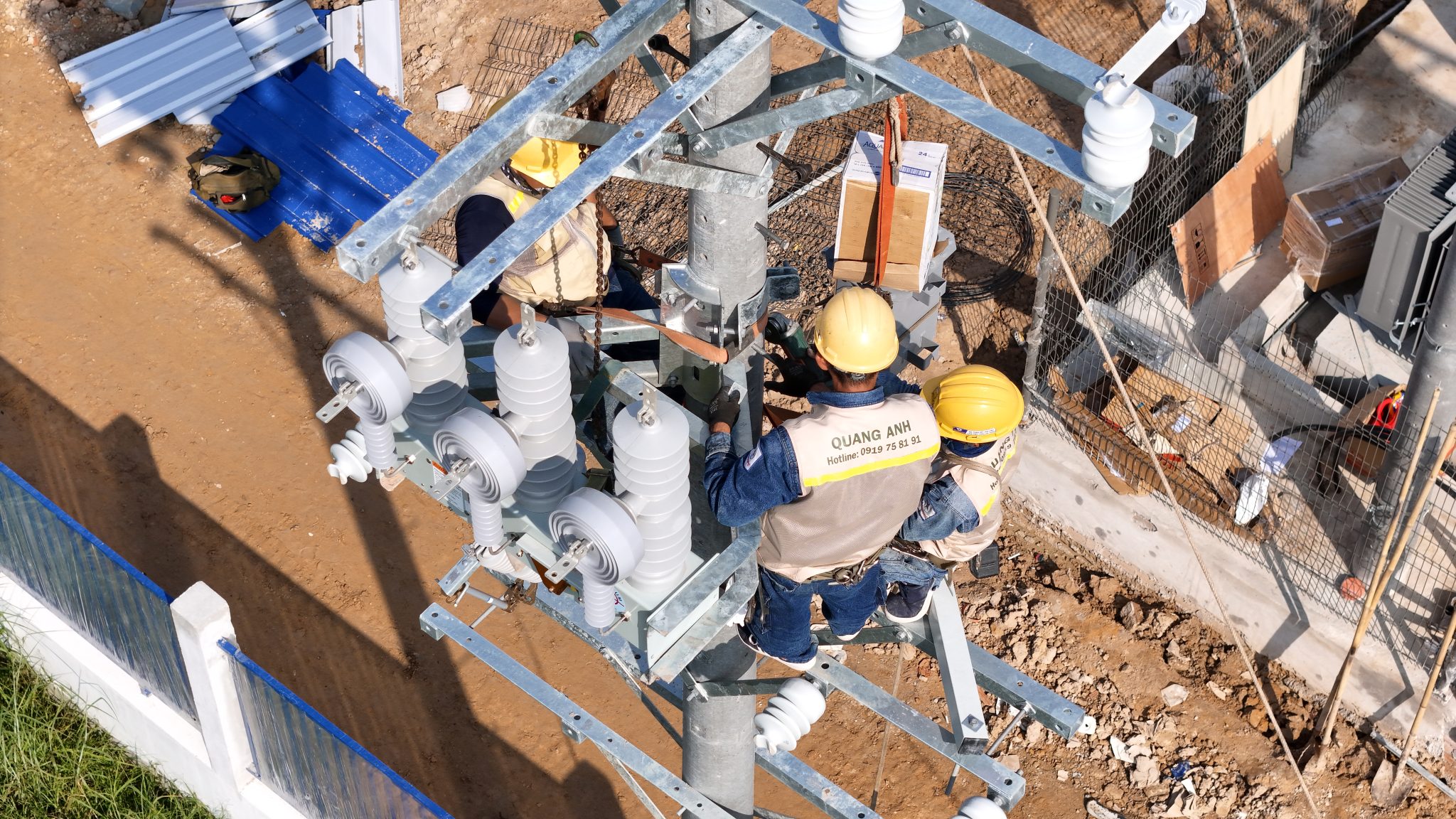
For a 1500kVA substation, primary equipment must include transformers, medium voltage switchgear (or RMU), low voltage cabinets, primary ACB, reactive power compensation, and grounding systems.
Transformers typically use oil-immersed types for the 1500kVA substation because of higher efficiency and lower investment. Dry transformers are chosen only if fire safety is critical or for indoor settings. Field surveys must check ventilation capabilities, ambient temperature levels (transformers operated ≤ 65°C), and safety distances before confirming transformer types.
Medium voltage switchgear is compulsory for a 1500kVA substation, including short-circuit interrupters, overcurrent protection, and measurement devices; SF6 or VCB types may be used based on EVN standards. If the medium voltage line is underground, or a closed loop is needed, prioritize RMU for integrated cutting, protection, and measurement, minimizing field setup and connection risks.
Low voltage cabinets must feature a primary ACB rated between 2500A–3200A for a 1500kVA unit, with short-circuit interruption and overload protection as per IEC 60947-2. Reactive power compensation units typically employ approximately 750kVar capacity (about 50% of the rated power) to mitigate reactive power penalties; capacitor bank configurations (fixed or automatic) should be determined based on load profiles.
- Field checks: confirm medium voltage cable type (22kV) and ensure grounding resistance is ≤ 4Ω per QCVN before testing.
- Measurement devices: 3-phase digital meters, medium voltage CT/VT, and SCADA/remote monitoring capabilities if required.
- Structural and environmental factors: Ensure support frames withstand load, protect from rain for outdoor stations, and enable ventilation for indoor stations.
Operational warnings: Survey the site to confirm transformer types, medium voltage switchgear type (RMU or separate cabinets), and actual short-circuit parameters for appropriately rated ACBs. Only after finalizing these foundational elements can detailed pricing and accurate material estimates be requested.
Pricing References and Estimating Without Missing Items
Budget framework for a 1500kVA substation must delineate costs across equipment, construction, cabling, testing, connections, and auxiliary expenses; pricing data is for reference.
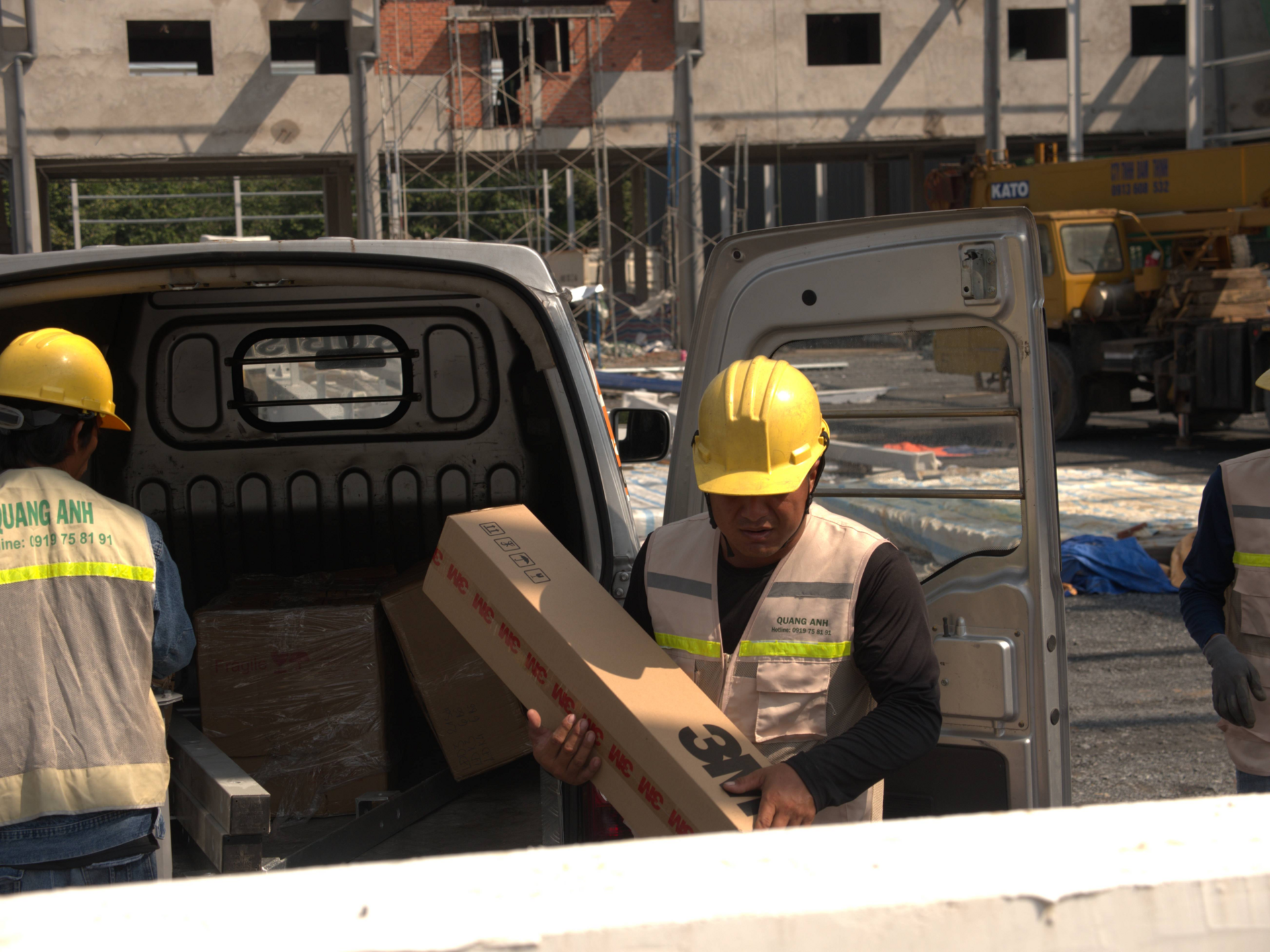
The cost estimates for a 1500kVA substation should be distinctly separated into key categories: equipment, construction, cabling, testing, connections, and auxiliary expenses to prevent missing any items.
Practically, each cost category must specify items and applicable conditions. In terms of fieldwork, substation type (platform, steel tower, kiosk) and site location (indoor/outdoor) will directly impact foundation strategies, construction methods, and installation costs.
| Cost Category | Main Items | Field Remarks |
|---|---|---|
| Main Equipment | Transformers, medium voltage switchgear (RMU), low voltage cabinets, protective devices | Price varies by brand, configuration, and testing requirements. |
| Construction | Foundations, crossbars, supporting beams, equipment frames | Depends on substation type and geological conditions on-site. |
| Cables & Connection Materials | Medium and low voltage cables, fireproof cable terminations, connection materials | Cable length and termination requirements significantly impact costs. |
| Testing & Inspection | Transformer testing, equipment commissioning | Includes certification costs according to management regulations. |
| Connections | Power cuts, hotline connections, commissioning | Hotline connections are often costly; agreements with EVN are necessary. |
| Transport & Construction | Equipment transport, construction machinery, labor, construction supervision | Should be separately itemized from material costs to avoid oversight. |
| Documentation & Approval | Department of Industry and Trade commissioning, EVN/EVNSPC approvals, completion, VAT | Approval and commissioning costs must be clearly listed; VAT in accordance with regulations. |
To finalize a reasonable price, collect specific field data; during a factory survey, check substation type, placement (indoor/outdoor), and medium voltage line distances. Major influencing factors include substation type (platform/tower/kiosk), location, and medium voltage line distance (note: beyond 40m usually necessitates a price adjustment).
Reference data from estimated items can inform budget comparisons: preliminary design estimation costs around 48.5 million VND; preliminary design review and estimation about 25 million VND; completion certification for the Department of Industry and Trade roughly 10 million VND; backup hotline connection estimated at 100 million VND. Estimates typically include 8% VAT on pre-tax total costs and require connection agreements with EVN.
Regarding timeline, design estimates are typically prepared within about 50 days, with turnkey construction spanning approximately 10 days, suggesting a total estimated time of about 60 days. A practical warning is not to consolidate transport, construction machinery, and supervision costs into a single item unless field surveys are conducted; this can lead to missing items during commissioning.
Next step decision: Execute detailed on-site surveys noting cable distances and foundation conditions, secure layout drawings, and connect with EVN for detailed and complete quote approval.
Selecting Substation Layout and Cable Routes Based on Layout, Safety, and Operations
Direct comparisons of substation types (kiosk, outdoor platform, indoor, lattice/tower) and cable methods (overhead/underground, radial/loop) based on layout, safety, and operational needs.
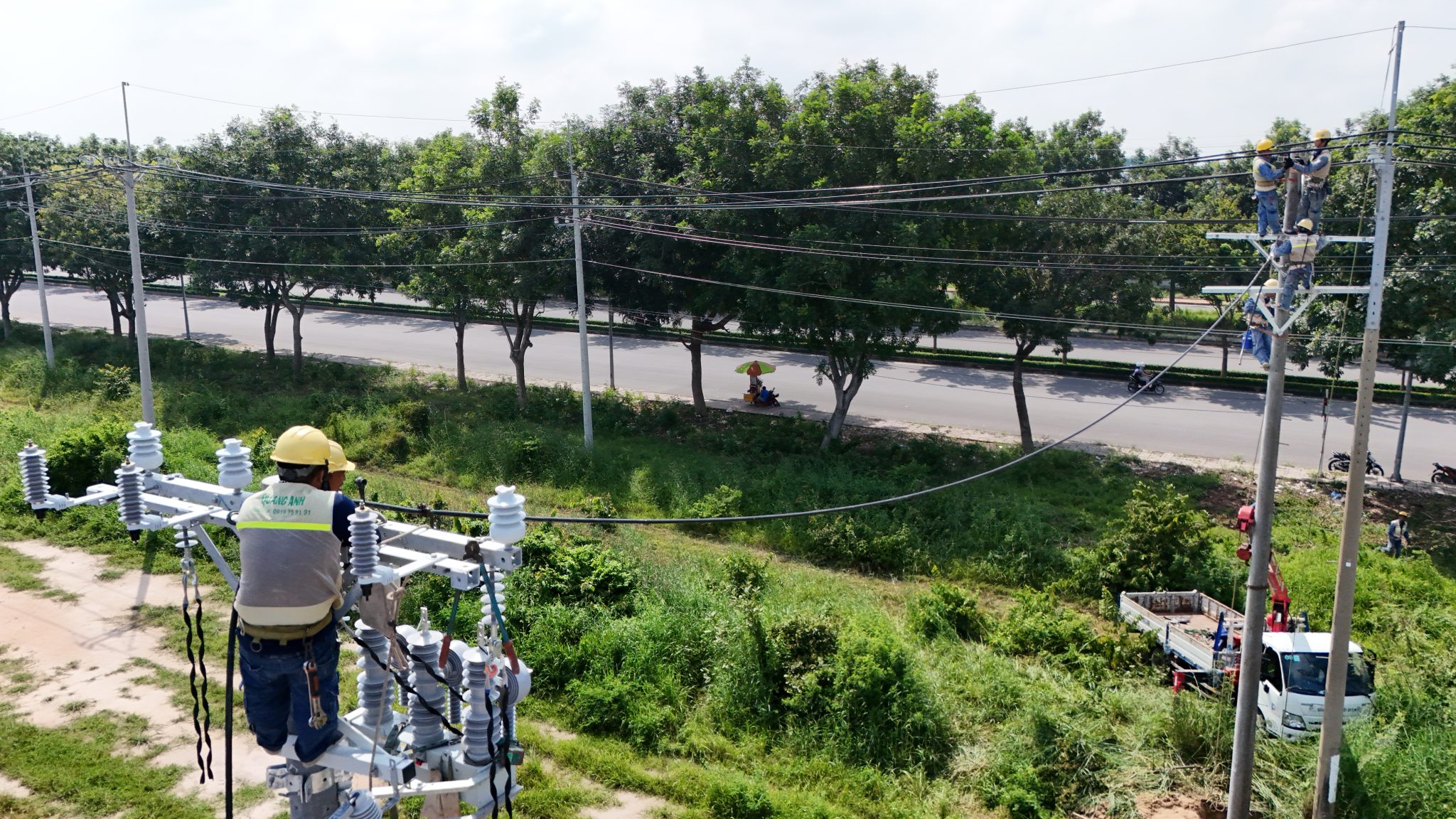
The selection of substations and cable routes should prioritize compatibility with the site layout, safety requirements, and operation feasibility instead of applying a one-size-fits-all method.
Field considerations include available space, proximity to medium voltage lines, maintenance accessibility, and environmental risks (lightning, flooding, residential areas). Generally, outdoor platforms are suitable for wide industrial areas with lower costs than kiosks but require lightning protection and clearances; kiosks are optimal for tight spaces with IP54 protection, ideal for rapid setups; indoor substations demand sealed rooms, ventilation, and prioritize dry transformers to mitigate oil spill risks; lattice or tower setups suit elevated terrains or need altitude separation, offering easier maintenance access though higher frame costs.
| Option | When Suitable | Field Checkpoints |
|---|---|---|
| Outdoor Platform | Broad industrial sites with ample space | Distance to medium voltage lines; lightning protection; access pathways |
| Kiosk (Integrated) | Limited space, urban areas, rapid installation | IP protection, intrusion prevention, heat dissipation gaps |
| Indoor Substation | Aesthetic needs, fire safety, sealed indoor spaces | Ventilation, fire prevention, prioritize dry transformers |
| Lattice/Tower Substation | High altitude terrain, requires elevation separation | Supporting structure, climbing safety, higher frame costs |
For cables: overhead medium voltage cables (aerial) save costs and construction time but are more susceptible to weather impacts and need broader corridors; underground medium voltage cables enhance reliability and safety, fitting dense areas, but trenching and groundwork costs can be notably higher, sometimes 3-5 times compared to aerial depending on site conditions. Radial (single) setups offer simplicity and low costs, suitable for small factories with stable loads; loop (ring) configurations boost reliability and allow AFLR for reduced outage times during incidents.
RMUs (Ring Main Units) are segmented medium voltage switchgear supporting AFLR to automatically isolate faults on loop networks; maintenance requires confirming AFLR capabilities and insulation as per local conditions, depending on model and operating conditions. Practical operations suggest considering outdoor substations for easier access compared to indoor closed setups, though indoor requires standard fire safety measures; kiosks are suitable for speed and limited access.
Final decisions should stem from site surveys: defining available space, maintenance access, EVN safety requirements, and terrain conditions. Post-survey, detailed plans and material breakdowns can settle cost estimates. Operational warning: in critical areas, prioritize underground cables and loops to minimize earth-fault risks; with outdoor installations, plan appropriate lightning protections and medium voltage clearances (site information suggests maximum distances for design consideration).
Survey and Construction Process, Connections, and Commissioning
A sequence from site survey, design and estimation documentation, material preparation, construction and installation, testing, connection, and final commissioning.

The procedural workflow begins with a site survey, followed by the preparation and approval of design-estimation documentation, material provisioning, foundation construction, installation, testing, connection (via power cut or hotline), and concludes with final commissioning.
When inspecting a facility for a 1500kVA substation placement, evaluate coordinate compatibility with the medium voltage grid, confirm safety distances to power lines, foundation conditions, and access for equipment transport. Design-estimation documentation must include technical drawings, a list of materials (transformers, medium/low voltage cabinets, connection cables, supports), and a safety labor plan compliant with electrical utility regulations before execution.
| Item | Description | Field Checkpoints |
|---|---|---|
| Site Survey | Identify installation sites, transport routes, and foundation conditions | Distance to power lines, load capacity of foundations, cable positioning |
| Design & Estimation Docs | Construction plans, BOM of equipment, construction cost estimates | Precision of drawings, alignment of medium-low voltage connections, approval by management |
| Construction & Installation | Foundations, crossbars, installation of transformers and distribution cabinets | Foundation inspection, bolt position and machinery alignment checks |
| Pre-Connection Testing | Insulation testing, performance checks, protection function validation | Insulation values, no-load/operating voltage tests (as per design) |
| Connection & Final Commissioning | Coordinate power cuts or hotline connections, safety verification pre-commissioning | Include electricity cut reports, permits, grounding checks, and inspection documents |
In practice, testing and inspection precede connections: verify insulation, relay protection functioning, no-load transformer tests, and full system grounding checks. Coordination with power utilities for scheduled power cuts (per distribution network management procedures) is mandatory during medium voltage connections; consider a hotline connection plan as a contingency if continuous power is required.
Key site decisions: refrain from commissioning without test completion reports or power cut schedule confirmations; maintain tight construction oversight to ensure timeline and safety compliance. Related costs like power cuts, connections, and supervision are usually itemized separately in estimates.
The typical execution timeline ranges between 50–60 days, based on scale, approval procedures, and transport conditions; construction phases should adhere to sequential auditing to minimize delays. Proposal for next steps: conduct detailed site surveys and compile real-time execution schedules based on access conditions and connection obligations with grid management entities.
Common Mistakes, Required Documentation, and Selecting the Right Contractor
An overview of frequent mistakes in capacity selection, configuration, and EPC contract scope for a 1500kVA substation, accompanied by a checklist for documentation and contractor evaluation criteria.
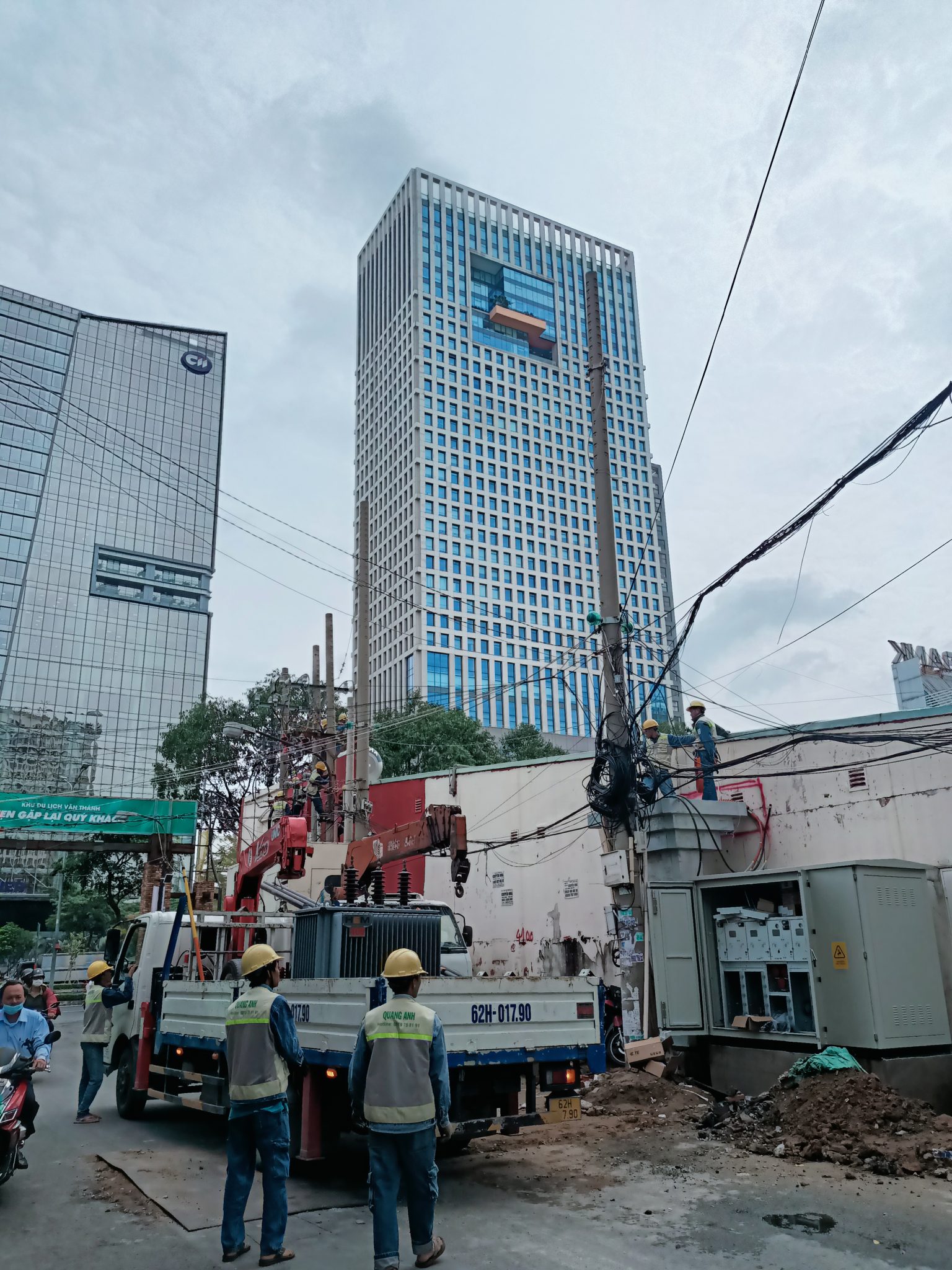
Selecting contractors solely on low price without validating credentials can result in unexpected costs and delays. During site assessments at the plant, measure the distance of medium voltage lines to the substation to anticipate EVN connection costs and avoid surprises.
Before signing contracts, legal and commissioning documents must be verified; typically, these include design approvals and assessed estimates. Below is a checklist of essential documentation before signing:
- Investment license and substation installation proposal (certified copies).
- Approved design and assessed estimates (basis for approvals from relevant authorities).
- Power cut and connection agreements with EVN, including costs and cut schedules.
- Equipment commissioning documents: transformer test reports, transformer and control cabinet test records.
- Completion documentation, as-built drawings, and final approval from the Department of Industry and Trade where applicable.
- Contractor competencies: equivalent 1500kVA project records, all-in contractor certifications, key personnel profiles.
Contractor selection criteria should prioritize real-world connection experience with EVN, comprehensive construction capabilities, and committed execution timelines. Maintenance and commissioning phases must demonstrate contractors have testing processes and hotline support for resolving commissioning issues.
EPC contracts should delineate detailed scopes: design, construction, commissioning, completion, and energization; explicitly stating responsibilities and costs for power cuts, connections, and equipment transport. Operational caution: without pre-agreed power cut costs, connection costs may arise outside the contract, prolonging timelines.
Depending on project conditions, documentation typically takes around 50 days to complete, with approximately 10 days for construction, totaling about 60 days; on-site surveys should verify exact timelines. For progression, contractors must present qualifications pertinent to 1500kVA projects and undertake on-site surveys before negotiating contract terms.
To create a reliable quote for investment decisions, determine power demand needs, cable routes, substation types, connection conditions, and commissioning documents upfront. Clear inputs enable the 1500kVA substation quote to precisely guide contractor selection and manage emerging risks.
Frequently Asked Questions
What level of plant load is suitable for a 1500kVA substation?
A 1500kVA substation is suitable when both operational demands and short-term peaks align with the transformer capacity; decisions also depend on the power factor, starting currents, backup requirements, and expansion plans. Load charts, power factor, and starting load data are needed for accurate assessment.
When should I choose an oil or dry 1500kVA transformer for specific installation conditions?
Choose oil transformers for outdoor installations due to cost and maintenance advantages; choose dry for indoor setups where reducing fire risks is important. Decision factors include location, fire safety needs, ventilation, and budget—provide these details to make an informed choice.
Which costs are often overlooked when requesting quotes for a 1500kVA substation?
Common omissions include testing and inspection, design approvals, connection/energization costs (power cuts or hotline), transport, emerging foundation costs, insurance, completion, and contingencies. Request BOM details and work scope to fairly compare quotes.
When is using RMU appropriate versus FCO and LA methods?
RMUs are suitable for underground medium voltage cables or loop configurations requiring fast switching and branch segmentation. FCO/LA works for overhead lines and simple radial networks needing basic protection. Provide network diagrams and cable types to choose the best method.
What distinguishes power cut connection from hotline connection?
Power cut connections occur on de-energized grids, posing lower electrical risks and typically costing less but require scheduling production halts per EVN. Hotline connections maintain continuous power, needing specialized teams and insulated equipment, at a higher cost.
How can I verify if a contractor has built and commissioned a 1500kVA substation before?
Request a list of similar projects with contracts and commissioning records, site photos, lead engineer information, and construction permits; contact references to confirm. Obtain commissioning documents, completion certificates, and EVN records where available.
How to Prepare Inputs for Accurate 1500kVA Substation Quotes
- Confirm current operating load, backup load, and future expansion needs.
- Determine connection voltage, substation site, and preliminary medium voltage cable routes.
- Define the intended substation type: kiosk, outdoor platform, indoor, or another suitable option for the layout.
- Clearly list requirements for equipment, cables, construction, testing, inspection, and connections.
- Explain construction site conditions, whether industrial zone, urban, rural, or mountainous area.
- Check legal documents and power utility requirements before finalizing commissioning timelines.
- Compare quotes covering the identical scope instead of just focusing on main equipment prices.
If you’re at the budgeting or comparison stage for a 1500kVA substation, ensure you reconsider equipment range, cable routing, and connection conditions before soliciting detailed quotes.
[contact-form-7 id="7239967" title="Contact form 1"]
Related Posts
Pricing and Configuration Guide for 1600kVA Substations
A detailed guide on pricing for 1600kVA substations, including equipment specs, connection costs, EVN procedures, [...]
Mar
Comprehensive Guide to 1500kVA Substation Pricing: Configuration, Costs, and Investment Process
A comprehensive overview of configurations, costs, construction methods, connection procedures, and contractor selection for 1500kVA [...]
Mar
Tay Ninh Solar Power Planning: Technical Framework, Grid Interconnection, and Rollout Roadmap
Technical overview of solar planning in Tay Ninh: irradiation, grid capacity, permitting, design, operations, and [...]
Dec
Binh Duong Solar Planning: Regulatory Framework, Grid Interconnection, and an Implementation Roadmap for Factories and Industrial Parks
An overview of Binh Duong solar planning: legal framework, interconnection, design, risk management, and an [...]
Dec
Solar Farm Repair: O&M Workflow, IV Curve Diagnostics, Thermography, Inverter Service and Utility-Scale Safety
A utility-scale solar farm repair plan centered on O&M, IV curves, thermal imaging, inverter service, [...]
Dec
Dong Nai Solar Power Plan 2023–2025: Tri An 1,029 MW, Grid Upgrades and the DPPA Pathway
A complete look at Dong Nai’s solar power plan: Tri An 1,029 MW, irradiation potential, [...]
Nov
Quang Ngai Solar Power Plan 2024–2030: Legal Framework, Irradiance Potential, and Development Roadmap
A complete look at Quang Ngai’s solar power plan: capacity targets, irradiance (PVout), development zones, [...]
Nov
Solar Damage Assessment Services: On-Site Procedures, EL/IV/Thermography Testing & Compliance with Standards
Discover IEC/UL/NEC standard solar damage assessment processes: on-site evaluation, EL and IV curve testing, thermal [...]
Nov
Comprehensive Package Estimate for a 1800MVA 500kV Substation: Scope, Configuration 3x600MVA, Standards and Timeline Management
An overview of the 1800MVA 500kV substation estimate: construction scope, configuration 3x600MVA, GIS/AIS, SCADA, standards, [...]
Nov
Factory Electrical Systems: Comprehensive Design and Implementation Guide
Discover the detailed and safe process of factory electrical systems design and implementation. [...]
Oct
Blueprints Required for Factory Construction Permits
Discover the necessary blueprints in factory construction permit applications, from floor plans to electrical and [...]
Oct
What Are the Requirements for a Factory Construction Permit? A Comprehensive Guide
Explore the documentation and steps needed to secure a factory construction permit for streamlined project [...]
Oct
Factory Construction Permit Procedures in Vietnam: Essential Guidelines and Documents
Learn the procedures for securing a factory construction permit in Vietnam, focusing on document preparation [...]
Oct
Key Steps in the Factory Construction Process
Discover the essential steps and requirements for building factories. [...]
Oct
Comprehensive Electrical Substation Solutions by Quanganhcons
Discover the cutting-edge electrical substation solutions offered by Quanganhcons for industrial applications. [...]
Oct
Investment Costs for a 1MWp Solar Power System and Influencing Factors
Explore the investment costs for a 1MWp solar power system in Vietnam and the influencing [...]
Sep
QuangAnhcons: Elevating Wind Energy Solutions
Explore QuangAnhcons' leadership in wind energy and renewable solutions in Vietnam. [...]
Sep
Electrical Contractor Strategies at Becamex Industrial Park
Discover the strategic advancements and partnerships of the electrical contractor at Becamex Industrial Park. [...]
Sep
Investment Insights for 1MW Wind Energy in Vietnam: Costs and Opportunities
Discover the detailed analysis of costs and opportunities for investing in 1MW wind energy projects [...]
Sep
Advanced Electrical Installation Solutions by QuangAnhcons
Explore advanced electrical installation solutions and modern technology with QuangAnhcons. [...]
Sep