

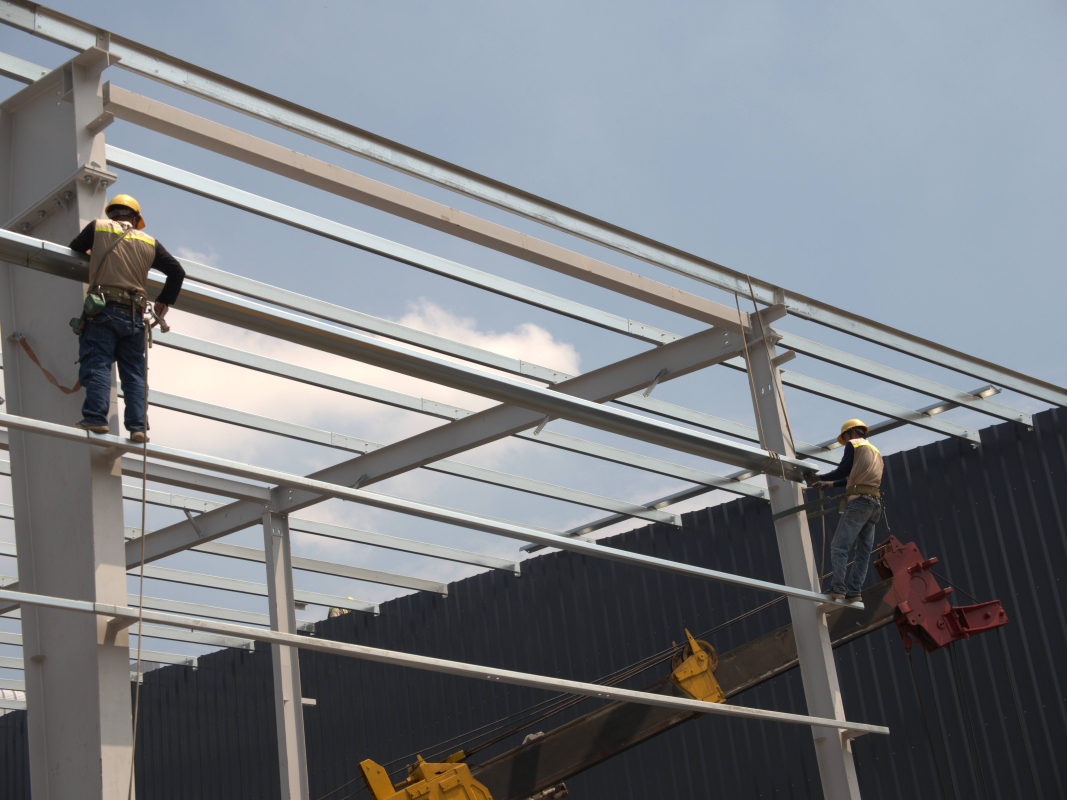
- Identifying initial wrong decisions can escalate construction costs, modifications, and power-up delays.
- Differentiating between immediate investment costs and those arising due to poor onsite design collaboration.
- Knowing which aspects are commonly overlooked in EVN documentation, testing, and inspections.
- Evaluating when to prepare for expansions to avoid renovation after a few years of operation.
- Use a checklist before finalizing EPC or handing over projects to contractors for transformer station setup.
- Factory investors planning to install a new transformer station.
- Project managers needing to control EPC electricity costs.
- Factory technical teams involved in capacity planning and grid connection strategies.
- Procurement departments comparing equipment and proposal scopes.
When Should You Read This?
- While setting investment policies or estimation for transformer stations.
- When preparing to finalize transformer capacity and medium-voltage plans.
- If EVN documentation lacks clarity on connection requirements.
- When price discrepancies between providers are significant but risks are hard to identify.
- When aiming to minimize rework before inspection and power-up.
- 1. Where Do Costs in Transformer Station Construction Typically Originate?
- 2. Incorrect Transformer Capacity Selection: Overinvestment or Insufficient Operating Capacity
- 3. Poor Station Location Design and Medium-Voltage Connection Plans
- 4. Inappropriate Equipment and Configuration Choices Lead to Costly Inspections, Operations, and Replacements
- 5. EVN Documentation, Testing, and Field Procedure: Missing Steps Can Delay the Whole Project
- 6. Lifecycle Costs Often Overlooked When Only Considering Initial EPC Price
Constructing a transformer station for a factory often incurs additional costs not due to a single major mistake, but rather a series of minor decisions made too early or due to a lack of coordination between design, the field, and connection procedures. Understanding where things typically go wrong from the start can help investors avoid costly modifications that prove more time-consuming than monetary.
Where Do Costs in Transformer Station Construction Typically Originate?
Cost overruns in transformer stations often arise from technical decisions during the design finalization and construction preparation stages, rather than during construction itself.
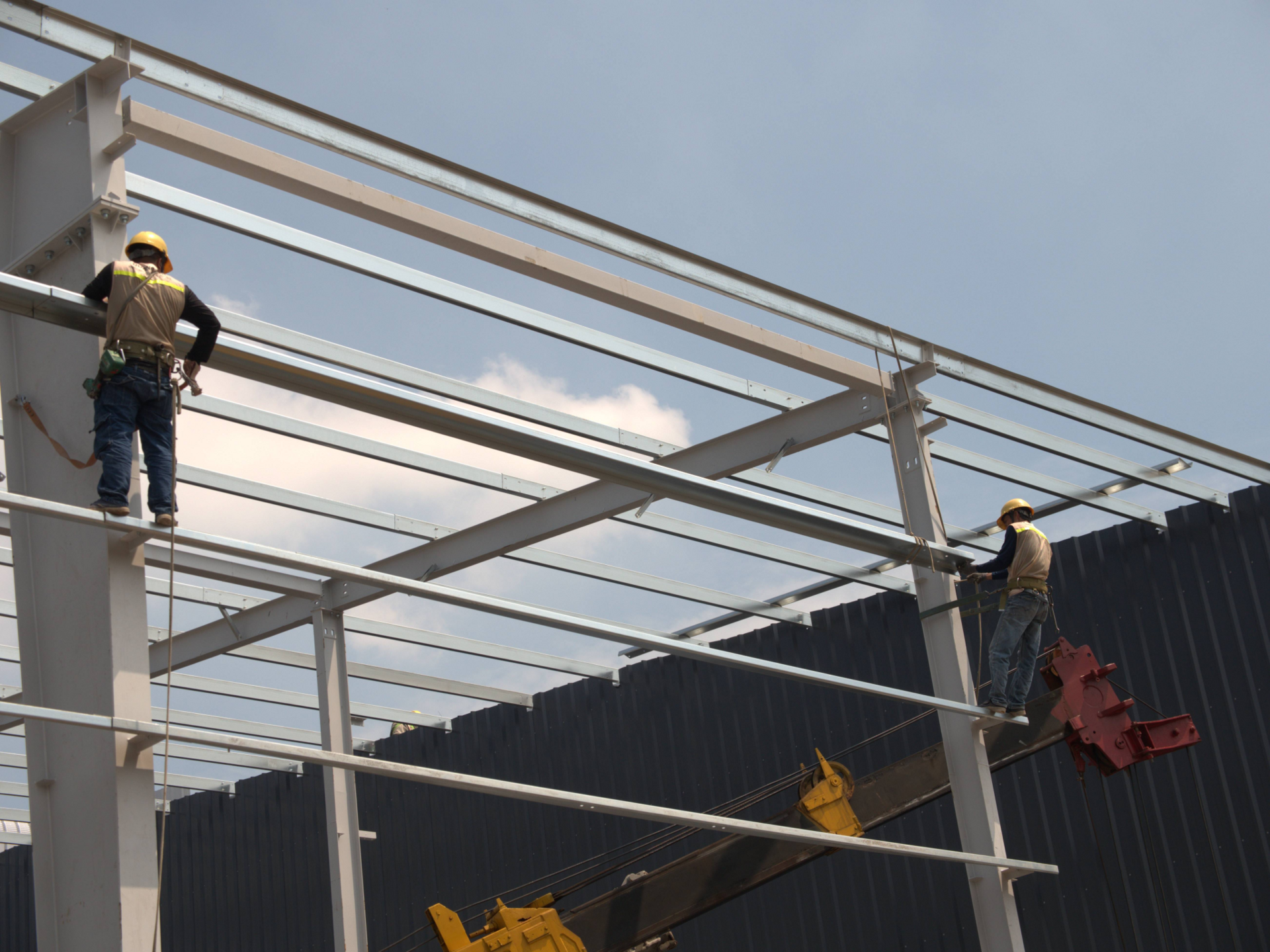
Most cost overruns occur right from briefing finalization and material selection, not just during the construction stage.
Onsite, factors that can increase costs include incorrect location installation, inappropriate construction materials, and incorrect protection system settings. During factory inspections, issues should be checked like bar connections, circuit breaker gaps, and bolt or weld quality to detect poor contacts. During maintenance periods, signs like unusual noise from coil expansion or localized overheating indicate early intervention is needed to avoid major replacements.
Quick checklist (field inspection helps identify potential hidden costs):
- Verify equipment installation location and method: ensure correct connections and anti-vibration pads where needed.
- Verify construction material quality: assess foundation integrity and moisture protection layers.
- Measure connection resistance and inspect contact gaps during maintenance visits.
- Review protection system settings (fuse, relays) before completion trials.
- Watch for overloads or unusual noise when machines operate on load simulators.
To avert unexpected costs, make three early decisions: clarify technical requirements and material lists before signing contracts; include contact resistance and electrical measurements in inspection checklists; and set regular maintenance schedules. If sparks occur or breakers won’t open/close, halt switching immediately and address connections as these are precursors to major failures if ignored.
| Issue Group | Field Indicators | Cost Impacts |
|---|---|---|
| Installation & Connection | wrong position connections, loose welds, winding noise | Component repair, inspect internals, replace windings |
| Materials & Structure | foundation cracks, damp materials, poor protective layers | Increased maintenance, foundation repair, material replacement |
| Protection & Adjustment | relay misadjusted, sparks at breakers, abnormal resistance measurement | Additional protection devices, calibration, emergency stops |
Quick coupling: managerial and technical inspection decisions at the briefing stage often determine the major downstream cost influences; field surveys can transform these risks into mandatory checks before construction.
Incorrect Transformer Capacity Selection: Overinvestment or Insufficient Operating Capacity
Transformer capacity should be determined considering real load, growth forecasts, and factory operation characteristics. Undersized units may lead to overloads, voltage fluctuations, and shutdowns. Over-sizing for “safety” can mean unnecessary capital investment without guaranteed operational efficiency improvements.
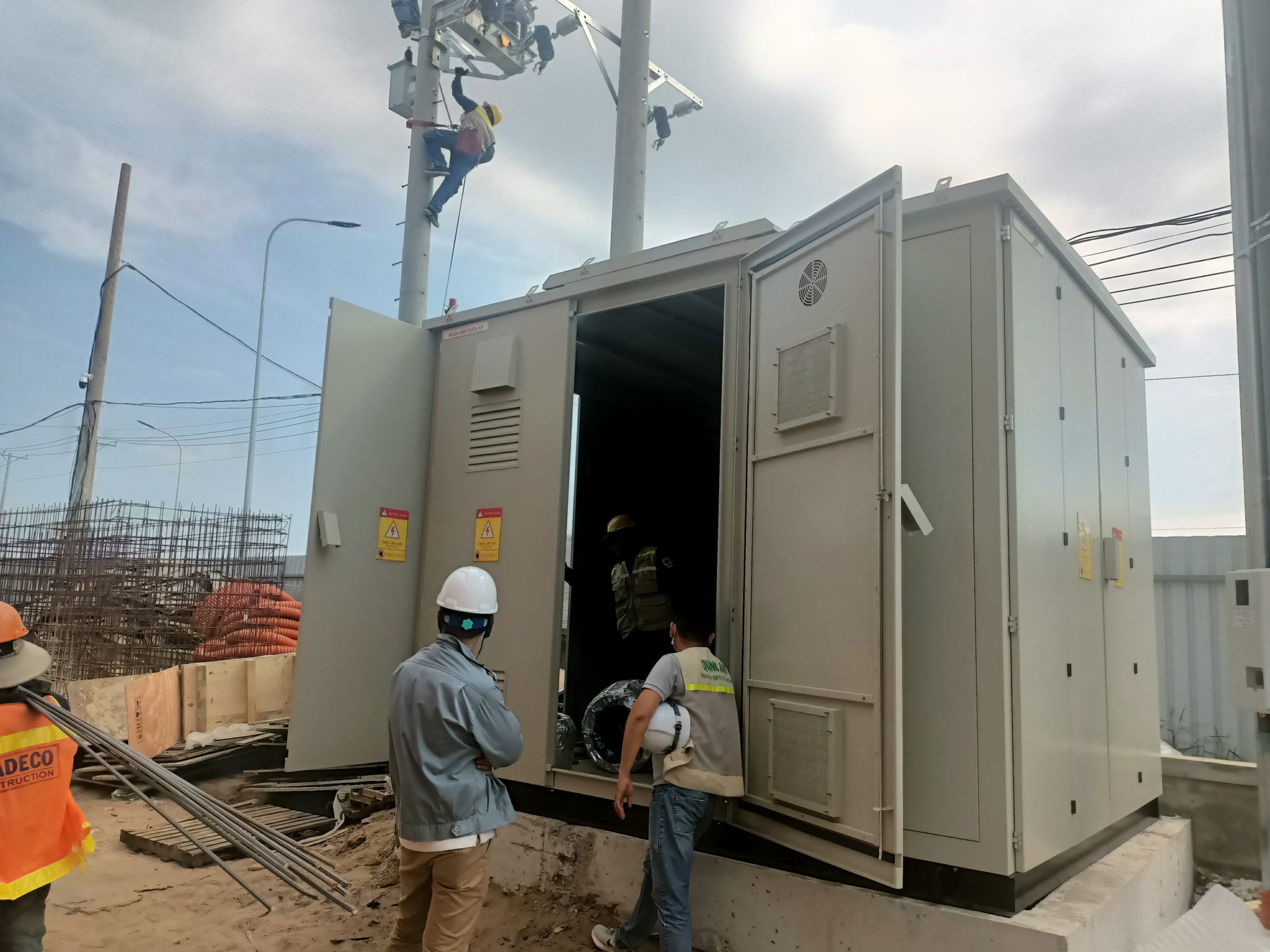
Selecting the wrong transformer capacity tends to have two primary outcomes: insufficient capacity for stable operation or overinvestment relative to actual needs. Practical solutions should not be based on gut feelings or solely on equipment cost but should adhere to load consumption, growth potential, and factory operating modes.
When a transformer operates beyond its rated capacity, coils can overheat, expand, and generate unusual noise, signaling early warning signs during maintenance checks. Prolonged overloading can increase oil temperature, reduce cooling efficiency, and impact oil longevity. Typically, manufacturers face unstable voltage issues with this setup, showing low voltage, over-voltage, or voltage fluctuation that can increase terminal device failures and production disruptions.
Conversely, opting for an oversized transformer can inflate initial capital without corresponding load needs. Investment strategies should thus consider lifecycle costs rather than just equipment purchase price, as capacity decisions also affect operation, maintenance, and future load adjustments. For efficacy evaluation, lifecycle cost frameworks that include initial investment, annual operation charges, and equipment replacement costs throughout its lifespan can be referenced.
| Cost Group | Components | Influencing Variables | Application Notes |
|---|---|---|---|
| Initial Investment | Transformer and related infrastructure | Capacity selection, operation requirements, redundancy levels | Over-sizing can lead to unnecessary CAPEX increase |
| Operation | Voltage stability, load control, oil temperature | Real load, power source, operating conditions | Under-sizing increases overload risks and voltage fluctuations |
| Maintenance and Risks | Maintenance, repairs, machine downtime | Work beyond rate, protection efficiency | Costs can skyrocket if the transformer frequently overloads |
Key criteria include real factory load and expansion potential in the near future. Upon factory inspection, unusual humming, structural vibration, localized hot spots at input terminals, or compromised protection efficiency are signals needing capacity problem assessment instead of surface-level fixes. This step is crucial before configuring the station and selecting coordinating equipment.
Poor Station Location Design and Medium-Voltage Connection Plans
Early adjustment of station location and medium-voltage connection plans reduces risks of undergrounding costs, document amendments, and cable material expenses during construction.
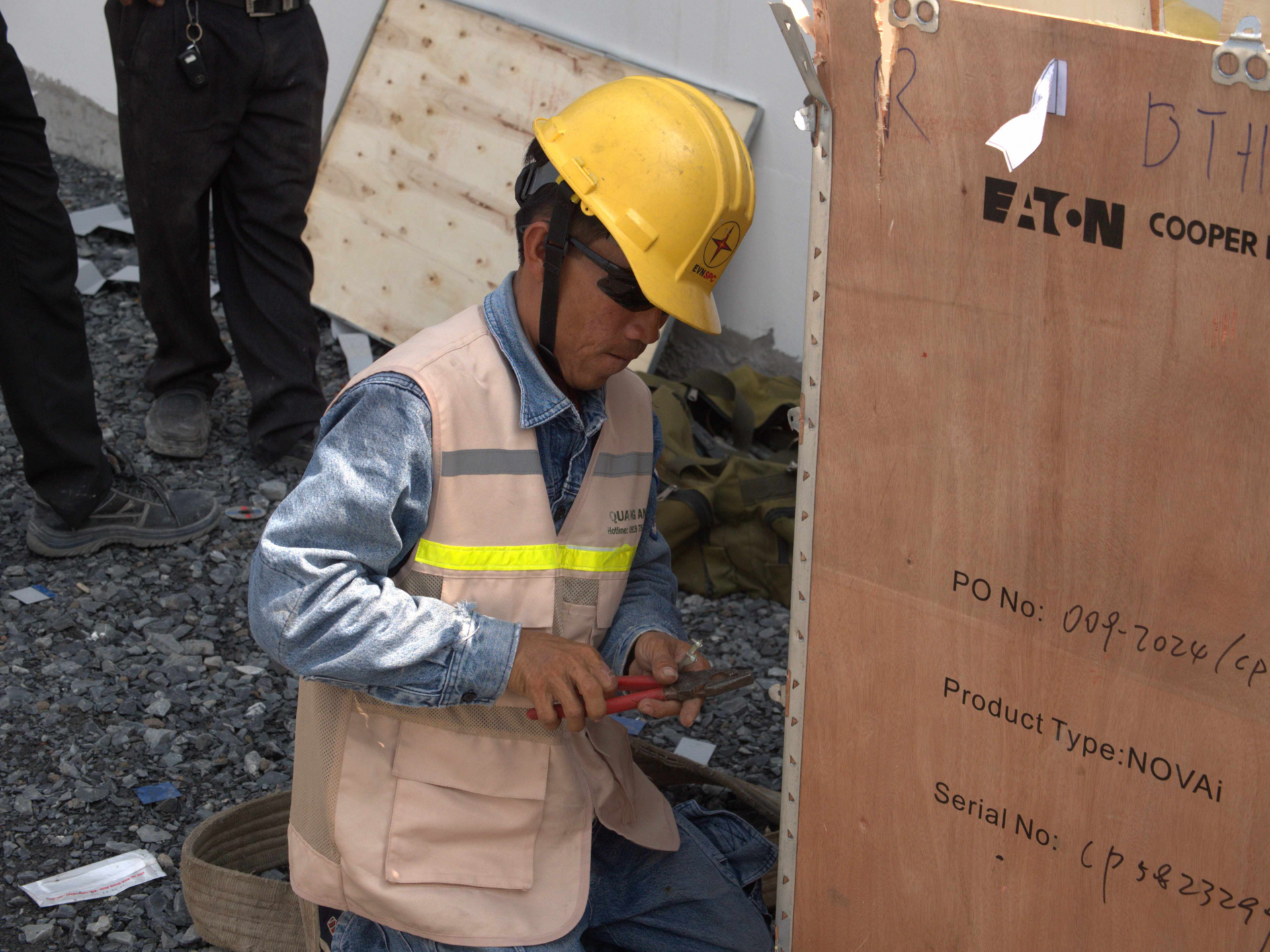
The position of the station and medium-voltage connection plans must be adjusted in advance to prevent future construction expenses and document corrections due to “site misalignment” designs.
From a technical standpoint, a station placed far from power consumers typically extends medium-voltage cable lengths, requiring more undergrounding and materials. Site surveys may expose underlying issues, traffic crossing points, or inconsistent terrain necessitating equipment repositioning and foundation work.
If connection plans don’t match EVN diagrams, approvals may be denied, leading to document revisions, protection adjustments, and reconstruction. In practice, poor coordination with EVN can cause power-up delays, extended wait costs, and contractual penalties.
- Underground position checking: locate pipes, wires, and drainage lines before detailed design.
- Determine optimal cable runs by consumption distance to limit undergrounding and material needs.
- Cross-reference connection diagrams with EVN necessities before issuing construction documents.
- Evaluate EVN’s reserve load demand to avoid post-operation upgrades.
Below is a summary of factors directly influencing cost and necessary field checks:
| Influencing Factor | Practical Effect / Field Check |
|---|---|
| Medium-voltage cable length | Increased material and underground costs; verify distance to consumption points. |
| Traffic crossings | More licensing procedures and underground efforts; inspect crossing routes onsite. |
| Subsurface and terrain | Triggers relocations, foundation adjustments; conduct soil layering and local geological surveys. |
| EVN diagram coordination | Avoids approval denials, power-up delays, and waiting fees; pre-construction diagram verification required. |
Operational warning: ignoring surveys and diagram verification may lead to redesign costs and extend construction timelines; this can sometimes lengthen projects by 20-30% due to reagent and additional undergrounding adjustments. Design decisions need careful consideration during surveys to avoid future cost impacts.
Next steps: conduct a detailed survey, prepare optimal cable route plans, and seek EVN confirmation on connection diagrams before issuing construction plans.
Inappropriate Equipment and Configuration Choices Lead to Costly Inspections, Operations, and Replacements
Comparing initial purchase price with replacement/upgrade risks and incompatibilities can increase costs during transformer station inspections, operations, and replacements.
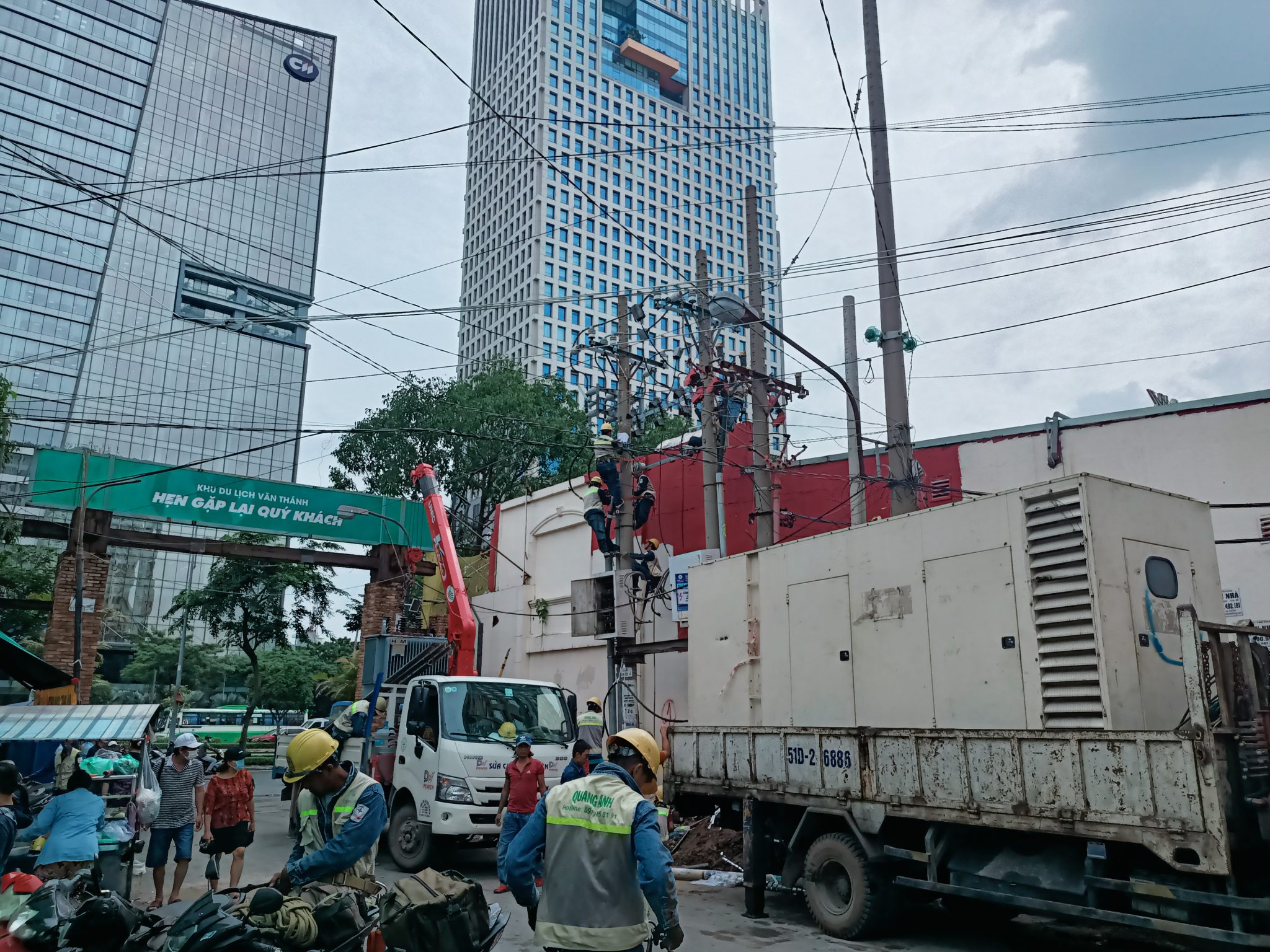
Choosing unsuitable equipment or configurations increases inspection, operational, and replacement costs due to early failures, grid incompatibility, and required on-site adjustments.
Common technical mistakes include not meeting equipment technical specifications, incompatible transformer capacities, inadequate cooling systems, and wrongly adjusted protection configurations. During maintenance or factory surveys, evaluate load capacity, insulation parameters, and cooling abilities of transformers per standards TCVN 6306-2:2006 and TCVN 10860:2015 for operational lifespan assessment.
At the acceptance stage, costly mistakes may include contact resistance deviations causing arcing, inadequate circuit breaker gaps, poor insulation, and incorrect equipment position causing vibration. In practice, these errors often result in module replacements, reinforcement needs, or transformer replacements if unresolvable.
- Check contact resistance and mechanical gaps of switches or circuit breakers (tolerance data required for field measurements).
- Review rated capacity and overload factor of transformers; verify cooling system compatibility with actual operating conditions.
- Confirm insulation material quality and levels according to applicable TCVN codes to prevent shorts and ground faults.
- Examine protection configurations (relays, fuses) to ensure compatibility with distribution circuit diagrams to avoid delayed crisis management.
- Inspect installation positions and anti-vibration measures; reinforce immediately if vibration propagation is detected.
Decisions to approve or replace equipment should be based on practical criteria: compatibility with EVN’s acceptance standards, in-situ repairability, availability of spare parts, and impact on downtime. Non-compliance with EVN’s grid standards risks acceptance denials, necessitating replacements or upgrades, which may cost significantly more than initial purchases.
Operational notice: when transformers operate beyond design loads or insufficient cooling, reduce loads and immediately check oil temperature, coil expansions, and signs of arc discharge; delaying inspections can lead to major failures. Field surveys guide further decisions on upgrades, replacements, or protection configuration adjustments.
EVN Documentation, Testing, and Field Procedure: Missing Steps Can Delay the Whole Project
The order of completing EVN documents, equipment testing, and acceptance in the field dictates the risk of re-documentation and power-up delays.
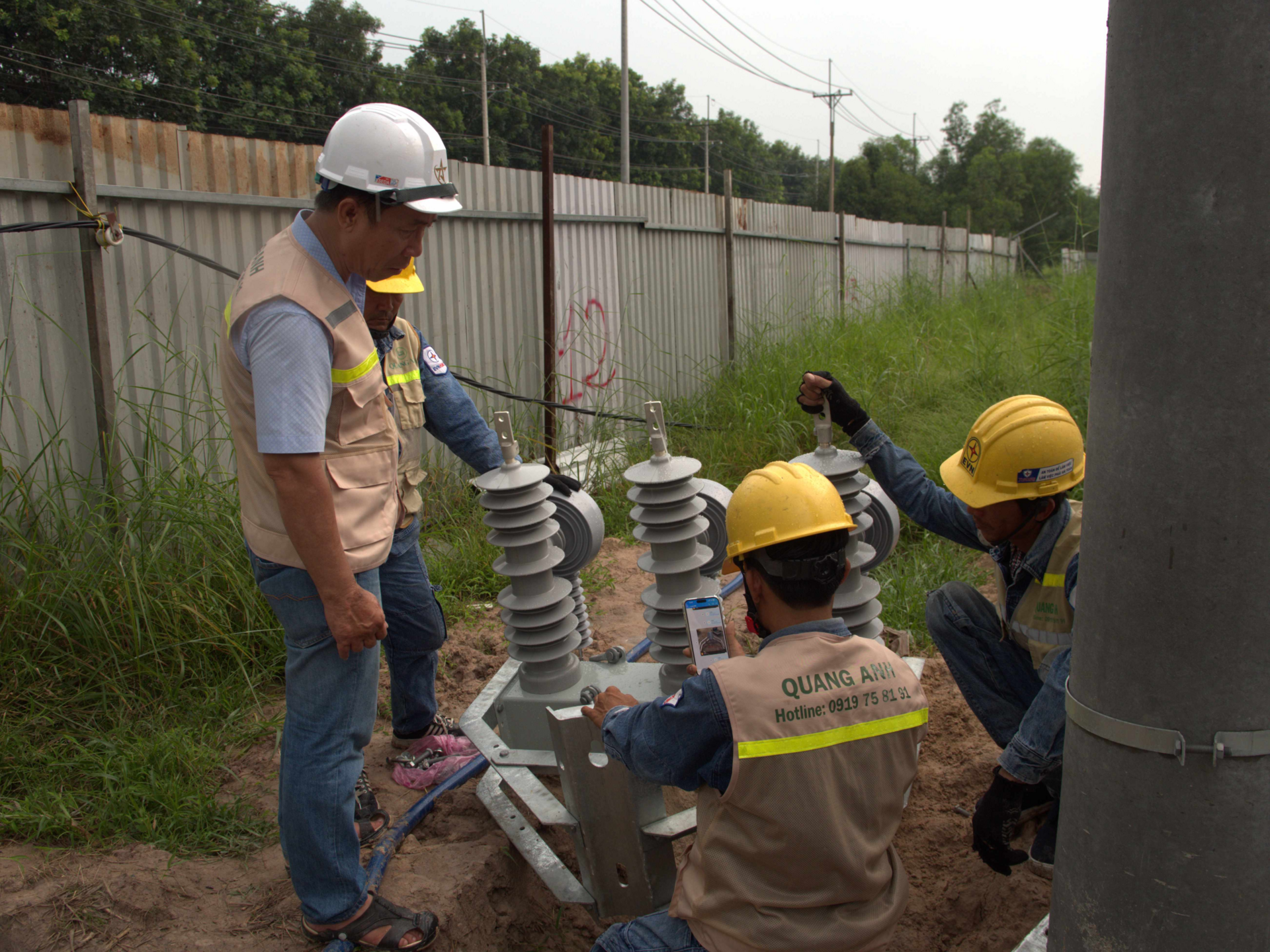
Execution sequence should be: complete EVN documentation, inspect installation, conduct electrical tests, and field acceptance before power-up.
From a field perspective, begin with mechanical and connection checks: inspect bushing bolts, busbar connections, and equipment stability to avoid operational vibration and misalignment.
After mechanical completion, conduct standard electrical tests: measure three-phase DC resistance, check contact gaps, perform trials on unloaded breakers, and supplement intent thermal imaging for suspect connectors.
| Step | Field Check | Decision Criteria |
|---|---|---|
| Prepare EVN Documentation | Complete diagrams, installation reports, equipment lists, and internal acceptance files. | Don’t submit for acceptance if documents are incomplete; supplement before power-up requests. |
| Field Testing | Measure three-phase DC resistance, verify contact gaps, test breaker operation, and use infrared on suspect connections. | If resistance deviations or contact gaps are incorrect, open internals, tighten/weld, or replace before acceptance. |
| Acceptance and Power-up | Test protection functions, adjust OFLTC if primary voltage deviates, and trial switch operations with no load. | Sparking, failed breaker operations, or misconfigured protection are reasons to halt power-up. |
Operational caution: during acceptance, if breakers spark during load trials or do not open/close correctly, stop the power-up procedure and address mechanical or electrical issues first.
Standards reference and next steps: when adhering to legal and technical standards, check requirements per QCVN 01:2020/BCT, IEC 60076, and TCVN 6001:2008 depending on the scope, and conduct field surveys if doubts persist.
Lifecycle Costs Often Overlooked When Only Considering Initial EPC Price
Calculating lifecycle costs that include maintenance, replacements, and upgrades significantly changes investment decisions compared to only considering initial EPC costs.
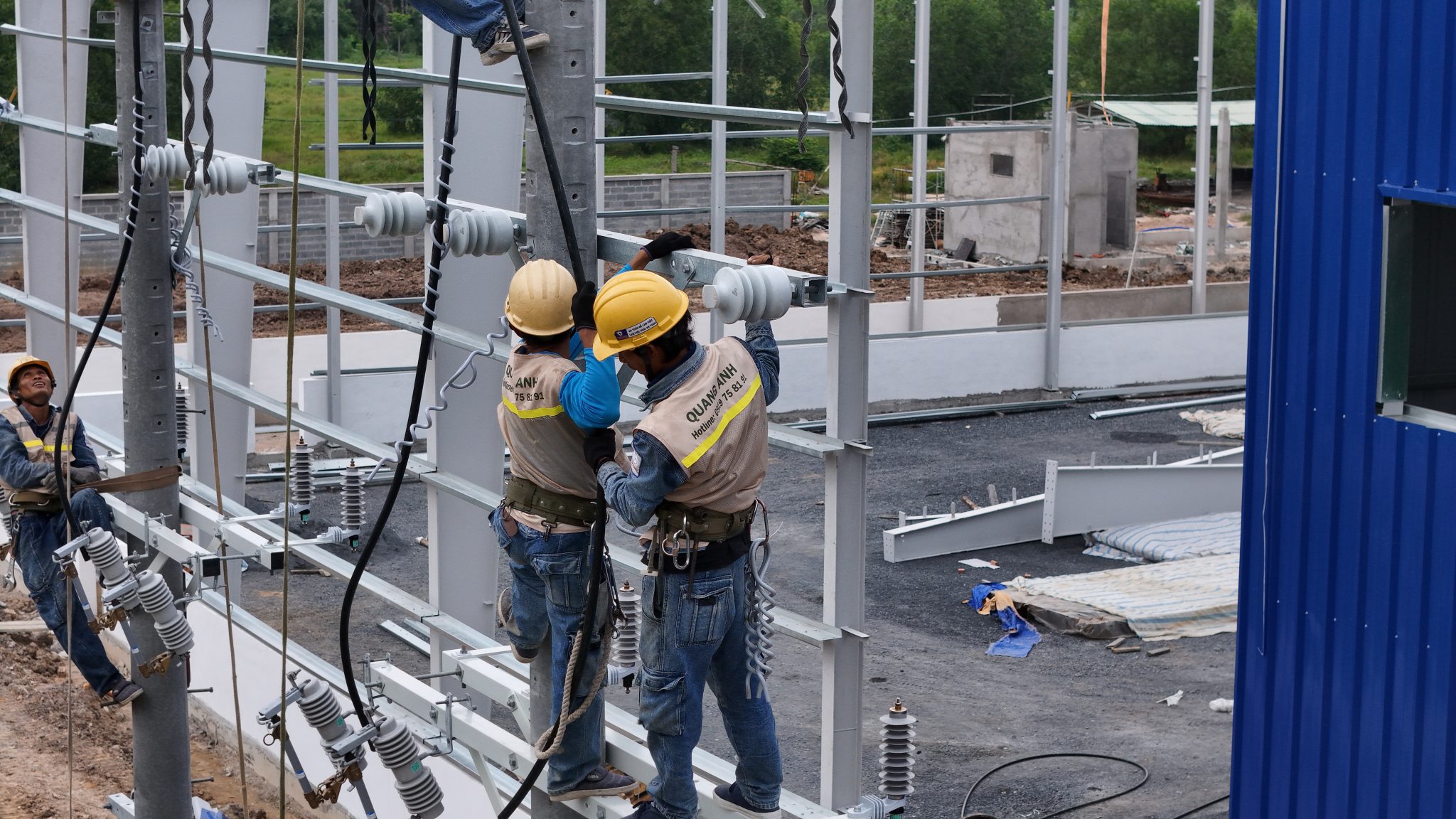
Choosing purely based on initial EPC prices can be misleading; lifecycle costs often exceed when factoring in periodic maintenance, emergency repairs, and post-operation expansion needs.
Technically, initial costs (EPC) generally cover materials, installation, and acceptance, while operating costs and abnormalities like repair due to shorts, oil replacement, or middle-voltage undergrounding improvements arise over several years. During site inspections, check for such field signs as high oil temperatures, incorrect contact gaps, loose foundation bolts, and vibration transmission to estimate maintenance frequency and replacement risks.
| Cost Group | Typical Components | Influencing Variables |
|---|---|---|
| CAPEX | Equipment, installation, EPC acceptance | Station scale, material quality, EVN acceptance requirements |
| Periodic OPEX | Maintenance, oil changes, scheduled inspections | Inspection frequency, load conditions, initial quality |
| Emergency Repairs | Short circuit repairs, internal checks, coil or breaker replacements | Construction methods, internal short circuits, on-site response capability |
| Expansion & Upgrades | Additional machines, capacity boosts, middle-voltage undergrounding | Design modularity, capacity reserves |
| Operational Interruption Costs | Production halts, power outages | Load criticality, recovery times |
Conceptually, lifecycle cost models can be described as the total of CAPEX plus annual OPEX and replacement costs, minus any recovery value; however, site surveys are crucial to identify input parameters before modeling LCC. During maintenance, beneficial measurements include oil temperature checks, contact impedance measures, and groundwork bolt tightening to detect early loosening or vibration transmission.
- Operational warning: improper construction can cause short circuits necessitating urgent repairs, incurring costs beyond initial estimates.
- Note: according to field experience, repairs due to coil damage following overloads or unstable voltages can reach 20-50% of equipment value based on model and operating conditions.
- Production halt risk: internal short circuits requiring internal checks can lead to plant production halts costing billions per day in severe cases.
Technical conclusion: to make sustainable investment decisions, integrate expansion evaluations, material selection criteria, and anti-vibration solutions into design stages, while conducting site surveys to quantify OPEX and risks; from this, develop an optimal strategy balancing CAPEX against lifecycle costs.
To effectively control transformer station costs, investors should treat it as a holistic challenge involving load, location, connection, equipment, documentation, and long-term operation. A cheap proposal may not equate to minimal expenses when put into real use.
Frequently Asked Questions
Is opting for a transformer capacity larger than needed always safer?
Not necessarily. Larger capacity provides growth buffer but increases capital costs, reduces efficiency at low loads, and can cause peculiar startup behaviors and maintenance needs. Opt for calculations based on load charts, growth forecasts, and startup characteristics; hourly data and expansion plans are required.
Why might quotes for the same transformer station vary significantly across contractors?
Differences arise from varied scope and standards in proposals: equipment types, warranty levels, EVN acceptance agreements, underground work, testing, labor costs, and site risks are valued differently. Practically, request cost breakdowns, material lists, technical standards, and site conditions for accurate comparisons.
What costs commonly arise from poor coordination with EVN?
Poor EVN coordination typically leads to connection document revisions, additional equipment/protection resistors per requirements, extended cable runs or extra undergrounding, and repeated acceptance costs and power-up delays. Control by obtaining connection diagram, power condition confirmations, and full EVN documentation before contracts.
Can we reduce tests or bypass documentation to expedite power-up?
No, skipping essential tests/documentations could endanger safety, result in EVN acceptance rejections, and incur costly repairs. To speed up, prioritize critical tests and concurrently finalize documents and check EVN for minimum requirements confirmation.
When should expansion reserves be arranged early in the investment phase?
Expansion reserves are beneficial when unexpected power boosts are imminent, ambiguous production plans exist, or site/layout prevents cost-effective future expansions. Guideline: contrast current costs against future upgrade expenses; retrieve 3–5 year load forecasts, growth rates, and site limits to decide.
Should maintenance costs factor into finalizing transformer station proposals?
Yes, maintenance costs should be considered during proposal finalization: they impact total lifecycle costs based on equipment selection, oil type, spare part reserves. Implement using lifecycle models or maintenance checklists, obtain maintenance quotes; factor in maintenance schedules, material prices, and downtime estimates.
If you are comparing investment approaches or encounter unclear areas within transformer station quotes, revisit initial technical briefs, connection requirements, and acceptance conditions before proceeding with deployment.
[contact-form-7 id="7239967" title="Contact form 1"]
Related Posts
Common Mistakes in Transformer Station Construction Leading to Extra Costs
Các sai lầm khi làm trạm biến áp thường không nằm ở một hạng mục [...]
Apr
Comprehensive Guide to Acquiring Used Transformers
Góc nhìn kỹ thuật về thu mua TBA cũ: cách đánh giá hiện trạng, hồ [...]
Apr
Comprehensive Transformers Maintenance for Industrial Plants
Tổng quan dịch vụ bảo trì trạm biến áp nhà máy: lịch bảo dưỡng, thí [...]
Apr
Transformers: Assessing and Safely Handling Used Transformers
Khung đánh giá máy biến áp cũ theo tình trạng kỹ thuật, dầu cách điện, [...]
Apr
How Proactive Transformer Maintenance Minimizes Business Risks
Nhìn từ góc độ vận hành nhà máy, bảo trì chủ động trạm biến áp [...]
Apr
Comparing Oil and Dry Transformers in Industrial Projects
Distinguish between oil and dry transformers based on installation site, safety, maintenance, energy losses, initial [...]
Mar
Electrical Overload Warning Signs in Factories
Recognize early indicators of factory electrical overload such as voltage drops, overheating equipment, circuit breaker [...]
Mar
Risks of Overloading Industrial Transformers Without Upgrades
Keeping the same low-voltage transformer while increasing factory loads can result in overheating, insulation degradation, [...]
Mar
Evaluating and Implementing Transformer Contractors in Tay Ninh
Criteria for selecting transformer substation contractors in Tay Ninh, EPC scope, and factors affecting project [...]
Mar
Comparing Oil and Dry Transformers for Industrial Applications
Examine oil and dry transformers based on installation location, fire safety, maintenance, energy loss, investment [...]
Mar
Comprehensive 1500kVA Transformer Station Budget for Manufacturing Facilities
Guidance for creating a detailed budget list for a 1500kVA transformer station, including medium voltage [...]
Mar
Comprehensive Transformer Station Pricing: Elements and Considerations
Examine key components in comprehensive transformer station pricing including design, equipment, construction, testing, and connection [...]
Mar
Pricing Guide for 4000kVA Transformer Stations: Configuration, Cost, and Investment Process
An overview of configuration, cost estimates, connection approaches, and investment checklists for 4000kVA transformer stations [...]
Mar
Pricing and Setup of 3200kVA Transformer Stations: Configuration, Costs, and Investment Procedure
Explore the pricing structure for a 3200kVA transformer station, primary equipment configuration, cost variables, EVN [...]
Mar
Cost Estimation for 2500kVA Transformer Station: Configuration, Expenses, and Investment Process
Reference framework for quoting a 2500kVA transformer station based on configuration, station type, cable solutions, [...]
Mar
2000kVA Transformer Station Guide: Configuration, Costs, and Investment Process
Discover key aspects of a 2000kVA transformer station: from technical configuration and cost analysis to [...]
Mar
Pricing and Configuration Guide for 1600kVA Substations
A detailed guide on pricing for 1600kVA substations, including equipment specs, connection costs, EVN procedures, [...]
Mar
Comprehensive Guide to 1500kVA Substation Pricing: Configuration, Costs, and Investment Process
A comprehensive overview of configurations, costs, construction methods, connection procedures, and contractor selection for 1500kVA [...]
Mar
Tay Ninh Solar Power Planning: Technical Framework, Grid Interconnection, and Rollout Roadmap
Technical overview of solar planning in Tay Ninh: irradiation, grid capacity, permitting, design, operations, and [...]
Dec
Binh Duong Solar Planning: Regulatory Framework, Grid Interconnection, and an Implementation Roadmap for Factories and Industrial Parks
An overview of Binh Duong solar planning: legal framework, interconnection, design, risk management, and an [...]
Dec