

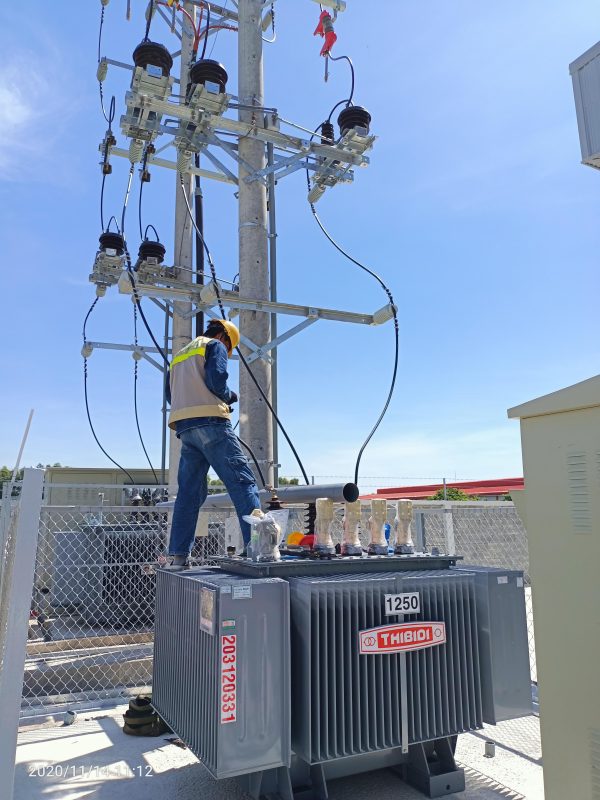
Quanganhcons stands out in the design, construction, and installation of substations, renowned for implementing modern technology and offering a range of services.
Advanced Technologies in Substation Design
Quanganhcons incorporates automated control and supervision technology via SCADA systems in substation designs, facilitating remote management and operation. This not only cuts costs but also enhances the safety and reliability of the electrical system. This integration is particularly beneficial for maintaining performance and dependability in 35kV substations.
Substations play a critical role in energy transmission and distribution systems, ensuring voltage transformation and system stability. With the pressing need for operational efficiency, advanced technologies have been integrated into substation designs. Solutions include Digital Substations, replacing traditional apparatus with intelligent measuring and control devices, which elevate measuring precision and allow remote monitoring, significantly reducing maintenance costs.
SCADA system integration marks another crucial advancement. SCADA systems enable remote device management and, when combined with IoT, gather real-time data, ensuring system stability and effective fault forecasting. In modern design, compact substations are favored for their space-saving traits and installation flexibility, especially in urban areas.
Advanced insulating materials like polymers and composites are widely adopted to increase lifespan and mitigate fire hazards. Additionally, AI in substations optimizes maintenance schedules, minimizes errors, and boosts operational efficiency.
The trend of eco-friendly substation designs (Green Substations) is rising. The adoption of green designs and renewable energy not only cuts energy consumption but also reduces greenhouse gas emissions. Furthermore, dry-type transformers mitigate hazardous chemical leakage risks.
Facing current challenges like high safety demands and new-old system integration, solutions like design optimization through digital simulations and standardized equipment selection are implemented to uphold electrical system sustainability.
Applications and Efficiency of Substations
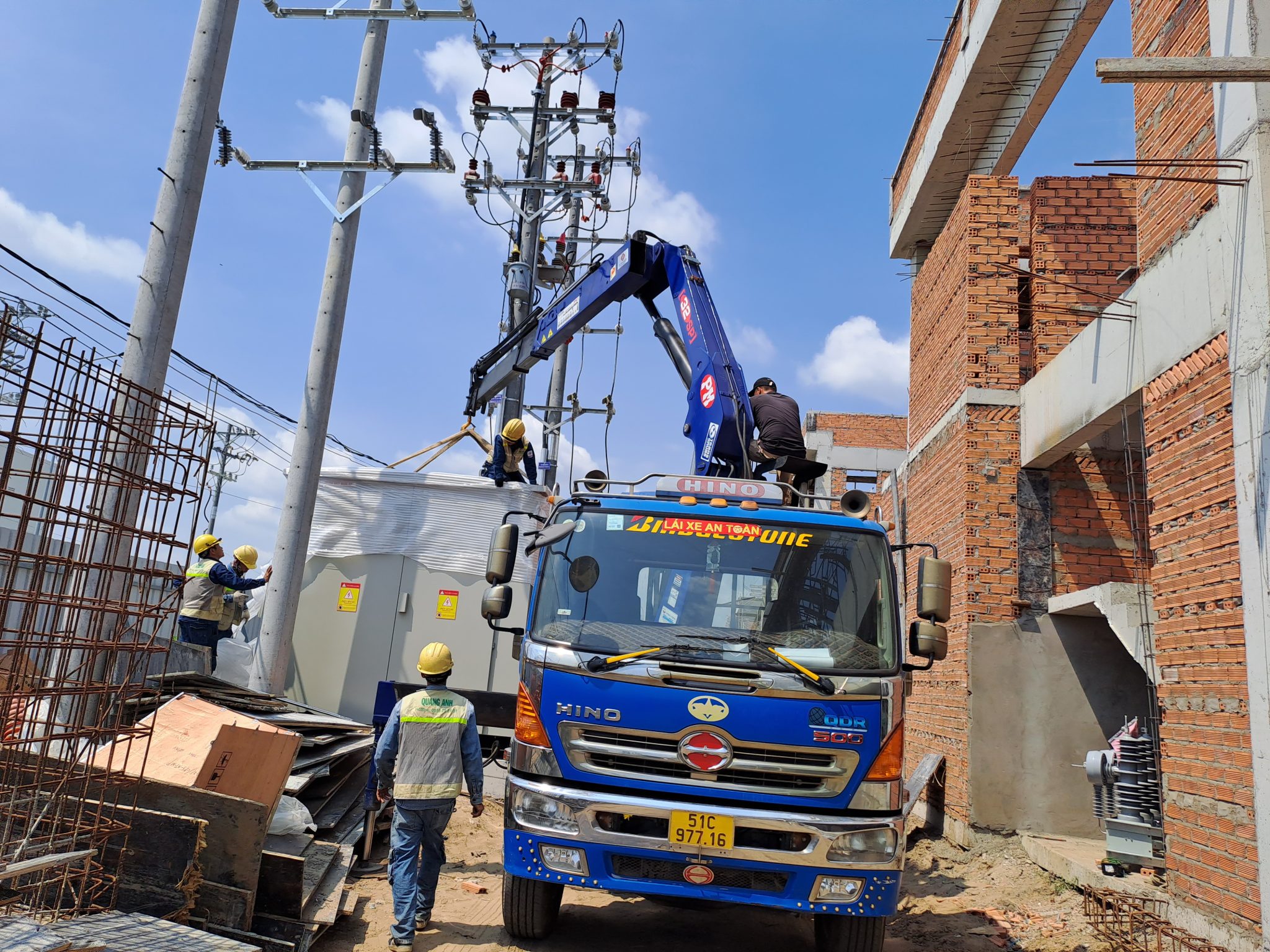
Substations provided by Quanganhcons are extensively utilized in major industrial zones like Dung Quat Economic Zone. These facilities ensure reliable energy supply and meet complex energy needs, helping businesses maintain consistent and efficient operations.
Substations are pivotal in electrical systems, tasked with voltage transformation to facilitate safe, efficient power transmission and distribution. Across the power grid, substations offer varied applications.
Applications of Substations
- Transmission Substations: Specialize in reducing ultra-high voltage to high or medium levels, minimizing energy loss during long-distance transmission, and optimizing system efficiency.
- Distribution Substations: Transform high or medium voltage to low voltage for distribution to households, businesses, and civil constructions.
- Industrial Substations: Provide suitable voltage for equipment and production lines in factories, playing an indispensable role in ensuring production efficiency.
- Urban Substations: Designed to supply power to urban areas, commercial centers, and densely populated residential zones, catering to high electricity demands.
- Agricultural and Remote Area Substations: Serve rural, mountainous, and isolated island regions, contributing to local economic and social development.
- Backup Substations: Ensure continuous power supply during outages or maintenance of other stations, preventing operational disruptions.
Efficiency and Benefits of Substations
- Reducing Energy Loss: Substations play a crucial role in appropriate voltage transformation, reducing energy loss and enhancing power supply efficiency.
- Stability and Source Protection: Isolation transformers and substation devices protect against overvoltage or undervoltage, improving safety for both industrial and residential systems.
- Ensuring Safety and Continuous Operations: Utilizing advanced technologies like SCADA and thermal sensing UAVs permit timely fault detection, minimizing accident risks and power interruptions.
Advanced Technology Applications at Substations
- Remote Monitoring with SCADA: SCADA technology is instrumental in collecting, monitoring, and remotely controlling substation equipment, enhancing operational efficiency while reducing errors and saving costs.
- Using UAVs with Thermal Cameras: This technology detects unusual heat spots early, efficiently handling issues, especially in difficult terrains.
- Digital Transformation and Management Software: Employing specialized software for technical management, testing, safety, and energy measurement improves accuracy and automation, decreasing reliance on manual labor.
In today’s context, substations are not just technical connection points but the backbone of electrical systems. The application of advanced technology continues to improve monitoring capabilities and smarter operation, ensuring stable and reliable electricity for users.
Safety Standards and Maintenance for Substations
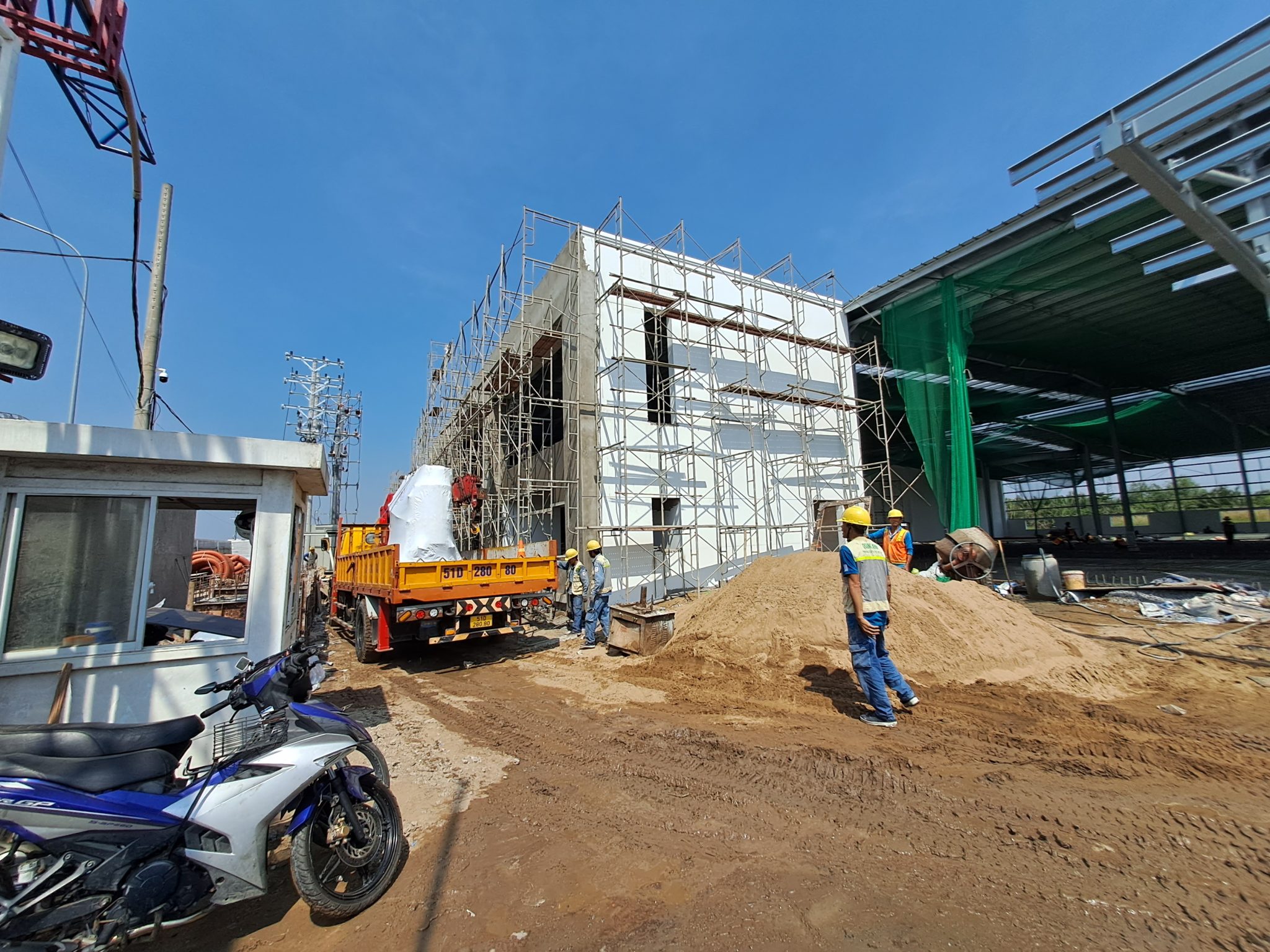
Quanganhcons strictly adheres to technical and safety standards for fire protection and equipment safeguarding. This not only protects assets but also contributes to sustainable operation of substations. Quanganhcons also offers operational and maintenance support services, ensuring system stability.
Fire Protection and Design Safety Standards
Ensuring fire protection safety in substation design plays a vital role. Substations must be built with safe spacing between equipment, using fire-resistant materials, and equipped with proper ventilation and emergency exits. It is indispensable to have necessary firefighting equipment, automatic fire alarm systems, and lightning protection systems to ensure highest performance.
Electrical Safety and Equipment Layout Standards
Safety barriers and standard equipment layout are essential to ensure electrical safety in substations. Transformers and distribution devices need appropriate safety enclosures. Circuit breakers, fuses, and isolation switches must have clear schematic diagrams, and be numbered for easy technician handling. Electrical enclosure boxes should meet the protection index (IP) suitable for working environments and have covers to prevent water and dust intrusion.
Operational and Maintenance Procedures
A standard substation operation process must include regulations on incident response and regular maintenance. This requires a workforce thoroughly trained in fire and electrical safety. Regular emergency response drills keep staff prepared for emergencies.
Technical Standards for Grounding and Protection
The grounding resistance should not exceed 4Ω to ensure maximum safety. Short-circuit protection systems need surpass three times the nominal cut-off current for automatic disconnection during faults. This requires the system to be established according to strict national technical standards.
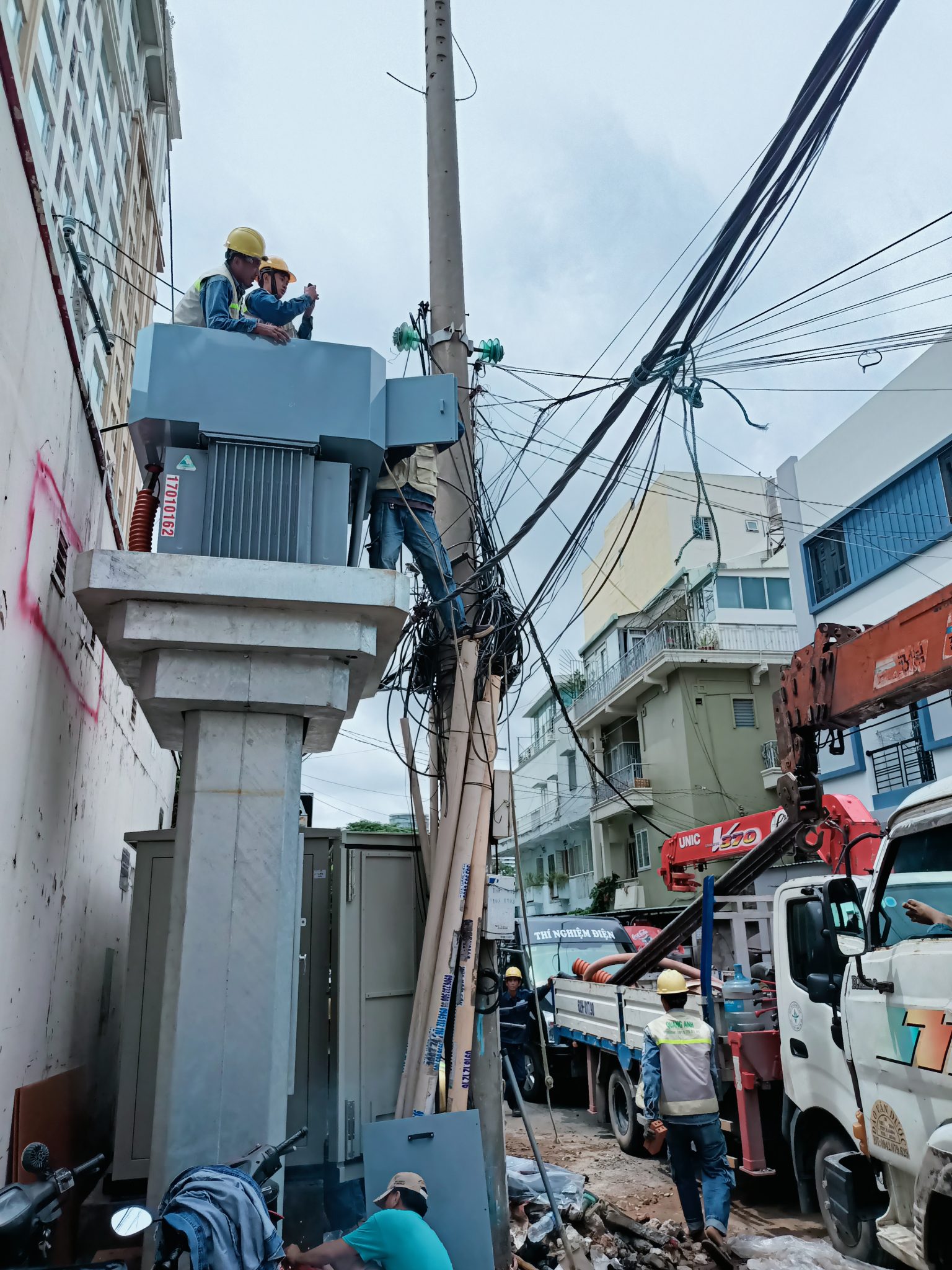
Quanganhcons not only provides pioneering technical solutions enhancing cost efficiency and operational performance, but also offers comprehensive maintenance support, ensuring electrical system safety and sustainability. These solutions grant businesses peace of mind for long-term growth.
Contact Quanganhcons now for the perfect substation solution for your business. Hotline: +84 9 1975 8191
Quanganhcons offers diverse, modern substations with SCADA technology, materials from esteemed brands, and professional maintenance support, ensuring the stability and safety of your enterprise’s electrical system.
[contact-form-7 id="7239967" title="Contact form 1"]
Related Posts
Comparing Oil and Dry Transformers in Industrial Projects
Distinguish between oil and dry transformers based on installation site, safety, maintenance, energy losses, initial [...]
Mar
Electrical Overload Warning Signs in Factories
Recognize early indicators of factory electrical overload such as voltage drops, overheating equipment, circuit breaker [...]
Mar
Risks of Overloading Industrial Transformers Without Upgrades
Keeping the same low-voltage transformer while increasing factory loads can result in overheating, insulation degradation, [...]
Mar
Evaluating and Implementing Transformer Contractors in Tay Ninh
Criteria for selecting transformer substation contractors in Tay Ninh, EPC scope, and factors affecting project [...]
Mar
Comparing Oil and Dry Transformers for Industrial Applications
Examine oil and dry transformers based on installation location, fire safety, maintenance, energy loss, investment [...]
Mar
Comprehensive 1500kVA Transformer Station Budget for Manufacturing Facilities
Guidance for creating a detailed budget list for a 1500kVA transformer station, including medium voltage [...]
Mar
Comprehensive Transformer Station Pricing: Elements and Considerations
Examine key components in comprehensive transformer station pricing including design, equipment, construction, testing, and connection [...]
Mar
Pricing Guide for 4000kVA Transformer Stations: Configuration, Cost, and Investment Process
An overview of configuration, cost estimates, connection approaches, and investment checklists for 4000kVA transformer stations [...]
Mar
Pricing and Setup of 3200kVA Transformer Stations: Configuration, Costs, and Investment Procedure
Explore the pricing structure for a 3200kVA transformer station, primary equipment configuration, cost variables, EVN [...]
Mar
Cost Estimation for 2500kVA Transformer Station: Configuration, Expenses, and Investment Process
Reference framework for quoting a 2500kVA transformer station based on configuration, station type, cable solutions, [...]
Mar
2000kVA Transformer Station Guide: Configuration, Costs, and Investment Process
Discover key aspects of a 2000kVA transformer station: from technical configuration and cost analysis to [...]
Mar
Pricing and Configuration Guide for 1600kVA Substations
A detailed guide on pricing for 1600kVA substations, including equipment specs, connection costs, EVN procedures, [...]
Mar
Comprehensive Guide to 1500kVA Substation Pricing: Configuration, Costs, and Investment Process
A comprehensive overview of configurations, costs, construction methods, connection procedures, and contractor selection for 1500kVA [...]
Mar
Tay Ninh Solar Power Planning: Technical Framework, Grid Interconnection, and Rollout Roadmap
Technical overview of solar planning in Tay Ninh: irradiation, grid capacity, permitting, design, operations, and [...]
Dec
Binh Duong Solar Planning: Regulatory Framework, Grid Interconnection, and an Implementation Roadmap for Factories and Industrial Parks
An overview of Binh Duong solar planning: legal framework, interconnection, design, risk management, and an [...]
Dec
Solar Farm Repair: O&M Workflow, IV Curve Diagnostics, Thermography, Inverter Service and Utility-Scale Safety
A utility-scale solar farm repair plan centered on O&M, IV curves, thermal imaging, inverter service, [...]
Dec
Dong Nai Solar Power Plan 2023–2025: Tri An 1,029 MW, Grid Upgrades and the DPPA Pathway
A complete look at Dong Nai’s solar power plan: Tri An 1,029 MW, irradiation potential, [...]
Nov
Quang Ngai Solar Power Plan 2024–2030: Legal Framework, Irradiance Potential, and Development Roadmap
A complete look at Quang Ngai’s solar power plan: capacity targets, irradiance (PVout), development zones, [...]
Nov
Solar Damage Assessment Services: On-Site Procedures, EL/IV/Thermography Testing & Compliance with Standards
Discover IEC/UL/NEC standard solar damage assessment processes: on-site evaluation, EL and IV curve testing, thermal [...]
Nov
Comprehensive Package Estimate for a 1800MVA 500kV Substation: Scope, Configuration 3x600MVA, Standards and Timeline Management
An overview of the 1800MVA 500kV substation estimate: construction scope, configuration 3x600MVA, GIS/AIS, SCADA, standards, [...]
Nov