

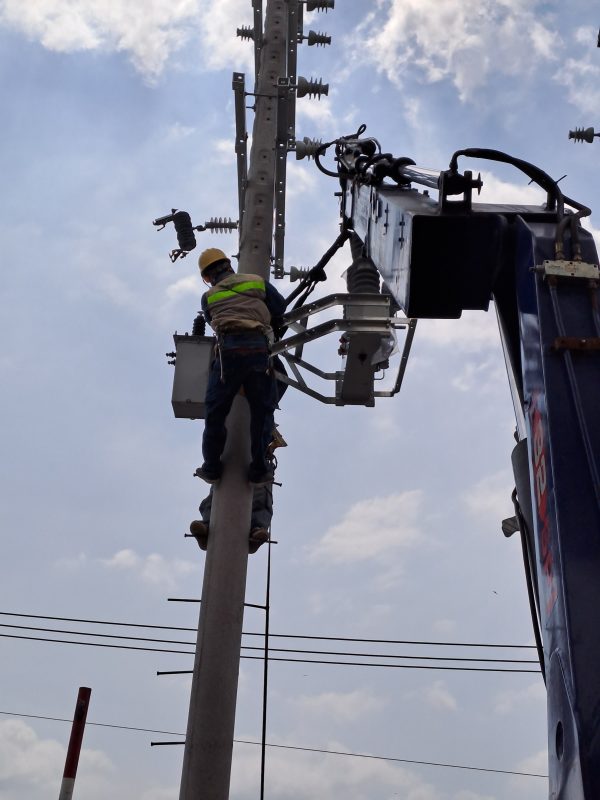
Installing an industrial electrical system requires meticulous procedures and adherence to high technical standards to ensure safety and efficiency.
Installation Process for Industrial Electrical Systems
The installation demands careful preparation and a clear process, starting with equipment like transformers, factory electrical cabinets, and protective devices such as CBs and relays. On-site surveys are then conducted to measure and analyze the customer’s power needs. Lastly, detailed designs adhering to standards like IEC 60364 or TCVN ensure safety and cost optimization. Each step requires close supervision for accuracy and safety.
Installing industrial electrical systems is a complex procedure blending technical expertise and safety. For effective, long-term operation, the following key steps should be observed:
- Preparing Equipment
- Ensure all necessary installation equipment like Thibidi transformers, Mitsubishi electrical cabinets, or Schneider protective devices are ready to facilitate the process smoothly.
- Personnel must be equipped with full protective gear for safety assurance.
- Site Survey
- Gather and process information on power usage needs and site conditions.
- Conduct an actual site survey to draft an effective, suitable construction plan.
- Electrical System Design
- Based on survey data, detailed electrical drawings compliant with IEC 60364 standard are created to ensure a safe and cost-effective system.
- Analyze and adjust drawings for optimal system operation.
- Installation Execution
- Implement installation as per approved design, prioritizing compliance with electrical safety standards.
- Ensure safety for both workers and equipment throughout the installation process.
- Testing and Inspection
- Following installation, the system undergoes thorough testing and trial runs to ensure stable operation.
- Complete handover procedures and gather customer feedback to improve service quality.
Optimizing installation and operational costs, while strictly adhering to technical standards, are crucial factors for the long-term success of any industrial electrical system.
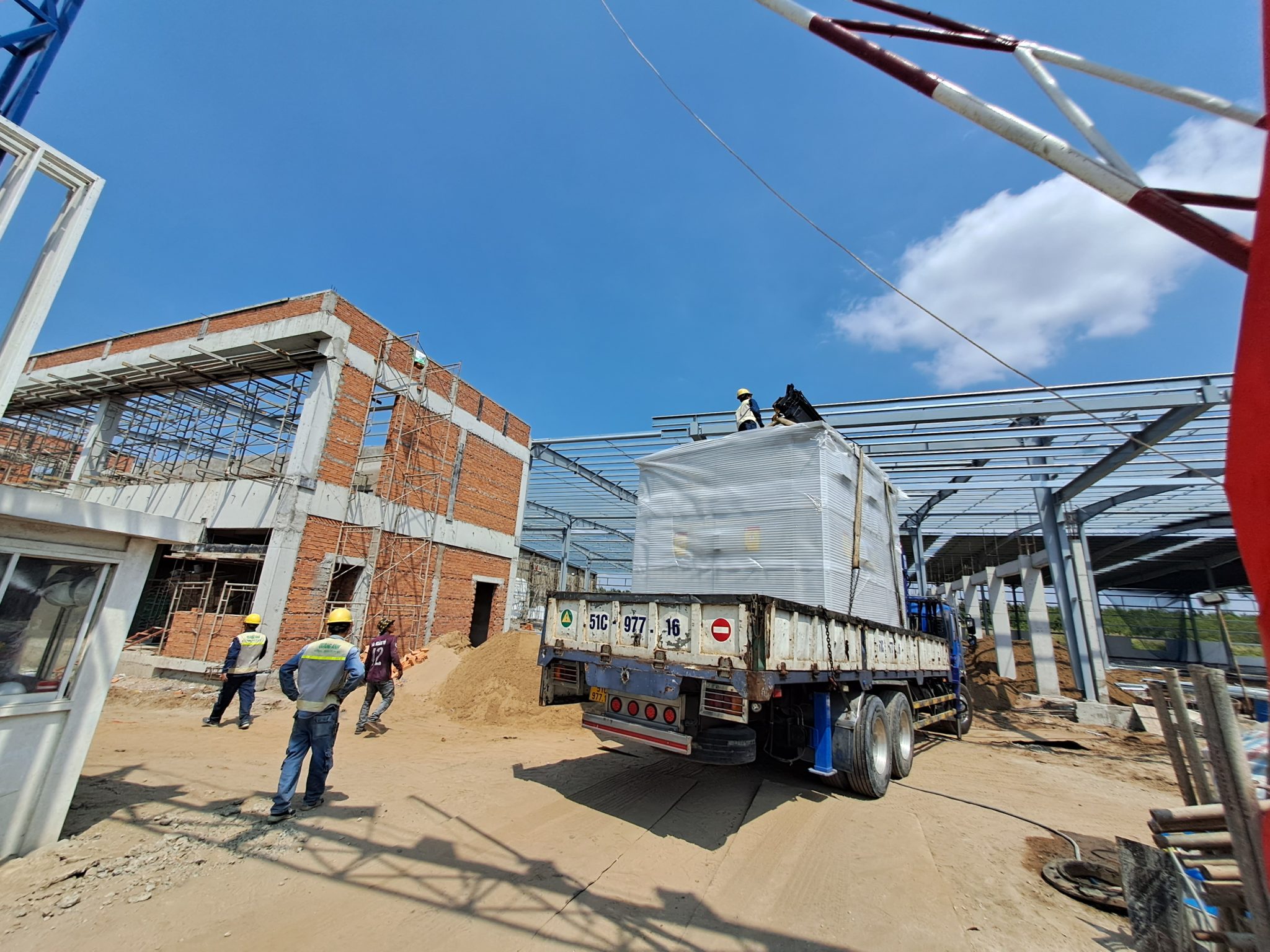
Specialized Equipment and Materials in Electrical Installation
Utilizing specialized equipment and materials is vital in industrial electrical installations. Key components include distribution boards (MSB), motor control centers (MCC), and backup generators, as well as protective devices like ELCB and surge protectors for safety. The selection of cables, such as XLPE underground and high-temperature insulated cables, is crucial in industrial environments.
Specialized equipment and materials play essential roles in both industrial and domestic electricity setups, with suitable choices ensuring safety and performance.
Domestic Electrical Devices include:
- Breakers, Circuit Breakers, Fuses: These devices protect circuits by automatically disconnecting in overload or short circuit conditions.
- Electric Meters: Essential for measuring power consumption, aiding energy management.
- Outlets, Switches: Control the distribution of power to individual devices.
- Wires: Classified by cross-section and materials like copper or aluminum, crucial in electrical design.
Industrial Electrical Equipment shows distinct differences, especially in high and medium voltage applications:
-
High Voltage Devices used on high voltage networks from 74kV to 800kV:
-
High Voltage Circuit Breakers: Interrupt high voltage circuits utilizing SF6 or vacuum technology.
-
Current Transformers (CT) and Isolating Switches: Protect the system by measuring current and creating safe maintenance spaces.
-
Medium Voltage Equipment offers optimal choices like:
-
Reclosers and Contactors: Automatically restore circuits post short circuit incidents.
-
Surge Protective Devices (SPD): Shield against electrical surges caused by storms or switching operations.
-
Voltage/Potential Transformers (VT/PT): Lower voltage for safe measurement and monitoring.
Mechanical and Electrical (M&E) Materials are equally significant:
- Ventilation and Insulation Ducts: Made from heat-resistant materials like fiberglass, enhance HVAC system efficiency.
- Stainless Steel Straps and Cabinet Sheets: Used for securing and protecting in harsh environments, with enclosures often from galvanized steel or flame-retardant composite.
Specialized Electrical Cabinets:
- Distribution Boards (DB): Distribute power to smaller circuits, integrating devices like MCCB/RCCB.
- Motor Control Centers (MCC): Manage three-phase motors and protect motor operations effectively.
- Reactive Power Compensation Cabinets: Reduce power loss, boost efficiency using shunt capacitors.
Additionally, Installation Support Materials:
- Copper/Aluminum Busbars are main conductors in many distribution board applications.
- Silicone Insulation Sealants play crucial roles in ensuring junction safety.
- PVC/PPR Conduit Pipes: Protect wires from environmental factors.
Standards and Technologies are also clearly applied:
- Insulating Materials must withstand atmospheric voltages per IEC 62271 standards.
- IoT Measurement Technology with temperature/humidity sensors supports efficient remote monitoring.
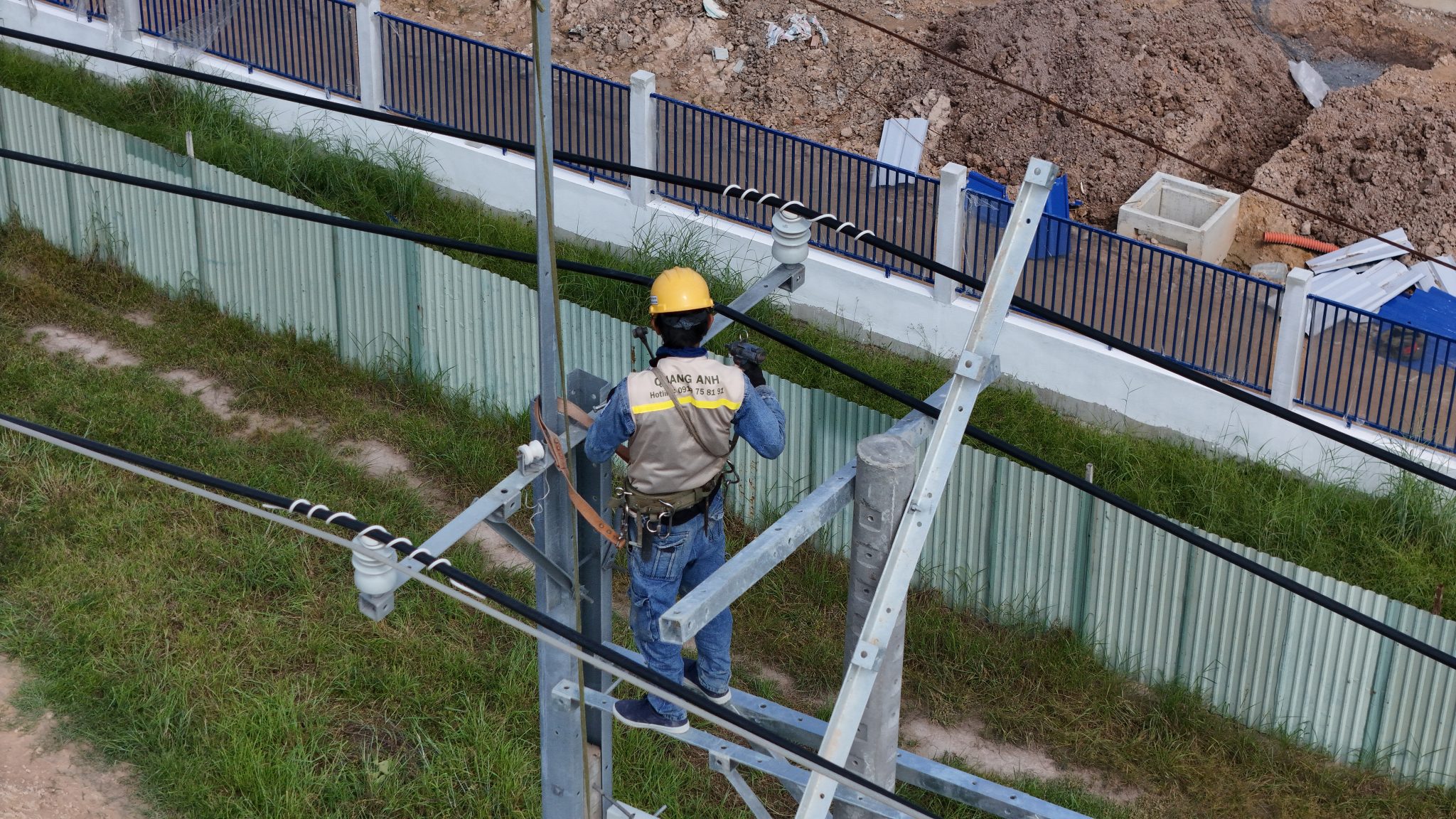
Challenges and Modern Trends in Industrial Electrical Systems
Industrial electrical installations face challenges such as system complexity and safety risks due to miscalculations or harsh weather. Investment costs are significant, requiring high-quality materials and skilled labor. However, modern trends like using VFDs for motors and dimmable industrial LED lights effectively save energy. Additionally, IoT sensor integration for automatic load balancing is a notable industry trend.
Amid rapid development, Vietnam’s industrial electrical systems face major challenges. A primary issue is the imbalance between power supply and demand, particularly in the North, where no new energy sources lead to reliance on transmission from other regions, stressing the grid.
The fast-growing power consumption due to industrial and residential expansion increases pressure on the existing electrical systems, requiring continuous upgrades to meet demands. Conversely, traditional energy sources like water and fossil fuels are depleting, necessitating a shift to renewable energy for long-term stability.
Addressing this, electricity pricing policies and reinvestment into the system are essential aspects warranting attention. To sustainably maintain and develop the grid, a reasonable electricity pricing mechanism helps secure strong financial resources.
Modern trends emphasize renewable energy adoption. Sources like solar and wind reduce reliance on fossil fuels, minimizing environmental impact. Concurrently, the development of smart grids is a major advancement, enhancing system efficiency and flexibility through advanced edge computing and IoT technologies.
Digital integration and data analytics assist in efficient management and supervision of electrical systems, allowing precise demand forecasting and optimal distribution. Investing in new infrastructure such as smart substations and microgrids is an inevitable trend in tackling current challenges, ensuring sustainable industrial electrical system advancement.
Technologies like VFDs optimize energy consumption and improve motor management. Automatic load control significantly contributes to balancing demand and supply, reducing grid pressure, and enhancing system stability.
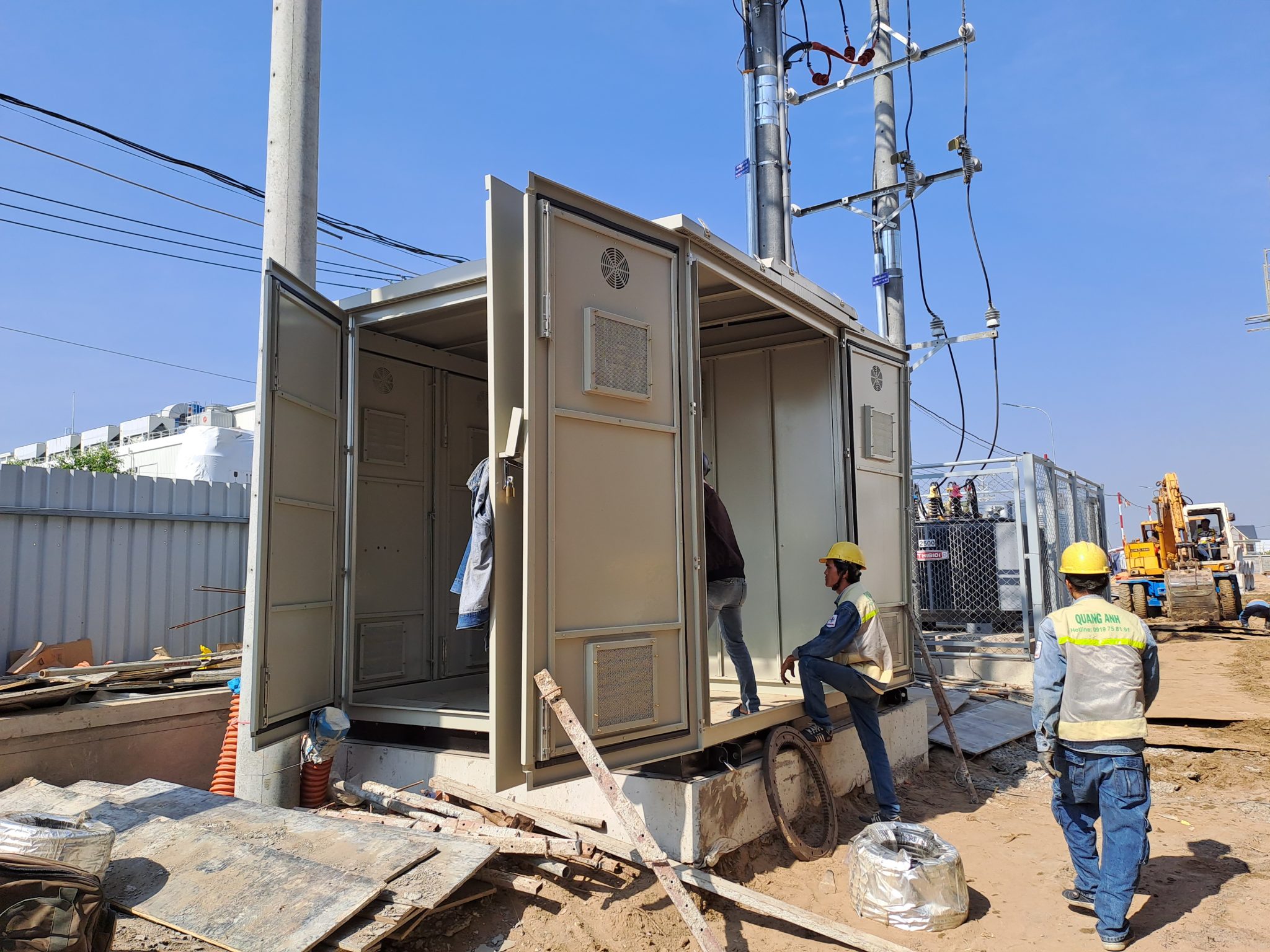
Installing industrial electrical systems not only demands precise procedures and adherence to technical standards but also offers significant technical, investment, and strategic benefits. Modern trends like IoT sensor integration and energy optimization enhance operational efficiency, reduce costs, and increase safety.
For optimal industrial electrical system implementation, contact QuangAnhcons at +84 9 1975 8191.
QuangAnhcons provides comprehensive industrial electrical system installation services with international standards, ensuring high safety and efficiency, including complete surveys, design, installation, and maintenance.
[contact-form-7 id="7239967" title="Contact form 1"]
Related Posts
Comparing Oil and Dry Transformers in Industrial Projects
Distinguish between oil and dry transformers based on installation site, safety, maintenance, energy losses, initial [...]
Mar
Electrical Overload Warning Signs in Factories
Recognize early indicators of factory electrical overload such as voltage drops, overheating equipment, circuit breaker [...]
Mar
Risks of Overloading Industrial Transformers Without Upgrades
Keeping the same low-voltage transformer while increasing factory loads can result in overheating, insulation degradation, [...]
Mar
Evaluating and Implementing Transformer Contractors in Tay Ninh
Criteria for selecting transformer substation contractors in Tay Ninh, EPC scope, and factors affecting project [...]
Mar
Comparing Oil and Dry Transformers for Industrial Applications
Examine oil and dry transformers based on installation location, fire safety, maintenance, energy loss, investment [...]
Mar
Comprehensive 1500kVA Transformer Station Budget for Manufacturing Facilities
Guidance for creating a detailed budget list for a 1500kVA transformer station, including medium voltage [...]
Mar
Comprehensive Transformer Station Pricing: Elements and Considerations
Examine key components in comprehensive transformer station pricing including design, equipment, construction, testing, and connection [...]
Mar
Pricing Guide for 4000kVA Transformer Stations: Configuration, Cost, and Investment Process
An overview of configuration, cost estimates, connection approaches, and investment checklists for 4000kVA transformer stations [...]
Mar
Pricing and Setup of 3200kVA Transformer Stations: Configuration, Costs, and Investment Procedure
Explore the pricing structure for a 3200kVA transformer station, primary equipment configuration, cost variables, EVN [...]
Mar
Cost Estimation for 2500kVA Transformer Station: Configuration, Expenses, and Investment Process
Reference framework for quoting a 2500kVA transformer station based on configuration, station type, cable solutions, [...]
Mar
2000kVA Transformer Station Guide: Configuration, Costs, and Investment Process
Discover key aspects of a 2000kVA transformer station: from technical configuration and cost analysis to [...]
Mar
Pricing and Configuration Guide for 1600kVA Substations
A detailed guide on pricing for 1600kVA substations, including equipment specs, connection costs, EVN procedures, [...]
Mar
Comprehensive Guide to 1500kVA Substation Pricing: Configuration, Costs, and Investment Process
A comprehensive overview of configurations, costs, construction methods, connection procedures, and contractor selection for 1500kVA [...]
Mar
Tay Ninh Solar Power Planning: Technical Framework, Grid Interconnection, and Rollout Roadmap
Technical overview of solar planning in Tay Ninh: irradiation, grid capacity, permitting, design, operations, and [...]
Dec
Binh Duong Solar Planning: Regulatory Framework, Grid Interconnection, and an Implementation Roadmap for Factories and Industrial Parks
An overview of Binh Duong solar planning: legal framework, interconnection, design, risk management, and an [...]
Dec
Solar Farm Repair: O&M Workflow, IV Curve Diagnostics, Thermography, Inverter Service and Utility-Scale Safety
A utility-scale solar farm repair plan centered on O&M, IV curves, thermal imaging, inverter service, [...]
Dec
Dong Nai Solar Power Plan 2023–2025: Tri An 1,029 MW, Grid Upgrades and the DPPA Pathway
A complete look at Dong Nai’s solar power plan: Tri An 1,029 MW, irradiation potential, [...]
Nov
Quang Ngai Solar Power Plan 2024–2030: Legal Framework, Irradiance Potential, and Development Roadmap
A complete look at Quang Ngai’s solar power plan: capacity targets, irradiance (PVout), development zones, [...]
Nov
Solar Damage Assessment Services: On-Site Procedures, EL/IV/Thermography Testing & Compliance with Standards
Discover IEC/UL/NEC standard solar damage assessment processes: on-site evaluation, EL and IV curve testing, thermal [...]
Nov
Comprehensive Package Estimate for a 1800MVA 500kV Substation: Scope, Configuration 3x600MVA, Standards and Timeline Management
An overview of the 1800MVA 500kV substation estimate: construction scope, configuration 3x600MVA, GIS/AIS, SCADA, standards, [...]
Nov