

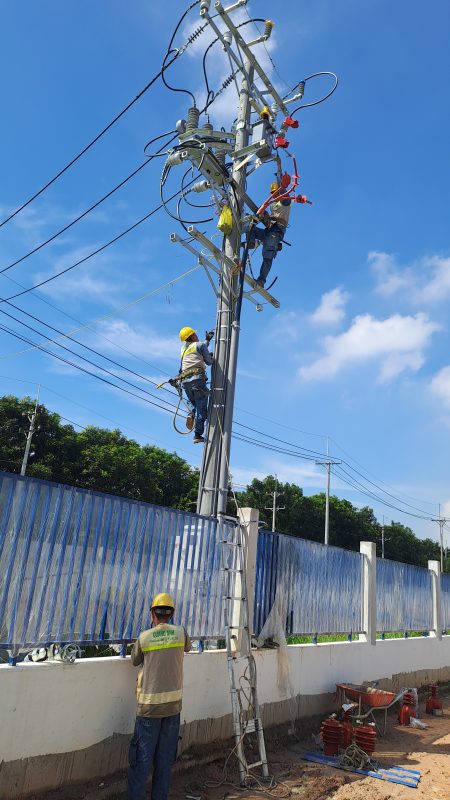
Industrial electrical installation is a complex procedure requiring thorough preparation and meticulous execution to ensure both efficiency and safety, adhering to technical standards.
Overview of Industrial Electrical Installation
Incorporating the design, construction, and operation of electrical systems in industrial parks, every detail from drafting technical drawings to installation and inspection is prioritized for safety and effectiveness.
This process mandates a strict execution sequence to ensure both safety and efficiency. Here are the crucial steps involved in an industrial electrical installation project.
- Site Survey: The initial phase involves site surveys to gather data on space dimensions, workforce, machinery, industry type, and power demands.
- Design Drawing: The electrical system’s design must comply with stringent technical and electrical safety standards, ensuring accurate equipment placement, system configuration, and control circuits.
- Equipment Preparation: Essential equipment sourcing is a critical pre-installation step.
- Installation Execution: Installation adheres to approved designs, guaranteeing the system’s safe and efficient functioning.
- Testing and Inspection: Trial operation tests the system’s performance against power and safety standards prior to final acceptance and handover.
Key Considerations for Industrial Electrical Systems
- Power Consumption Estimation: Calculating the total power requirement guides suitable equipment selection.
- High Voltage Network Design: Careful planning of high-voltage lines, substation, and control panels is essential for efficient electricity distribution.
- Low Voltage Network Design: Ensures systems operate under 1kV voltage, with organized control panel installations.
- Lighting System Design: Determines necessary lighting fixtures to optimize costs and ensure production illumination.
Industrial Control Panels
Industrial control panels house interconnected electrical equipment via copper bars and wiring, managing power and safeguarding factory systems.
Safety and Efficiency
- Electrical Safety: Ensures compliance with all prescribed safety and technical standards.
- System Efficiency: Assures energy efficiency and high performance throughout operation.
Professionalism and strict adherence to procedures make industrial electrical installation both efficient and safe.
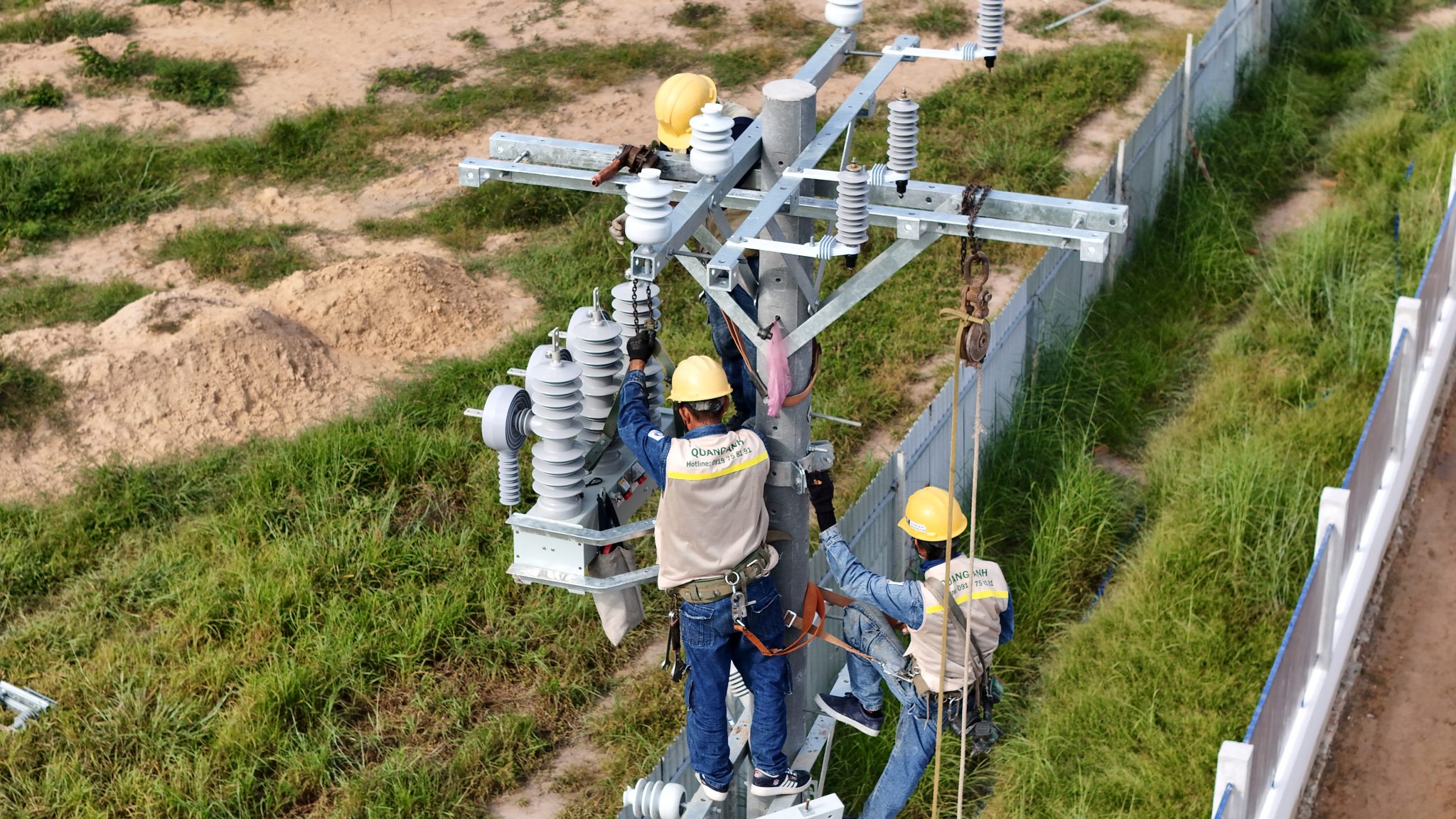
Detailed Process of Industrial Electrical Installation
The process begins with equipment preparation and site surveying, followed by designing the electrical blueprint, equipment installation, connectivity, and safety checks, culminating in a trial run to verify efficient system operation.
Adhering to detailed steps and technical guidelines is crucial for a successful installation.
Step 1: Equipment Preparation and Information Gathering
Ensure the availability of essential tools and materials for the industrial electrical installation, including both project materials and supporting tools. Collect comprehensive customer information and conduct site surveys for tailored system implementation.
Step 2: Survey and Design
Conduct precise data collection at the site for informed electrical design. Utilize these technical parameters to create a detailed blueprint, ensuring safe and efficient system functionality.
Step 3: Blueprint Approval
Submission and authorization of the blueprint by the business is crucial to validate all proposed methods before installation.
Step 4: Installation Execution
The process follows the approved blueprint, ensuring industrial electrical safety. All equipment, from power to control, must be securely installed according to the vetted design, with brands like Thibidi, EMC, and ABB recognized for durability and effectiveness.
Step 5: Testing and Inspection
A comprehensive system test evaluates practical operational capacity. Once all components meet performance and safety standards, the project is ready for full customer handover.
Installing Industrial Control Panels
The assembly process for industrial control panels requires precision from cutting cable trays to installing power and control equipment. Brands such as Schneider and Mitsubishi ensure quality and reliability.
Adhering precisely to the procedure ensures the installation of electrical systems with accuracy, efficiency, and safety, enhancing operational demands in manufacturing settings.
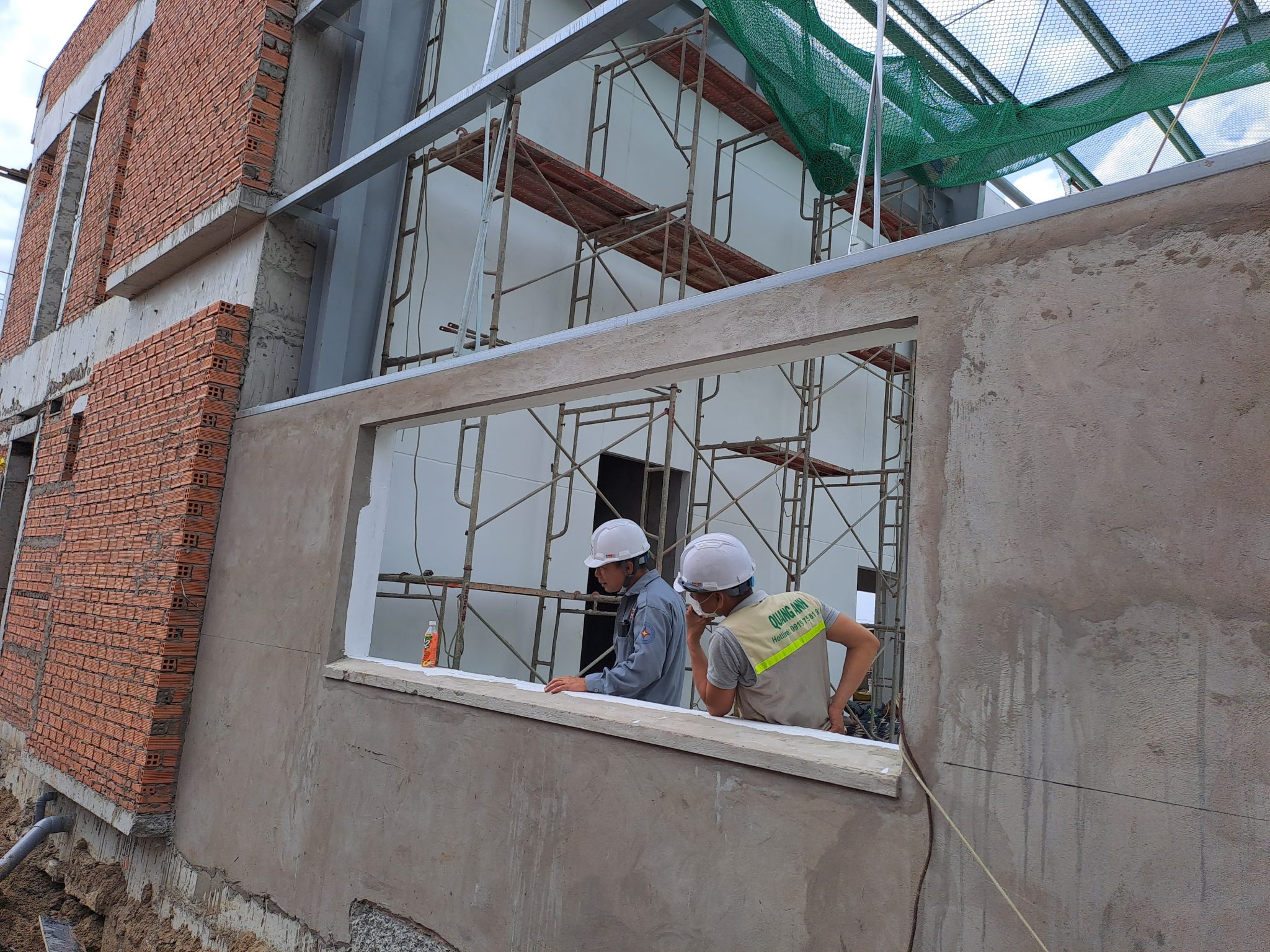
Guide to Installing Industrial Control Panels
Installing industrial control panels begins with cross-referencing schematics and materials, then mounting equipment, labeling, and completing technical connectivity checks.
This critical industrial process demands precision and advanced technical skills from comprehensive equipment preparation and detailed schematic interpretations, ensuring maximum efficiency and safety.
1. Preparation and Schematic Interpretation
- Equipment and Material Preparation: Ensure all necessary tools and materials are on hand, including reputable brands like Schneider, Mitsubishi.
- Schematic Analysis: Analyze technical drawings and cross-reference material lists to accurately assess the needed device specifications, preventing critical shortages or excess.
2. Control Panel Frame Installation
- Location Choice: Select installation spots that are dry and impact-free for stable, long-term industrial control panel performance.
- Frame Stabilization: Secure frames firmly to walls or floors, ensuring safety and aesthetics.
- Cable Trays and Rails: Efficiently arrange internal wiring for seamless future electrical connections.
3. Equipment Installation
- Cable Tray Setup: Cut and fit cable trays as specified, forming a base for mounting electrical devices.
- Power Component Installation: Secure components like circuit breakers and disconnects using bolts, with durable products from ABB or LS preferred.
- Control Component Installation: Mount control devices such as PLCs and sensors on quick-fit railings for easy operation and maintenance.
- Panel Door Components: Install indicator lights, switches, ensuring the overall system’s effective operation.
4. Electrical Device Connection
- Switchgear Setup: Organized installation per schematic ensures optimal power and electrical safety.
- Wire Connection: Robust connections between devices and main power following stringent quality like Cadivi standards.
- Load Connection: Ensure all industrial electrical devices perform their intended functions without complications.
5. Inspection and Completion
- System Inspection: Conduct comprehensive tests to confirm all components operate smoothly and error-free.
- Finalization and Certification: Ensure the panel’s electrical safety compliance for operational use, adhering to rigorous technical standards.
Important Considerations
- Safety: Always follow safety guidelines when handling industrial control panels to protect workers and equipment.
- Quality: Ensure the quality of devices and materials used from trusted manufacturers like Eaton, Schneider.
- Technical Standards: Strictly adhere to present electrical and technical standards to maximize system efficiency.
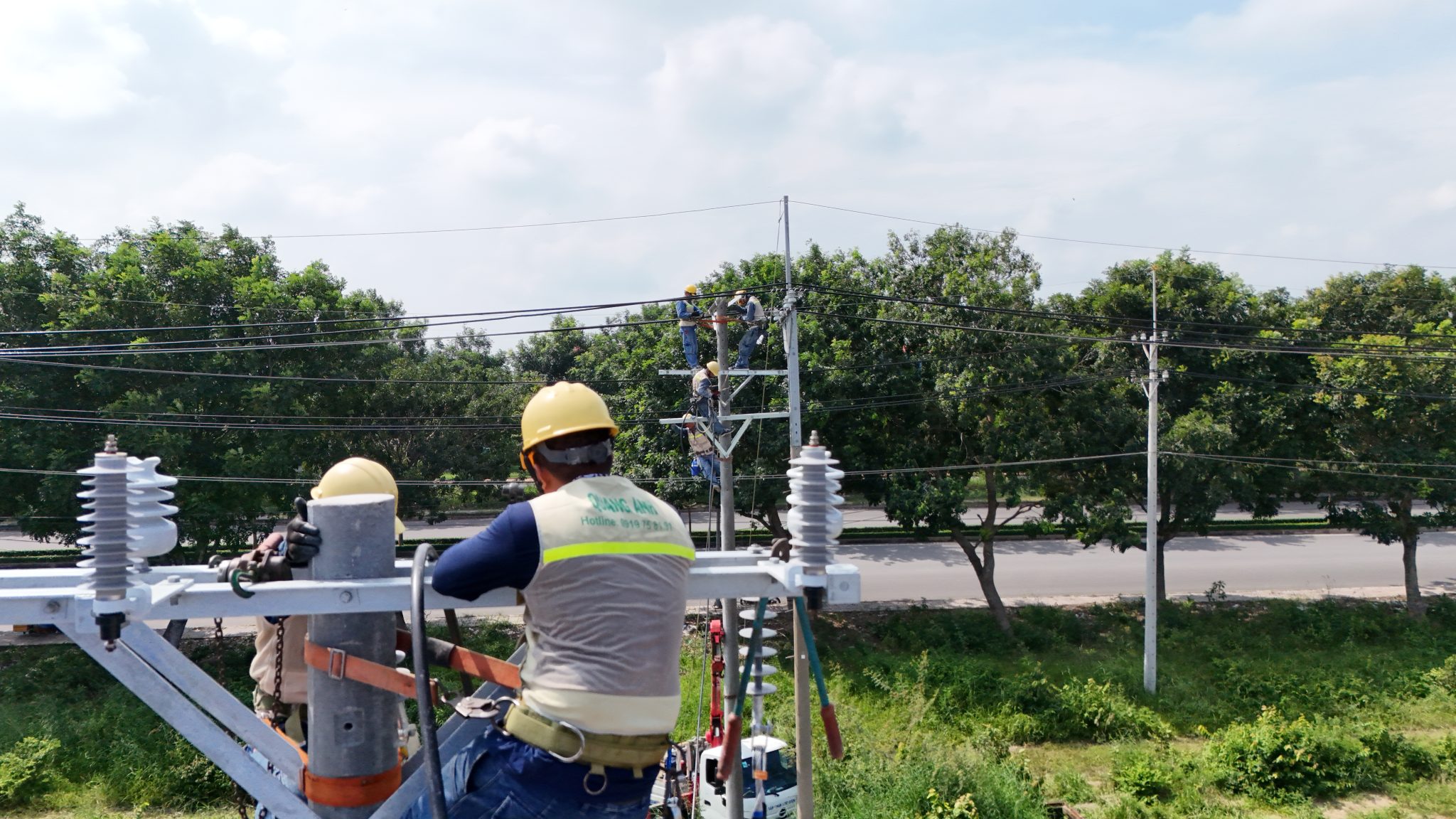
Industrial electrical installation offers significant benefits for manufacturing and industrial operations by ensuring efficient performance, cost savings, and safety. Proper adherence to processes enhances productivity and stability of business energy systems.
Contact QuangAnhcons now at Hotline: +84 9 1975 8191 for detailed advice on industrial electrical installation for your project.
QuangAnhcons specializes in providing comprehensive industrial electrical installation services with standard and safe procedures, from design to test operation, ensuring business efficiency.
[contact-form-7 id="7239967" title="Contact form 1"]
Related Posts
Comparing Oil and Dry Transformers in Industrial Projects
Distinguish between oil and dry transformers based on installation site, safety, maintenance, energy losses, initial [...]
Mar
Electrical Overload Warning Signs in Factories
Recognize early indicators of factory electrical overload such as voltage drops, overheating equipment, circuit breaker [...]
Mar
Risks of Overloading Industrial Transformers Without Upgrades
Keeping the same low-voltage transformer while increasing factory loads can result in overheating, insulation degradation, [...]
Mar
Evaluating and Implementing Transformer Contractors in Tay Ninh
Criteria for selecting transformer substation contractors in Tay Ninh, EPC scope, and factors affecting project [...]
Mar
Comparing Oil and Dry Transformers for Industrial Applications
Examine oil and dry transformers based on installation location, fire safety, maintenance, energy loss, investment [...]
Mar
Comprehensive 1500kVA Transformer Station Budget for Manufacturing Facilities
Guidance for creating a detailed budget list for a 1500kVA transformer station, including medium voltage [...]
Mar
Comprehensive Transformer Station Pricing: Elements and Considerations
Examine key components in comprehensive transformer station pricing including design, equipment, construction, testing, and connection [...]
Mar
Pricing Guide for 4000kVA Transformer Stations: Configuration, Cost, and Investment Process
An overview of configuration, cost estimates, connection approaches, and investment checklists for 4000kVA transformer stations [...]
Mar
Pricing and Setup of 3200kVA Transformer Stations: Configuration, Costs, and Investment Procedure
Explore the pricing structure for a 3200kVA transformer station, primary equipment configuration, cost variables, EVN [...]
Mar
Cost Estimation for 2500kVA Transformer Station: Configuration, Expenses, and Investment Process
Reference framework for quoting a 2500kVA transformer station based on configuration, station type, cable solutions, [...]
Mar
2000kVA Transformer Station Guide: Configuration, Costs, and Investment Process
Discover key aspects of a 2000kVA transformer station: from technical configuration and cost analysis to [...]
Mar
Pricing and Configuration Guide for 1600kVA Substations
A detailed guide on pricing for 1600kVA substations, including equipment specs, connection costs, EVN procedures, [...]
Mar
Comprehensive Guide to 1500kVA Substation Pricing: Configuration, Costs, and Investment Process
A comprehensive overview of configurations, costs, construction methods, connection procedures, and contractor selection for 1500kVA [...]
Mar
Tay Ninh Solar Power Planning: Technical Framework, Grid Interconnection, and Rollout Roadmap
Technical overview of solar planning in Tay Ninh: irradiation, grid capacity, permitting, design, operations, and [...]
Dec
Binh Duong Solar Planning: Regulatory Framework, Grid Interconnection, and an Implementation Roadmap for Factories and Industrial Parks
An overview of Binh Duong solar planning: legal framework, interconnection, design, risk management, and an [...]
Dec
Solar Farm Repair: O&M Workflow, IV Curve Diagnostics, Thermography, Inverter Service and Utility-Scale Safety
A utility-scale solar farm repair plan centered on O&M, IV curves, thermal imaging, inverter service, [...]
Dec
Dong Nai Solar Power Plan 2023–2025: Tri An 1,029 MW, Grid Upgrades and the DPPA Pathway
A complete look at Dong Nai’s solar power plan: Tri An 1,029 MW, irradiation potential, [...]
Nov
Quang Ngai Solar Power Plan 2024–2030: Legal Framework, Irradiance Potential, and Development Roadmap
A complete look at Quang Ngai’s solar power plan: capacity targets, irradiance (PVout), development zones, [...]
Nov
Solar Damage Assessment Services: On-Site Procedures, EL/IV/Thermography Testing & Compliance with Standards
Discover IEC/UL/NEC standard solar damage assessment processes: on-site evaluation, EL and IV curve testing, thermal [...]
Nov
Comprehensive Package Estimate for a 1800MVA 500kV Substation: Scope, Configuration 3x600MVA, Standards and Timeline Management
An overview of the 1800MVA 500kV substation estimate: construction scope, configuration 3x600MVA, GIS/AIS, SCADA, standards, [...]
Nov