

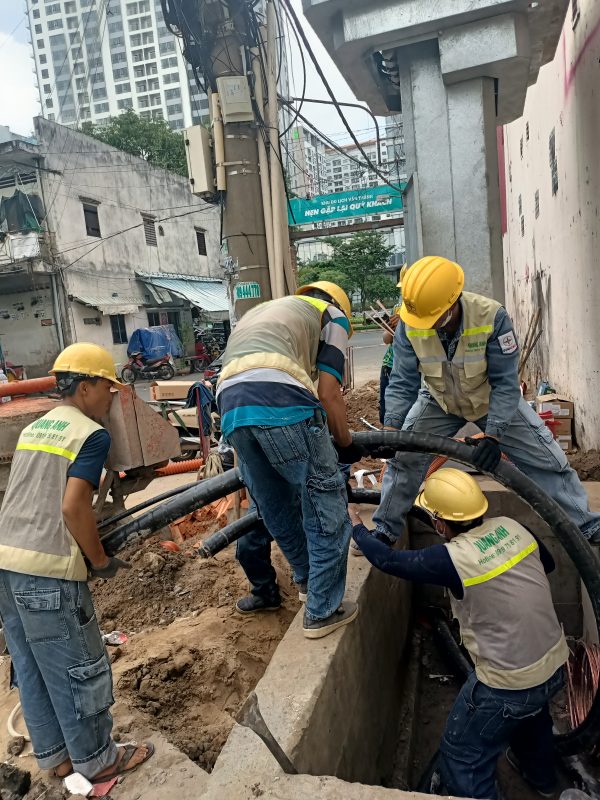
Designing and implementing a factory electrical system involves creating and installing a safe and stable electrical setup for production, which includes surveying, designing, and inspection.
Design and Implementation Process
The process of designing and implementing a factory electrical system includes site surveys, detailed design of high and low voltage systems, installation of cable trays, and inspection. Each step must adhere to strict technical and safety standards to ensure stable and safe operation.
Designing and implementing an electrical system is a crucial engineering process to ensure that a project’s electrical system operates efficiently, stably, and safely. Below are the detailed steps involved in designing and implementing an electrical system.
- Project Information Gathering and Site Survey: Initially, gathering complete requirements from investors, along with a site survey, is crucial. Factors such as area, number of electrical devices, and intended use are recorded to aid in designing the electrical system.
- Preliminary Design Proposal: Based on collected information, engineers propose an initial design solution to ensure safety, aesthetics, and operational efficiency, then discuss with the investors to finalize the plan.
- Detailed Calculation and Design:
- Calculate the electrical loads to design lighting systems and sockets according to technical standards.
- Select and calculate key equipment such as transformers, generators, reactive power compensation cabinets from reputable brands like ABB, Mitsubishi, and Schneider to ensure stable operation and energy savings.
- Calculate conductors and MCCBs (automatic circuit breakers) to match the load and ensure high efficiency.
- Design grounding, earthing, and lightning protection systems meeting safety standards to protect people and equipment.
- Complete detailed design drawings for construction and inspection.
- Material and Equipment Listing: This process involves listing materials and estimating costs based on detailed designs to optimize resources for the project.
- Electrical System Implementation: Install cable trays, switchboards, and conductors following the approved design. Quality checks accompany to ensure electrical safety.
- Inspection, Testing, and Handover: Finally, the system undergoes comprehensive testing to meet safety and performance criteria before it’s handed over to the investor.
Compliance with electrical technical standards throughout these steps is vital in ensuring a safe and effective electrical system.
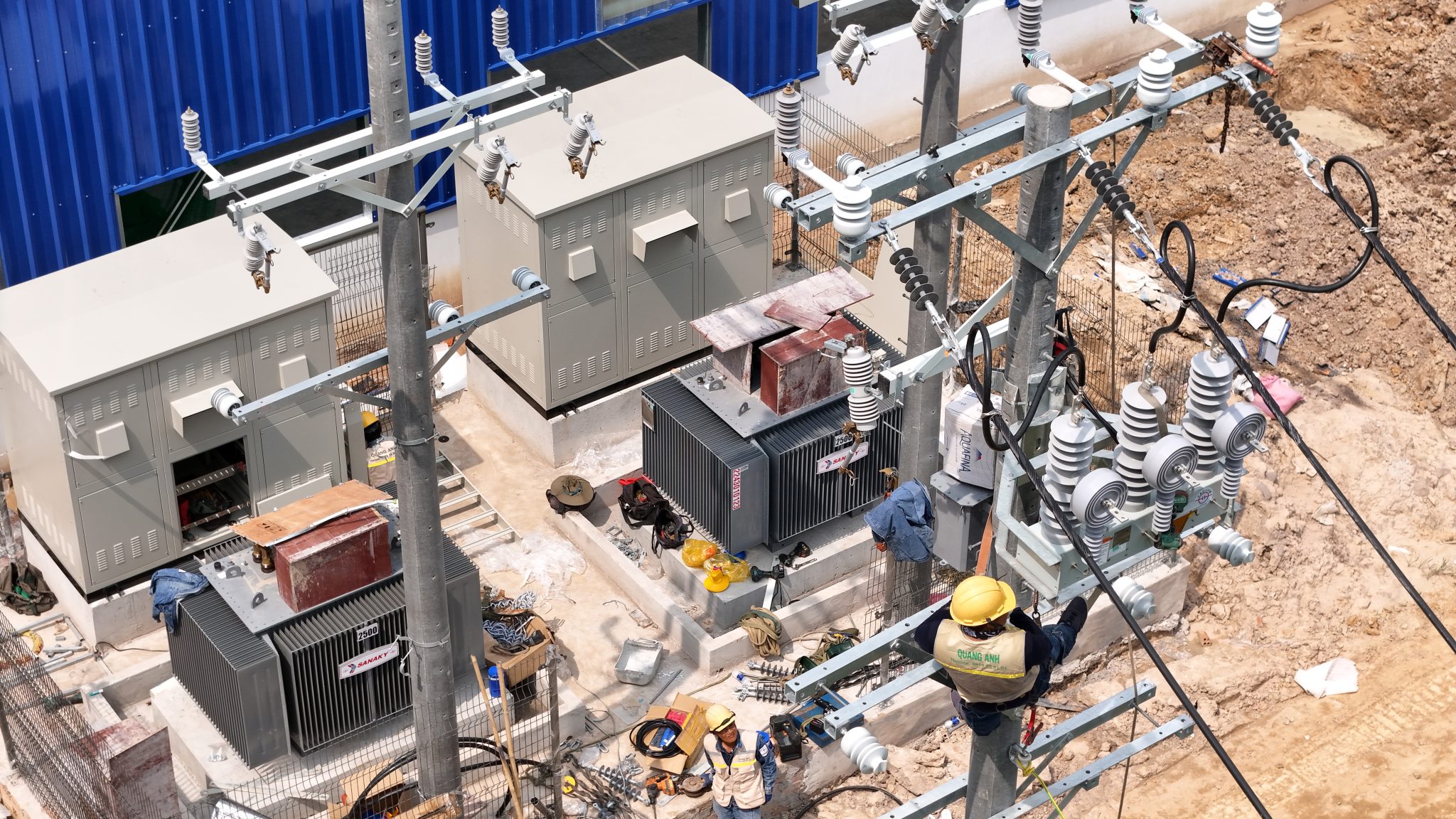
Detailed Design of High and Low Voltage Systems
High voltage system design involves determining pole locations and designing safe electrical networks. Low voltage systems are calculated to avoid overload and conserve energy. Emphasis on aesthetics and safety is paramount in designing cable trays.
Detailed electrical design plays a key role in ensuring the safety and efficiency of each industrial facility. For specific needs like high voltage system design, accurately determining the load is crucial. The load is the total electrical consumption capacity of all devices and machinery at a given time, helping in defining necessary technical specifications for equipment, conductors, breakers, and related components.
High voltage design, typically ranging from 35kV to 220kV, requires not only detailed layout plans from pole placement to the number of insulators per voltage level but also optimizing substation arrangement for efficient distribution. For industrial electrical systems, this is equally vital for safety and operational coordination.
For low voltage systems, with nominal voltages less than 1kV like 220/380V, priority is given to distribution and machinery control in workshops. Low voltage cables are often twisted or insulated, designed to high TCVN standards for system safety.
Steps in detailed system design include calculating load, drafting layout plans, selecting equipment, and designing efficient and safe power distribution diagrams. These steps are guided by TCVN electrical standards and must be executed by experienced technical experts.
Safety is indispensable in the design and installation process, hence lightning protection and grounding calculations are mandatory. Cable tray arrangements should be meticulously planned to ensure both aesthetics and functionality. The combination of aesthetics and technical precision ensures maximum safety for people and systems.
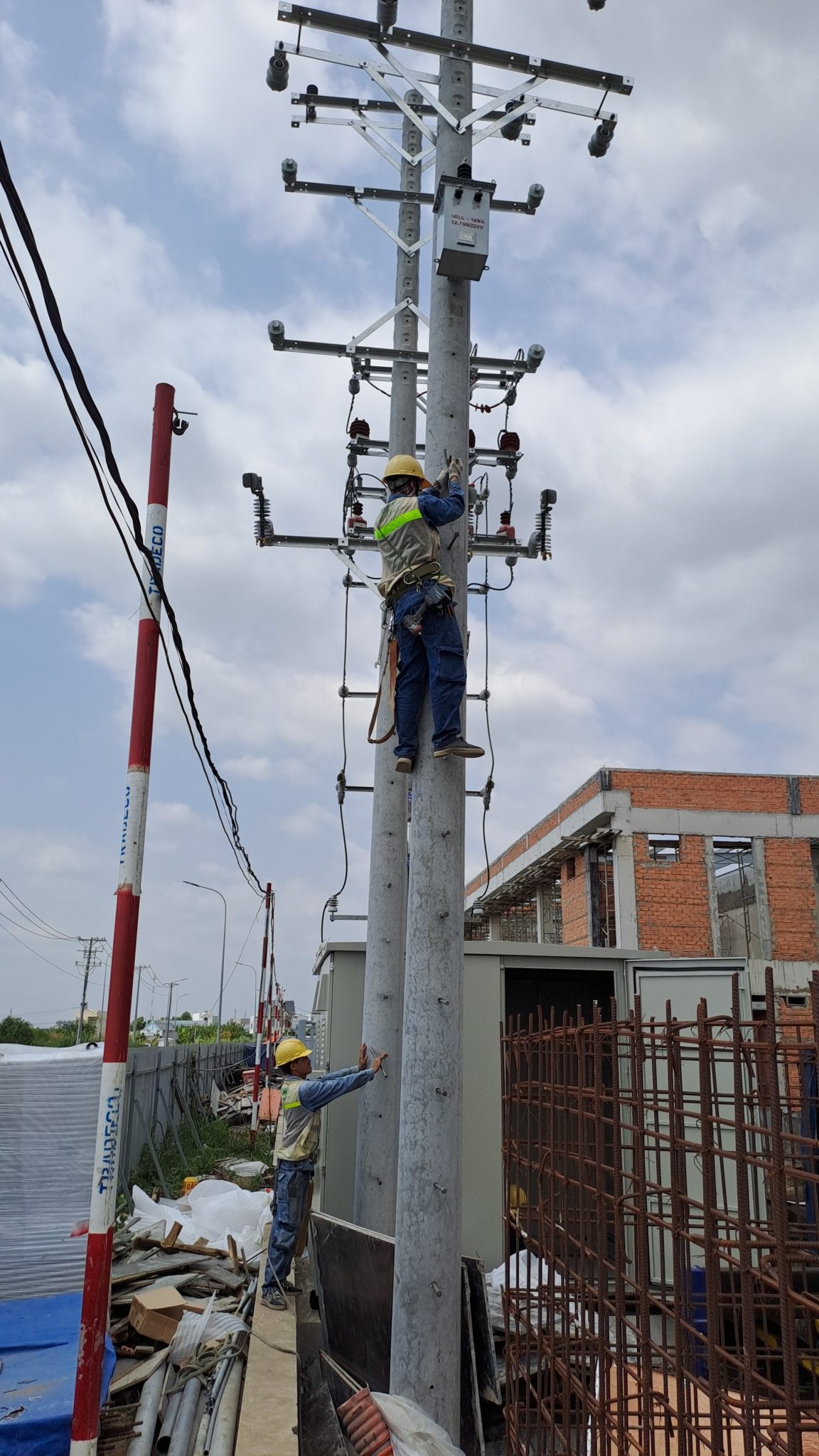
Installation of Cable Tray Systems
Cable trays are essential structures for protecting and organizing cables aesthetically and safely. Their installation requires sturdiness and precision, with durable materials to withstand harsh working conditions.
Introduction to Cable Tray Systems
The installation and setup of cable trays are crucial for the protection and organization of cables like electrical, signal, and network cables in constructions. The main benefits include protection from external impacts and tidy, space-savings management.
Concept and Classification of Cable Tray Systems
Cable tray systems consist of three main types:
- Cable Ladder: This type, with ladder-like design, suits structures requiring good ventilation and easy maintenance. Ideal for electrical cables in high-tech environments.
- Cable Trunking: With an enclosed base, it protects cables from dust, water, and chemicals, suitable for harsh environments or where safety is paramount.
- Cable Tray: An intermediary type between ladder and trunking, adaptable for drainage requirements or added protective covers.
Material Selection and Benefits
Wire material choice determines durability and corrosion resistance, with popular options like galvanized steel, powder-coated steel, stainless steel, and aluminum alloys.
Installation Process
- Preparation: From field surveys to determine load and working environment to detailed design drawings.
- Installation: Includes setting up support structures as per standards, linking tray sections, and legally compliant cable installations for electrical safety.
- Inspection and Acceptance: Ensure the system functions without hidden dangers and adheres to safety standards.
Technical Considerations for Installation
- Adherence to electrical, construction, and fire safety standards.
- Lightning protection and safe grounding practices.
- Material selection for corrosion resistance tailored to the working environment.
- Space allocation to prevent interference from other systems like plumbing and mechanical installations.
Standards and Regulations
Dimensions, safety, and compliance standards are critical for the efficiency and safety of cable tray systems.
Trends and New Applications
Current trends include smart cable tray systems with sensors and predictive maintenance support in smart buildings. There is also an increasing focus on using lightweight, durable, and environmentally-friendly materials.
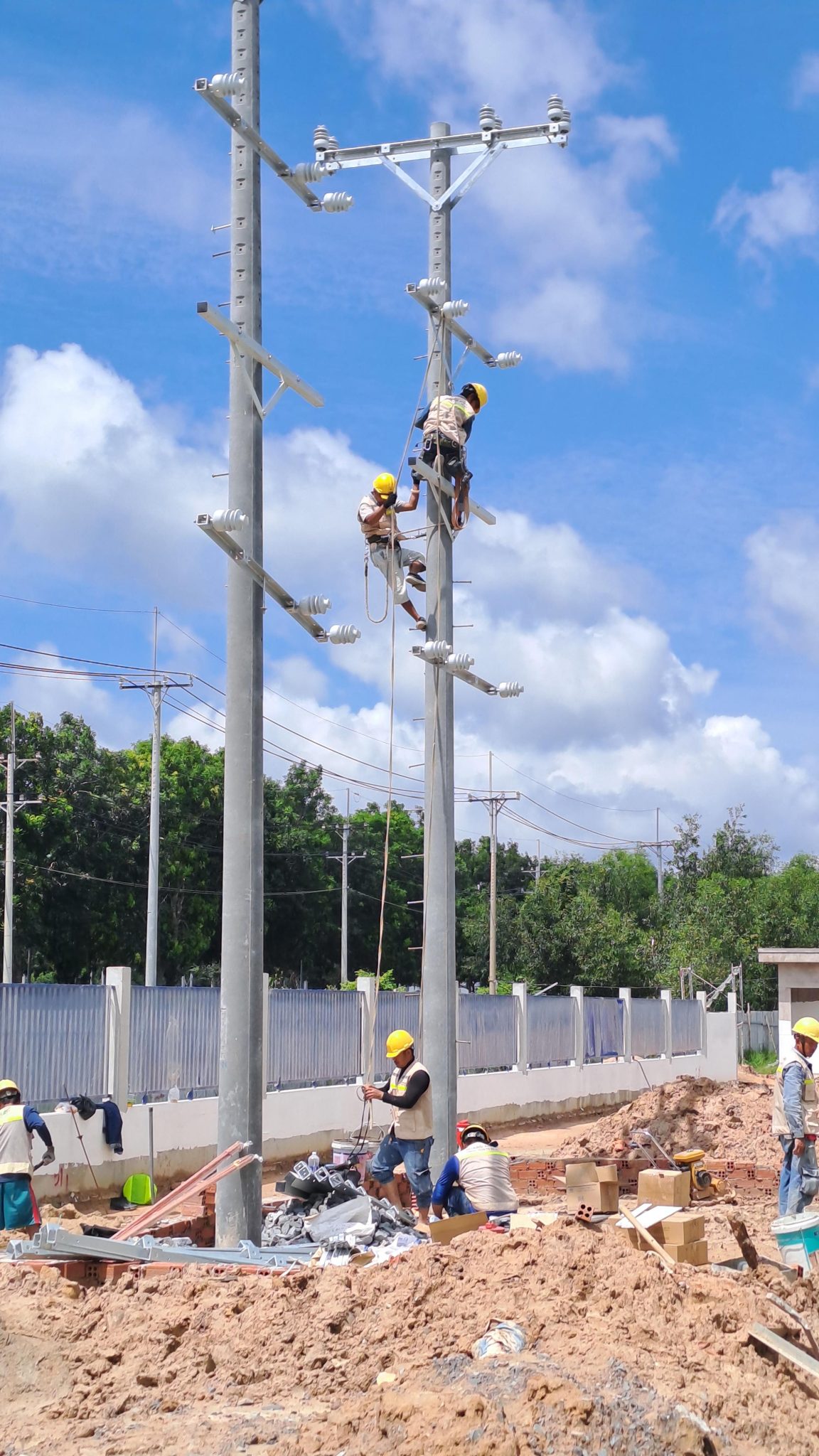
Designing and implementing factory electrical systems not only ensures technical safety but also optimizes operational costs, contributing to the long-term sustainable development strategies of businesses.
Contact QuangAnhcons for professional advice on safe and efficient factory electrical systems design and implementation. Hotline: +84 9 1975 8191
QuangAnhcons specializes in providing comprehensive factory electrical system design and implementation services, ensuring safety, efficiency, and adherence to the technical and production needs of enterprises.
[contact-form-7 id="7239967" title="Contact form 1"]
Related Posts
Comparing Oil and Dry Transformers in Industrial Projects
Distinguish between oil and dry transformers based on installation site, safety, maintenance, energy losses, initial [...]
Mar
Electrical Overload Warning Signs in Factories
Recognize early indicators of factory electrical overload such as voltage drops, overheating equipment, circuit breaker [...]
Mar
Risks of Overloading Industrial Transformers Without Upgrades
Keeping the same low-voltage transformer while increasing factory loads can result in overheating, insulation degradation, [...]
Mar
Evaluating and Implementing Transformer Contractors in Tay Ninh
Criteria for selecting transformer substation contractors in Tay Ninh, EPC scope, and factors affecting project [...]
Mar
Comparing Oil and Dry Transformers for Industrial Applications
Examine oil and dry transformers based on installation location, fire safety, maintenance, energy loss, investment [...]
Mar
Comprehensive 1500kVA Transformer Station Budget for Manufacturing Facilities
Guidance for creating a detailed budget list for a 1500kVA transformer station, including medium voltage [...]
Mar
Comprehensive Transformer Station Pricing: Elements and Considerations
Examine key components in comprehensive transformer station pricing including design, equipment, construction, testing, and connection [...]
Mar
Pricing Guide for 4000kVA Transformer Stations: Configuration, Cost, and Investment Process
An overview of configuration, cost estimates, connection approaches, and investment checklists for 4000kVA transformer stations [...]
Mar
Pricing and Setup of 3200kVA Transformer Stations: Configuration, Costs, and Investment Procedure
Explore the pricing structure for a 3200kVA transformer station, primary equipment configuration, cost variables, EVN [...]
Mar
Cost Estimation for 2500kVA Transformer Station: Configuration, Expenses, and Investment Process
Reference framework for quoting a 2500kVA transformer station based on configuration, station type, cable solutions, [...]
Mar
2000kVA Transformer Station Guide: Configuration, Costs, and Investment Process
Discover key aspects of a 2000kVA transformer station: from technical configuration and cost analysis to [...]
Mar
Pricing and Configuration Guide for 1600kVA Substations
A detailed guide on pricing for 1600kVA substations, including equipment specs, connection costs, EVN procedures, [...]
Mar
Comprehensive Guide to 1500kVA Substation Pricing: Configuration, Costs, and Investment Process
A comprehensive overview of configurations, costs, construction methods, connection procedures, and contractor selection for 1500kVA [...]
Mar
Tay Ninh Solar Power Planning: Technical Framework, Grid Interconnection, and Rollout Roadmap
Technical overview of solar planning in Tay Ninh: irradiation, grid capacity, permitting, design, operations, and [...]
Dec
Binh Duong Solar Planning: Regulatory Framework, Grid Interconnection, and an Implementation Roadmap for Factories and Industrial Parks
An overview of Binh Duong solar planning: legal framework, interconnection, design, risk management, and an [...]
Dec
Solar Farm Repair: O&M Workflow, IV Curve Diagnostics, Thermography, Inverter Service and Utility-Scale Safety
A utility-scale solar farm repair plan centered on O&M, IV curves, thermal imaging, inverter service, [...]
Dec
Dong Nai Solar Power Plan 2023–2025: Tri An 1,029 MW, Grid Upgrades and the DPPA Pathway
A complete look at Dong Nai’s solar power plan: Tri An 1,029 MW, irradiation potential, [...]
Nov
Quang Ngai Solar Power Plan 2024–2030: Legal Framework, Irradiance Potential, and Development Roadmap
A complete look at Quang Ngai’s solar power plan: capacity targets, irradiance (PVout), development zones, [...]
Nov
Solar Damage Assessment Services: On-Site Procedures, EL/IV/Thermography Testing & Compliance with Standards
Discover IEC/UL/NEC standard solar damage assessment processes: on-site evaluation, EL and IV curve testing, thermal [...]
Nov
Comprehensive Package Estimate for a 1800MVA 500kV Substation: Scope, Configuration 3x600MVA, Standards and Timeline Management
An overview of the 1800MVA 500kV substation estimate: construction scope, configuration 3x600MVA, GIS/AIS, SCADA, standards, [...]
Nov