

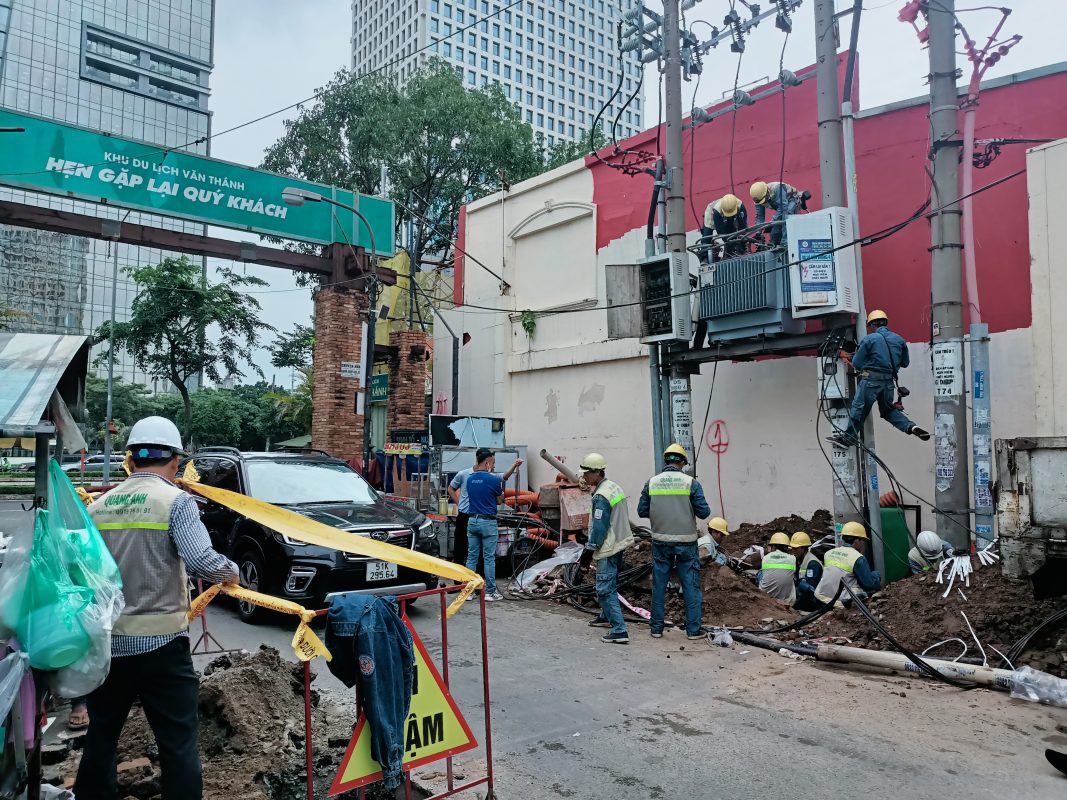
- Provides clarity on transformer choices for indoor and outdoor installations and explosion safety.
- Explains maintenance differences, insulation durability, and operational factors affecting downtime directly.
- Considers energy losses and overall ownership costs rather than just initial purchase price.
- Explains how investment and delivery timelines change with capacity, voltage level, and project setup.
- Guides on selecting suitable options for factories and buildings, focusing on construction, acceptance, and practical operations.
- Investors and industrial project managers choosing transformer station options.
- Factory technical teams balancing safety, maintenance, and operational efficiency.
- Building or facility operators determining optimal transformer placement.
When to Read This Article?
- Preparing for new investments or upgrading transformer capacity.
- Choosing between indoor and outdoor installations with safety constraints.
- Comparing investment costs with long-term operational expenses before finalizing equipment.
- 1. Fundamental Differences Between Oil and Dry Transformers
- 2. Optimal Placement for Transformers in Factories and Buildings
- 3. Fire and Explosion Risks and Safety Considerations
- 4. Maintenance, Lifespan, and Common Operational Issues
- 5. Energy Losses and Total Cost of Ownership Perspective
- 6. Investment Cost, Delivery Time, and Finalizing Suitable Options
Choosing between oil-filled and dry transformers for industrial constructions affects not just equipment costs but installation location, fire safety, maintenance, energy losses, and long-term operation potential. Errors in initial installation can lead to more significant costs and risks than initial purchase price differences.
Fundamental Differences Between Oil and Dry Transformers
Describes key differences between oil-immersed and dry transformers in terms of insulation, cooling mechanisms, and voltage limits.
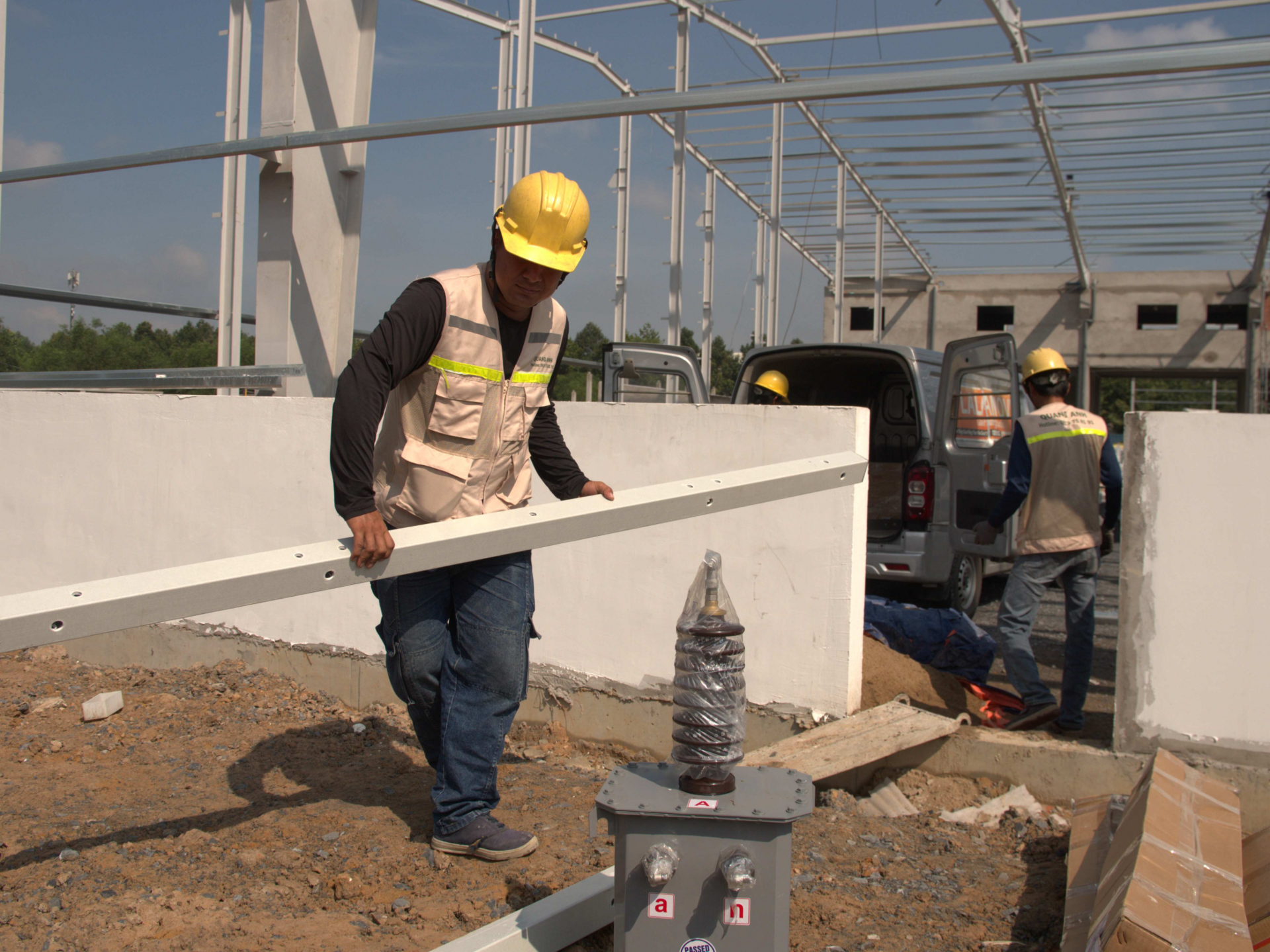
The primary distinction lies in insulation mediums and cooling mechanisms, impacting losses, voltage limits, and maintenance requirements.
Field-wise, oil transformers use mineral oil for insulation and cooling, whereas dry transformers employ epoxy or VPI/VPE techniques for wire protection.
Oil facilitates uniform heat dissipation around components reflecting average temperature, whereas dry transformers rely on specific location sensors, not always indicating overall coil temperature; thus, during factory inspections, scrutinize sensor placements to assess safe load limits.
Energy losses and capacity thresholds differ: at distribution level, dry transformers have significantly higher no-load losses (reference: roughly 7–7.55 kW compared to 2.66 kW at 2500 kVA), typically limiting voltage to ≤35 kV and capacity to ~2500 kVA; oil-filled transformers can surpass many capacity levels (10,000–20,000 kVA and high voltage applications) and handle overloads more effectively.
Regarding safety, dry transformers minimize oil pollution risks and require no oil maintenance, burn at higher temperatures (~1000°C) than oil (~350°C), so installation positions and fire plans vary; during maintenance, check housing integrity, ventilation systems (for dry), or oil status and conservator management (for oil).
- Selection criteria on-site: required voltage levels and capacity, installation conditions (indoor/outdoor), fire prevention standards, real overload capabilities, and maintenance needs.
- On-site inspections: temperature sensor placements on dry, oil leakage checks, oil clarity reviews, cover checks, and cooling system assessments.
Operational alert: Do not operate dry transformers outside rated capacity range, and periodically check oil transformers for insulation degradation or oil leaks; based on field survey results, choose optimal approaches up next.
Optimal Placement for Transformers in Factories and Buildings
Suggest transformer placement based on type (dry/oil), ventilation requirements, technical corridors, connection convenience, and maintenance ease.
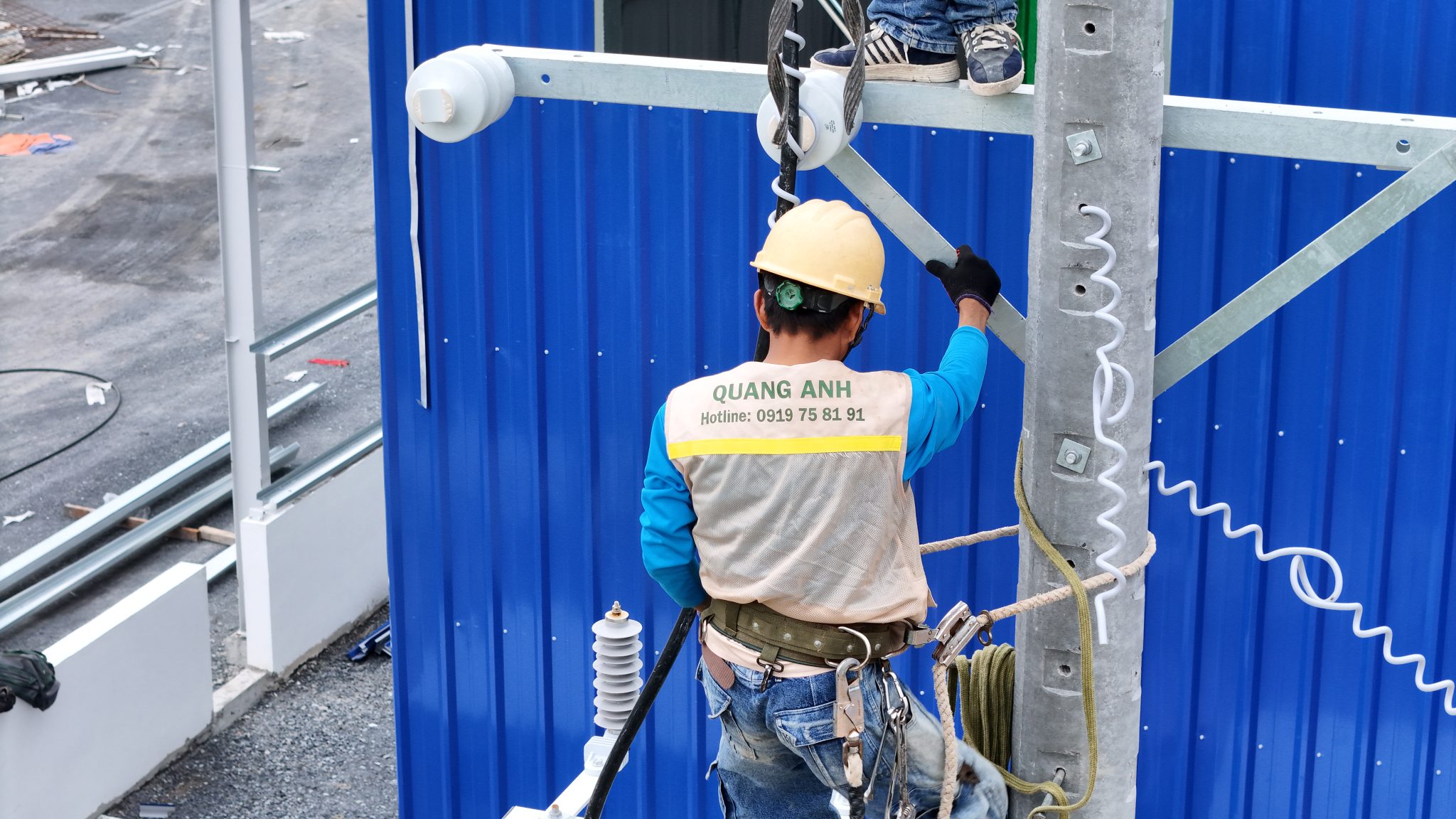
Dry transformers are best suited for indoor placements, while oil transformers are preferred outdoors; however, final decisions depend on ventilation, medium voltage connection access, and maintenance corridors.
In the field, dry transformers are appropriate for indoor buildings due to higher fire safety, despite generally greater heat losses, necessitating good ventilation or cooling solutions. During maintenance, the advantage of dry transformers is direct coil observation, speeding up insulation checks; conversely, dry transformers are typically noisier, so positioning away from offices or residences is recommended. Some documentation states dry transformers combust only at very high temperatures (~1000°C), allowing more flexible placement in projects, subject to site surveys.
Oil transformers typically require outdoor deployment to minimize fire risks (some references indicate ignition at ~350°C) and facilitate medium voltage connections. Heavier and supported by oil tanks, oil transformers need broad maintenance corridors, appropriate transport tools (cranes or ramps), and solid load-bearing surfaces. Outdoors, weather-protection canopies and prescribed safe distances as per utility or regulations are mandatory.
- On-site checks: natural/convection ventilation potential, equipment transportability (crane, ramps), foundation load capacity, and maintenance corridor clearance.
- Safety checks: proximity to fire-prone areas, noise-sensitive zone positioning (dry transformers are noisier), medium voltage connection placement convenience.
- During maintenance: ensure space for assembly/disassembly and coil visibility for dry; oil considerations include tank location and anti-leakage safety zones.
| Criteria | Dry Transformer | Oil Transformer | Note |
|---|---|---|---|
| Preferred Position | Indoors, buildings | Outdoors | Depends on ventilation and fire risk |
| Ventilation Requirement | Requires good ventilation due to high heat loss | Less reliant on ventilation but needs canopy | Evaluate upon factory inspection |
| Maintenance and Transport | Easy coil visibility, minimal oil leak risk | Needs wide maintenance corridors, heavy handling | Check crane capacity and foundation load |
| Fire Safety | Higher heat tolerance; some sources indicate ~1000°C flaming point | Higher fire risk at lower temperatures (~350°C depending on source) | Must avoid fire-prone locations |
| Medium Voltage Connection Access | Convenient for placing near indoor loads | Easy for outdoor connections, reduced need for close construction | Prioritize proximity to medium voltage cable routes |
Provisional conclusion: Choosing placement requires balancing fire safety, ventilation, noise, transportability, and medium-voltage connection ease. Conduct on-site inspections to assess foundation load, crane installation potential, fire-prone zone distances, and finalize installation options.
Fire and Explosion Risks and Safety Considerations
Assess fire hazard risks and safety requirements to select suitable transformers according to project sensitivity, installation spacing, and acceptance checks.
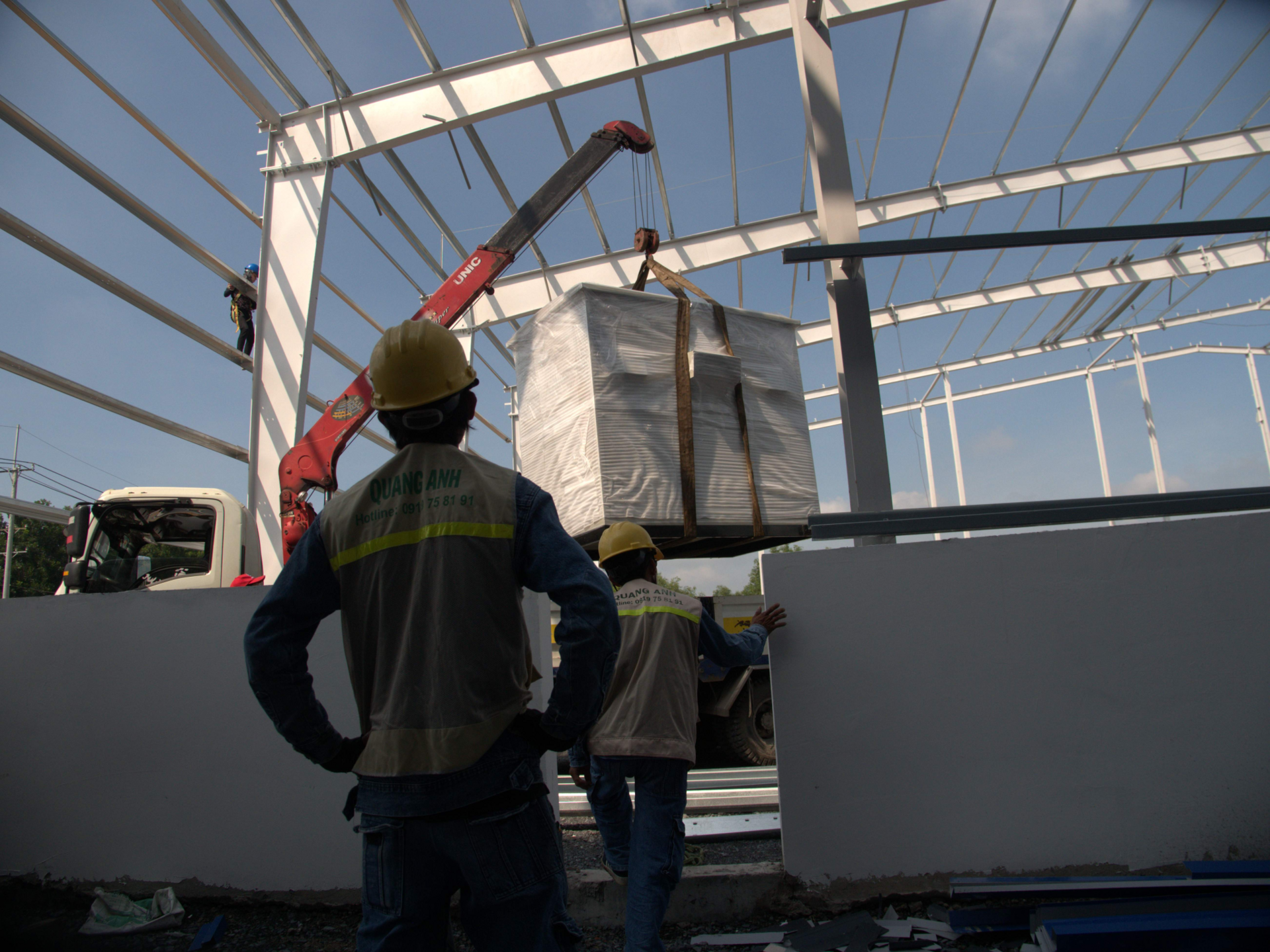
Dry transformers are safer against fires and explosions; oil-immersed equivalents entail higher risks requiring additional fire preventive measures.
In practice, oil insulation within oil-immersed transformers can ignite around 350°C under operating conditions, demanding greater installation distances and specialized fire extinguishing systems. Plant surveys should check equipment placements, natural ventilation potential, and escape route planning to evaluate fire spread risks.
Dry transformers use non-combustible materials, igniting at higher temperatures (~1000°C), often favored for indoor or densely populated places. Note that dry transformers offer fewer overload tolerances, necessitating cross-referencing with actual load data and acceptance requirements.
- Field checks: identify area’s fire sensitivity, proximity to combustible materials, and personnel density.
- Installation requirements for oil: breezy/outdoor locations, spill containment, oil leak detection, and dedicated fire systems.
- Requirements for dry: indoor positions near personnel require no oil systems; assess cooling and overload constraints.
- During maintenance: observe any oil leaks, oil temperature logs, overheating signs, and insulation material conditions.
- Acceptance criteria: compliance with regulations, safe distances, test certifications, and fire system integrations on-site.
Operational warning: any detected oil leak, heat anomaly, or oil temperature beyond the operating limit necessitates emergency action; dry transformers should avoid prolonged overload to prevent insulation damage. Customizing all strategies must align with model specifics and operating settings.
Upon concluding evaluations, perform field surveys and cross-reference with applicable standards and regulations before deciding transformer types and fire and explosion safety criteria in handover.
Maintenance, Lifespan, and Common Operational Issues
Compares maintenance volume, common failures, and reliability between oil and dry transformers in industrial environments.

Oil transformers require quality oil monitoring and periodic temperature management; dry transformers need no oil maintenance but must avoid overload for localized overheating limitation.
Operationally, oil transformers often incur maintenance tasks involving dielectric oil: sampling, level monitoring, leakage inspections, and replacement scheduling. During maintenance, noise and vibrations should be checked to detect early mechanical component failures. These checks directly impact operational reliability and cost.
Dry transformers have fewer consumable operations; maintenance involves coil surface observation and epoxy insulation inspections, dust handling, and local overheating assessments. Inspections rely on direct coil surface assessment and surface temperature monitoring to verify insulation condition. Since they lack oil, environmental pollution risks via leaks are minimized.
Present technology suggests oil transformer lifespans often exceed dry transformers by approximately five years, although this can vary per model and user conditions. Oil transformers face commonplace oil quality declines and leaks impacting insulative efficacy; dry transformers encounter localized overheating due to high-load epoxy insulation damage. Some records highlight crucial temperatures linked to fire hazards (~350°C for oil), necessitating specific model action point validations before strategizing.
| Criteria | Oil Transformer | Dry Transformer |
|---|---|---|
| Insulation Checks | Oil sampling, oil quality analysis | Coil observation, epoxy surface inspection |
| Scheduled Maintenance | Periodic oil change, monitoring oil levels, leakage treatment | Cleaning, surface inspection, no oil changes needed |
| Temperature Monitoring | Oil temperature readings, overload control | Surface temperature readings, avoid overloads |
| Operational Risks | Oil leaks, fire risk if not temperature-controlled | Localized overheating, epoxy insulation degradation at high loads |
During field inspections and plant maintenance, focus on key inspection signals: oil levels and color, leakage marks on transformer lids, hot spot temperatures, epoxy bulging, and unusual noise. Operational warnings: closely observe operational temperatures to prevent overload-related incidences; detect early oil leaks to mitigate insulation failures and environmental risks. Additionally, arrange routine sampling and recording trends for extended device lifespans.
Conduct field appraisals and assess plant maintenance capabilities before selecting transformer types; based on operation conditions and maintenance prospects, managers should request detailed service descriptions from suppliers and schedule corresponding maintenance checks.
Energy Losses and Total Cost of Ownership Perspective
Transformer energy losses form a core part of TCO and require comparisons of no-load losses, load losses, and maintenance costs before purchasing.

Oil-immersed transformers typically entail lower total energy losses than dry equivalents of the same capacity, hence potentially yielding lower long-term operational costs (TCO). For instance, at 2500 kVA, oil transformer’s no-load loss is 2.66 kW versus dry CRT’s 7 kW and VPI’s 7.55 kW; oil transformer’s 50% load loss sits at 4.1 kW versus CRT’s 4.63 kW and VPI’s 5.25 kW, rendering total no-load + 50% load around 6.76 kW for oils against 12.18–12.25 kW for dry units.
TCO considerations must clearly include specified components: energy losses, maintenance costs, initial purchase costs, and expected life spans. Commonly affecting cost elements and variables are collated as follows:
| Cost Category | Items | Affecting Variables |
|---|---|---|
| Energy Losses | No-load loss, load loss | Average load, operating hours/year, design efficiency |
| Maintenance & Operations | Oil replacements, insulation inspections, service tasks | Maintenance frequency, material cost, environmental conditions |
| Capital & Depreciation | Purchase price, installation costs | Initial purchase price, expected lifespan, dismantling costs |
| Operational Risks | Power outages, downtime, safety | Safety requirements, onsite repair capabilities |
In practical plant applications, translated energy loss differences may become substantial. With 8760 work hours annually, total 50% load loss for oil is estimated at ~59,217 kWh/year, while dry falls at approximately 106,696–107,310 kWh/year. Assuming electrical tariffs of ~2,500 VND/kWh (as reference data), annual energy loss costs amount to ~148,042,500 VND for oils and ~266,740,000–268,275,000 VND for dry transformers — demonstrating that the energy component can hold a notable TCO chunk during continuous ops.
When deciding, critical data collection is necessary for TCO: actual annual operating hours, load distribution profiles, applicable electricity pricing, regular maintenancecosts, and projected lifespan. In the field, maintenance sessions should leverage no-load loss calculations, load readings from SCADA/current transformers, and cooling system conditions for coil heat dissipation assessments.
Operational alerts: overlooking accumulated energy costs if only comparing initial purchase prices; dry transformers commonly possess higher insulation/cooling path losses under similar load scenarios; correspondingly, oil transformer benefits in heat dissipation uniformity aid temperature control and sustained loss reductions. To finalize, solicit detailed quotes encompassing no-load and load losses against real load points with TCO simulations for pricing and load levels.
Investment Cost, Delivery Time, and Finalizing Suitable Options
Evaluate investment costs, delivery durations, and oil or dry transformer selection criteria based on capacity, installation setting, and electrical loss.
Determining whether to opt for oil-immersed or dry transformers hinges on installation environments, capacity demands, electrical losses, and associated fire risks.
Practically, oil transformers align with outdoor setups and high-capacity uses, while dry transformers fit enclosed factories prioritizing fire safety and ample ventilation. Commonly, oil units present lower initial purchase prices than dry for similar capacities, though their operational and maintenance expenses may rise given regular dielectric oil handling and checks.
Plant surveys should include load profiling and standard 8760-hour annual operation estimations for cost calculations on energy losses. For instance, at 2500 kVA, oil transformer’s total loss (no-load + 50% load) stands at ~6.76 kW, whereas dry CRT/VPI models are around 12 kW; assuming electricity pricing at ~2,500 VND/kWh, annual energy loss discrepancies become significant and must be reflected in total cost of ownership assessments.
| Criteria | Oil | Dry | Note |
|---|---|---|---|
| Initial Purchase Cost | Typically lower | Usually higher | Dependent on capacity (500–20,000 kVA) and insulation configuration |
| Energy Losses (example 2500 kVA) | Total ~6.76 kW (no-load + 50% load) | Approx. 12 kW (CRT/VPI, total comparable) | Estimation using 8760 hours/year for energy cost consideration |
| Maintenance | Higher (inspections, samples, oil processing) | Lower (minimal oil maintenance) | Accumulated maintenance costs affect total ownership expenses |
| Delivery Time & Installation | Generally faster production, but heavy, increasing transport expenses | Potentially longer production; lighter, easier for indoor setup | Timeframes contingent on capacity; large capacity needs advance orders |
Practical operation finalization procedures should align as follows to limit risks and implicit costs.
- Establish installation contexts and electrical supply: outdoors or voltages >35 kV typically opt for oil transformers; enclosed factory setups and heightened fire safety concerns favor dry types.
- Conduct actual load assessments (average loads, operating hours) — employing typically 50% load simulation and 8760 hours/year projections to estimate energy losses and operational costs.
- Compare total cost ownership (purchase price + energy loss cost per kWh ~2,500 VND + maintenance costs) and evaluate payback over practical operating life.
- Inspect the site: installation space, dry transformer ventilation, oil transformer transport and hoisting feasibility, fire-prevention conditions.
- Compile technical specifications and minimal delivery timeframes with suppliers, notably for higher capacities as dry transformer productions may stretch longer.
Operational caution: dielectric oils combust around 350°C whereas dry transformer insulations have higher temperature thresholds (~1000°C); thus, fire and explosion safety risks and prevention measures should be evaluated prior to decision-making. Any exceptional conditions (corrosive environments, spatial limits, high-reliability futures) mandate thorough site surveys and technical proposal requests from suppliers for a conclusive verdict.
No single type of transformer is universally suitable for all projects. The correct choice lies in a solution aligning with the installation environment, safety requirements, maintenance structure, and life-cycle costs controllable by the project.
Frequently Asked Questions
What is the biggest difference between oil and dry transformers when used for factories?
The most significant difference is the insulation environment and cooling mechanisms: oil transformers use oil for insulation and cooling, while dry transformers use solid materials (epoxy/VPI), offering better fire safety but generally higher energy losses and limited voltage/power range. Choose based on position, fire risk, and power requirements.
When should dry transformers be prioritized over oil transformers?
Prioritize dry transformers for indoor placement or areas with high fire sensitivity, to avoid oil leak risks and for simplified maintenance, near operators. Before finalizing, check projected load, ventilation capacity, power limits, and budget, as dry transformers normally incur higher losses and running costs.
Do oil transformers have to be placed outdoors?
Not necessarily, but outdoor placement is commonly chosen to minimize fire risks and manage oils. Indoor setups require specific oil containment, ventilation, fire precautions, safe distances, and adherence to local regulations; risk assessments and official approvals must precede decisions.
Does a dry transformer’s total ownership cost always remain low because of reduced maintenance?
Not necessarily. Dry transformers require lesser maintenance, but standard no-load and load losses often exceed oil counterparts, elevating operational costs. Total ownership expenses depend on load models, energy pricing, maintenance rates, and lifespan predictions. Access real load data, energy rates, and upkeep expenses for precise comparisons.
What factors prolong transformer delivery in industrial projects?
Factors: custom configurations, large capacity/voltage levels, parts or core shortages, testing and certification needs, supplier manufacturing capabilities, and transport logistics. To reduce delays, early technical specifications, considering standard designs, or prior ordering per project timelines is advised.
If a plant anticipates increased load in the coming years, which option should be selected initially?
The guiding principle is capacity foresight: choose a transformer with some safety margin, reserve framework or connections for added units, or parallel multiple smaller units for scalability. Decision demands load forecasts, area limits, budget, and loss considerations for optimization.
Quick Guide to Choosing Oil or Dry Transformers for Industrial Projects
- Determine clearly whether transformer placement will be indoor, outdoor, or in a fire-sensitive zone.
- Check load operating requirements, ventilation capacity, and acceptable downtimes during maintenance.
- Compare not only purchase price but also installation, regular maintenance, and energy loss costs.
- Review safety requirements, testing, and acceptance conditions related to transformer stations and power connections.
- Evaluate future capacity expansion risks to prevent early infrastructure changes.
- Finalize upon cross-referencing space availability, delivery schedules, and actual operating conditions.
If your project is in the transformer station configuration stage, review installation sites, acceptance requirements, and operation plans before deciding on oil or dry transformers.
[contact-form-7 id="7239967" title="Contact form 1"]
Related Posts
Comparing Oil and Dry Transformers in Industrial Projects
Distinguish between oil and dry transformers based on installation site, safety, maintenance, energy losses, initial [...]
Mar
Electrical Overload Warning Signs in Factories
Recognize early indicators of factory electrical overload such as voltage drops, overheating equipment, circuit breaker [...]
Mar
Risks of Overloading Industrial Transformers Without Upgrades
Keeping the same low-voltage transformer while increasing factory loads can result in overheating, insulation degradation, [...]
Mar
Evaluating and Implementing Transformer Contractors in Tay Ninh
Criteria for selecting transformer substation contractors in Tay Ninh, EPC scope, and factors affecting project [...]
Mar
Comparing Oil and Dry Transformers for Industrial Applications
Examine oil and dry transformers based on installation location, fire safety, maintenance, energy loss, investment [...]
Mar
Comprehensive 1500kVA Transformer Station Budget for Manufacturing Facilities
Guidance for creating a detailed budget list for a 1500kVA transformer station, including medium voltage [...]
Mar
Comprehensive Transformer Station Pricing: Elements and Considerations
Examine key components in comprehensive transformer station pricing including design, equipment, construction, testing, and connection [...]
Mar
Pricing Guide for 4000kVA Transformer Stations: Configuration, Cost, and Investment Process
An overview of configuration, cost estimates, connection approaches, and investment checklists for 4000kVA transformer stations [...]
Mar
Pricing and Setup of 3200kVA Transformer Stations: Configuration, Costs, and Investment Procedure
Explore the pricing structure for a 3200kVA transformer station, primary equipment configuration, cost variables, EVN [...]
Mar
Cost Estimation for 2500kVA Transformer Station: Configuration, Expenses, and Investment Process
Reference framework for quoting a 2500kVA transformer station based on configuration, station type, cable solutions, [...]
Mar
2000kVA Transformer Station Guide: Configuration, Costs, and Investment Process
Discover key aspects of a 2000kVA transformer station: from technical configuration and cost analysis to [...]
Mar
Pricing and Configuration Guide for 1600kVA Substations
A detailed guide on pricing for 1600kVA substations, including equipment specs, connection costs, EVN procedures, [...]
Mar
Comprehensive Guide to 1500kVA Substation Pricing: Configuration, Costs, and Investment Process
A comprehensive overview of configurations, costs, construction methods, connection procedures, and contractor selection for 1500kVA [...]
Mar
Tay Ninh Solar Power Planning: Technical Framework, Grid Interconnection, and Rollout Roadmap
Technical overview of solar planning in Tay Ninh: irradiation, grid capacity, permitting, design, operations, and [...]
Dec
Binh Duong Solar Planning: Regulatory Framework, Grid Interconnection, and an Implementation Roadmap for Factories and Industrial Parks
An overview of Binh Duong solar planning: legal framework, interconnection, design, risk management, and an [...]
Dec
Solar Farm Repair: O&M Workflow, IV Curve Diagnostics, Thermography, Inverter Service and Utility-Scale Safety
A utility-scale solar farm repair plan centered on O&M, IV curves, thermal imaging, inverter service, [...]
Dec
Dong Nai Solar Power Plan 2023–2025: Tri An 1,029 MW, Grid Upgrades and the DPPA Pathway
A complete look at Dong Nai’s solar power plan: Tri An 1,029 MW, irradiation potential, [...]
Nov
Quang Ngai Solar Power Plan 2024–2030: Legal Framework, Irradiance Potential, and Development Roadmap
A complete look at Quang Ngai’s solar power plan: capacity targets, irradiance (PVout), development zones, [...]
Nov
Solar Damage Assessment Services: On-Site Procedures, EL/IV/Thermography Testing & Compliance with Standards
Discover IEC/UL/NEC standard solar damage assessment processes: on-site evaluation, EL and IV curve testing, thermal [...]
Nov
Comprehensive Package Estimate for a 1800MVA 500kV Substation: Scope, Configuration 3x600MVA, Standards and Timeline Management
An overview of the 1800MVA 500kV substation estimate: construction scope, configuration 3x600MVA, GIS/AIS, SCADA, standards, [...]
Nov