

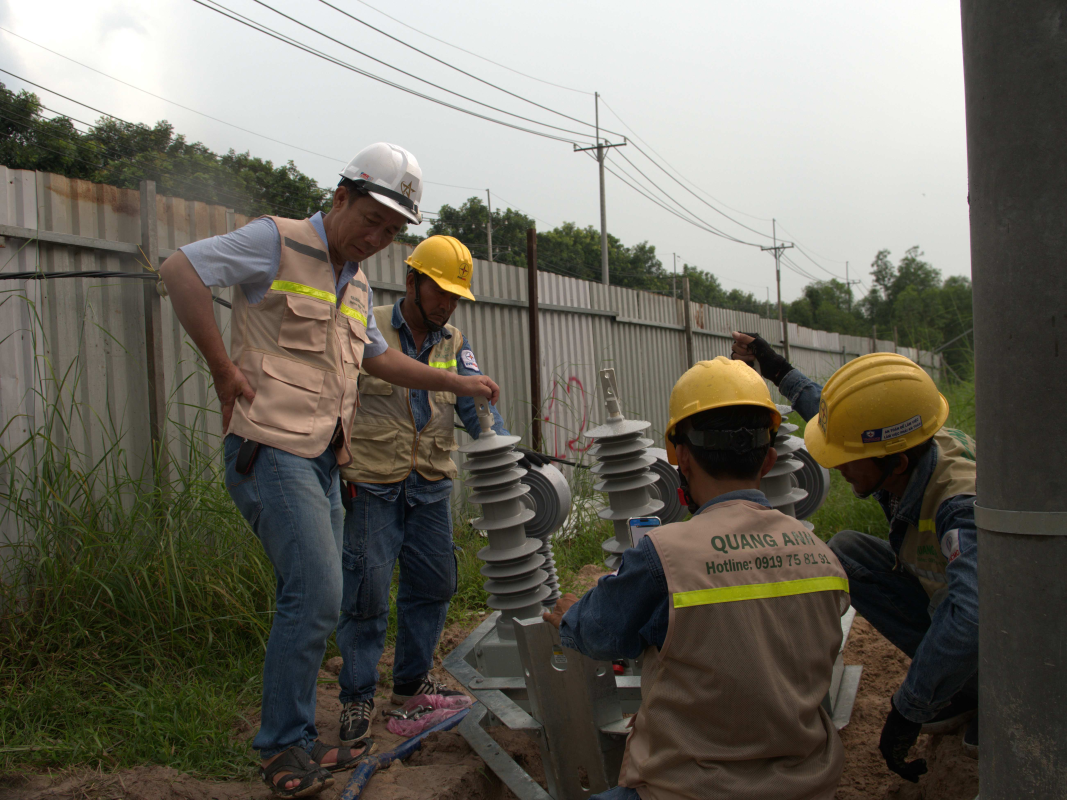
- Differentiate scenarios for acquiring used transformers versus investing in new ones to mitigate operational risks.
- Clarify items that need verification before finalizing purchases, including transformers, RMUs, cables, documentation, and installation conditions.
- Identify common risks when reusing transformers that have been operational or relocated multiple times.
- Summarize the field process from surveying, dismantling, transporting to testing and acceptance before energizing.
- Outline cost frameworks based on influencing factors instead of speculative pricing when market data is absent.
- Investors considering purchasing used transformers for quick expansion or replacement.
- Technical departments evaluating the reuse capability of existing transformers and medium-voltage equipment.
- Project management units reviewing documentation, electrical safety, and procedures involving EVN during relocation or upgrading of transformers.
When to read this guide?
- When retrieving or acquiring used transformers for electrical upgrade projects.
- When comparing new purchase options against reusing existing equipment for expedited progress.
- When preparing for field surveys, technical costing, or acceptance documentation for transformer reuse.
- 1. When to Opt for Purchasing Used Transformers Over New Investments
- 2. Indicators of Reusability for Old Transformers
- 3. Checklist for Surveying and Technical Evaluation before Purchase
- 4. Procedure for Dismantling, Relocating, and On-Site Testing
- 5. Documentation, Procedures, and Acceptance Conditions Pre-Reconnection
- 6. Cost Determining Factors and Selecting the Right Handling Unit
Acquiring used transformers isn’t just about the cost of equipment; it’s a technical decision directly impacting safety, reconnection possibilities, and electrical stability. Misjudgments at the outset often lead to higher resolution costs post-purchase than initial savings.
When to Opt for Purchasing Used Transformers Over New Investments
Criteria for selecting between used transformers and new investments revolve around project timelines, load capacity compatibility, operational documentation, and technical risk levels.
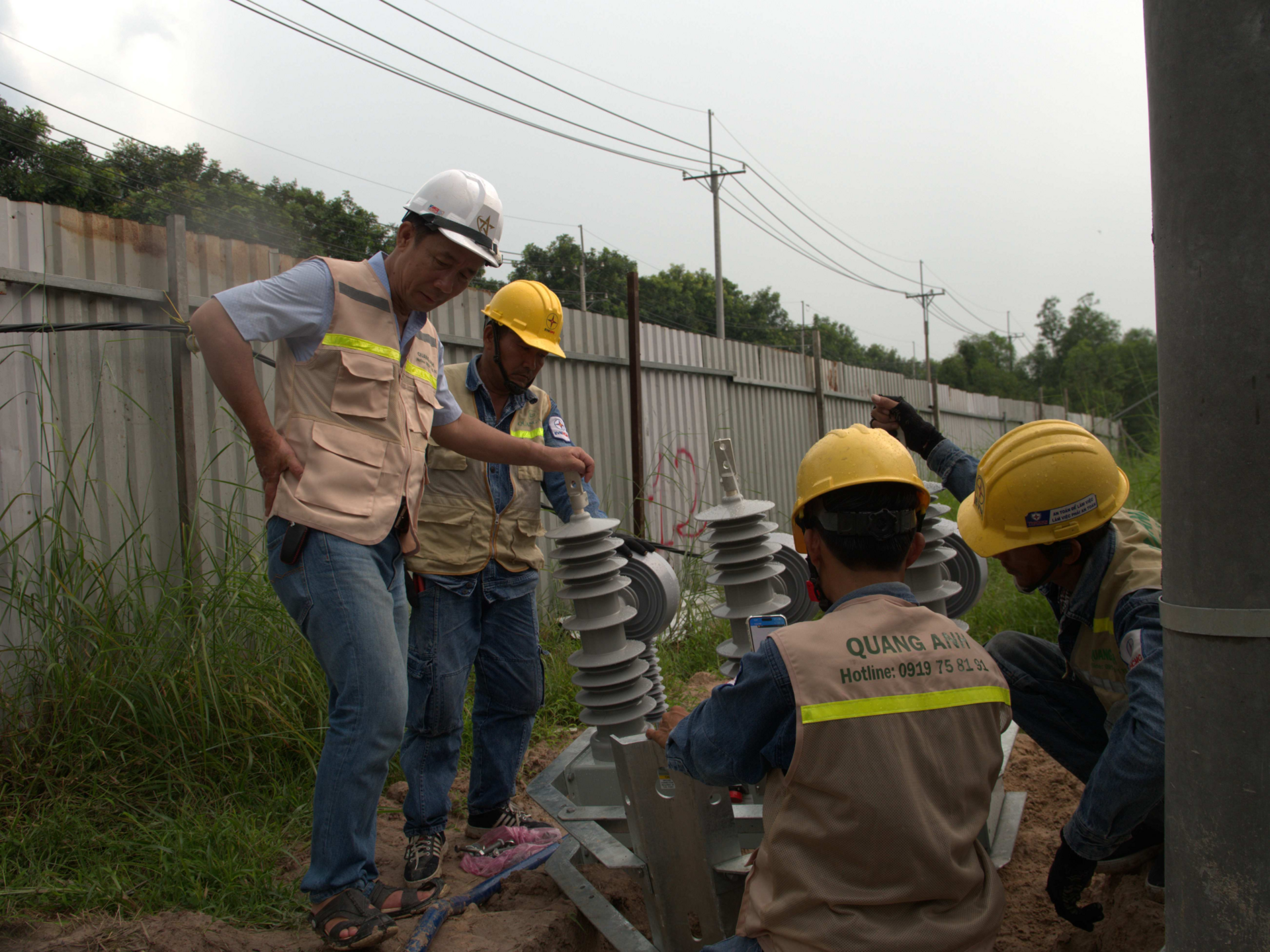
Used transformers should be considered when project timelines are critical, and equipment capacity aligns with the current load.
Used transformers are feasible when spare capacity aligns with short-term forecasts without exceeding safe operating thresholds. From a field perspective, physical condition, maintenance records, insulating oil samples, and insulation test results should be checked before finalizing the plan.
- Project timelines — the primary advantage of acquiring used transformers in projects needing fast electrification.
- Load capacity compatibility — typically used if not exceeding 80-90% of continuous rated capacity.
- Comprehensive operational and maintenance documentation — mitigates breakdown risks and facilitates acceptance.
- Physical condition & testing — oil, windings, and insulation must meet standards.
- Operational objectives — suitable for temporary or phase extensions; not recommended for critical 24/7 operations.
Used transformers save initial costs compared to new ones but pose higher risks if the equipment is beyond its service life or has a poor operational history. During maintenance or surveys at plants, prioritize equipment dismantled from official grids to reduce origination risks.
Operational warning: purchasing is discouraged if high reliability is needed for continuous 24/7 production; EVN acceptance may be more stringent, affecting initiation timelines. After field surveys and tests, compile a detailed condition assessment report for decisions on refurbishment or subsequent replacement.
Indicators of Reusability for Old Transformers
Evaluate aging signs, insulation damage, mechanical integrity, and phase imbalance to determine reuse potential or discard necessity of used transformers.
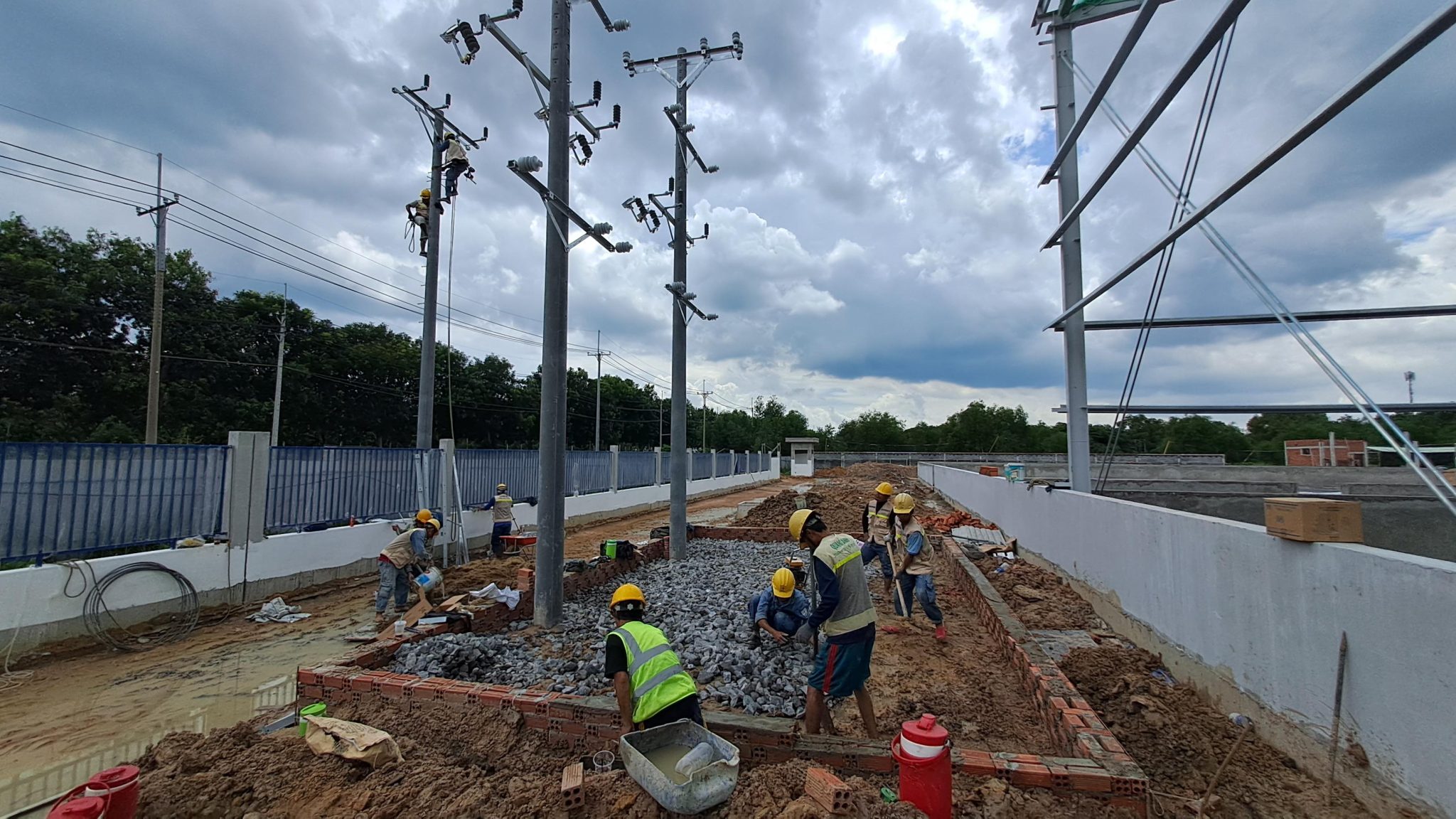
Old transformers should only be reused if the insulating oil, insulation resistance, phase balance, and mechanical structure meet field inspection criteria; if any key benchmarks fail, discard is advised. During maintenance and plant surveys, prioritize observations of oil leaks and casing deformations before conducting in-depth measurements.
Key inspections and field signs include:
- Insulating oil check: dark color, impurities, or leakage — field-wise, leaks through the breather signal seal failure or casing corrosion.
- Insulation resistance measurement: typically, resistance below 100 MΩ at 20°C indicates serious insulation failure; necessary to measure at winding terminals.
- Dissolved Gas Analysis (DGA): detecting high H2, CH4 indicates partial discharges or overheating in insulation.
- Ratio and phase balance checks: no-load voltage ratio deviation >2% between phases usually signals core or winding faults.
- Noise and vibration: noise >60 dB when unloaded or severe vibrations indicate loose core bolts or mechanical damage.
- Insulation paper strength: brittle, degraded paper or tensile strength <20% of the original value often requires full solid insulation replacement.
Field operation warnings: continuous oil temperature over 95°C accelerates cellulose insulation degradation, and failed short-circuit endurance tests can indicate weak mechanical structure prone to damage upon reinstallation. Burns on casing or burnt smell signify safety risks, requiring immediate discard even if some measures are within acceptable limits.
The final decision should be based on a combination of measurement results, field observations, and operational history; full field surveys and standard tests, such as TCVN 11824:2017, alongside safety checks per QCVN 01:2020/BCT, should be conducted before accepting reuse or proceeding with discard.
Checklist for Surveying and Technical Evaluation before Purchase
Technical evaluation checklist for transformers, RMUs, cables, grounding, and testing records to decide on finalizing a purchase or halting the transaction.
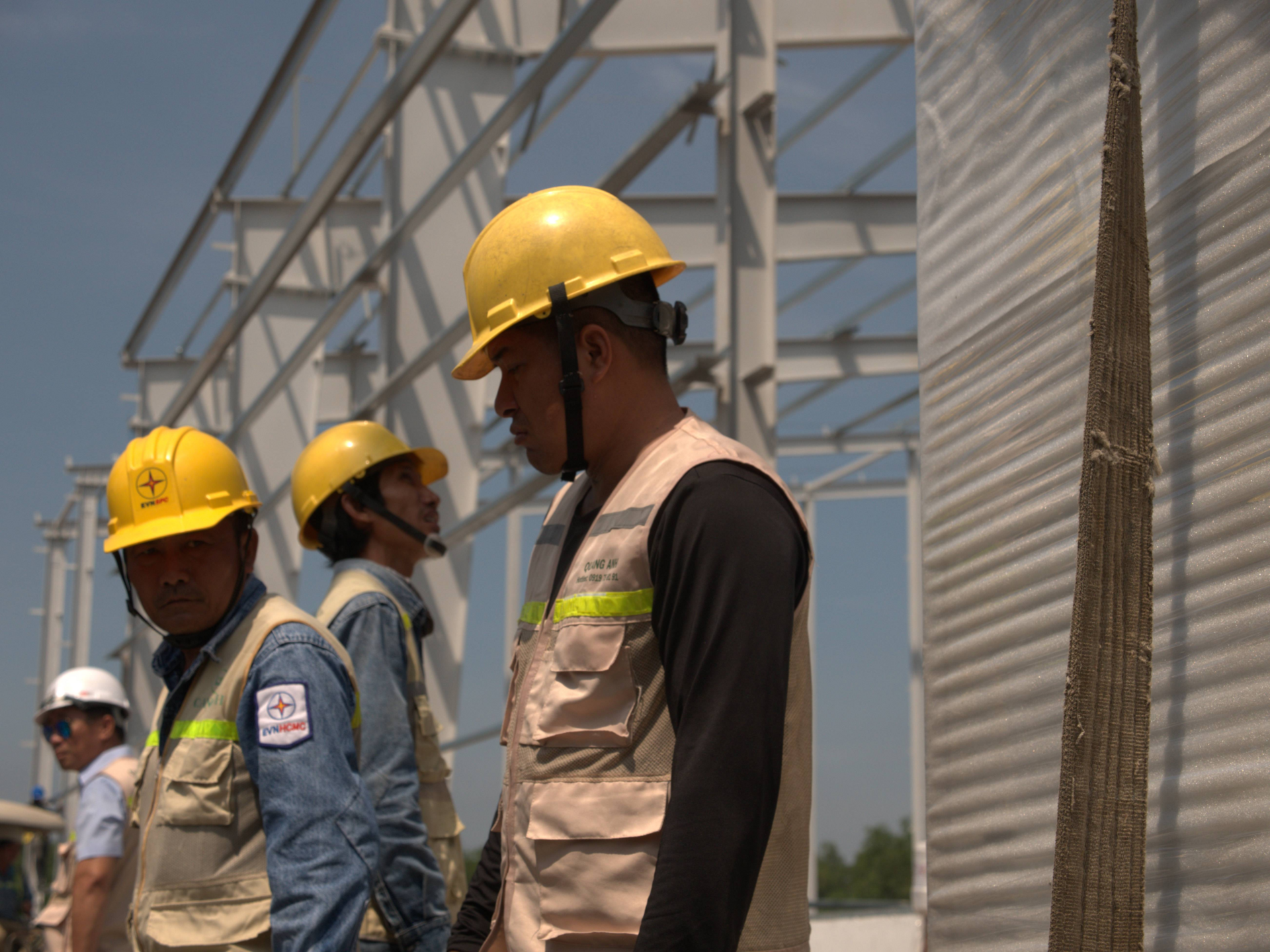
Finalizing a purchase should only occur if field surveys and basic tests indicate that the transformers, RMUs, cables, and grounding meet safe operational requirements; if severe signs manifest, stop the transaction.
Field-wise, surveys must encompass insulating oil checks (DGA analysis), moisture and burnt odor, oil leaks, winding and core condition assessments, alongside RMU or control cabinet evaluations (circuit breakers, relays, temperature sensors). During plant surveys, insulation resistance between windings and cores, winding resistance measurement, transformer ratio checks by no-load method, and auxiliary equipment capabilities like cooling fans, oil pumps, and gas release valves should be verified.
With cables and grounding systems, measuring grounding resistance at connection points is mandatory; if the resistance exceeds safety limits or cable insulation degrades, recalculating installation risks at new positions is necessary. Maintenance surveys and checks always involve technical documentation: recent testing certificates, maintenance reports, and repair histories should be matched against actual conditions.
| Item | Test / Criteria | Field Notes |
|---|---|---|
| Transformer | Oil analysis (DGA: H₂, C₂H₄, C₂H₂), insulation resistance measurement, winding resistance measurement, transformer ratio checks, oil leakage inspections | Note gas accumulation levels, burn marks, and leak locations |
| RMU / Control Cabinets | Breaker operations, protective relays, temperature sensors, circuit testing | Identify unreliable protective devices requiring replacement |
| Cable & Grounding | Cable insulation checks, type/size determination, grounding resistance measurement | Record measured values and grounding sites for upgrade evaluation |
| Technical Documentation | Recent testing certificates, maintenance reports, repair history | Missing docs increase risks; demand retesting |
| Auxiliary Equipment | Cooling fans, oil pumps, oil filters, gas release valves | Verify operation and backup power of auxiliary equipment |
Key decision criteria and operational warnings:
- Halt transactions if signs of electrical failure, oil breakdown gases at alarm levels, severe oil contamination, or missing testing records are found.
- During surveys, if grounding resistance exceeds safety parameters, delay closing until grounding systems are enhanced before transportation.
- If repair costs estimates exceed purchase device value, recommend halting or renegotiating terms.
Create detailed survey reports, listing all faults and retesting requirements along with repair estimates as pricing or transaction cancellation basis.
Procedure for Dismantling, Relocating, and On-Site Testing
Steps for dismantling, relocating, and field testing to control safety, reduce damage risks, and prepare for subsequent installation or refurbishment.
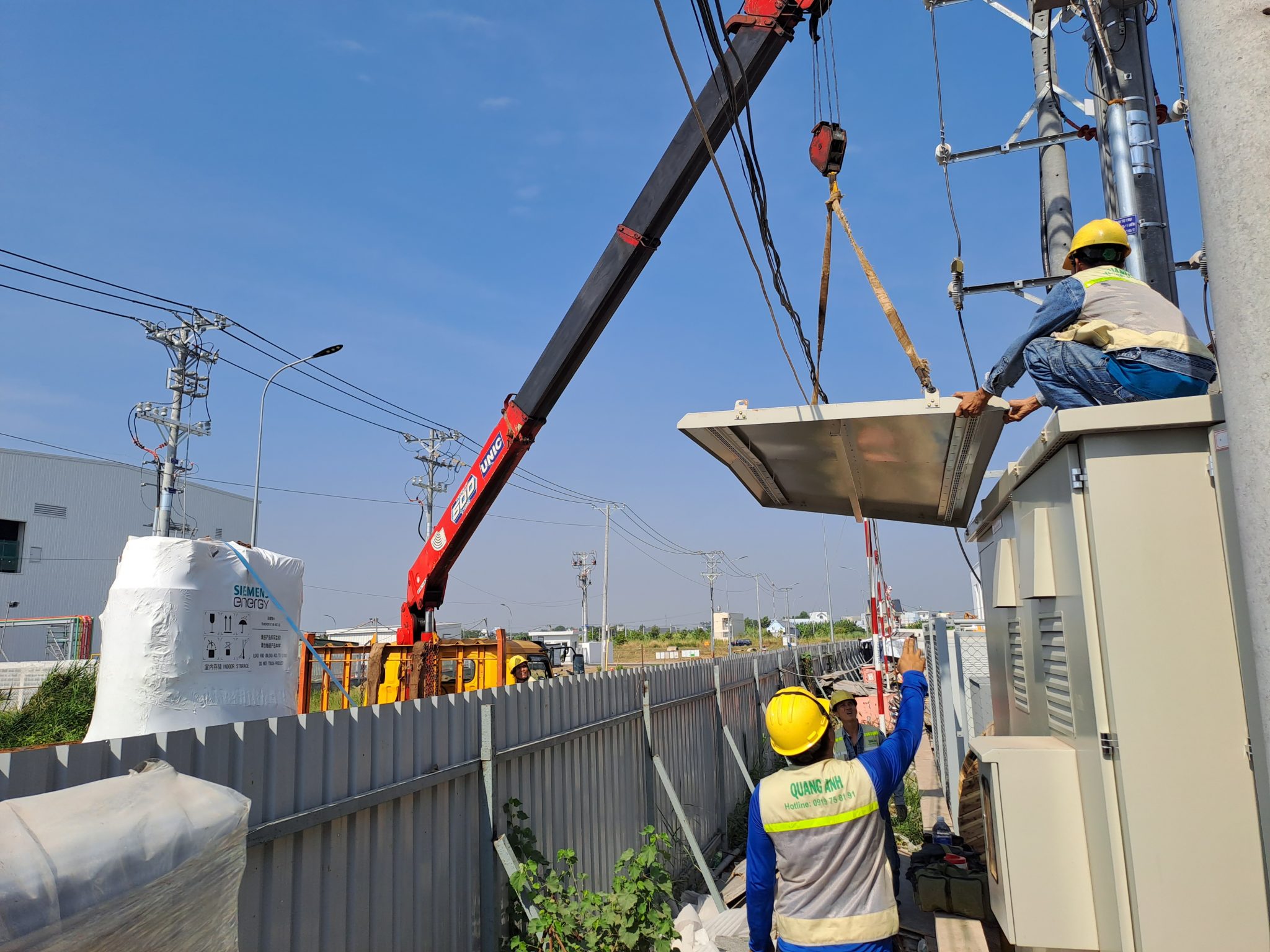
Dismantling and relocating old transformers must start with complete power disconnection and verification of de-energization before any steps are initiated.
During maintenance, examine casing, oil, bolts, and grounding systems for pre-existing damages; typically, these defects directly impact fault risks during lifting and transport. Pre-dismantling requires deploying protective measures, setting warning signs, and preparing appropriate measurement equipment to confirm de-energization state.
Once the initial checks are completed, relocating the transformer is a heavy mechanical task, necessitating cranes, specialized vehicles, and proper load ratchet equipment; if the equipment contains mineral oil, hazardous goods transport regulations and environmental protection must be followed. During plant surveys, pay attention to lift hooks, casing and frame stress points, avoiding deformations that could compromise insulation.
| Item | Description | Inspection Points |
|---|---|---|
| Safety Preparations | Power cut, barricades, de-energization verification | Verify with measurement tools; warning signs; work permit records |
| Pre-relocation Inspection | Inspect casing, bolts, oil, insulation, grounding | Oil leaks, loose bolts, casing cracks, insulation resistance |
| Transportation | Utilize cranes and specialized vehicles; handle oil accordingly | Hazardous goods transport paperwork if oil present; secure ratchets |
| Post-relocation Testing | Conduct basic electrical tests prior to reinstallation | Measure insulation, transformer ratio, oil check, grounding resistance |
| Reinstallation & Acceptance | Ensure foundations, safety distances, drainage, and diagram-compliant connections | Mechanical and electrical acceptance before energizing |
In terms of testing, after re-positioning, at least the following measurements are required: insulation resistance, transformer ratio checks, oil (if applicable) inspection, and grounding resistance; depending on the specific model and operational conditions, additional deep tests according to applicable standards may be added. In plant practice, detailed recording of measurement values is needed for future comparison.
Operational warning: if oil leaks, severe insulation damage, or structural deformities are found during checks, halt relocation and execute professional treatment or environmental protection. Subsequent decisions often require additional field surveys and repair feasibility assessments before further transportation.
Fieldwork should conclude with complete documentation of dismantling, transportation, and testing to facilitate post-installation inspections; re-inspections per current standards are mandatory before energizing and commissioning the equipment for operation.
Documentation, Procedures, and Acceptance Conditions Pre-Reconnection
Acceptance documentation, testing requirements, and cooperation conditions with power units must be completed before reconnecting old transformers.
Documentation for acceptance prior to reconnection must comprehensively include main and auxiliary device test reports, medium-voltage connection drawings, and confirmations from the power unit.
Field-wise, standard required trials include insulation checks, winding resistance measurement, insulating oil analysis, and load testing per equipment capability; testing reports must be prepared by authorized entities. During plant surveys, exterior condition checks to confirm no oil leaks, intact casing, and compliant grounding system parameters are necessary before proceeding with acceptance paperwork.
Acceptance documentation lists and on-site checkpoints can be summarized as follows.
| Item | Brief Description | On-Site Checkpoints |
|---|---|---|
| Main Device Test Report | Records results from insulation, winding resistance, ratio, and acceptance tests | Compare data with manufacturer standards; verify reports are signed by authorities |
| Auxiliary Equipment Test Report | Review meters, isolators, protection units, relays, and grounding system | Relay functionality checked during maintenance, safety system synchronization confirmed |
| Insulating Oil Check | Analyze moisture content, dissolved gases (if applicable), degradation index | Oil sample results must comply with manufacturer’s requirements or applicable standards |
| Medium-Voltage Connection and Grounding Diagram | Updated positions for devices, busbar layout, switches, and grounding | Diagrams must match field implementations during site surveys |
| Project Acceptance Report | Signed acceptance forms from investors and power units confirming acceptance completion | Requires signatures and temporary or permanent re-energization approval from power units |
Throughout documentation preparation, consider practical operational decisions: if equipment fails to meet original specifications, defer file submission for power restoration; handle, repair, or replace before inviting EVN for inspections. Additionally, adjusting protection systems, relays, and grid synchronization is a step that cannot be overlooked during acceptance.
Per electrical distribution systems and safety regulations, documentation submitted to power units must include connection diagrams, device handover reports, and testing reports from authorized providers; coordinating submission for temporary or full re-energization needs practical inspection date alignment. Record all acceptance files thoroughly for future audits and maintenance operations.
Cost Determining Factors and Selecting the Right Handling Unit
Cost estimates for purchasing and refurbishing used transformers depend on capacity, equipment age, oil/winding conditions, testing expenses, and handling unit capabilities.
Costs for acquiring and refurbishing used transformers are determined by rated capacity, current technical conditions, and the scope of required tests.
Field-wise, distinguish clear cost elements before finalizing purchase prices: initial survey costs, comprehensive electrical tests, transport/dismantling, refurbishment actions (oil changes, winding repairs, mechanical improvements), and costs for certification/acceptance documentation. During maintenance or plant surveys, mandatory inspections include: insulation resistance measurements, dissolved gas analysis in oil, moisture and acid levels in insulating oil.
| Item | Details / Inspection Points |
|---|---|
| Technical Survey | Check equipment age, capacity, mechanical condition, record damage signs; site surveys required for detailed costing. |
| Electrical Testing | Measure insulation resistance, DGA analysis, moisture and oil acid checks; determine if oil treatment or part replacement is needed. |
| Transportation and Relocation | Costs for dismantling, lifting, and logistics; safety risks and support equipment should be accounted for in estimates. |
| Refurbishment / Repairs | Oil replacement, winding repairs, mechanical fixes; quote per item after in-depth surveys. |
| Inspection, Certification, and Warranty | Costs for re-inspections per standards, issuing electrical safety certificates, and post-refurbishment warranties. |
Criteria for selecting suitable handling units should prioritize survey capabilities, on-site testing abilities, and the capacity for issuing inspection certificates. In plant practice, verify experience with popular brands (THIBIDI, SHIHLIN, ABB, KP Electric) and capacity for mandatory field experimentation.
- Capability requirements: technical surveys, testing (insulation resistance, DGA), certification issuing.
- Purchase contracts: define technical acceptance criteria, post-refurbishment warranty responsibilities, and hidden defect clauses.
- Implementation timeline: testing and refurbishment typically extend 4-8 weeks depending on complexity, and must factor into project scheduling.
Operational warning: initial purchase price doesn’t reflect costs arising from testing and hidden defect rectification; during maintenance, safety plans must be in place when relocating or integrating equipment into the grid. Decision-wise, refurbishment is often cheaper than new purchases but only when detailed surveys and costings validate feasibility.
Next steps: comprehensive field surveys and complete testing sets are required to convert the above factors into clear cost estimates and contract clauses.
With old transformers, the purchase price is only a small part of the equation. Accurate decisions should hinge on equipment condition, re-inspection capability, legal documentation, and alignment with actual load needs.
Frequently Asked Questions
Is it necessary to fully retest used transformers before recommissioning?
Full retesting isn’t mandatory if recent test documentation and authorization from a power entity exist; however, key tests like insulation resistance, ratio, winding resistance, oil check, and grounding are compulsory. If documentation is missing, follow the principle: comprehensive testing before closing a purchase.
Which aspects of old transformers are often misjudged visually?
Visual misjudgments often affect: oil condition (contamination, moisture), internal winding and core conditions, insulation resistance, ratio errors, RMU component contacts, and underground cable conditions. Principle: always request in-depth tests and maintenance records before deciding.
Are transformers relocated multiple times suitable for plant reuse?
Depends on the case; transformers relocated multiple times may be reused if no mechanical damage exists, the windings and oil meet requirements post-testing. Knowing relocation history, dismantling records, and post-relocation check results is essential. If lacking, prioritize comprehensive mechanical, physical, and chemical testing before decisions.
To what extent can old medium-voltage equipment like RMUs, cable ends, and underground cables be reused?
Reusability depends on insulation condition, age, and maintenance records. RMUs can often be reused if good insulation and mechanical condition exist; cable ends and underground cables require insulation resistance checks, insulation damage signs, and on-site testing. Lacking data, require insulation testing and mechanical checks.
What documentation is needed when acquiring old transformers for seamless acceptance and energizing?
Prepare: the most recent test reports, maintenance and repair records, connection diagrams, factory certificates, oil test results, grounding resistance measures, and authorized inspection reports. If documents are lacking, compile a list of required tests and perform them before acceptance.
Should an entire used transformer unit be purchased, or only use the transformer and replace other parts?
The decision is based on technical condition, compatibility, and overall cost. If RMUs, cables, and structures are intact and documentation is complete, full unit purchase saves time; if multiple medium-voltage components fail or do not match, use just the transformer and replace the rest. Assess repair costs versus new purchase.
Safe Approach to Acquiring Used Transformers
- Determine load requirements, site location, and reuse objectives for the plant.
- Conduct field surveys to assess the condition of the transformer, medium-voltage equipment, cables, and substation structure.
- Review original documentation, operational history, maintenance, failures, and any previous relocations.
- Compile a test list and exclusion criteria before finalizing purchase decisions.
- Estimate total costs, including purchase, dismantling, transport, refurbishment, inspection, and reconnection costs.
- Proceed with reuse only after completing tests, acceptance documentation, and safety conditions.
If you need to assess an old transformer before purchase or reuse, start with a condition survey and mandatory test list to avoid control issues during connection.
[contact-form-7 id="7239967" title="Contact form 1"]
Related Posts
Common Mistakes in Transformer Station Construction Leading to Extra Costs
Các sai lầm khi làm trạm biến áp thường không nằm ở một hạng mục [...]
Apr
Comprehensive Guide to Acquiring Used Transformers
Góc nhìn kỹ thuật về thu mua TBA cũ: cách đánh giá hiện trạng, hồ [...]
Apr
Comprehensive Transformers Maintenance for Industrial Plants
Tổng quan dịch vụ bảo trì trạm biến áp nhà máy: lịch bảo dưỡng, thí [...]
Apr
Transformers: Assessing and Safely Handling Used Transformers
Khung đánh giá máy biến áp cũ theo tình trạng kỹ thuật, dầu cách điện, [...]
Apr
How Proactive Transformer Maintenance Minimizes Business Risks
Nhìn từ góc độ vận hành nhà máy, bảo trì chủ động trạm biến áp [...]
Apr
Comparing Oil and Dry Transformers in Industrial Projects
Distinguish between oil and dry transformers based on installation site, safety, maintenance, energy losses, initial [...]
Mar
Electrical Overload Warning Signs in Factories
Recognize early indicators of factory electrical overload such as voltage drops, overheating equipment, circuit breaker [...]
Mar
Risks of Overloading Industrial Transformers Without Upgrades
Keeping the same low-voltage transformer while increasing factory loads can result in overheating, insulation degradation, [...]
Mar
Evaluating and Implementing Transformer Contractors in Tay Ninh
Criteria for selecting transformer substation contractors in Tay Ninh, EPC scope, and factors affecting project [...]
Mar
Comparing Oil and Dry Transformers for Industrial Applications
Examine oil and dry transformers based on installation location, fire safety, maintenance, energy loss, investment [...]
Mar
Comprehensive 1500kVA Transformer Station Budget for Manufacturing Facilities
Guidance for creating a detailed budget list for a 1500kVA transformer station, including medium voltage [...]
Mar
Comprehensive Transformer Station Pricing: Elements and Considerations
Examine key components in comprehensive transformer station pricing including design, equipment, construction, testing, and connection [...]
Mar
Pricing Guide for 4000kVA Transformer Stations: Configuration, Cost, and Investment Process
An overview of configuration, cost estimates, connection approaches, and investment checklists for 4000kVA transformer stations [...]
Mar
Pricing and Setup of 3200kVA Transformer Stations: Configuration, Costs, and Investment Procedure
Explore the pricing structure for a 3200kVA transformer station, primary equipment configuration, cost variables, EVN [...]
Mar
Cost Estimation for 2500kVA Transformer Station: Configuration, Expenses, and Investment Process
Reference framework for quoting a 2500kVA transformer station based on configuration, station type, cable solutions, [...]
Mar
2000kVA Transformer Station Guide: Configuration, Costs, and Investment Process
Discover key aspects of a 2000kVA transformer station: from technical configuration and cost analysis to [...]
Mar
Pricing and Configuration Guide for 1600kVA Substations
A detailed guide on pricing for 1600kVA substations, including equipment specs, connection costs, EVN procedures, [...]
Mar
Comprehensive Guide to 1500kVA Substation Pricing: Configuration, Costs, and Investment Process
A comprehensive overview of configurations, costs, construction methods, connection procedures, and contractor selection for 1500kVA [...]
Mar
Tay Ninh Solar Power Planning: Technical Framework, Grid Interconnection, and Rollout Roadmap
Technical overview of solar planning in Tay Ninh: irradiation, grid capacity, permitting, design, operations, and [...]
Dec
Binh Duong Solar Planning: Regulatory Framework, Grid Interconnection, and an Implementation Roadmap for Factories and Industrial Parks
An overview of Binh Duong solar planning: legal framework, interconnection, design, risk management, and an [...]
Dec